Rhinoplasty & Common Cold

While most surgeons agree that developing a cold or the flu won’t impact the results of surgery, patients who have contracted an upper respiratory infection should probably postpone surgery until they’ve fully recovered.
Any plastic surgeon in NYC experienced in nasal surgery will more than likely not perform the procedure while the patient is sick with an upper respiratory infection. It’s good common practice that will reduce the risk of complications.
Not a Pleasant Experience
Still, coming down with the cold or the flu, bronchitis, or viral pneumonia isn’t pleasant. The coughing, sneezing, fever and body aches associated with these head and lung illnesses are uncomfortable at best. The sinuses will be congested and the nose will be swollen and red from the constant wiping away of post-nasal drip.
Imagine how much more unpleasant the experience will be if you’re sick AND recovering from rhinoplasty surgery.
The doctor may prescribe an antibiotic or recommend a cold or flu medicine to ease the symptoms.
Some Common Sense Practices
If you’re sick with the common cold or flu, your nose will be draining mucus almost nonstop. If you’re recovering from rhinoplasty, never rub or wipe your nose hard with a tissue or handkerchief as this may irritate and inflame the suture lines and wound areas. Instead, gently dab away the nasal drip until the nose is completely dry. Also, gently irrigate the nose with a warm saline solution to reduce the viral load, which will help your symptoms clear up faster.
Doctor Knows Best
Patients waiting in line for cosmetic nose surgery are generally an antsy bunch. The thought of having to put off surgery for a week or longer because of some pesky cold or flu virus can be upsetting to them. Even so, never minimize the severity of your condition with your rhinoplasty surgeon. Let your physician decide whether it is safe to proceed. Your doctor most likely will give the green light if all you have is a simple head cold. But if you’ve developed a more serious upper respiratory infection, don’t blow it and be sure to tell your surgeon right away.
Dr. Philip Miller is a board certified facial plastic surgeon in New York City with offices located at 60 East 56th, Third Floor, New York, N.Y. Contact our office at (646) 791-3025 for a personal consultation.
Fixing a Twisted Nose
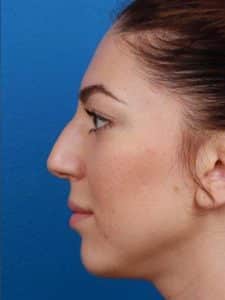
Having a nose that appears bent may be the result of an injury or surgical error. However, some people are born with an overly angular nose. No matter what the cause of the problem, whether congenital or acquired, cosmetic nose surgery in the hands of an experienced facial plastic surgeon in NYC can correct the problem.
Anatomy of a Twisted Nose
When the nose appears twisted it’s likely because the nasal bones or cartilage inside the nose are also twisted. The interior tension caused by the deformity may push the tip of the nose toward the face at a downward angle, or it may cause an over-projection of the nose from the face. The nasal bridge may also bend to the left or to the right.
The type of rhinoplasty procedure used depends on how much surgical correction is needed. There are many techniques, including cartilage grafting and osteotomy, to correct the basic symmetry and nose angulation. Refinements to the bridge or tip of the nose can be made using one or more techniques. The delicate nasal bones may be cut and reset in order to correct and improve the nasal profile.
The surgeon may recommend less invasive suturing or camouflaging techniques to lessen the appearance of nasal deviation.
Your New York Nose Surgeon Knows Best
While there is no such thing as a perfectly straight nose, the surgeon will make every effort to achieve a perfect result. It will require a thorough evaluation of the basic symmetry of the patient’s face prior to surgery and determining the full extent of nasal or septal deviation. The choice of procedure depends on which part of the nose is twisted.
It’s generally easier to correct a crooked nose caused by trauma than it is to fix a congenitally twisted nose where certain internal tissues or structures may be undersized or absent.
In sum, rhinoplasty is one of the most difficult corrective surgeries to perform and fixing a twisted nose is one of the most difficult sub-categories of procedures. Talk with a board certified facial plastic surgeon experienced in rhinoplasty to find out if you are a candidate for nose surgery.
Dr. Philip Miller is a board certified facial plastic surgeon with offices located at 60 East 56th, Third Floor, New York, N.Y. Call (646) 791-3025for a personal consultation.
Next, read about The Effects of a Rhinoplasty with the Common Cold
Rhinoplasty to improve nasal bridge and tip, 3 month post-op, by Dr. Miller
Weight Loss After Facelift: All You Need To Know
The results of your facelift can be affected by weight you lose after your surgery. The good news is there are ways to lose weight safely and effectively after a facelift, without compromising your results.
Can weight loss affect my facelift results?
Yes. Losing significant weight results in a pattern distribution of weight loss throughout the body, including the face. Facial volume is necessary for proper skin support. If you suddenly drop 20 pounds or more in just a few months after facelift surgery, the weight loss may translate into lost facial volume, and skin laxity may develop. As a result, you may find yourself with an aged appearance in the mid-face and cheek areas.
Additionally, making dramatic changes in weight between consultation and surgery date may significantly change the surgical plan your plastic surgeon created for you. Surgeons generally advise patients to achieve their goal weight as closely as possible before undergoing many types of aesthetic surgery.


How much weight can I lose safely to preserve my facelift?
Most doctors recommend losing weight slowly and at a healthy pace. Losing 1-2 pounds per week is ideal for safe and lasting results. This slow steady rate ensures skin has time to conform over the new contour to maintain a firm, youthful appearance.
Should I lose weight before or after facelift?
Surgeons typically recommend losing weight before a facelift. Since a facelift involves the redistribution and removal of fat cells, and facial fat is necessary for a more youthful appearance, it is best to lose weight slowly and steadily to allow skin elasticity to bounce back naturally before surgery.
Most surgeons also advise patients to get within 10 pounds of their ideal weight before surgery. Doing so will produce the best facelift results.
Learn more about facelift surgery here.
Philip J. Miller, MD, FACS, can guide you on your facelift journey. During your consultation, be open and honest about your weight loss goals so he can recommend the best approach for your specific case. This ensures that your surgical and weight loss goals are all safely met.
It is possible to manage weight loss before and after facelift surgery, especially with the help of an expert facial plastic surgeon. Dr. Miller specializes exclusively in facial plastic surgery and has over 20 years of experience performing procedures like a facelift. In addition to the standard facelift, Dr. Miller can perform a deep plane facelift, the Miller lift (liquid facelift), or a MicroLift.
To learn more about weight loss and facelift surgery, contact Dr. Miller’s Manhattan, New York, or New Orleans, Louisiana office to schedule an appointment.
Cosmetic Procedures for Getting Rid of Turkey Neck

From Jack Lalanne to Facial Yoga
The late health guru Jack Lalanne, for example, was big on daily exercises to keep the facial muscles strong and the skin tight. Jack was a true pioneer and expert in healthy living who developed his own personal facial exercise routine that kept his profile relatively sag- and wrinkle-free well into his 90s. But not even Jack Lalanne was able to win the battle against the forces of gravity and age and stay a healthy looking 70-something indefinitely.
Modern health and fitness experts can be heard these days singing the praises of “hydration” as the proverbial fountain of youth. They recommend a body fat ratio of 14 to 24 percent for women and 6 to 17 percent for men, which means for most of us a radical change in diet is in order and lots of aerobic exercise and hours spent training in the gym or health club.
New Age types, on the other hand, are big adherents of Facial Yoga, a series of targeted exercises which are supposed to ward off neck and facial drooping. Many yoga aficionados do, in fact, look great as they age but there is no real evidence that facial yoga is effective.
Cosmetic Treatments for Turkey Neck
There are several non-surgical treatments touted for their ability to target the neck, including skin peels, topical creams and laser procedures, many of which are simply ineffective. Non-surgical skin tightening treatments may be effective to some degree, particularly in patients with minimal sagging. In addition, Botox can be used to effectively treat neck bands. However, these non-surgical treatments generally do not address excess or lax skin and cannot recreate the neck line that most patients desire.
The meat of the matter regarding the turkey neck is that it is one stubborn age-related effect that is difficult to resolve non-surgically. Traditional neck lift and facelift techniques remove excess skin and fat and tighten the platysma muscle to create a firmer, tighter, more youthful look that will last for many Thanksgivings to come. Neck lift may be performed on its own or combined with a traditional facelift.
Don’t be a turkey this Thanksgiving. Consult with a qualified facial plastic surgeon who can help you decide which procedure is best for your sagging neckline.
Dr. Philip Miller is a board certified facial plastic surgeon with offices located at 60 East 56th, Third Floor, New York, N.Y. Contact our office at (646) 791-3025 for a personal consultation.
Miller Lift to treat facial wrinkles and sculpt jawline by Dr. Miller
What is a Deep Plane Facelift?

Some doctors shy away from the Deep Plane Facelift because of the more invasive nature of the procedure and the increased risk of nerve damage and other complications which might occur. Still, this technique has produced many satisfied patients because of the natural and long-lasting effects of deep mid-face plane lifting.
Deep Plane Facelift vs. Traditional Facelift
Unlike the traditional facelift, the deep plane facelift (Deep Plane Rhytidectomy) involves a deeper plane of dissection, allowing the surgeon access to the underlying muscle and soft tissue layer just below the skin. This includes the malar fat pads which begin to droop and flatten with age.
During the procedure the surgeon is constantly focused on the mid-face area including, the nose and upper lip to correct any issues caused by aging. With this technique the surgeon is also able to correct the deep nasolabial folds that form as the face loses volume due to the decreased production of collagen and elastin. These are the body’s foundational chemicals which give the facial skin its natural volume and elasticity.
Because the Deep Plane Facelift involves a deeper angle of “attack” there is an increased risk of facial nerve and tissue damage. It is an advanced and complicated surgical procedure that is best handled by an experienced and highly skilled surgeon. Even so, many surgeons view the procedure as a longer lasting alternative to the standard facelift because it targets age-related flaws centered in the mid-face area, an area often overlooked with other facelift techniques, while at the same time lifting the neck and jowls for a more youthful appearance. The Deep Plane Facelift tightens and rejuvenates the muscle-fascia layer and repositions fat tissue to achieve a true 3-dimensional result.
While the mechanics of the Deep Plane Facelift are more intricate by design, the results of the procedure are said to be superior than those of a standard facelift. If you have been considering facial rejuvenation surgery, the Deep Plane Facelift is just one of many options for you to discuss in consultation with a qualified plastic surgeon well-versed in the technique. To learn more about facelifts, visit medlineplus.gov.
Contact a Facial Plastic Surgeon for a Deep Plane Facelift Consultation
Dr. Philip Miller is a board certified facial plastic surgeon with offices located at 60 East 56th, Third Floor, New York, N.Y. Call (646) 791-3025 for a personal consultation or fill out our contact form.
Rhinoplasty Surgery for Older Patients
Am I too old for a nose job?
There is no age limit for having cosmetic nose surgery. The general rule is, if you’re in good health, you are likely a good candidate for surgery.
However, as patients get older, surgeons may be faced with increasing challenges that can affect the long-term cosmetic results for the patient.
Many patients from NYC choose to have cosmetic surgery done in their 40s and 50s, before the aging process produces significant changes in the appearance and basic structure of the nose. These patients are generally satisfied with the rejuvenating effect of rhinoplasty and in many cases, it is the fulfillment of a life-long dream to enhance their appearance.

Is 40 too old for rhinoplasty?
78,054 total rhinoplasty procedures were performed on people aged 40-54 in 2021, according to the American Society of Plastic Surgeons (ASPS). As long as you are in good physical and mental health, you may benefit from the procedure. The best time to have a rhinoplasty is when you feel most confident in your decision and informed about the procedure. You must also be comfortable with your surgeon, who should guide you through the journey.
Nose Job at 50
As long as you are in good health and you have enough time on your schedule for a proper recovery, 50 is not “too old” for rhinoplasty. As a cosmetic procedure, rhinoplasty is intended to make the patient look and feel better about their nose, and a nose job can be tailored to a patient of any age. Just like any other patient, you will need a physical exam and be cleared by your doctor prior to surgery. Don’t let your age hold you back from consulting with a facial plastic surgeon in New York.

Rhinoplasty Over 50
The technical steps of performing a rhinoplasty in patients over 50 are similar to those for younger patients. Rhinoplasty at this age can even make you look more youthful, as changes may occur to the nose over time that contribute to an aged appearance. However, patients in this age group are more likely to have underlying conditions like hypertension and diabetes that could increase the risks associated with surgery.

When a patient has reached the age of 60 and beyond, physiological changes in the nose demand a thorough evaluation by the performing surgeon to determine whether a favorable cosmetic result is possible. Any underlying health concerns must also be considered as well. Dr. Miller will discuss your medical history at length before surgery to ensure the procedure will be both safe and effective for you.
There may be a variety of pre-operative issues as well. For example, is the patient able to tolerate the anesthesia? What is the quality of the facial skin, nasal cartilage, and bone structure? Is there a severe nasal droop or significant changes in the nasal dorsum and nasal airways?
Years of exposure to the sun may have caused dramatic skin changes as well, affecting skin quality. The skin also grows thinner with age as there is less collagen and elastin produced by the body to give the facial skin its natural fullness and volume. As a result, older patients bruise more easily and healing takes longer to complete. There may be an increased risk of bleeding and scarring as well.
Dr. Miller will weigh your goals and expectations against the physical reality of surgery. Only then can he determine whether rhinoplasty is right for you. When you both have confidence in the safety and outcome of the procedure, everyone can be happy in the end.
Dr. Philip Miller is a board-certified facial plastic surgeon with offices located in Manhattan, New York, and New Orleans, Louisiana. Contact us online or call (646) 791-3025for a personal consultation.
Next, learn How we Can Fix a Twisted Nose
Rhinoplasty to straighten bridge and refine tip by Dr. Miller
The Mini Facelift

In a traditional facelift, the incision typically runs from about the temples, in front of and around the ear, to behind the ear and ending in the lower scalp. Working through the incisions, the skin is separated from the deeper tissues. The skin is then re-draped and any excess skin is removed. It’s a more complicated procedure designed to reduce the appearance of extensive sagging and wrinkles of the lower face and neck.
Patients who opt for the Mini Lift are often in their 40s or 50 and don’t exhibit major signs of aging. The jawline may only show moderate drooping. There may only be a few shallow wrinkles and facial lines. The facial plastic surgeon’s views for the Mini Lift as a more localized approach to improve one’s facial appearance. It require much smaller incisions through which surgical tools are used to extract excess fat and reshape muscles so that a softening of facial lines and wrinkles is achieved quickly and with much less downtime required during the recovery process. The Mini Lift is also a less costly way for men and women to reduce minor sagging around the cheeks, neck, and jawline with minimal risk of complications during and after surgery.
Many patients prefer the Mini Lift because of its targeted approach, its cost effectiveness – roughly half that of a traditional facelift – its nearly immediate results, and its fast recovery period. Though your results will depend on a variety of factors, the Mini Lift is an excellent way to tackle the flaws and blemishes of early aging head on. A qualified facial plastic surgeon can help you decide which procedure is right for you and help you achieve the best facelift results. To learn more about the mini facelift, visit healthcare.utah.edu
Dr. Philip Miller is a board certified facial plastic surgeon with offices located at 60 East 56th, Third Floor, New York, N.Y. Call (646) 791-3025for a personal consultation
Next, learn about The Impact of Weight Loss after a Facelift.