Seven Popular Facelift Myths

The facelift procedure in NYC has gotten a bad, and unwarranted, reputation over the years. The fact of the matter is that facelifts are a commonly chosen procedure and for many good reasons. Yet, still there are many misconceptions about this type of plastic surgery that make it hard to discern fact from fiction. To truly understand what a facelift is, and what it isn’t, you’ll have to debunk some of the common myths circulating out there.
Myth #1 – Only “Old People” Get Facelifts
While the idea of rejuvenating the face and reducing the appearance of fine lines and wrinkles might seem to be for mature audiences only, younger and younger people are seeking out facelifts. In fact, facelift surgeries are often more successful when the changes needed are slighter and less dramatic. Women as young as their 30s are getting facelift surgeries to get a jumpstart on the aging process and to maintain, rather than restore, a youthful look. The biggest audience for facelifts are patients ranging from 30 to 50 years old. The right time for a facelift is when aging signs like sagging facial skin are bothering you.
Myth #2 – Only Women Get Facelifts
There’s a trend in plastic surgery to think that procedures are limited to women. That simply isn’t true. With plastic surgery on the rise, especially among men, facelifts for men are becoming a common procedure. There are some changes that need to be made in order to account for things exclusive to the male face, like facial hair and sideburns. That aside, more and more men, particularly among the Baby Boomer generation, are seeking facelifts to help rejuvenate their appearance. Plastic surgeons are more than happy to offer this procedure to men and women alike.
Myth #3 – Only Rich People Get Facelifts
There is a widespread belief that cosmetic facial surgeries like facelifts are too expensive for the average person to afford. However, most of the people electing facelift procedures aren’t rich and famous, don’t drive fancy cars or live in mansions, and have to live on a budget just like everyone else. The advances in technology and technique have helped lower the costs associated with these procedures, making them more affordable. According to the American Academy of Facial Plastic and Reconstructive Surgery, the average surgeon fee for facelift in 2012 was $7,453. If you’d like to have a facelift but money is a problem, consult with your doctor to see what your options are.
Myth #4 – Everyone Will Know You Had a Facelift
It’s a big concern of anyone considering plastic surgery that you’ll forever walk around broadcasting the fact that you once had work done. A trained and experienced plastic surgeon, however, aims to make every surgery result as natural-looking as possible. In fact, most facial plastic surgeons will not deem a facelift surgery as a success unless it does look natural. This means no weird pulling or crinkling of the skin, no huge changes to the hairline, no distortions of the ear, and no obvious scarring. You’re meant to enjoy a facelift’s results, not carry them around like a badge for the rest of your life!
Myth #5 – Facelifts Last Forever
It’s easy to assume that your brand new look will last forever. After all, isn’t that what surgery is for? The truth is that while a facelift can address some of the effects of aging from your face, it cannot stop the aging process. You will still be susceptible to the effects of gravity, collagen loss, and other issues that age the face. However, those who have had a facelift start out of the gate a little later. So while you will still experience the signs of aging as you move on from your facelift, you’ll be in a much better position at 80 than your friends who haven’t.
That said, caring for your skin and living a healthy lifestyle can definitely impact how long your facelift lasts. Use the same tactics you always would to keep wrinkles and sun damage at bay: wear sunscreen daily, eat healthy, get regular exercise, stay hydrated, and sleep on your back to avoid nighttime wrinkling that will eventually become plain old wrinkles. These techniques can take that running start you got from the facelift and help you jog right through the aging process for a little bit longer.
Myth #6 – Facelifts Are Very Painful
The idea of knives and incisions leaves everyone wincing in pain, but the truth is that facelifts and most other plastic surgery procedures are just not that painful. In fact, most facelift recoveries take only a couple of weeks, not the months you might assume. The first few days after a facelift, you will experience some swelling, redness, and discomfort, but these are manageable with ice packs and pain medication and should not be severe. You will need to rest during these days, elevating your head to minimize swelling, and then you will be restricted from certain activities for up to a few weeks. Most patients return to work after two weeks, but every patient is different. Discuss your expected recovery timeline and any restrictions with your plastic surgeon prior to your facelift procedure.
Myth #7 – Nonsurgical Facelifts Are Just as Good as Traditional Facelifts
There is a recent trend in the plastic surgery world for patients to seek out nonsurgical alternatives to facelifts. While injectable treatments are available to mimic the after-effects of a facelift, the two just aren’t the same. Injectables can diminish the appearance of fine lines and wrinkles, add volume to certain areas of the face, and even be used to enhance the lips. These results are very temporary, with some lasting as little as four months, and they can’t do anything to correct sagging skin and fatty deposits along the jawline. Injectables do have value in the cosmetic surgery world and are sometimes used in conjunction with other procedures, so don’t discount them completely. Some physicians may even recommend them as a way to touch-up your facelift results in the years following your surgery. Still, to get the true facelift result, a traditional, surgical facelift is the best option.
Is It Time for a Facelift?
If you’re thinking about a facelift procedure, consult with a trusted, highly experienced plastic surgeon to get the results you want. Dr. Philip Miller, a specialized facial plastic surgeon in NYC, offers his patients more than 20 years of experience. Ranked among the Best Doctors in America annually since 2007, Dr. Miller is also considered a Top Doctor of New York and has served as a member of the Board of Directors for the American Academy of Facial Plastic and Reconstructive Surgery. Contact Dr. Miller’s office, located at 60 East 56th Street, Third Floor, in New York, New York, by calling (646) 791-3025.
What Makes Rhinoplasty So Popular?

Year after year, rhinoplasty surgery in New York lingers at the top of the list of most-requested plastic surgery procedures. Rhinoplasty is the oldest procedure in the world of modern facial plastic surgery, but shouldn’t that mean it’s run its course? After all, new is usually better when you’re talking about good looks and trends. What rhinoplasty offers, however, is much more than a trend. There are many benefits that contribute to keeping rhinoplasty at the top of many patients’ lists.
Rhinoplasty Offers Cosmetic Control
When you can’t stand the look of your own nose, it can be highly detrimental to your self-image and your concept of self-worth and confidence over time. An unattractive nose can draw the attention of bullies and other kids eager to tease you. It can wreak psychological havoc over you, making you run from the camera when someone wants to take pictures or go out of your way to avoid a mirror. You might develop bad posture as you keep your head down and shoulders bent; you might develop poor social skills because you fear everyone is staring at your nose; you might even have health issues like trouble breathing or nighttime snoring.
All in all, an unwanted nose is nothing to take lightly. Rhinoplasty gives people suffering from a displeasing nasal appearance the opportunity to take control over their appearance and do something to change it. You’ll gain cosmetic control as you meet with a physician for a rhinoplasty consultation, then again when you head in for your surgery. The end result of your rhinoplasty will be designed to please you, finally after all your years of struggle. It’s easy to understand why rhinoplasty can remain so popular, with thousands of unhappy people looking to change their noses to change their lives.
Rhinoplasty Has Many Medical Benefits
Many people wander in for rhinoplasty consultations because a medical condition has brought them there. Because rhinoplasty is a procedure that offers much more than a cosmetic application, surgeries can also be performed to help alleviate breathing trouble, widen airways, correct breathing obstructions like a deviate septum, and more. Individuals with breathing issues, sinus troubles, snoring and certain types of sleep apnea can all benefit from the right functional rhinoplasty procedure.
Incidences of these medical issues aren’t influenced by popularity or social trends, so because of them, yet another need for rhinoplasty surgeries will keep this procedure securely at the top.
Rhinoplasty for Injuries & Trauma
As long as people continue to have broken noses, there will always be a need for rhinoplasty. When a nose suffers damage or significant trauma, plastic surgery is often required to restore the nose to its original state, inside and out. Some incidences involving the nose can cause dangerous blood clots that will damage the cartilage of the nose if left untreated. Others can lead to breathing trouble, snoring, and a whole host of other problems for the nose.
When you suffer any kind of injury to the nose, it is important to have it checked out by a medical professional who can advise you on whether or not you will require reconstructive surgery. If that is the case, be sure to contact a trusted facial plastic surgeon who can correct any serious damage and set your nose properly to heal without bumps and scarring.
Rhinoplasty Can Correct Damage from Rhinoplasty
While uncommon, it is possible to have a “bad nose job” where the results you expected were not achieved at all. This is less likely to occur when you do your homework to find the right surgeon, however it does happen from time to time, whether due to surgical error or healing complications. In these cases, a rhinoplasty procedure is often the only way to reverse any damage done to your nose or inner parts. You will be able to discuss your past procedure with your new doctor, voicing any concerns or special needs you have for your revision rhinoplasty. It is unfortunate that this needs to happen at all, but it helps to keep rhinoplasty among the most requested procedures in the world.
Stick With the Popular Rhinoplasty Crowd
Those who have had rhinoplasty surgery in the past can attest to its incredible benefits to your health, your self-image, and other areas of your life. If it’s time for you to sit down for a rhinoplasty consultation with a physician labeled as one of the Best Doctors in America for 6 years running, contact Dr. Philip Miller. He is recognized as an expert in rhinoplasty, making him the perfect plastic surgeon with whom to discuss your questions and concerns. Contact the office of Dr. Miller, located at 60 East 56th street, Third Floor in New York, New York, by calling (646) 791-3025.
Rhinoplasty to straighten the bridge and improve the tip by Dr. Miller
Life After Facelift: Tips to Make Your Results Last Longer

Life After Facelift: Tips to Make Your Results Last Longer
A facelift is fixing the effects of aging on the face but it doesn’t stop the face from continuing to age after all your incisions have healed. Mother Nature will come to find you, no matter how many facelifts you have to keep her at bay. That doesn’t mean that you have to roll over and accept it, however; there are many things you can do every day to make sure your newly rejuvenated appearance stays that way as long as possible. You didn’t pay that good money just to let it sag and wrinkle again, did you?
What the Facelift Did For You
When you had your facelift, what exactly did the surgeon do? Basically, a facelift procedure begins with incisions made along the hairline and around behind the ears, extending to the lower scalp. A limited facelift can be done with incisions in the same places, but just not made as long. During the procedure, fat can be removed with liposuction or redistributed from around the chin and jawline to areas like the cheeks and forehead. If needed, facial muscles will be lifted and tightened. Finally, the surgeon will replace the skin over the face, tightening as he works and then removing the excess. Basically, the important elements of your face have been tweaked and shifted to give you several years back, reversing the aging process to help you look younger and rejuvenated.
What You Can Do For Your Facelift
Now that you can see the tremendous amount of work that went into your brand new you, it makes sense to do whatever you can to preserve your results for as long as possible. It starts with a proper recovery where you take every possible measure to help get well and get the required rest your body needs. Follow the instructions of your physician to ensure that your facelift results are exactly as desired when the swelling subsides. Apply cold compresses often and take your pain medication to help control the swelling while you recover. Keeping your head elevated also helps to limit the swelling. Only return to work and other activities with the permission of your physician so you don’t overexert yourself by trying to do things before you’re allowed.
The full recovery process can last for quite a long time since the swelling of the face can last up to six to nine months before completely subsiding. During this time, the skin and muscles of the face are working to repair and heal, a complicated process that can only be helped by how healthy you are. The success and speed of your recovery centers on your body’s health and wellbeing and your patience throughout recovery to give it all the time it requires.
Tips for Maintaining Beautiful Facelift Results
Once all the skin has settled and the swelling has subsided, it’s tempting to resume your normal activities and forget you ever had a facelift at all. If you were caring for your skin properly before your surgery, that’s fine. If there’s any room for improvements, however, wouldn’t you want to take them? Making your facelift results truly last takes a little work on your part, but it’s definitely worth it. You don’t want to have to recover for another six to nine months so soon, do you? Follow these basic guidelines to be sure you’re doing everything possible to preserve those beautiful facelift results:
• Live a healthy lifestyle. As already mentioned, being healthy on the inside is key to how your body handles recovery. It also shows on the outside when we eat a proper diet and regularly exercise, so making sure you’re healthy and active can extend your facelift results.
• Stay hydrated. You’ll also want to make sure to drink enough water every day. By keeping the body well hydrated, you’re enabling it to do a better job all around. The skin responds to proper hydration by maintaining a healthy glow and also staying rich in collagen and elastin so it looks plump and supple.
• Opt for nonsurgical treatments as needed. Injectable treatments can offer a nonsurgical way to maintain that look without another surgery. Some of these injectable treatments can help to reverse and even delay the creation of wrinkles. Others serve as volume enhancers, giving the skin that fuller, more youthful look. Discuss your options for injectable fillers and wrinkle treatments that can give you an instant boost.
• Wear sunscreen to avoid UVA exposure and damage. Just putting on sunscreen every day (yes, every season of the year) can be the difference between even skin tone and your next sunspot. Don’t leave your skin vulnerable to UVA rays, which can cause pigmentation and fine lines and wrinkles. Find a daily lotion or makeup with an SPF if you don’t like sunscreen products. Make sure you use a 30 SPF at the minimum.
• Boost your results with Face-Tite laser therapy. This procedure is another nonsurgical option that can return your face to that post-facelift glory. Face-Tite can lift and tighten areas of the face including the brow, cheeks, neck, jowls, and delicate area beneath the eye. Ask your doctor if Face-Tite laser therapy could help you maintain your facelift results non-surgically. To learn more about facelift, visit medlineplus.gov
Where Can I Schedule a Facelift?
Get started today by scheduling a consultation with a reputable facial plastic surgeon specializing in facelift surgeries. As a recognized expert in facial rejuvenation procedures, Dr. Philip Miller is the New York facial plastic surgeon who can help you achieve the results you really want from your facelift. Voted among the Best Doctors in America consistently since 2007, Dr. Miller has also been named a Top Doctor of New York. His range of services include all of the procedures you’ll need to truly renew your look and his results are proven. Book your consultation today at his New York City office, located at 60 East 65th Street, Third Floor by calling (646) 791-3025.
Next, find out if a Facelift Could be Right for Your
Filler to enhance the shape and volume of the lips by Dr. Miller
Cosmetic vs. Functional Rhinoplasty

Form Follows Function?
Many people are unhappy with the way their nose looks. The nose may have an unsightly hump or bump in the middle of the nasal bridge. The tip of the nose may droop sharply or the nostrils flare. These are cosmetic issues, all of which may or may not affect the normal functioning of the nose. They can also be a source of low self-esteem and fuel a personal desire to correct these cosmetic flaws.
Cosmetic Rhinoplasty resolves these issues in an artful way that is pleasing to the patient’s sense of vanity. Non-cosmetic reasons for nose surgery, on the other hand, are generally more serious in nature because they directly impact a person’s health and wellbeing. The patient may suffer from diminished breathing capacity resulting from a deviated septum or restricted nasal airways. Sleep apnea is a functional sleep disorder that is often associated with a physical breathing problem. Breathing problems may be organic or the result of an accident or trauma.
There are two types of nose surgery to correct functional irregularities. Nasal Septoplasty repairs a deviated septum and improves shape and function. Turbinate reduction surgery reduces the size of the nasal air filters so that unobstructed breathing is restored.
A Common Combination
It’s common for patients to have cosmetic rhinoplasty in combination with functional rhinoplasty. Sometimes the cosmetic flaw may be associated with breathing complications. Other times the patient may simply take the time to improve cosmetic aspects of the nose while they’re working on the function. While functional and cosmetic surgical approaches are, in fact similar, there are key differences in surgical objectives.
Cosmetic rhinoplasty addresses aesthetic considerations by making surgical refinements that are more artistic in nature. Functional rhinoplasty, on the other hand, improves nasal function and eliminates breathing obstructions related to nasal architecture.
When the issue is one of form and function, it’s best to seek out a board certified facial plastic surgeon who is experienced in both cosmetic rhinoplasty and septoplasty surgery.
Dr. Philip Miller is a board certified facial plastic surgeon with offices located at 60 East 56th, Third Floor, New York, N.Y. Call (646) 791-3025for a personal consultation or view his before and after rhinoplasty photo gallery.
Next, read all about Ethnic Rhinoplasty
Rhinoplasty to improve the nasal bridge, one week post-op, by Dr. Miller
Challenges of the Male Facelift

Viva La Difference?
Why is it more challenging? The reasons are several. Men in general have thicker skin compared to women. And having thicker skin is necessary to support the growth of facial hair, which makes it even more necessary for there to be a richer, more nourishing blood supply to the face.
Other key differences between the sexes that exist can have a direct impact on the choice of surgical methods and incisional and suturing techniques used. For example, men have stronger ligamental supports, larger faces, heavier necks, and more vascular skin. The latter reason is why men generally bleed more profusely during cosmetic facelift surgery. As a result, there is an increased risk of post-operative hematoma. Conversely, the facial skin of a man is less prone to bruising and heals faster because it is thicker.
For men, the presence of facial hair requires that different surgical anchoring techniques be used to make sure that the sideburns and beard don’t shift from their normal position. Even more important, the surgeon must take special care not to leave the male patient with a feminizing result. The surgeon also must be careful when suturing the male patient to prevent noticeable scarring.
Because of their heavier neck and facial features men aren’t usually considered to be the best candidates for mini-lift procedures in which the best results tend to be found on female patients.
Real Men Do Have Facelifts
Physical differences aside, an estimated 20 percent of facelift patients are men and that trend is expected to continue well into the next decade. No longer is there a stigma associated with men having facelift or necklift surgery to improve personal appearance. But since there are important physical differences between the sexes, physicians are ever mindful of the “masculine side” to cosmetic facelift surgery.
Talk with a board certified facial plastic surgeon in New York to see if you might be a good candidate for a cosmetic facelift or other facial procedure.
Dr. Philip Miller is a board certified facial plastic surgeon with offices located at 60 East 56th, Third Floor, New York, N.Y. Call (646) 791-3025for a personal consultation.
Necklift vs. Facelift: Which is Right for You?
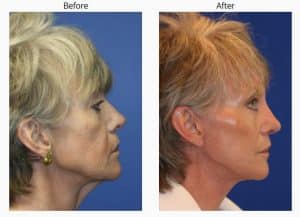
Traditional Neck Lift and Face Lift surgery can be performed as stand-alone procedures or together at our New York facial plastic surgery office. In fact, surgeons look at them as sister procedures, as they both address the lower half of the face, the chin, neck, and jowls. But which is right for you?
A Tale of Two Chins
It depends on the patient’s unique cosmetic issues and desired results whether he or she decides to get a neck lift, face lift, or combination procedure.
The traditional neck lift resolves the related problems of a “double chin” and “turkey neck” by surgically removing the excess loose fat and skin on the neck. The neck muscles are then tightened and lifted to reduce sagging and “banding.” Excess fat is removed using liposuction as an adjunct procedure. To learn more about neck lift, visit clinicaltrials.gov
Two Procedures: Same Difference
Lower face lift surgery, like the popular neck lift, addresses more pronounced cosmetic issues with the chin and jowls as well as the lower cheek area. Its focus is on the middle and lower face to eliminate excess fat and skin on the cheeks, jaw line, and nasolabial folds. These are age-related deep lines which form on either side of the nose when the skin has lost a sufficient supply of collagen to keep the facial skin moist and supple. The deeper the nasolabial folds, the older one’s facial appearance.
Neck Lift vs Face Lift: Which One to Choose?

Challenges of a Dual Facial Plastic Surgery Procedure
The basic distinction between the two procedures is that the neck lift improves the appearance of the lower jaw line and neck, while the lower face lift focuses on the lower third of the face and neck. Though both procedures can be performed in isolation, there is a large degree of overlap which makes them an excellent dual procedure.
In fact, some plastic surgeons see no difference in either procedure and consider them to be one and the same in terms of results. Both correct the problem of excess fat in the neck and jaw line leading to the appearance of vertical lines – Granny Lines – from the chin to the chest. They also remove droopy jowls as well as tighten and smooth the jaw line for a rejuvenated look.
Whichever procedure you choose to have done, be sure to talk with a board certified facial plastic surgeon in personal consultation. This will help you better define – and refine – your cosmetic goals and anticipated results.
Dr. Philip Miller is a board certified facial plastic surgeon with offices located at 60 East 56th, Third Floor, New York, N.Y. Call (646) 791-3025for a personal consultation.
Next, learn How to be a Great Candidate for a Facelift