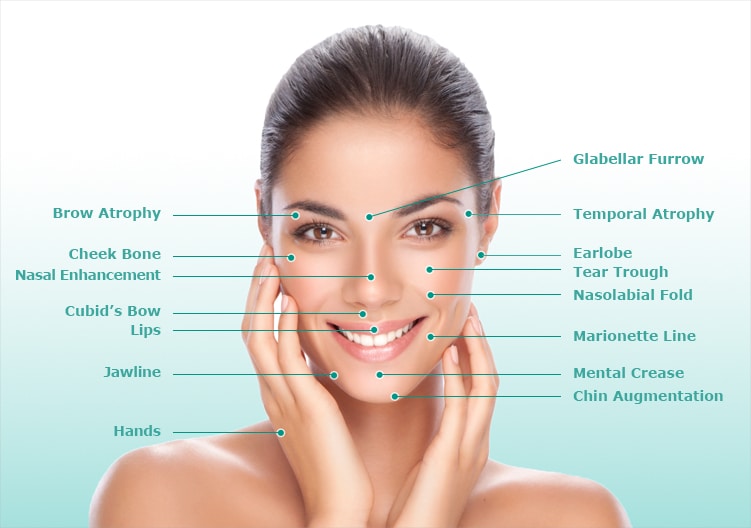
Wrinkles and volume loss are some of the most common signs of facial aging. As people age, their skin naturally produces less collagen and elastin, resulting in fine lines, loose skin, and hollows in the temples, cheeks, and under eyes. Philip J. Miller, MD, FACS, located in New York City, offers a wide range of minimally-invasive solutions to wrinkles and volume loss, such as injectable neuromodulators and dermal fillers.
Read More
Botox® — or Botulinum toxin
Unlike popular fillers or “volume” treatments such as Radiesse, Restylane, or Juvéderm that boost or inflate an area where there is a wrinkle or depression, Botox relaxes the muscles pulling on the skin to form the wrinkle. Botox is superior to dermal fillers for minimizing frown lines, horizontal furrows on the forehead known as surprise lines, and crow’s feet around the eyes. It can also be used around the lips, on either side of the nose, or on the bands of the neck. Other advantages of Botox are that it causes no allergic reactions so no test dose is required, and there is no recovery period required after the injection. Finally, those with needle anxiety can relax because the needle used for Botox injections is finer than a strand of hair.
Dermal Fillers: Restylane, Radiesse, Juvéderm
The reality is that not every skin problem can be improved with facial plastic surgery, chemical or laser peels, or even Botox. Examples of these skin problems could be the following: (1) The crease between your eyebrows or the furrow formed at the corner of your mouth is too deep; (2) You might have a small crease between the corner of your mouth and chin (known as the jowls) causing you to look angry all of the time, or (3) You might have persistent frown lines or crow’s feet that cannot be resolved with Botox.
While certain operations may improve these, the recovery time and expense may be more than you are willing to invest at this point. A reasonable alternative is to “inflate” a depressed or wrinkled area with a dermal filler.
There are pros and cons to each volume enhancer. Which one is right for you? Here is a brief introduction to the products.
Radiesse
Radiesse is a longer lasting method to reduce the appearance of facial lines and folds. The injectable product can last for a year or so and has shown little to no allergic reactions or other side effects attributed to other injectable methods. One of the most recent FDA-approved products for the treatment of facial “deflation” or wrinkle reduction that we offer at our Manhattan office, Radiesse, consists of calcium hydroxylapatite (a derivative of human bone) mixed into an easy-to-use-gel foam. Studies have shown that Radiesse remains soft for long periods of time when injected into the soft facial tissue. This is the preferred treatment for nasolabial lines, which are the wrinkles or furrows that form from the side of the nose to the side of the mouth.
Restylane and Juvéderm
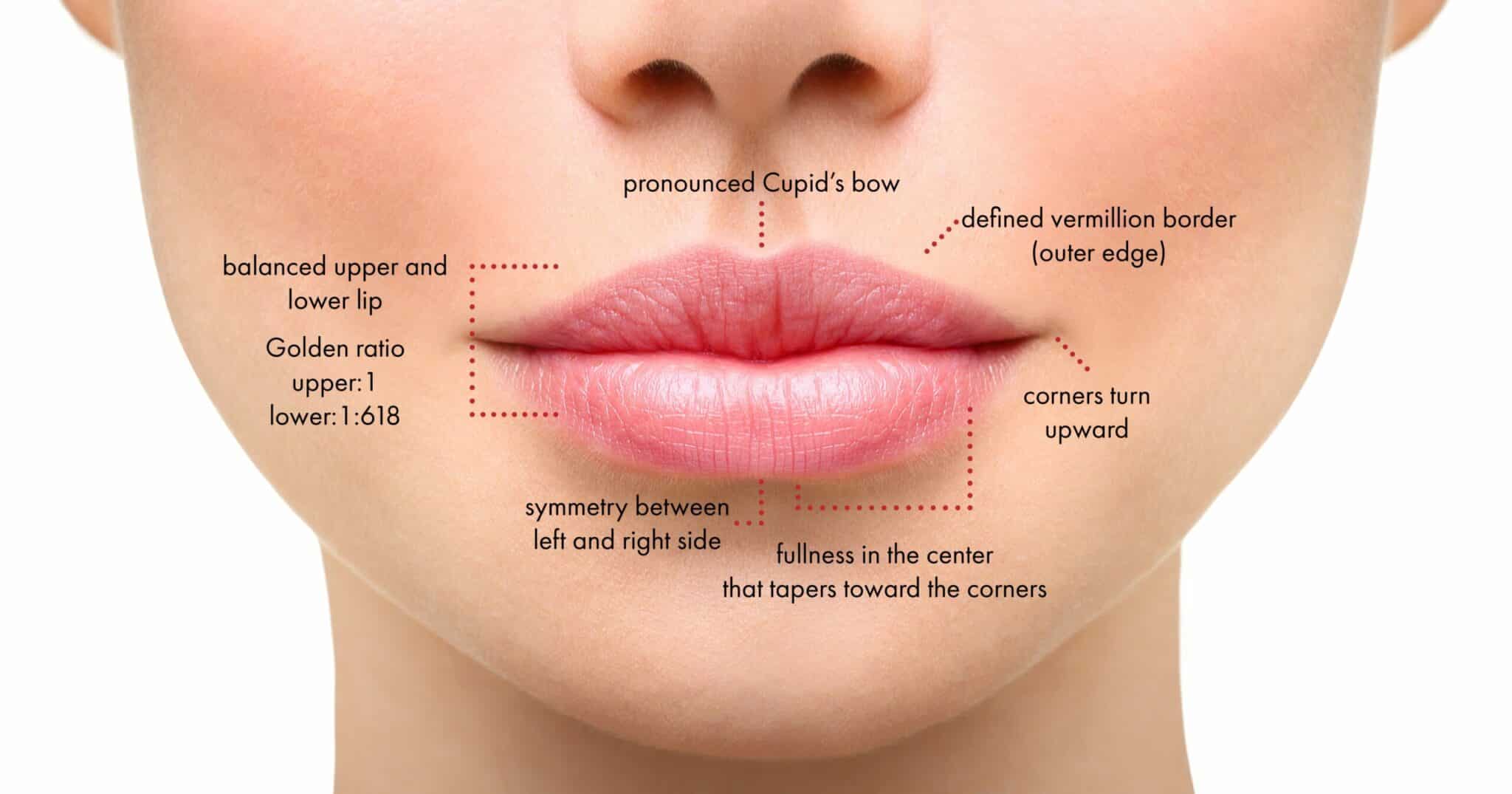
Known as the most common injectables, Restylane and Juvéderm, last 6-8 months. They are made of a purified form of hyaluronic acid, a material that is naturally found in the body. Restylane and Juvédermwork well for lip enhancement and as brow and fine wrinkle solutions. Some options available include Juvéderm Voluma, Vollure, and Volbella, as well as Restylane Lyft and Kysse.
To learn more about dermal fillers, visit www.fda.gov
Volume Enhancement
Sagging skin is not the only consequence of aging. Not only does facial skin sag with time, but facial fat also deflates similar to a balloon stuck with a pin. Before realizing the role of deflation in the aging process, we’ve done facelifts to pull the loose skin. Sometimes the results are good, but sometimes the skin looks stretched and unnatural. Two solutions to the deflation problem are Sculptra and fat injections.
Sculptra
Sculptra works much like a seed. After it is injected, it looks great for a day. Then, the volume goes down by the next morning. Over the next weeks or months, your body stimulates collagen volume in response to those “seeds.” The result is a gradual and increased inflation of depressed or hollow areas. 2 or 3 treatments are often necessary. Sculptra contains poly-L-lactic acid and is injected into the face after it has been anesthetized with a cream.
Fat Injections
Fat injections use your own fat from the inside or outside of your leg or your belly to provide volume enhancement to the face. Fat is harvested, washed with saline, and reinjected into the areas of the face that need inflation. There is some controversy regarding how long transplanted fat survives. As a result, you should be prepared to received multiple treatments. Also, fat injections produce the best results when combined with surgical procedures; they cannot be used alone to cure all facial aging problems.
Intense Pulse Light Therapy/PROLITE
Specifically designed for patients suffering from rosacea and other skin discolorations, Intense Pulse Light Therapy (IPL) or ProLight Facial technology helps eliminate redness and pigmentation discolorations from sun damage. The treatment is performed by a gentle light pulse that is delivered to the skin over several 15 to 30-minute treatments which are administered in three-week intervals. Between 4 and 6 treatments are necessary to achieve desired results. Diminished (or disappearing) redness, dark spots, and discolorations occur as well as reduced pore size. Equally beneficial is that little or no bruising occurs with this treatment, and there is no recovery period.
Before and After Photos
*Individual patient results can vary
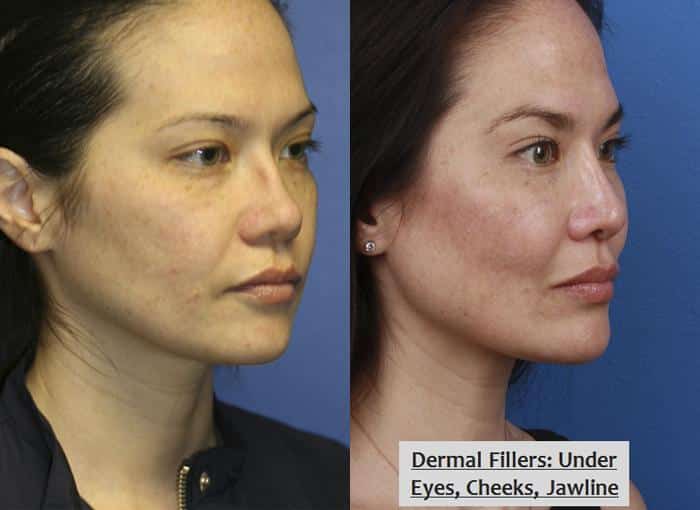
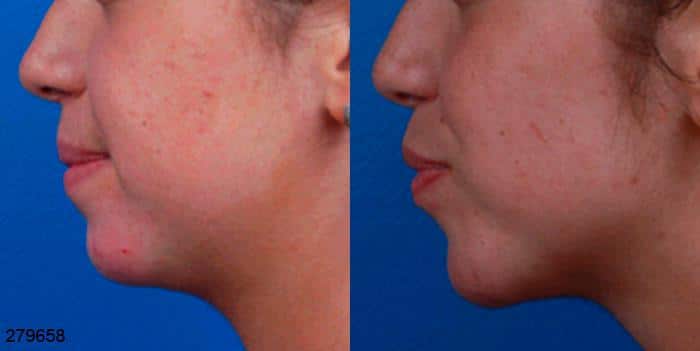
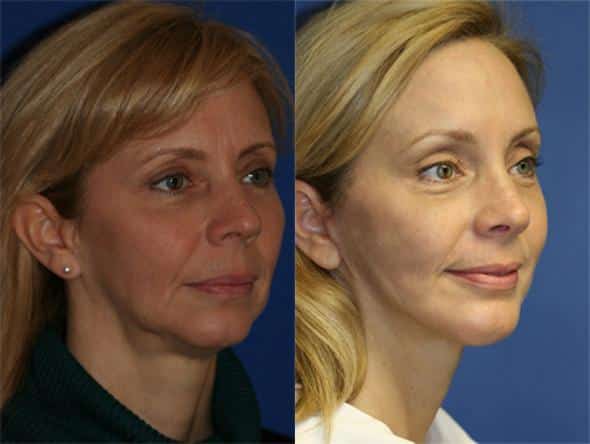
Before and after of a woman who received dermal fillers under the eyes, in the cheeks, and around the jawline
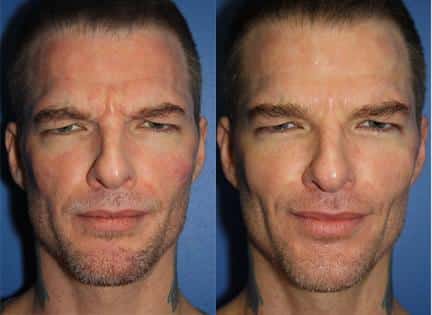
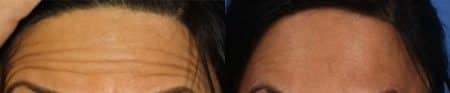
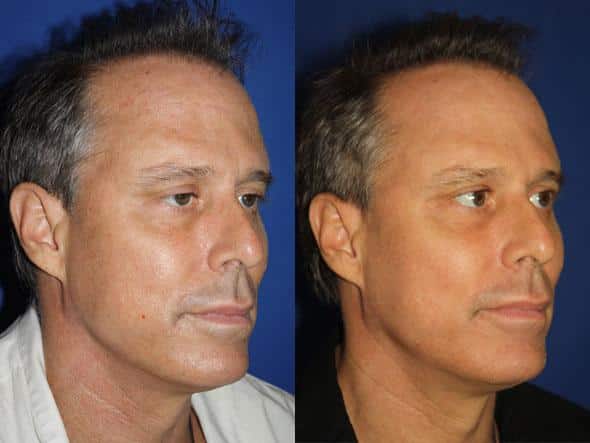
Before and after of a male who received Botox injections for horizontal forehead wrinkles
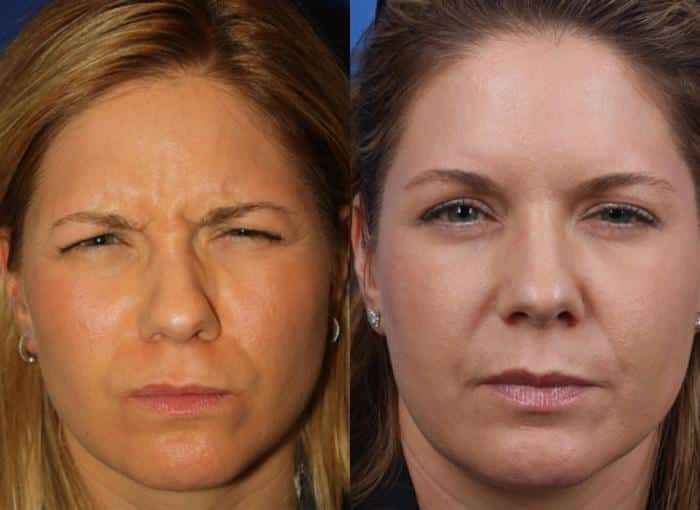
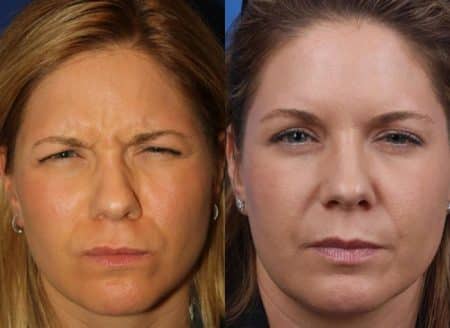
Before and after of a woman who received Botox injections to treat glabellar lines
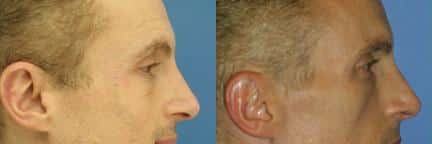
Before and after of a male who received Botox injections to treat crow’s feet
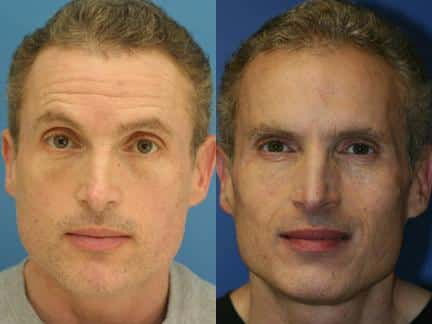
Before and after of a male who received Botox injections to treat glabellar lines
Before and after of a patient who received Botox injections to treat smile lines
Contact our New York-based Professionals.
Contact Dr. Miller and his team of skin specialists in New York to learn about the latest and most effective wrinkle treatments. Before recommending treatment, Dr. Miller will work will you to create a customized treatment plan through the NatraLook® Process. Utilizing various injectables, Dr. Miller can restore facial volume, reduce deep wrinkles, and help rejuvenate and lift the face.
Fine lines and wrinkles, which are usually the first visible sign of aging, can make people feel older and less attractive. They can also give a false impression that a person is angry, sad, tired, or fatigued when they actually are not. Botox® injections are a safe and simple non-surgical solution to reduce or eliminate fine lines and wrinkles. Dr. Philip Miller is a double board-certified facial plastic surgeon in New York, NY, who helps countless patients look younger using Botox.
Read More
What is Botox?
Botox is an FDA approved neuromodulator treatment for frown lines and crow’s feet. It works by blocking nerve impulses to the facial muscles responsible for certain fine lines and wrinkles called dynamic wrinkles. The medication is administered via injection in 3-4-month intervals. Following Botox injections, the skin appears smoother and less wrinkled.
The Botox Injection Procedure in New York City
The procedure starts by making the patient as comfortable and relaxed as possible. No IV sedation or anesthesia is required. After the skin is cleaned and prepped using a special solution, a tiny needle is inserted into muscles beneath wrinkled areas and Botox is administered. Total procedure time lasts approximately ten minutes. The procedure is best performed by an experienced physician who understands the aging processes of the face.
The Recovery Process
In most cases, patients are allowed to immediately return to activities as normal. It is possible that temporary bruising may occur near the injection site. Patients who wish to cover bruising may easily do so using makeup. Smoother, less wrinkled skin may be seen in as little as 24-48 hours and may last up to 4 months.
Good Candidates for Botox Injections NYC
Healthy men and women who want to look more youthful by improving the appearance of their fine lines and wrinkles are good candidates for Botox injections. A positive mindset and realistic goals are also important qualities of a good candidate.
Botox Before and After Photos
*Botox injections to reduce glabellar (frown) lines in a female patient by Dr. Miller.
*Botox injections to reduce glabellar (frown) lines in a female patient by Dr. Miller.
*Botox injections to treat forehead wrinkles in a male patient by Dr. Miller.
A consultation with Dr. Miller includes the following:
A thorough medical history review
A physical examination of your face, in which Dr. Miller may take pictures for review
A discussion regarding goals, expected results, and alternative treatment options
Dr. Miller will also answer any questions and address any concerns you may have.
Manhattan Botox FAQ
Q. Will people be able to tell that I have had an injection?
A. Botox injections should always be administered by a board-certified physician with extensive experience with cosmetic treatments. A physician who knows how to perform the procedure can do so without any noticeable signs occurring afterward.
Q. Do the injections hurt?
A. Proper precautions can be taken to ensure minimal pain or discomfort occurs after the tiny needle prick. The area can be numbed prior to the procedure using a topical anesthetic. Ice can be applied after the injection. In most cases, patients report only feeling a pinch.
Q. Are there risks associated with the procedure?
A. Botox injections are generally safe. There is a minimal chance of bruising, pain, infection, and temporary facial weakness and drooping.
Q. Are results permanent?
A. The results of neuromodulator treatments are temporary. They do last longer in some patients than others and can be maximized by caring for and protecting your skin after the procedure. Also, non-smokers generally experience longer lasting results.
Q. Is there anything I should avoid doing after the procedure?
A. Pressure may move the medication from its intended area. For this reason, you should avoid the following:
Rubbing or massaging the injected area for six hours after the procedure
Bending, kneeling, or stooping excessively for twenty-four hours after the procedure
You should also avoid drinking alcohol for 24 hours.
Q. Is Botox FDA approved?
A. Botox is the only FDA approved treatment to improve the appearance of frown lines between the brows and crow’s feet lines.
Q. What is in Botox?
A. Botox contains botulinum toxin type A, a toxin produced by the bacterium Clostridium botulinum. As previously mentioned, the toxin blocks nerve impulses to the facial muscles.
Q. Can men use Botox?
A. Clinical studies have shown that Botox can be effectively used by men and women. As the trend amongst men having plastic surgery continues to increase, so does the popularity of Botox injections in the male patient population.
Q. At what age should I start Botox injections?
A. There is no set age to begin using Botox injections. The decision to receive treatment is an individual one. Some of the factors that may influence your decision include the following:
Your aesthetic goals
Your skin quality
The progression of aging
The opinion of the physician treating your condition is also very important.
Q. What is the difference between Botox and fillers?
A. There are two types of wrinkles. Dynamic wrinkles are those that occur due to the use of facial muscles. Static wrinkles are those that are seen when the face is at rest. Botox treats dynamic wrinkles while static wrinkles are treated using fillers. By filling in the wrinkled skin with gel, fillers help the skin appear full and plump.
Q. Can Botox injections be combined with other procedures?
A. Botox Injections can be combined with other procedures, including but not limited to the following:
And, in some cases, fillers may be combined with Botox as well. The combination of procedures can be a great way to enhance facial appearance and maximize results.
Q. How many times can I have Botox injections?
A. There is no limit. However, treatments should be spaced out over the course of 3-4-months and should only be administered by an experienced, qualified physician.
Q. Does Botox ever stop working?
A. Patients generally do not develop resistance to Botox. However, it is important to space out injections to avoid muscle atrophy.
Q. When should I think about having surgery?
A. Patients looking for a permanent fine line and wrinkle solution may find one in any of the following procedures:
The decision to undergo surgery is an important one that should be made based on your goals and discussions with a board certified plastic surgeon.
Q. Can I get Botox injections if I am pregnant?
A. Women who are pregnant, hoping to get pregnant or breastfeeding should not get Botox® injections.
Q. Are Botox parties safe?
A. Botox should only be administered in a medical setting by a trained and experienced board-certified physician.
Q. How do I know if Botox injections are right for me?
A. The best way to definitively know is to make an appointment with Dr. Miller. His knowledge and experience will help determine if Botox injections are the right treatment option for your condition.
Q. Can I discuss other treatment options with Dr. Miller?
A. Of course! Dr. Miller has over twenty years of experience in facial plastic surgery. He will gladly go over any and all available treatment options with you.
Q. Will Dr. Miller take before and after photos?
A. If you would like before and after photos for comparison purposes, Dr. Miller will take them for you.
Q. What should I bring to my consultation appointment?
A. You should bring the following:
A list of medications you are currently on
A list of medications you are allergic to
A list of questions and concerns
If you would like to bring photographs for comparison purposes, you may do so.
Schedule a Botox Appointment in New York City
Dr. Miller has helped thousands of patients using Botox injections in his New York City office. For more information, visit medlineplus.gov or contact us online to make an appointment.
Improving one’s appearance and body image can significantly impact self-confidence. For individuals with skin color loss, or de-pigmentation, medical corrective tattooing can help. De-pigmentation may occur for a variety of reasons. Medical procedures, trauma, burns, congenital anomalies, and skin diseases can all lead to pigmentation irregularities. While many scars and skin abnormalities can be improved with medical treatments and surgery, skin color may still need to be addressed in order to recreate a “normal” appearance.
Read More
Understanding Skin Camouflage and Scar Camouflage
Skin camouflage and scar camouflage refer to the process of tattooing the skin using different shades of flesh tone pigments with the goal of disguising a scar or pigment irregularity. This form of medical or paramedical tattooing is considered a specialized form of cosmetics. You may find it referred to by a number of other names, such as Corrective Pigment Camouflage (CPC), Skin Repigmentation, Scar Camouflage, Corrective Camouflage, Skin Camouflage, Skin Color Tattooing, and Camouflage Tattooing. Scar and skin camouflage requires a specialist with a thorough understanding of the science behind pigments and the physiology of human skin and tissue, as well as advanced knowledge, training, skills, and experience in cosmetics and an artistic eye for color.
Candidates for Skin Color Repigmentation
Not all individuals with scars or skin abnormalities are candidates for skin repigmentation. The best candidates are generally those with scars that meet the following criteria:
Healed. Scars should be healed, at least 9 to 12 months old, with stable color and no be still be healing and premature tattooing may lead to additional skin damage. An experienced, reputable medical tattooist will not work on scar tissue prematurely. If you are wondering whether you may be a candidate for skin color repigmentation, your physician may be able to advise you.
Smooth, flat appearance. Issues with skin texture generally cannot be addressed with camouflage tattooing. For this reason, bumpy or raised scars may not be appropriate for treatment. The best scars for treatment are smooth and relatively flat. There are treatments available which may be able to first improve the skin texture before undergoing camouflage tattooing.
Free of dark edges. Scars with dark edges or borders may be indicative of post inflammatory hyper-pigmentation (PIHP) resulting from trauma or surgery. Increased hyperpigmentation and wider, darker borders may result from the camouflage tattooing process, though this tends to be more common among those with darker skin tones.
Some skin and pigment abnormalities are not good candidates for treatment with skin color repigmentation. These include port wine birthmarks, spider veins, freckles, age spots, under-eye circles, hyperpigmentation, and unstable vitiligo. These conditions may be improved with other treatments such as laser therapy, sclerotherapy, or chemical peels. A consolation can help to determine the best treatment for you.
Candidates for camouflage tattooing must have realistic expectations and understand that treatment cannot completely restore the skin to its pre-injured state or fully erase the scar or abnormality. The goal of camouflage tattooing is to improve upon color differences to help disguise the imperfection. Patients who spend time tanning may not be satisfied with their result as the tattooed skin will not darken like the surrounding skin when exposed to sunlight or tanning booths. The results of camouflage tattooing take time and may require more than one session.
As seen on The Doctors and Dr. Oz, the Pellevé Wrinkle Reduction System safely and effectively delivers skin tightening and firming results via a series of non-invasive, radiofrequency based treatments.
Pellevé can be used to firm the skin around the eyes (crows feet, under eye wrinkles and lax skin), cheeks, jowls, lines on the forehead, nasolabial folds, and wrinkles around the mouth, and the best results are achieved in mildly to moderately wrinkled and lax skin. Patients see improved skin quality, firmness, and a tighter appearance.
Read More
The Pellevé technology works by heating layers of the skin just enough to stimulate collagen changes without damaging the top layer or epidermis. Patients experience a deep warming sensation which feels like a warm facial massage which is virtually painless. The results are immediate in most cases and can last up to six months or longer, and a series of 3 treatments are recommended. Pellevé treatments in our New York City office take approximately 30-60 minutes, based on the size of the area being treated. Because Pellevé does not require anesthesia or downtime, it fits easily into your busy schedule.
Pellevé Results
Measurable and immediate improvement:
Visible and lasting effects in nearly all patients
Better skin quality and reduction in skin laxity
Safe and effective:
Non-invasive
No anesthetic required
No skin cooling needed
Minimal discomfort
Minimal side effects
To learn more about how Pelleve works and the technology behind it, visit www.pelleve.com
The Eclipse MicroPen™ is a new innovation in aesthetic medicine now offered in our Manhattan surgical office for the treatment of fine lines, acne scars, and improvement of the skin’s overall appearance.
During this procedure, tiny needles are used to create controlled micro-injuries to the skin in order to produce collagen and elastin. The skin’s repair process results in a thicker dermis with the appearance of softer wrinkles. Eclipse MicroPen™ also creates superficial micro-channels which allow topical gels, creams, and serums to be absorbed more effectively into the skin.
Read More
What are the Benefits of the MicroNeedling Procedure?
The benefits of micro-needling are a reduction in the appearance of fine lines and wrinkles, younger-looking skin with fewer signs of aging. Eclipse MicroPen™ also has a positive effect on hyperpigmentation as well as on hypo-pigmentation, acne scars, traumatic scars and stretch marks and generally creates a fresher appearance or glow to the skin.
To learn more about MicroPen and the process of micro-needling, visit www.ncbi.nlm.nih.gov
Wet/Dry Microdermabrasion
Wet/Dry microdermabrasion combines crystal free microdermabrasion, vacuum technology, and strategic product infusion to provide a gentle and effective exfoliation that leaves skin visibly soft, radiant, and glowing.
The microdermabrasion with product infusion is perfect for all skin types and is specifically designed for dull skin, age management, fine lines and wrinkles, mild to moderate blemishes, skin smoothing, and hyperpigmentation. Contact our New York City office to schedule a consultation today.
Dr. Philip Miller is very proud to offer the newly FDA approved Kybella, a non-surgical injectable treatment to eliminate double chin fat. The procedure is available in his office in New York City. Kybella, also known as deoxycholic acid, is available in a non-invasive injectable procedure for adults who have moderate-to-severe fat deposits below the chin area. This type of fat is known as submental fat. Dr. Miller is now able to treat his New York City patients with Kybella and eliminate double chins without surgery.
What is Kybella?
Kybella is a version of deoxycholic acid, promises to melt away chin fat. It uses a naturally-occurring molecule in the human body to aid in the breakdown of normal dietary fats. Until now, the only way to eliminate double chin fat, also known as submental fullness was with the surgical procedure liposuction. However, liposuction is considered an invasive surgical procedure and usually requires that the patient remains in the hospital to heal. Kybella, offered in injectable form, offers a safe, non-invasive alternative.
Read More
Manufactured by Kythera Biopharmaceuticals, Kybella is injected into the patient’s chin with a very precise needle. The injected Kybella immediately begins to destroy the membranes of fat cells. Any remaining part of the fat cell is reabsorbed into the patient’s body. Similar to Botox, Kybella treatments involve 10-20 injections at each visit. The total visit only lasts approximately 15 minutes in Dr. Miller’s New York City office.
Before and After of Kybella treatment to reduce fat cells under the chin
*Patient results may vary.
The secret behind Kybella is its ability to burst the fat cells and destroy them without affecting the surrounding cells. Fat is not melted but the membranes of the fat cells are broken allowing the contents to reabsorb into the patient’s body. The injection of Kybella actually disrupts the fat cell membranes.
Why Have Double Chin Fat Removal with Kybella
Double chin fat is one of the most difficult types of fat to lose. Because the fat deposits lie comfortably in sags of loose skin, even if the fat is lost, the skin stays behind. For centuries, men and women have struggled with ways to lessen the inevitable sag of chin fat due to time, gravity and being overweight.
The most common way to remove double chin fat before Kybella had been with liposuction – a surgical procedure. The patient would be admitted, have the surgery and remain in the hospital for several days for observation. The result would be scars, bruising and extreme tenderness. However, now with Kybella, all of that can be avoided.
Kybella is performed in an outpatient procedure in the physician’s office. The patient receives minimal prep work before the procedure. The physician administers approximately 10-20 injections of Kybella directly into the double chin fat area. Kybella immediately begins to work, breaking down the fat cell walls to allow the fat to redistribute into the patient’s body for easy absorption. The patient goes home the same day with minimal tenderness and mild to no scarring of any kind.
Before and After of Kybella treatment to reduce fat cells underneath the chin *Patient results may vary.
Double Chin Fat Removal with Kybella Treatment
Having double chin fat removed with the Kybella treatment is a low-risk effective procedure that will easily and quickly replace liposuction as the procedure of choice for double chin fat removal. People looking to get rid of double chin fat won’t have to resort to dramatic procedures like liposuction to regain the beauty of their younger years.
For some patients, removing double chin fat is not just a matter of vanity; it can actually present a health risk if the skin and tissue are left lying on the neck area or rub/chaff the area on a regular basis. Many patients experience soreness and even develop rashes and open lesions from large amounts of fat in the chin area. With Kybella as an option, patients are able to visit the physician as an outpatient and receive 10-20 injections that will immediately begin to break down the fatty cells and eliminate the double chin fat altogether.
Are You a Candidate?
Because fat cells are destroyed, the result will be loose, sagging skin. The ideal candidate for the Kybella injection procedure would have very supple, elastic skin that could recover from such a procedure. Patients who have a lot of extra skin would not really be best suited by this procedure. There are other options for patients who might need a more extensive treatment plan. Kybella patients will lose the fat cells that are filling up the excess skin under the chin. Once the fat is dissolved, the ideal skin would be extremely elastic and resilient, allowing it to shrink appropriately after the procedure.
Schedule a consultation with Dr. Miller to find out if you are a candidate for this new FDA-approved double chin fat removal treatment in New York.
FAQ
Q. How long will the procedure last?
A. Normally, the procedure only lasts about 15 minutes. The physician will administer 10-20 injections into the chin area in strategic places to ensure even distribution of Kybella. The fat cells will immediately begin to break down for re-absorption into the body.
Q. What can I expect after the procedure?
A. Patients can expect minimal bruising, minor pain and some numbness in the actual areas that are injected. Some patients report minor swelling as well. If these symptoms become troublesome, discuss them with your doctor for possible short-term remedies.
Q. Are there risks?
A. As with all surgical procedures, rarely more serious side effects do occur. One particular risk is an injury to the marginal mandibular nerve located in the lower neck area. If the nerve is injured, the patient could experience permanent loss of control of facial expressions on that side of the face resulting in an uneven smile. This is why choosing a trained, skilled physician is critical. The FDA has clearly mandated that only trained licensed healthcare professionals knowledgeable in the procedure are allowed to administer the Kybella injections. Learn more about possible risks at fda.gov.
Q. How soon can I return to work?
A. One of the great aspects of Kybella is the minimal recovery time. Patients are usually able to resume all normal daily activity immediately following the treatment. There is an inflammatory reaction immediately following the injections. Healing usually takes two to three days under normal circumstances.
Kybella Treatment in New York
As always, if your primary concern is weight loss, the ideal method for achieving this goal would be by eating a balanced diet and getting plenty of exercise. However, for many, a targeted removal of fat cells is necessary. Don’t wait any longer. Contact Dr. Philip Miller to schedule a consultation in his New York City office today.
Fractora™ laser skin resurfacing is an advanced anti-aging treatment which can rejuvenate the facial skin for a more youthful, radiant glow. Fractora uses fractional radiofrequency technology to ablate and resurface the skin, providing a significant improvement in the skin tone and texture.
This procedure can address common skin conditions like fine lines and deep wrinkles, redness, brown spots and other pigmentation issues, poor texture, and visible blood vessels. In the past treating this many conditions would require multiple treatments, but now Fractora can treat all at once at our New York City skin surgery center. Fractora is ideal for treating the upper and lower eyelids, smiles lines, mouth, cheeks, and neck.
Read More
What is Fractora Firm?
Fractora Firm is an advanced skin rejuvenation treatment that uses thermal energy to heat deep beneath the skin, tightening the skin and promoting collagen production. This is a safe, non-invasive treatment that can be used in all areas of the face and body to improve loose or sagging skin for a firmer appearance. There are two configurations of treatment, Fractora Firm and Fractora Plus which has a larger handpiece. Both are designed with built-in safeguards for precise thermal heating and optimal skin contraction without any risks of overheating the skin. More information on laser skin resurfacing can be found at ncbi.nlm.nih.gov
Schedule a Fractora Laser Skin Consultation in New York
Dr. Miller is a renowned facial plastic surgeon located in New York City. He performs the Fractora Firm and Fractora Plus treatments at his JCAHO accredited office-based facility. Treatment is quick and easy with few side effects and little to no downtime. To learn more about Fractora or Fractora Firm or to schedule a consultation with Dr. Miller, contact us today.
As people age, the skin begins to show the effects of sun damage, becomes looser and develops textural changes. Luckily, there are many treatments available that can improve the look and feel of your skin. CO2 resurfacing lasers are one of the newer types of lasers available to treat wrinkles and other skin problems. Here’s what you need to know about CO2 resurfacing laser treatment.
CO2 resurfacing is a type of laser treatment offered at Dr. Philip Miller’s New York office. Sometimes called”pixelated” lasers because the laser creates many microscopic (microdot) treatment areas, CO2 Resurfacing lasers have a longer wavelength than other lasers on the market. The longer wavelength means it can be used on darker skin types; conventional lasers are less effective on dark skin. Fractionating the laser beam splits it into thousands of tiny shafts of intense light. Each shaft penetrates into the deeper layers of the skin.
To heal, the body pushes old, damaged skin out of the shaft and replaces it with new skin. Because the shafts are very small and close together, the skin surface is smoother and has a better appearance than that achieved with other laser treatments.
Read More
Why Undergo CO2 Resurfacing?
Before and After of CO2 Laser Resurfacing to rejuvenate the skin
CO2 Resurfacing lasers are typically more effective in treating acne scars, blotchy skin, deeper wrinkles and scars from surgery or trauma. They also produce better results when the skin has severe textural changes including pigment abnormalities from sun damage. The laser affects the deeper layers of skin and helps to tighten or shrink collagen, which becomes loose as people age.
CO2 resurfacing lasers can be used in areas where the skin is delicate, such as on the eyelids and around the mouth. This type of laser is also used to remove precancerous growths called actinic keratoses. Although it is primarily used on the face, it can also be used – by an expert operator only – in areas like the chest, neck, arms, and legs. Patients who are careful about skin care and sun protection may find CO2 resurfacing laser treatments are effective for several years.
What is the CO2 Resurfacing Procedure Like?
Although the procedure itself takes about an hour, you should expect to arrive about 45 minutes before your treatment. Your skin must be thoroughly cleansed. Numbing cream or gel is applied to reduce discomfort; it takes about an hour for the full numbing effect. The numbing medication is then removed. Your eyes will be protected during the procedure. If you are having the eyelids treated, special protective contact lenses are inserted after numbing eye-drops are placed in the eyes.
The hand-held wand or device is moved slowly over the treatment area. Some physicians use a treatment called a Zimmer cooler, which blows a strong stream of cold air onto the treatment area to help reduce any discomfort. Anti-inflammatory medications may also be helpful. Most patients describe the actual treatment as causing pins and needles feeling. Most people are able to drive themselves to and from their treatments.
Are You A Candidate?
Before and After of CO2 Laser Resurfacing to rejuvenate the skin
The best candidates for CO2 resurfacing laser treatments are people in their late 40s to 70s who have moderate to severe acne scarring, wrinkles or sun damage. If you take medications that may increase sun sensitivity or anticoagulants (blood thinners) you may not be able to have the procedure.
CO2 resurfacing treatments are not recommended for women who are pregnant or for people who have a history of healing problems or excessive scarring. Patients who have taken the medication Accutane within the last year and those who have had chemotherapy should not have CO2 resurfacing treatments. CO2 resurfacing lasers are not effective in removing redness from dilated blood vessels or similar kinds of discolorations. Patients with darker skin types (Fitz 4 and up) are not suitable candidates for this procedure.
A: The procedure itself lasts about an hour and takes place at our New York City center, but additional aspects such as numbing and cleansing add to the time. Plan on a total time of about two and half hours. Some people need more than one treatment – it really depends on how much time you need to have for recovery.
Q: What can I expect after the procedure?
A: Immediately after the procedure, you can expect to look and feel as though you have a sunburn. Ice packs can help relieve any discomfort. The skin will peel for up to a week after the treatment. Occasionally patients develop minor bruising, which can take about two weeks to resolve. The full results of the procedure won’t become visible for three to six months. You will notice some immediate effects, such as less blotchiness. The skin will feel smoother; it will tend to be pinker than usual for about four to six weeks.
Q: Are there risks?
A: No medical procedure is totally risk-free. Mild pain is normal for the first day or two and redness lasts up to two weeks after the procedure. Rarely, it may last longer, especially in those people who blush easily or have dilated blood vessels on the surface of the skin. Your skin will be more sensitive to the sun for about four to six weeks after the procedure. Some people develop skin crusting as well as peeling. Occasionally people with darker skin may develop pigmentation changes (lighter or darker skin). These changes usually fade after three to six months, although on rare occasions that change is long lasting. Temporary swelling occurs in some patients, and very rarely, the treatment will cause scarring or an infection will occur.
Q: How soon can I return to work?
A: You should definitely plan to take the rest of the day off, as you will need to ice the treated areas. CO2 Resurfacing laser treatments can be customized – deeper treatments mean longer downtime for healing. Two shallow treatments may be equally effective and the healing time for each treatment is shorter. It takes three to 14 days for the skin to heal. For lighter treatments, expect three to five days of downtime, and for deep treatments, plan on seven to 10 days. If you are having the treatment performed for a special occasion like a wedding, allow at least two to four weeks of recovery time (longer for sites like the arms and legs).
Contact Dr. Philip Miller Today to Schedule a Consultation
Your skin is a barometer of health and greatly affects your appearance. CO2 Resurfacing laser treatments can make a big difference and there is no reason to look older. If you have questions or want to schedule an appointment in our New York City office, please call (646) 791-3025 or fill out this contact form.
When considering facial rejuvenation and body sculpting, plastic surgery isn’t the only option. Men and women today are now choosing from many non-invasive treatments that promise similar results to surgical procedures without general anesthesia or downtime. Whether your goal is to erase signs of aging such as lines and wrinkles, uneven skin tone, and sagging skin, or to reduce unwanted fat and improve facial and body contours, Dr. Miller can utilize injectables, radiofrequency devices, lasers, and ultrasound to give you a natural “lift.”
These are the non-surgical procedures and treatments performed by Dr. Miller in New York City.
Read More
Available Injectables at our Medical Spa
Neuromodulators
Neuromodulators are wrinkle-relaxing injections of botulinum toxin that smooth away lines and wrinkles to create a refreshed, more youthful look.
Botox
Botox works to relax the facial muscles and diminish wrinkles around the eyes (crow’s feet) and smooth out creases between the eyebrows or from across the forehead. It can also be used around the lips, on either side of the nose, or on neck bands. Following a treatment, the skin will appear smoother and naturally more youthful.
Jeuveau helps to erase dynamic wrinkles on the forehead and around the eyes by relaxing the muscles that cause them. As the muscles relax, so does the skin, resulting in a smooth facial appearance that conveys confidence and energy.
Dermal fillers are gel-like substances that are injected beneath the skin to fill in wrinkles, soften creases, restore lost volume, or enhance facial contours.
Juvéderm
The Juvéderm collection of injectable fillers are made from Hyaluronic Acid (HA) –a natural substance within the skin that delivers nutrients and helps the skin retain its moisture, softness, and volume. When injected, Juvéderm will replace lost volume in specific areas of the skin, helping patients achieve smoother skin and new facial contours.
Neuromodulators and dermal fillers can work in tandem to restore a more youthful look. By utilizing various injectables, Dr. Miller can reduce deep wrinkles, restore facial volume, and help rejuvenate and lift the face without the need for surgery.
Learn more about Wrinkle Treatments and Dermal Fillers at FDA.gov
Available Facial Lasers at our New York Medical Spa
CO2 Laser Resurfacing
Also referred to as “pixelated” laser, CO2 laser emits a beam that splits into thousands of tiny shafts of intense light that penetrates into the deeper layers of the skin. As the skin heals, the body pushes old, damaged skin out and replaces it with new, healthy skin, resulting in a skin surface that is smoother. Although primarily used on the face to treat age spots, uneven skin tone, deep lines and wrinkles, scarring, hyperpigmentation, and melasma, CO2 laser resurfacing can also be used on the neck, chest, arms, and legs.
Excel V+ is the latest generation of high-powered, dual-wavelength lasers that feature a micro-pulsed energy delivery system that has incredible precision and power, effectively breaking apart the pigment in the deepest lesions without harming surrounding healthy skin. Excel V+ can be used for hair removal as well as to treat skin conditions such as rosacea, sunspots, spider veins, fine lines and wrinkles, enlarged pores, bruises, and acne scars.
Various lasers offered at Gotham Plastic Surgery provide patients with an advanced, minimally-invasive approach to rejuvenating the face and neck, or sculpting the body by reducing cellulite. Examples of laser treatments include Face-Tite, Fractora, Neck-Tite, and Tite-FX which have become ideal alternatives to a facelift, neck lift, or liposuction procedure.
Fractora uses fractional radiofrequency technology to resurface the skin, correcting common skin conditions such as fine lines and deep wrinkles, brown spots, redness, poor skin texture, and visible blood vessels. Fractora Firm on the other hand, is an advanced skin rejuvenation treatment that utilizes thermal energy to deeply heat beneath the skin, boosting collagen production and resulting in tighter skin.
The ultimate in exfoliation, microdermabrasion uses a multilayered skin-resurfacing device to gently unclog the pores and eliminate dead skin cells from the epidermis, restoring smooth and healthy-looking skin. It also serves as the perfect pre-treatment procedure for further facial treatments.
This micro-needling procedure reduces the appearance of fine lines and wrinkles, leaving patients with younger-looking skin with fewer signs of aging. It effectively treats hyperpigmentation, hypopigmentation, scars, and stretchmarks. And because the procedure helps create superficial micro-channels on the skin, topical serums and creams are better absorbed by the skin.
The latest innovation in anti-aging treatments, Pellevé effectively tightens and firms the skin via a series of non-invasive radiofrequency-based treatments. It can be used to firm the skin around the eyes, cheeks, jowls, forehead, and around the mouth. Patients see improved skin quality, firmness, and a tighter appearance.
Skin needling offers an alternative to chemical peels and lasers for skin rejuvenation. Instead of removing the top layers of the skin, the microscopic pin pricks created on the skin trigger the body’s natural wound healing process, as well as the production of new collagen. As new collagen is continually produced, lines and wrinkles are filled, and scars (e.g., acne and chicken pox) begin to fade.
Kybella is an injectable treatment that uses deoxycholic acid –a naturally occurring molecule in the human body that aids in the breakdown of dietary fats. It is an effective treatment for eliminating double chins without surgery.
More than 18 million people undergo cosmetic procedures each year. Dr. Philip Miller can provide you with a custom cosmetic treatment plan that includes a combination of minimally-invasive techniques and advanced procedures to help you achieve the Aesthetic Confidence® you desire. Contact Dr. Miller and his staff at his New York office today.
We use cookies to enhance your browsing experience, provide personalized content, and analyze our traffic. By clicking "Accept All Cookies," you consent to our use of cookies. You can manage your cookie preferences or opt-out at any time by clicking "Cookie Settings." For more details, read our Privacy Policy.