Rhinoplasty to improve the nasal bridge, one week post-op, by Dr. Miller
Challenges of the Male Facelift

Viva La Difference?
Why is it more challenging? The reasons are several. Men in general have thicker skin compared to women. And having thicker skin is necessary to support the growth of facial hair, which makes it even more necessary for there to be a richer, more nourishing blood supply to the face.
Other key differences between the sexes that exist can have a direct impact on the choice of surgical methods and incisional and suturing techniques used. For example, men have stronger ligamental supports, larger faces, heavier necks, and more vascular skin. The latter reason is why men generally bleed more profusely during cosmetic facelift surgery. As a result, there is an increased risk of post-operative hematoma. Conversely, the facial skin of a man is less prone to bruising and heals faster because it is thicker.
For men, the presence of facial hair requires that different surgical anchoring techniques be used to make sure that the sideburns and beard don’t shift from their normal position. Even more important, the surgeon must take special care not to leave the male patient with a feminizing result. The surgeon also must be careful when suturing the male patient to prevent noticeable scarring.
Because of their heavier neck and facial features men aren’t usually considered to be the best candidates for mini-lift procedures in which the best results tend to be found on female patients.
Real Men Do Have Facelifts
Physical differences aside, an estimated 20 percent of facelift patients are men and that trend is expected to continue well into the next decade. No longer is there a stigma associated with men having facelift or necklift surgery to improve personal appearance. But since there are important physical differences between the sexes, physicians are ever mindful of the “masculine side” to cosmetic facelift surgery.
Talk with a board certified facial plastic surgeon in New York to see if you might be a good candidate for a cosmetic facelift or other facial procedure.
Dr. Philip Miller is a board certified facial plastic surgeon with offices located at 60 East 56th, Third Floor, New York, N.Y. Call (646) 791-3025for a personal consultation.
Necklift vs. Facelift: Which is Right for You?
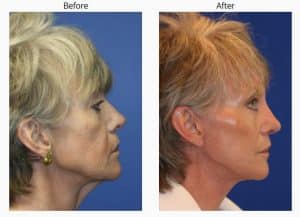
Traditional Neck Lift and Face Lift surgery can be performed as stand-alone procedures or together at our New York facial plastic surgery office. In fact, surgeons look at them as sister procedures, as they both address the lower half of the face, the chin, neck, and jowls. But which is right for you?
A Tale of Two Chins
It depends on the patient’s unique cosmetic issues and desired results whether he or she decides to get a neck lift, face lift, or combination procedure.
The traditional neck lift resolves the related problems of a “double chin” and “turkey neck” by surgically removing the excess loose fat and skin on the neck. The neck muscles are then tightened and lifted to reduce sagging and “banding.” Excess fat is removed using liposuction as an adjunct procedure. To learn more about neck lift, visit clinicaltrials.gov
Two Procedures: Same Difference
Lower face lift surgery, like the popular neck lift, addresses more pronounced cosmetic issues with the chin and jowls as well as the lower cheek area. Its focus is on the middle and lower face to eliminate excess fat and skin on the cheeks, jaw line, and nasolabial folds. These are age-related deep lines which form on either side of the nose when the skin has lost a sufficient supply of collagen to keep the facial skin moist and supple. The deeper the nasolabial folds, the older one’s facial appearance.
Neck Lift vs Face Lift: Which One to Choose?

Challenges of a Dual Facial Plastic Surgery Procedure
The basic distinction between the two procedures is that the neck lift improves the appearance of the lower jaw line and neck, while the lower face lift focuses on the lower third of the face and neck. Though both procedures can be performed in isolation, there is a large degree of overlap which makes them an excellent dual procedure.
In fact, some plastic surgeons see no difference in either procedure and consider them to be one and the same in terms of results. Both correct the problem of excess fat in the neck and jaw line leading to the appearance of vertical lines – Granny Lines – from the chin to the chest. They also remove droopy jowls as well as tighten and smooth the jaw line for a rejuvenated look.
Whichever procedure you choose to have done, be sure to talk with a board certified facial plastic surgeon in personal consultation. This will help you better define – and refine – your cosmetic goals and anticipated results.
Dr. Philip Miller is a board certified facial plastic surgeon with offices located at 60 East 56th, Third Floor, New York, N.Y. Call (646) 791-3025for a personal consultation.
Next, learn How to be a Great Candidate for a Facelift
Rhinoplasty to straighten nose and refine tip by Dr. Miller
Rhinoplasty & Common Cold

While most surgeons agree that developing a cold or the flu won’t impact the results of surgery, patients who have contracted an upper respiratory infection should probably postpone surgery until they’ve fully recovered.
Any plastic surgeon in NYC experienced in nasal surgery will more than likely not perform the procedure while the patient is sick with an upper respiratory infection. It’s good common practice that will reduce the risk of complications.
Not a Pleasant Experience
Still, coming down with the cold or the flu, bronchitis, or viral pneumonia isn’t pleasant. The coughing, sneezing, fever and body aches associated with these head and lung illnesses are uncomfortable at best. The sinuses will be congested and the nose will be swollen and red from the constant wiping away of post-nasal drip.
Imagine how much more unpleasant the experience will be if you’re sick AND recovering from rhinoplasty surgery.
The doctor may prescribe an antibiotic or recommend a cold or flu medicine to ease the symptoms.
Some Common Sense Practices
If you’re sick with the common cold or flu, your nose will be draining mucus almost nonstop. If you’re recovering from rhinoplasty, never rub or wipe your nose hard with a tissue or handkerchief as this may irritate and inflame the suture lines and wound areas. Instead, gently dab away the nasal drip until the nose is completely dry. Also, gently irrigate the nose with a warm saline solution to reduce the viral load, which will help your symptoms clear up faster.
Doctor Knows Best
Patients waiting in line for cosmetic nose surgery are generally an antsy bunch. The thought of having to put off surgery for a week or longer because of some pesky cold or flu virus can be upsetting to them. Even so, never minimize the severity of your condition with your rhinoplasty surgeon. Let your physician decide whether it is safe to proceed. Your doctor most likely will give the green light if all you have is a simple head cold. But if you’ve developed a more serious upper respiratory infection, don’t blow it and be sure to tell your surgeon right away.
Dr. Philip Miller is a board certified facial plastic surgeon in New York City with offices located at 60 East 56th, Third Floor, New York, N.Y. Contact our office at (646) 791-3025 for a personal consultation.
Fixing a Twisted Nose
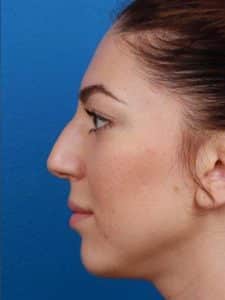
Having a nose that appears bent may be the result of an injury or surgical error. However, some people are born with an overly angular nose. No matter what the cause of the problem, whether congenital or acquired, cosmetic nose surgery in the hands of an experienced facial plastic surgeon in NYC can correct the problem.
Anatomy of a Twisted Nose
When the nose appears twisted it’s likely because the nasal bones or cartilage inside the nose are also twisted. The interior tension caused by the deformity may push the tip of the nose toward the face at a downward angle, or it may cause an over-projection of the nose from the face. The nasal bridge may also bend to the left or to the right.
The type of rhinoplasty procedure used depends on how much surgical correction is needed. There are many techniques, including cartilage grafting and osteotomy, to correct the basic symmetry and nose angulation. Refinements to the bridge or tip of the nose can be made using one or more techniques. The delicate nasal bones may be cut and reset in order to correct and improve the nasal profile.
The surgeon may recommend less invasive suturing or camouflaging techniques to lessen the appearance of nasal deviation.
Your New York Nose Surgeon Knows Best
While there is no such thing as a perfectly straight nose, the surgeon will make every effort to achieve a perfect result. It will require a thorough evaluation of the basic symmetry of the patient’s face prior to surgery and determining the full extent of nasal or septal deviation. The choice of procedure depends on which part of the nose is twisted.
It’s generally easier to correct a crooked nose caused by trauma than it is to fix a congenitally twisted nose where certain internal tissues or structures may be undersized or absent.
In sum, rhinoplasty is one of the most difficult corrective surgeries to perform and fixing a twisted nose is one of the most difficult sub-categories of procedures. Talk with a board certified facial plastic surgeon experienced in rhinoplasty to find out if you are a candidate for nose surgery.
Dr. Philip Miller is a board certified facial plastic surgeon with offices located at 60 East 56th, Third Floor, New York, N.Y. Call (646) 791-3025for a personal consultation.
Next, read about The Effects of a Rhinoplasty with the Common Cold
Rhinoplasty to improve nasal bridge and tip, 3 month post-op, by Dr. Miller
Weight Loss After Facelift: All You Need To Know
The results of your facelift can be affected by weight you lose after your surgery. The good news is there are ways to lose weight safely and effectively after a facelift, without compromising your results.
Can weight loss affect my facelift results?
Yes. Losing significant weight results in a pattern distribution of weight loss throughout the body, including the face. Facial volume is necessary for proper skin support. If you suddenly drop 20 pounds or more in just a few months after facelift surgery, the weight loss may translate into lost facial volume, and skin laxity may develop. As a result, you may find yourself with an aged appearance in the mid-face and cheek areas.
Additionally, making dramatic changes in weight between consultation and surgery date may significantly change the surgical plan your plastic surgeon created for you. Surgeons generally advise patients to achieve their goal weight as closely as possible before undergoing many types of aesthetic surgery.


How much weight can I lose safely to preserve my facelift?
Most doctors recommend losing weight slowly and at a healthy pace. Losing 1-2 pounds per week is ideal for safe and lasting results. This slow steady rate ensures skin has time to conform over the new contour to maintain a firm, youthful appearance.
Should I lose weight before or after facelift?
Surgeons typically recommend losing weight before a facelift. Since a facelift involves the redistribution and removal of fat cells, and facial fat is necessary for a more youthful appearance, it is best to lose weight slowly and steadily to allow skin elasticity to bounce back naturally before surgery.
Most surgeons also advise patients to get within 10 pounds of their ideal weight before surgery. Doing so will produce the best facelift results.
Learn more about facelift surgery here.
Philip J. Miller, MD, FACS, can guide you on your facelift journey. During your consultation, be open and honest about your weight loss goals so he can recommend the best approach for your specific case. This ensures that your surgical and weight loss goals are all safely met.
It is possible to manage weight loss before and after facelift surgery, especially with the help of an expert facial plastic surgeon. Dr. Miller specializes exclusively in facial plastic surgery and has over 20 years of experience performing procedures like a facelift. In addition to the standard facelift, Dr. Miller can perform a deep plane facelift, the Miller lift (liquid facelift), or a MicroLift.
To learn more about weight loss and facelift surgery, contact Dr. Miller’s Manhattan, New York, or New Orleans, Louisiana office to schedule an appointment.
Cosmetic Procedures for Getting Rid of Turkey Neck

From Jack Lalanne to Facial Yoga
The late health guru Jack Lalanne, for example, was big on daily exercises to keep the facial muscles strong and the skin tight. Jack was a true pioneer and expert in healthy living who developed his own personal facial exercise routine that kept his profile relatively sag- and wrinkle-free well into his 90s. But not even Jack Lalanne was able to win the battle against the forces of gravity and age and stay a healthy looking 70-something indefinitely.
Modern health and fitness experts can be heard these days singing the praises of “hydration” as the proverbial fountain of youth. They recommend a body fat ratio of 14 to 24 percent for women and 6 to 17 percent for men, which means for most of us a radical change in diet is in order and lots of aerobic exercise and hours spent training in the gym or health club.
New Age types, on the other hand, are big adherents of Facial Yoga, a series of targeted exercises which are supposed to ward off neck and facial drooping. Many yoga aficionados do, in fact, look great as they age but there is no real evidence that facial yoga is effective.
Cosmetic Treatments for Turkey Neck
There are several non-surgical treatments touted for their ability to target the neck, including skin peels, topical creams and laser procedures, many of which are simply ineffective. Non-surgical skin tightening treatments like Ultherapy, which uses ultrasound energy to tighten facial skin, may be effective to some degree, particularly in patients with minimal sagging. In addition, Botox can be used to effectively treat neck bands. However, these non-surgical treatments generally do not address excess or lax skin and cannot recreate the neck line that most patients desire.
The meat of the matter regarding the turkey neck is that it is one stubborn age-related effect that is difficult to resolve non-surgically. Traditional neck lift and facelift techniques remove excess skin and fat and tighten the platysma muscle to create a firmer, tighter, more youthful look that will last for many Thanksgivings to come. Neck lift may be performed on its own or combined with a traditional facelift.
Don’t be a turkey this Thanksgiving. Consult with a qualified facial plastic surgeon who can help you decide which procedure is best for your sagging neckline.
Dr. Philip Miller is a board certified facial plastic surgeon with offices located at 60 East 56th, Third Floor, New York, N.Y. Contact our office at (646) 791-3025 for a personal consultation.