Septoplasty
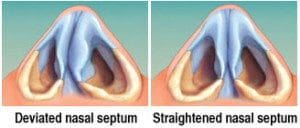
Our septoplasty procedure in New York City allows a facial plastic surgeon to realign the wall between the two nostrils–the septum–to achieve balance and symmetry within the two nasal cavities. Septoplasty is a surgery performed by Dr. Philip Miller to straighten a deviated septum. For some NYC patients, the simple act of breathing can be a labored affair. Structural irregularities in one or both of the nasal cavities can lead to nasal obstructions that impede airflow. The most common irregularity is a deviated septum – a condition where partition between the two nasal cavities does not run straight down the center of the nose. The crooked shape contributes to the blockage that prevents open airflow and hinders patient breathing.
For New York patients with this condition, a septoplasty procedure can correct the problem and return their breathing to normal.
The nasal septum is the wall that divides the two sides of the inner nose which should be properly aligned for healthy noses. However, the nasal septum can be crooked for some people. When this occurs, it is known as a deviated septum, which can block the nasal passage and contribute to symptoms of nasal blockage and obstruction.
Deviated septums can be corrected through septal surgery, also known as deviated septum surgery or a septoplasty. Dr. Philip Miller specializes in septoplasty in NYC and has over 20 years of experience performing this type of surgery. Since a deviated septum usually produces no external visual signs, most people with a deviated septum do not even know they have this condition. But for some people the deviation causes problems such as snoring, sinusitis, breathing difficulties, sleep apnea, and respiratory complaints. These types of issues may often require surgical procedures.
Dr. Philip Miller currently sees patients at his office at 60 E. 56th & Park New York, New York 10022. You can call Dr. Miller to set up your Septoplasty consultation and surgery.
What is a Septoplasty?
Septoplasty procedures in NYC can be performed independently from rhinoplasty surgery. The surgeon can usually realign the septum into the midline using incisions all well hidden within the nostrils. The procedure begins with Dr. Miller separating the septum from the mucosa lining surrounding it. The septum is repositioned and the mucosa lining is replaced.
What Happens The Day Of My Septoplasty Procedure?
Dr. Miller will perform your septoplasty procedure in his state-of-the-art, accredited surgical suite, conveniently located in his NYC office. Septoplasty is performed under anesthesia by making an incision within the nostrils. The lining over the septum, called the mucosa, is gently separated from the septum, exposing the deviated pieces of cartilage and bone. Through a variety of techniques, the septum will be repositioned or reshaped into the midline. Once completed, small plastic supports may be inserted into the nose to help the septum stay stable for the first week following surgery. The septoplasty will take between 60 to 90 minutes and be on an outpatient basis, meaning you can return home the same day.

If general anesthesia will be used, you cannot drive or travel alone following your septoplasty. Please arrange for transportation home and for someone to stay with you for at least the first 24 hours following your septoplasty.
Benefits
There are numerous benefits associated with a septoplasty procedure, including:
Improved Breathing
By clearing the nasal passages, you can enjoy uninterrupted breathing patterns.
Better Sleep
Impeded nasal airways are the leading cause of a poor night’s sleep. Whether it is excessive snoring, sleep apnea or other conditions, repairing the inner nasal structure to improve airflow can be the most effective way to enjoy more restful nights.
Fewer Sinus Infections
When the nasal passageways are blocked by structural deformities, the nose cannot naturally maintain clean airways and sinus drainage cannot easily occur. This results in an increase in sinus infections. By creating an open and unimpeded airway, drainage improves and these infections are reduced.
Improved Senses of Smell and Taste
When you can’t properly inhale through your nose, your key senses of smell and taste are adversely affected. By re-aligning the nasal passageways, your senses will be awakened to a whole new world around you.

What Are The Risks Associated With Septoplasty?
Many of the risks associated with septoplasty procedure can be minimized in the hands of a highly skilled and experienced surgeon like Dr. Miller. However, risk can never be 100% eliminated. Certain factors beyond Dr. Miller’s control can sometimes intervene and create complications.
During your septoplasty consultation, Dr. Miller will explain the risks associated with this nose job procedure. You will be asked to sign consent forms acknowledging that you understand these risks.
How Can I Help My Septoplasty Recovery?
The best way you can ensure a good recovery after a septoplasty procedure is to follow all of Dr. Miller’s orders. He has performed thousands of these procedures and has decades of experience with septoplasty patients. His instructions should be trusted and followed.
Besides following your doctor’s orders, there are a few additional things you can do to help streamline your recovery process.
Elevate Your Head
Use a few extra pillows at night to elevate your head and keep swelling down.
Avoid Strenuous Activity
For at least the first two weeks, you should focus on taking it easy. Even if you’re feeling better, don’t push it. You don’t want to do anything during this important recovery phase that could jeopardize your final results.
Don’t Pull Clothing Over Your Head
Try and avoid turtlenecks or tight t-shirts or any other article of clothing that will put pressure on your nose. If you ever wanted a reason to only wear loose, comfy tops or button-up shirts, the days and weeks following your septoplasty procedure are it.
When Will I Be Back To Normal?
You can usually return to work and daily activities within a few days, but you should refrain from strenuous physical activity for 2-3 weeks. You will likely feel much better within a week or so. However, the healing process will continue long after you are feeling like yourself again since cartilage and nasal tissue can take up to one year to settle into their new shape. For more info here please read this.
Am I A Good Candidate For Septoplasty?
If you experience excessive snoring, sleep apnea, recurrent sinusitis, or other respiratory complaints, you may be a good candidate for a septoplasty procedure. An otolaryngologist (ear, nose and throat doctor), such as Dr. Miller, can examine you to identify whether a deviated septum is the cause of your problems.
Other candidates for septoplasty include patients who experience a deviated septum as the result of injury or trauma to the nose. In those instances, a nose job procedure may need to be performed in addition to the septoplasty, to correct the external appearance of the nose as well as the deviated septum.
How Do I Learn More About Septoplasty by Dr. Miller?
If you experience difficulty breathing or have suffered trauma or injury to the nose, you may be an excellent candidate for a septoplasty procedure performed by Dr. Philip Miller in New York City. Simply fill out our convenient contact form or call us and one of our friendly Patient Advisers will help you get started on the journey to the new and improved you.
Next, read septoplasty turbinate reduction.
Balloon Sinuplasty
Hundreds of patients who suffer from the sinus pain and pressure associated with chronic sinusitis have sought out Dr. Philip J. Miller, a leading NYC rhinoplasty surgeon and otolaryngologist, for help. Though Dr. Miller does not perform sinus surgery, he does work with the best sinus surgeons and they perform the nasal and sinus procedure together. The patient benefits from undergoing anesthesia just once, while two experts in their field perform their specialized procedures.
Balloon sinuplasty is a popular, less-invasive treatment designed to open up blocked sinus passageways and help drain mucus buildup in patients who suffer from chronic sinusitis.
Balloon sinuplasty uses a small, inflatable catheter – a balloon catheter – to open up blocked sinus passageways. The balloon catheter is inserted through the nostril and into the inflamed sinus. The catheter is then inflated to expand the sinus opening.
Once the sinus is opened, the sinus is flushed with a saline solution to remove built-up mucus. When the mucus is removed, the balloon catheter is deflated and removed. The sinus then maintains the improved, wider shape.
The procedure takes approximately 3 hours, including anesthesia recovery time. Patients are able to go home the day of the procedure.
What Are the Benefits of Balloon Sinuplasty by Dr. Miller?
Patients suffering from chronic sinusitis turn to balloon sinuplasty for the many benefits, including:
Safe & Immediate Relief
The nature of the procedure allows your sinus passageways to be opened through non-surgical or invasive means. This results in no long healing period and minimal risk of complications. The passageways are immediately opened, providing instantaneous drainage and relief.
Local Anesthesia
If you prefer to avoid general anesthesia or cannot tolerate it due to medical reasons, this procedure can be completed under only localized anesthesia.
Fast Recovery
Since there is no cutting or removal of bone or tissue, you can usually return to normal activities within a few days.
Consistent Results
Balloon sinuplasty enjoys a very successful track record. Most patients would recommend the procedure to family and friends for relief from chronic sinusitis.
Am I a Good Candidate for Balloon Sinuplasty?
If you have been diagnosed with chronic sinusitis or you suffer from recurrent sinus infections, sinus headaches, facial pressure or pain and you have not responded favorably to medication or other treatments, you may be a good candidate.
However, not every patient with chronic sinusitis is a candidate for balloon sinuplasty. While balloon sinuplasty excels at opening and widening sinuses, the nature of the procedure means balloon sinuplasty cannot remove nasal polyps or treat heavily scarred sinus openings. For patients with those conditions, more traditional surgical procedures may be warranted.
To determine if balloon sinuplasty is the right treatment for you, a consultation with a qualified otolaryngologist, such as New York-based Dr. Miller, is required. During the consultation, Dr. Miller will review your patient history, evaluate your symptoms, thoroughly examine you and review or order a sinus CT scan to determine if balloon sinuplasty will be effective for you. If so, he will refer you to a specialist in the field.
How Do I Find Out More About Balloon Sinuplasty by Dr. Miller?
If you are interested in learning more about balloon sinuplasty, visit ncbi.nlm.nih.gov or please get in touch to set up your consultation in Dr. Miller’s NYC office. You can call the office or simply complete our contact form to get started.
Next, read about broken nose surgery.
Rhinoplasty Recovery 101
Rhinoplasty has helped many Manhattan, New York and New Orleans, Louisiana patients enhance their appearance or improve their breathing through nose job procedures. One of the first questions these patients often ask at their initial consultation is what to expect from the recovery process.
Through decades of working with patients, Dr. Miller understands that an educated patient is in the best position to enjoy exemplary rhinoplasty results. This rhinoplasty recovery guide is designed to help potential nose job candidates understand what is involved in the days and weeks following surgery.
How Long is Nose Job Recovery: What to Expect
Dr. Miller typically performs rhinoplasty using general anesthesia. Patients cannot drive afterward and should have someone with them for the first 24-48 hours after surgery. While rest is an important part of the healing process, it is best to elevate your head while lying down or sleeping to minimize postoperative swelling.
You will wear a nose splint for the first week and will experience slight bruising and swelling around the nose and eyes. This will gradually dissipate over the course of a few days or weeks.
How long does it take to recover from rhinoplasty?
It will take some time to heal after rhinoplasty. You can usually return to work and other activities within three weeks, but you should refrain from strenuous physical exercise for 3-6 weeks. You will begin to see the swelling and bruising disappear within 2-3 weeks, at which time you will start to appreciate the results.
You will have at least two postoperative follow-up visits during this time as well. Full results usually take 6-12 weeks to be seen while your healing will continue for the entire first year. Dr. Miller and his team will follow you through this entire process, but please be patient to see the final results.
How long does swelling last after rhinoplasty?
Pain and swelling will be most pronounced during the first week post-surgery, and you will most likely have some bruising and tenderness under your eyes and on your cheeks as well. The majority of the facial swelling should subside and most of the bruising should be resolved after the second week.
What to expect 2 weeks after rhinoplasty?
Most of your facial swelling and bruising will have subsided at this time. You will likely feel comfortable going out in public, using makeup to cover up any residual discoloration. You will still have some time to wait before your full results become apparent.
What to expect 3 weeks after rhinoplasty?
At this point, you can safely resume some cardiovascular activity such as walking, jogging, and swimming. Visible swelling and bruising should be virtually non-existent at this time. Most patients start breathing easier by now as well, with postoperative congestion dissipating.
Hard Nose Tip after Rhinoplasty
A temporary hard tip or bump on the nose after rhinoplasty is very common. A hard tip typically occurs due to swelling of the nasal tissue or the presence of scar tissue. The hardness of the tip may also be indicative of the cartilage grafts used during surgery. The nasal tip is narrowed and supported with cartilage grafts, which give the nose a new shape but also prevent the nose from changing its shape once it has fully healed, making your nose feel tight after rhinoplasty.
The stiffness is temporary and should resolve in 9 months to one year after rhinoplasty. As swelling and stiffness ease, the tip will be much softer, and normal sensation will return. Cut back on salt to help relieve swelling and fluid retention. If the tip of the nose is still hard one to two years after rhinoplasty, seek advice from your surgeon.
When can I wear glasses after rhinoplasty?
You can resume wearing your glasses or sunglasses after rhinoplasty by about six weeks when bones are more stable. Dr. Miller will give you specific instructions when he monitors you during your recovery process.
When can I drink alcohol after rhinoplasty?
Drinking alcohol is a dangerous activity for any patient healing from surgery, including rhinoplasty. Alcohol can interfere with your medications and thin your blood, promoting excess bleeding and bruising. To be safest during your recovery, avoid drinking alcohol for at least three weeks after your rhinoplasty surgery.
When can I sleep on my side after rhinoplasty?
During the initial part of your recovery, it is extremely important that you keep your head elevated in a straight position to facilitate proper blood flow and prevent additional bruising and swelling, as well as displacing your nose. You’ll need to sleep in an upright position (with your head propped on two to three pillows or on a foam wedge) for 6 weeks. At that point, you can resume sleeping on your side if that is a more comfortable position for you.
How long after rhinoplasty can I workout?
At weeks 3-4, you can resume some cardiovascular activities such as jogging, cycling, and swimming. By the sixth week, your nasal bones should be stable enough to allow you to lift weights after rhinoplasty. To be sure, consult with our office before resuming any strenuous physical activities.
When can I wear makeup after rhinoplasty?
You can start wearing makeup once the external splint is removed 5-7 days after your surgery. Be careful not to put too much pressure on your nose when you apply your products.
How long does your nose bleed after rhinoplasty?
How long after rhinoplasty can I breathe through my nose?
The nature of your procedure and the accompanying swelling in your nasal cavity means that you will likely experience a bit of congestion in the weeks following the procedure. If nasal packing after rhinoplasty is necessary, it is typically removed within two days after surgery.
Swelling and bruising will often increase in the first 2-3 days following surgery and then start to subside. The nasal may feel congested for at least 2 weeks following surgery. It may be difficult to breathe through the nose initially but as the swelling goes down, the congestion should disappear.
Schedule your Nose Job in NYC
Dr. Miller performs his nose job surgeries at his accredited plastic surgery clinic. Rhinoplasty is an outpatient procedure that usually lasts 1.5 to two hours and after the nose job is complete, patients can return home. Fly-In Program patients can convalesce in a hotel or recovery facility. The goal for all rhinoplasty patients is to allow for rest and recuperation in comfortable surroundings.
Please do not hesitate to contact our NYC plastic surgery clinic for any recovery or post-operative instructions after your rhinoplasty surgery. For more information or to schedule your initial consultation, contact our office today.
Nose Reshaping
For nose reshaping procedures, hundreds of patients each year trust their face to Dr. Philip J. Miller, a leading rhinoplasty expert in the greater NYC area. People who are unhappy with the shape or size of their nose turn to nose reshaping, also referred to as rhinoplasty, to improve their appearance or correct nasal breathing problems.
Nose reshaping can increase or decrease the overall size of your nose, reduce or eliminate bumps or humps and even modify nostril size. Virtually any aspect of your nose can be changed with rhinoplasty.
If you’re happy with the appearance of your nose, but struggle with difficulties breathing due to a deviated septum – one of the most common causes of restricted airflow through the nasal cavities – nose reshaping can also provide relief. A skilled rhinoplasty surgeon can adjust the inner nasal structure to produce better alignment and improve airflow.
What Does a Nose Reshaping Procedure by Dr. Miller Involve?
As one of the premier nose reshaping surgeons in NYC, Dr. Miller calls upon more than 20 years experience and incorporates a variety of techniques to achieve impeccable results. His superior skill ensures that your revised nose is in harmony with the balance of your face. His strategies include modifying nostril width, altering the angle between the nose and mouth, reshaping, reducing or enlarging the width of the nose, and reshaping the tip of the nose.
Every rhinoplasty patient is unique and so is the approach Dr. Miller takes in treating his nose reshaping patients. Despite these differences, all nose reshaping procedures follow a common format.
Initial Consultation with Dr. Miller
Every nose reshaping starts with an initial office consultation with Dr. Miller. During this important first meeting, your concerns and expectations are fully discussed. Dr. Miller examines your nose and facial structure, and makes recommendations suitable for you. Dr. Miller also carefully explains any potential limitations suggested by your existing nasal structure and skin condition. Pre-operative photographs will be taken at this time and then digitally manipulated to show you the intended end result. This “virtual surgery” is now performed in both 2-D and 3-D.
Day of Surgery
You arrive at Dr. Miller’s accredited, office-based surgical suite, and are prepped for the 1 to 2.5 hour outpatient procedure. You will be sedated with either a general anesthesia or intravenous medication to ensure comfort throughout the procedure, and the procedure begins.
Depending on the shape and contours of your nose, Dr. Miller will perform either an open or closed rhinoplasty to access the interior nasal structure. Open rhinoplasty involves small, discreet incisions in the columella, the column between the nostrils. In closed rhinoplasty, the incisions are made inside the nose.
Once the procedure is complete, temporary nasal packing may be placed to control bleeding, and a light cast is placed over the nose to control swelling and provide support. The packing is removed before you leave the office. The cast is removed after one week.
Post-Operative Care
Since your nose reshaping will be an outpatient procedure, you can go home shortly after surgery. If general anesthesia was administered, you are not permitted to drive and must be accompanied by someone for the trip home and in the hours immediately following the procedure.
Even though there is usually not much post-operative pain associated with a nose job, pain medication will be prescribed and can be taken as needed. Swelling, stuffiness and bruising are typical in the first few days after surgery, but will clear up in a few weeks.
You can usually return to work and daily activities within one week, but should refrain from rigorous physical activity for 3-6 weeks following the procedure. Throughout the recovery period, if you wear glasses you should avoid resting them on the bridge of your new nose.
What Are The Benefits Of Nose Reshaping?
Whether you want nose reshaping to improve your appearance or fix a breathing problem, there are many benefits from rhinoplasty. Dr. Miller has helped thousands of patients improve their quality of life through nose reshaping procedures in his NYC practice.
Easier Breathing
For some people, breathing through the nose is difficult or even impossible due to nasal cavity blockage. This blockage is most often caused by a deviated septum – the structure that separates the two nasal cavities. Dr. Miller can reshape the inner nose and correct these issues, allowing you to finally breathe easier.
Better Sleep
Six to eight hours of restful sleep each night are the minimum your body needs to maintain good health. Unfortunately, structural irregularities in your nasal cavity can cause excessive snoring, sleep apnea or other breathing problems that interfere with a good night’s sleep. A nose reshaping can help eliminate these common sleep problems.
Improved Self-Confidence
Your nose is the focal point of your face. When you are self-conscious about it, your overall confidence suffers. Getting a nose reshaping can be the easiest way to boost your self-confidence and put your best face forward.
Am I A Good Candidate For Nose Reshaping?
The decision to pursue nose reshaping is an important and very personal one. If you struggle with self-esteem or other difficulties due to the shape or size of your nose, rhinoplasty surgery can be a life-changing event.
The ideal rhinoplasty patient is healthy, at least 13 years of age and a non-smoker. More importantly, the ideal nose reshaping candidate has realistic expectations about the final outcome. While rhinoplasty can improve your appearance in dramatic ways, there are still limitations. Open and clear communication between you and your surgeon, combined with your acceptance and recognition of realistic outcomes, is the best combination to ensure satisfactory and appreciated results.
How Do I Find Out More About Nose Reshaping by Dr. Miller?
To learn more about nose reshaping and find out if it is right for you, contact Dr. Miller’s NYC office to set up your initial consultation. You can call us or contact us on our website. One of our friendly Patient Advisors will be in touch to help you get started.
Next, read about revision rhinoplasty.
Anatomy of the Nose
Your nose sits front and center of your face and is responsible for a number of daily functions that you usually take for granted. From smelling the flowers, to filling your lungs, your nose plays a vital role in your day-to-day existence.
Unfortunately, unless there is a nasal blockage that prevents easy breathing, you probably ignore your nose for the most part. Your nose may hold your sunglasses upright or warn you of spoiled food, but is otherwise neglected or unnoticed. Unless, of course, your nose has the misfortune of sporting an unattractive hump, bump or other characteristic that draws your ire. In those cases, your nose may be prompting you to consider a nose job.
To better understand how and why rhinoplasty by Dr. Miller in NYC works, you should have a basic understanding of how your nose is built.
The Anatomy Of The Nose
Your nose is comprised of two obvious areas – the outside and inside. Nuances within each of these areas can cause your nose to possess undesirable characteristics such as humps, bumps, hooks or nasal blockages.
Outside Of The Nose
The outside is made up of a hard bony “roof” that consists of your nasal and cheek bones; both hard and soft cartilage that forms your bridge and shapes your middle and lower nose; and very soft cartilage that forms your nostrils and nose tip.
The entire exterior structure is covered in skin, which adheres closely to the bone and cartilage and forms the shape of your nose.
Nasal Bones
Though the upper third of the nose is made of bone, only the very peak of the bone consists of the separate paired nasal bones. Those bones sit on top of an extension of the upper jaw bone, called the Maxilla, that extend forward away from the face.
Upper Lateral Cartilages
The upper lateral cartilages are wing shaped cartilages extending horizontally across the middle third of the nose and then vertically. They are attached to the bone structure described above.
Lower Lateral Cartilages
The lower lateral cartilages are paired rams horn shaped cartilages that are floating in a skin and soft tissue envelope. The lower lateral cartilages constitute the lower third of the nose, namely the tip of the nose. It is these cartilages that are altered, narrowed, re-positioned, shortened or elongated to modify the nasal tip.
Inside Of The Nose
The main internal structure of your nose is your septum, the structure that separates your two nostrils. The septum is made up of bone and cartilage that is covered by a mucous membrane. While you can’t see your septum, you can feel it by running your finger down your bridge to the middle third of your nose, or by placing your thumb and forefinger inside your nostrils and feel for the bridge of skin that separates your finger tips.
Also inside your nose you will find turbinates – small bony, mucosa-lined outgrowths on the sides of each nostril. Turbinates are the filtering device that the nose uses to clean inhaled air before it reaches the lungs.
How Does My Nose Structure Affect A Rhinoplasty Procedure by Dr. Miller?
When you are considering a nose job, there is undoubtedly some aspect of your existing nose that you don’t like. Perhaps it is aesthetic or maybe it is a structural problem that keeps you from breathing easily.
Regardless of why you seek out rhinoplasty, your nose’s unique structure and characteristics will impact all aspects of your nose job procedure. During your consultation with Dr. Miller in his New York City office, he will thoroughly examine your nose and surrounding bone structure and identify your goals and objectives. He will advise you as to the proper technique and strategies he will use to give you the nose of your dreams. To learn more about the anatomy of your nose, visit rochester.edu or contact our office.
Next, learn about balloon sinuplasty.
Broken Nose Surgery
Nasal fractures, or broken noses, result from facial injuries in contact sports or falls. When a physical fight or car accident results in a broken nose, there is more than just appearance to consider. While many NYC patients may often have to contend with a significant alteration to his or her appearance, they may also experience difficulty breathing. Dr. Philip J. Miller specializes in the cosmetic and structural repair of broken noses in NYC damaged through accident or trauma.
You can call Dr. Miller to set up your broken nose or nasal fracture consultation and surgery. Dr. Miller accepts most POS and PPO insurances for any medical issues related to the nose as an out-of-network provider. Please contact us today to find out.
How Can A Broken Nose Be Treated?
While some broken noses can be resolved with a basic alignment procedure, in most cases surgery is needed to restore full functionality and appearance to the nose. Depending on the severity of the break, Dr. Miller may choose one or more procedures.

Closed Reduction of Nasal Fracture
There is a 7 to 14-day window after nasal trauma when the fractured bone can be put back into its original position. This can be done without breaking the bones again, or requiring any advanced techniques. It simply requires the patient to be adequately anesthetize a long the nose such that manipulation does not cause any discomfort or pain.
Open Reduction of Nasal Fracture
After the 14-day window, the displaced nasal bones have already begun to heal and have formed firm attachments to their new position. As such, a more involved procedure is required to realign the bones. An open reduction means that incisions inside the nose have to be made in the bones read broken. An open reduction can be avoided if the patient is seen and treated within the first 7 to 14 days after nasal trauma.
Rhinoplasty
Also commonly called a “nose job,” a rhinoplasty procedure is performed by a skilled facial plastic surgeon that uses a variety of techniques to restore the appearance of the nose. Nasal bones and cartilage are modified or removed and tissue is sometimes added for reshaping the structure of the nose. The skin of the nose remains unaltered. However, once the underlying bone structure is revised, the skin conforms to the new shape, resulting in an impressive final result. While performing a concomitant rhinoplasty with a close reduction of the nasal fracture is typically uncommon, many patients with a long-standing nasal fracture who have elected to undergo an open reduction, as discussed above, will elect to simultaneously get refinement of the nasal contour.
Septoplasty
Septoplasty allows the surgeon to realign the wall between the two nostrils – the septum – to achieve balance and symmetry within the two nasal cavities. In many nose break cases, the septum can become very misshapen. In turn, this causes breathing difficulties, as either one or both of the nasal cavities becomes blocked.
Whether one or both procedures will be required, depends on the severity of the break. Dr. Miller regularly performs close reduction, open reduction, rhinoplasty, and septoplasty procedures in his NYC office for patients who have suffered broken noses as a result of accidents or trauma.

How Is Broken Nose Surgery Performed by Dr. Miller?
Every broken nose patient is unique and so is the approach Dr. Miller takes in treating his broken nose surgery patients in NYC. Whether the patient requires a close reduction, open reduction, rhinoplasty, septoplasty, or any combination thereof, the patient can expect the following:
Initial Consultation
Every broken nose evaluation starts with an initial office consultation with Dr. Miller. Dr. Miller examines the patient’s nose and facial structure, assesses the structural damage and makes recommendations to restore the nose. X-rays will be reviewed or ordered as seen necessary. Dr. Miller also carefully explains any potential limitations suggested by the patient’s existing nasal structure and skin condition. Pre-operative photographs will also be taken at this time.
Day of Surgery
The patient arrives at Dr. Miller’s accredited, office-based surgical suite in NYC, and is prepped for the outpatient procedure. The patient is sedated with either a general anesthesia or intravenous medication to ensure comfort throughout the procedure, and the procedure begins.
Depending on the shape and contours of the patient’s damaged nose, Dr. Miller will perform one or a combination of the listed above to access the interior nasal structure.
Once he has completed his work, the incisions are closed with stitches, nasal packing may be used to control bleeding, and a light cast is placed over the nose to control swelling and provide support. Any nasal packing is removed before the patient is sent home. The cast is removed after one week.

Post-Operative Care
Since nose break surgery is an outpatient procedure, patients can go home shortly after surgery. If general anesthesia was administered, the patient cannot drive and must be accompanied by someone for the trip home and in the hours immediately following the procedure.
Pain medication will be prescribed and the patient should expect some swelling, stuffiness and bruising in the first few days after surgery. This will clear up in a few weeks.
Patients can usually return to work and daily activities within one week, but should avoid rigorous physical activity for 3-6 weeks following the nose job surgery. Throughout the recovery period, patients who wear glasses should avoid resting them on the bridge of the nose.
What Are The Benefits Of Nose Job Surgery by Dr. Miller?
A patient who suffers a traumatic nose break can experience many benefits from close reduction, open reduction, rhinoplasty and/or septoplasty, including:
Restored Appearance
Broken nose surgery can restore the nose to it’s pre-accident or original condition. In many cases, a rhinoplasty procedure can result even make improvements, resulting in a new nose that is more symmetrical and streamlined than the nose prior to the break. Patients often comment that they love their “new nose” even more than the old one.
Easier Breathing
When the inner nasal structure is broken, irregular or difficult breathing can result. During broken nose surgery, the inner nose can be reshaped to correct these issues, allowing the patient to finally breathe normally.
Better Health
Obstructed breathing can lead to a host of health issues. By restoring the nasal airflow, nose job surgery can help a patient avoid common health issues related to poor nasal airflow.
Improved Self-Esteem
Nothing can make a patient more self-conscious than the disfigured nose after a nose break. With the right surgical procedures, the patient can once again enjoy a natural looking nose and the boosted self-confidence that comes along with it.
How Can I Learn More About Broken Nose Surgery by Dr. Miller?
If you have suffered a broken nose as the result of traumatic accident or injury and are now suffering from breathing difficulties or an undesirably altered appearance, you may be an excellent candidate for broken nose surgery.
The best way to determine if broken nose surgery is right for you is to set up a consultation with Dr. Miller in his NYC office. Please call us our practice in New York City or complete the convenient contact form to request more information. One of our helpful Patient Advisers will get back to you as soon as possible to schedule your consultation. You can also visit harvard.edu to learn more about a broken nose.
Next, learn about ethnic rhinoplasty.
Nose Reduction Surgery in New York
Nose reduction, also called reduction rhinoplasty, is one of the most common rhinoplasty surgeries performed by New York top facial plastic surgeon, Dr. Miller.
One of the most common complaints made by nose job candidates in New York City is that they want a smaller nose. Big noses are definitely a top ranking culprit when it comes to complaints among prospective rhinoplasty patients. After all, a large nose can throw off the proportions of the entire face, drawing attention right to it, and causing you endless frustration. Whether they are unhappy with the width, profile or nostril size, many people struggle with a nose that is disproportionately large for their face.
In reduction rhinoplasty, nasal cartilage and bone is removed, trimmed or rearranged to achieve a smaller shape. This is accomplished through small incisions inside the nostrils which allow access to the underlying bone and cartilage. Although the underlying structure is reduced, the exterior skin is left intact. During the healing process, the skin shrinks down to adopt the new shape.
Depending on how much of a reduction is desired, the nostrils may need to be reduced to keep everything in proportion. If that is the case, tiny incisions will be made on each nostril. These incisions will leave only very fine scars and are hidden within the crease between the nostril and the face. Our guide on rhinoplasty has additional info on the surgical procedures.
Reduction Rhinoplasty Details
Typical rhinoplasty surgeries are performed in a similar fashion, beginning with incisions for the closed rhinoplasty or open rhinoplasty approach. During a closed, or endonasal, rhinoplasty, your facial plastic surgeon will make careful incisions inside the nostrils, leaving behind no visible stitches or scars.
From here, he can lift the underlying cartilage and bone to re-contour or reconstruct the nose. During an open, or external, rhinoplasty, a very small incision will be placed between the nostrils on the underside of the nose. Through this approach, the surgeon can access the top of the nose as well as the structures of the lower and middle third of the nose.
There is no set way that a facial plastic surgeon will approach a reduction rhinoplasty, although the end result of a smaller nose is always the same. Regardless of the incision placement, your surgeon will need access to the cartilage and bone that will be rearranged or removed to make your nasal structure smaller.
How your surgeon accesses the bone and cartilage will largely depend on where he must do the bulk of his work. Discuss the surgical approach for your own reduction rhinoplasty directly with your facial plastic surgeon. In some cases, adjustments may be made to your nostrils to keep them in proportion to the rest of your nose, but you will also know about this beforehand.
Am I A Candidate For A Nose Reduction?
If you struggle with self-consciousness due to a large nose, you may be a good candidate for reduction rhinoplasty. The first step to determine whether a nose reduction procedure is right for you is to schedule a consultation with Dr. Miller in New York City.
At this consultation, Dr. Miller will examine your existing nasal structure and skin conditions to determine what is surgically possible. Some limitations on the amount of reduction that can be achieved include age, skin condition or thickness, and pre-existing injuries.
Book a Consultation With Dr. Miller
What are the Benefits of a Reduction Rhinoplasty by Dr. Miller?
For NYC patients who pursue a nose reduction surgery with Dr. Miller, the benefits can be many.
Better Facial Symmetry
An oversized nose can throw the entire facial appearance out of balance. By reducing its size, the nose can be brought into proportion with the eyes, mouth and cheeks to produce a harmonious overall appearance.
More Flattering Nose Shape
A nose that is too wide or that has noticeable ridges and bumps can be aesthetically displeasing to the eye. A nose reduction can address these issues by reducing the incongruities and streamlining the nose to make it flow with other facial features.
Improved Quality Of Life
A patient who is self-conscious about a large nose tends to lose confidence in all areas of life. By reducing the nose size and bringing it into proportion with the balance of the face, the patient gains renewed self-confidence and enjoys a higher quality of life.

*Patient results may vary
When Can I Expect Results?
Full results usually take 6-12 weeks to be seen while your healing will continue for the entire first year. As with any rhinoplasty procedure, results are different for each patient. You can expect bruising and swelling, especially around the eyes.
It usually takes up to three weeks for these symptoms to disappear. You will also need to wear a firm splint over your nose for at least one week. Even though there is usually not much post-operative pain associated with reduction rhinoplasty, pain medication will be prescribed and can be taken as needed.
You can usually return to work and daily activities within one week, but should refrain from rigorous physical activity for 3-6 weeks following the procedure. Throughout the recovery period, if you wear glasses you should avoid resting them on the bridge of your nose. You may experience a numbness or stiffness around the tip of the nose for several months.
Planning for a Reduction Rhinoplasty
When you’re hoping to reduce the size of your nose, your first step is to meet with a board-certified and experienced facial plastic surgeon to discuss your specific case. During this rhinoplasty consultation, you’ll have the opportunity to talk about what makes you unhappy with your nose and what changes you’re hoping to make.
If it’s just a smaller nose you’d like, a reduction rhinoplasty will do the trick. If you also want to change the shape of your nose, the tip of your nose, or something else, your facial plastic surgeon will device a combination of techniques to complete your surgery and deliver the results you desire.
During this meeting, you should also be ready for your facial plastic surgeon to perform a thorough examination of your nose and other facial features. He may take measures to calculate how out of proportion your nose is and how drastic a change can be safely made without resulting in an unnatural look. You certainly don’t want to wind up with a nose that is too small for your face, so be sure to listen to the advice your facial plastic surgeon has to give.
Although you have had your nose for your whole life, your surgeon has looked at many different kinds of noses for years, maybe decades. Trust the he has a good understanding of what size nose will look best among your other facial measurements.
After Your Reduction Rhinoplasty
Reduction rhinoplasty does not require any specific limitations or extra time for recovery. Your nose and surrounding tissue will heal on the same timetable as any other nasal surgery and your results will gradually become apparent as the swelling goes down. Your facial plastic surgeon will not do anything to reduce the skin on your nose, as it will shrink up to fit your new, smaller nose all on its own. You should expect this to happen during your recovery time without you even noticing it.
What is the cost of a nose reduction surgery?
There are a lot of factors to consider when assessing the cost of a nose reduction surgery. We do have a rhinoplasty cost-analysis guide, however.
Other Options
Yes, there are numerous nose surgery options available – visit this page to see them all.
How Do I Learn More About NYC Nose Reduction by Dr. Miller?
It is easy to find out more about a nose reduction procedure with Dr. Miller in New York City. Simply fill out our convenient contact form or call us and one of our friendly patient advisers will help you get started on the journey to the new and improved you.
To learn more about nose reduction you can visit medlineplus.gov.
Microsurgery: MicroRhinoplasty™ in New York
For patients in NYC wishing to remove a hump or bump on the bridge of the nose, MicroRhinoplasty may be the answer. MicroRhinoplasty is the latest advancement in nose job procedures that allows the surgeon to reduce a hump or bump on the nose in a less invasive manner than traditional techniques. The development of MicroRhinoplasty is especially exciting, as hump or bump removal is the most common request among rhinoplasty patients.
In a traditional rhinoplasty procedure, an osteotomy is the usual technique employed to reduce humps or bumps on the bridge of the nose. An osteotomy requires that the surgeon manually fracture the nasal bones to re-shape the nasal structure and eliminate the hump. While quite effective, an osteotomy is a complex procedure. It is typically performed under general anesthesia and results in significant swelling and bruising and significant recovery times. Some patients also experience complications from the procedure.
With the introduction of MicroRhinoplasty, Dr. Miller can now eliminate unsightly humps and bumps without resorting to bone fracturing or highly invasive procedures. Using an innovative air-powered microrasp and utilizing only a local anesthesia, MicroRhinoplasty procedures are done in the office and completed in as little as five minutes.
To learn more about MicroRhinoplasty™ in NYC, please contact our office to set up a consultation with Dr. Miller. You can fill out our convenient contact form or call our practice in New York. One of our Patient Advisers will be happy to help you start the journey to a new improved you. More information on the difference between a rhinoplasty and MicroRhinoplasty can be found here scholar.harvard.edu.
What Problems Does MicroRhinoplasty Correct?
The primary problem a MicroRhinoplasty corrects is a bump or hump on the nasal bridge, also known as a dorsal hump. This concern is a common one among Eastern and Northern European populations but can occur to nearly anyone regardless of ethnicity.

How Does MicroRhinoplasty Work?
To perform MicroRhinoplasty, Dr. Miller accesses the treatment area through a tiny incision in the nostril. Then, using a specialized microrasp, he removes the obtrusive bony layers with extreme precision until the desired contour is achieved. Patients report very little pain, minimal swelling and bruising, and usually, return to normal activities within a few days.


Are you a good candidate for MicroRhinoplasty in NYC?
While the MicroRhinoplasty is an excellent alternative to the more traditional rhinoplasty procedure, not everyone is an appropriate candidate. Individuals who are frustrated with a ‘nasal hump’ or bump along the bridge of the nose may make an excellent candidate for a MicroRhinoplasty procedure. Patients should also be in generally good health and have realistic expectations from the procedure. Before a surgery is scheduled, a consultation appointment will be set up with Dr. Miller. At this time, it will be determined if a MicroRhinoplasty is the correct procedure for the specific situation.
What Are The Benefits Of MicroRhinoplasty by Dr. Miller?
For the right patient, the benefits of MicroRhinoplasty by Dr. Miller in NYC are many.
Short Treatment Time
Perhaps the number one benefit of MicroRhinoplasty is the short duration of the procedure. Most procedures can be completed in as little as five to fifteen minutes and only require a localized anesthesia.
Minimal Pain and Discomfort
The nature of MicroRhinoplasty means that the patient will experience very little pain – either during or after the procedure. Minor swelling or bruising may occur but usually resolves in a few days or weeks.
Quick Resolution
Microrhinoplasty is ideal for those patients who are bothered by having a very small bump and want to remove it, but the bump is not so obtrusive to justify a complete rhinoplasty.
Fast Recovery
Once the procedure is complete, a patient is free to resume normal activities in one to two days, although strenuous activity should be avoided for 4-6 weeks. Unlike traditional nose job procedures that require weeks of devoted recovery time, MicroRhinoplasty allows a patient to return to normal life within a day or two of leaving Dr. Miller’s office.
How Do I Prepare For My MicroRhinoplasty Procedure?
Prior to your MicroRhinoplasty procedure, you will receive detailed pre-operative instructions from Dr. Miller. MicroRhinoplasty patients should also remember the following:
Review All Materials
During your consultation, you will receive a packet of information regarding your MicroRhinoplasty. If you have any questions about your procedure, you should contact Dr. Miller’s office before the day of your procedure.
Fill All Prescriptions Ahead Of Time
Make sure you have any prescriptions filled before your surgery date. The hours immediately following your procedure should be devoted to rest and recovery, not standing in line at the pharmacy.
Arrange For Transportation Home
Even though the nature of MicroRhinoplasty is not as invasive as a traditional nose job, you will still receive anesthesia during the procedure. Each patient recovers differently from anesthesia, and driving or traveling alone is not allowed.
Keep Contact Information Handy
While you are recuperating, it is important that your friends, family or caregiver has immediate access to Dr. Miller and other emergency personnel. Make a list of all contact numbers and keep it handy in case you need assistance once you’re home.
Schedule Your Follow-Up Appointments
Dr. Miller wants to carefully assess your recovery progress and does this through your post-procedure appointments. This follow up is critically important to your healing process, so mark your calendar and don’t miss these appointments.
Schedule Your Nose Bump Removal by Dr. Miller in New York
To learn more about MicroRhinoplasty in NYC, please contact our office to set up a consultation with Dr. Miller. You can fill out our convenient contact form or call us. One of our patient advisers will be happy to help you start the journey to a new improved you.
Alarplasty / Wide Nostril Reduction Surgery in New York
The ideal nose creates a triangle shape with symmetrical nostrils that are of proportionate size.
Whether owing to ethnic heritage or genetic makeup, many NYC patients with wide, large, or long nostrils and a bulbous nasal tip are often unhappy with their nose because it does not complement the rest of their facial features. Wide or flared nostrils can sometimes create or contribute to the appearance of an oversized nose that prevents people from achieving facial harmony. Rhinoplasty can be a surgical option that improves the appearance of the nose and facial balance overall.
Philip J. Miller, MD, FACS, specializes in nose, nostril, and alar base reduction surgery in NYC. Alarplasty is a cosmetic procedure for nostril reshaping. For those who want to reduce their nostril size, alter their nostril shape, or correct a crease on the nose, alar reduction or nostril narrowing helps patients achieve a nose that looks symmetrical.
Dr. Miller performs flared nostril reduction surgery to address overly wide or big nostrils in his NYC office for a variety of patients.
How Do You Make Your Nose Smaller?
For reduction rhinoplasty or nose size reduction, Dr. Miller uses a small, wedge-shaped piece of nasal soft tissue which is removed from where the nostril connects to the cheek at the alar base. The rhinoplasty stitches on the nose cause the skin to achieve a narrower position at the base of the nose. Dr. Miller makes incisions either inside or at the base of the nose, typically hidden within the natural nose crease. The result is narrow or smaller nostrils and minimal to no obvious alarplasty scars.
You may learn more about rhinoplasty terminology here.
What Does Alarplasty Treat?
Alarplasty treats the following cosmetic concerns:
- Nasal shape – Changes to the alar nose or alar crease make the nostrils smaller, creating an overall narrower nose shape.
- Nasal size – Through nostrils surgery, different sized nostrils can be corrected and nostril size reduction can be achieved.
- Breathing issues – Whether performed alone or combined with rhinoplasty, nostril surgery can correct asymmetry issues or different size nostrils, enabling better airflow and breathing function.

Dr. Miller’s Approach to Nose Reduction Surgery
If you are considering nose reduction surgery in NYC, the importance of a plastic surgeon’s expertise and experience cannot be overstated. Wide nostril rhinoplasty requires a facial plastic surgeon who is well-versed in the latest rhinoplasty techniques and has intricate knowledge of nasal anatomy. It is a good idea to view the surgeon’s before and after photos of previous patients to get an idea of the work and the type of results you can expect to achieve.
Dr. Miller is a double-board certified facial plastic surgeon with offices in both New York City and New Orleans. He brings more than two decades of experience and is considered by his peers to be an expert in rhinoplasty and facial rejuvenation procedures. He develops personalized treatment plans that combine desired changes with the preservation of their unique features, including ethnic identity, for the best possible results.

If you are considering nose reduction surgery in NYC, the importance of a plastic surgeon’s expertise and experience cannot be overstated. Wide nostril rhinoplasty requires a facial plastic surgeon who is well-versed in the latest rhinoplasty techniques and has intricate knowledge of nasal anatomy. It is a good idea to view the surgeon’s before and after photos of previous patients to get an idea of the work and the type of results you can expect to achieve.
Dr. Miller is a double-board certified facial plastic surgeon with offices in both New York City and New Orleans. He brings more than two decades of experience and is considered by his peers to be an expert in rhinoplasty and facial rejuvenation procedures. He develops personalized treatment plans that combine desired changes with the preservation of their unique features, including ethnic identity, for the best possible results.
His proprietary consultation process is known as Natralook, which is a process that includes an evaluation of the patient’s nose and other facial features while considering carefully the patient’s specific issues and aesthetic goals. NatraLook enhances the usual plastic surgery experience into a safe, collaborative environment where patients can explore their aesthetic confidence. Dr. Miller works with each of his patients to create a unified vision for optimal results and the most natural outcome possible.
Alarplasty Before and After


Am I a candidate for alar base reduction?
If you are dissatisfied with your appearance because your nostrils are too long or wide, you are a potential candidate for alar base reduction. Those who want to refine the results of their previous rhinoplasty or would like to address a traumatic facial injury can also benefit from a nose job for the nostrils.
The ideal rhinoplasty nostril reduction candidates are non-smokers, in good general health, and at least 16 years of age to ensure the facial features are fully developed. Noses reach full growth in girls between the ages of 13-14 and boys between 15-16. The first step in determining your candidacy for a nose job is to set up a consultation with Dr. Miller.
Nostril Reduction Surgery FAQ
What are the benefits of nostril reduction rhinoplasty?
- Improved appearance – Nostril reduction can produce a whole new look. Whether you want subtle or distinctive changes, a new nostril shape can be the foundation for a new you.
- Increased self-confidence – When you feel good about how the world sees you, you feel good about yourself. Even small changes can make a big difference and help you gain confidence in your appearance.
- Better health – Perhaps it isn’t just your large nostrils that have you bothered. Maybe having one nostril smaller than the other is causing you breathing difficulties or other health problems. A rhinoplasty reduction or alar crease reduction can improve both the nose’s appearance and functionality, allowing you to breathe easier.
How much does alarplasty cost in NYC?
Nostril reduction costs anywhere between $6,000 to $9,000 in New York City. This is the average price for the area, but the true cost varies from patient to patient, depending on factors such as the patient’s aesthetic goals, the length and involvement of the surgery, anesthesia and facility fees, and the surgeon’s experience. The actual cost will be provided during your consultation. For more information on alar base reduction cost, please contact Dr. Miller at his Manhattan, New York, or New Orleans, Louisiana, plastic surgery office.
How will the procedure go?
Dr. Miller will make an incision in the nose’s alar region where the nostrils meet the cheeks, either inside or at the base of the nose. He will sculpt the tissue and then close the incisions with sutures to reinforce the narrower shape of the alar base.
Dr. Miller can perform a nose job for big nostrils under local anesthesia in less than one hour. Alarplasty is performed on an outpatient basis, and you will be released to go home after your surgery.
What does recovery from alarplasty look like?
Recovery time is relatively quick. Unlike a typical rhinoplasty procedure, no cartilage or bone is removed in an alarplasty. Any swelling, bruising, and tenderness will be resolved within 1-2 weeks, and stitches will be removed around the same time. Most patients can resume their normal activities within one week. Strenuous activities must be avoided for 2-3 weeks after surgery. Full recovery from alarplasty typically takes 1-3 months.
Does it hurt?
Typically, alarplasty alone can be performed under local anesthesia, and the surgery is well tolerated. It is a quick procedure and done in a very conservative manner. Pain medication is provided and may be taken to alleviate any pain, although few find it necessary.
It is important to discuss all your concerns with your surgeon before your surgery. Dr. Miller will be able to set your expectations for your recovery and recommend specific after-care solutions to make your healing process as smooth as possible.
Will insurance cover my wide nostril reduction surgery?
If the reason for rhinoplasty reduction is purely cosmetic, it is not covered by insurance. If it is provided to correct breathing or other functional issues, then it may be covered by your insurance policy.
Schedule an Alarplasty Consultation in New York
Learn more about alarplasty or wide nostril reduction surgery in NYC by contacting us to schedule a consultation with Dr. Miller. You may fill out our contact form or contact us at (646) 791-3025. You will be put in touch with a patient advisor who will help you get started on your rhinoplasty goals.
Next, learn about Hispanic rhinoplasty.
Teen Rhinoplasty
Teen rhinoplasty is the most-often requested procedure by teenage patients in New York City. This is not surprising given today’s societal pressure to fit in combined the popularity of social media websites and the “selfie” culture that comes with it.
While some professionals assert that teens are not mature enough to understand or deal with the implications of plastic surgery, Dr. Philip Miller believes that parental involvement and careful patient selection can ensure the process is beneficial and highly successful for the right adolescent patient.
How Does Dr. Miller Evaluate a Teen Rhinoplasty Candidate?
Dr. Miller takes a very conservative approach to evaluating teenage rhinoplasty patients in New York City. He understands that it is critically important for these patients to have realistic expectations about the procedure’s outcome. He is careful to ensure that the teen does not view rhinoplasty as a “cure all” solution. Dr. Miller’s careful screening process – which includes both the teen and parents – is a testament to the special professional responsibility he assumes for this particular type of patient. He does a thorough assessment to ensure the teen is psychologically mature enough for the entire process and that the teen fully understands the benefits and potential risks. In some cases, Dr. Miller may also call upon a psychologist to assist with the evaluation process. Dr. Miller does not accept every teenage rhinoplasty candidate with whom he consults. As a responsible medical professional, he believes his ultimate obligation is to ensure that the nose job procedures are only performed on those teenagers who are physically and psychologically ready for all aspects of the surgery.

What Are the Benefits of Teen Nose Job Surgery by Dr. Miller?
For the teenage rhinoplasty patient, the benefits of a nose job surgery can be great.
Improved Self-Confidence
The teenage years are difficult under the best of circumstances. With social media, “selfies” and bullying at all-time highs, today’s teen faces an endless amount of pressure. When a teen’s focus of dissatisfaction is his or her nose, it can overshadow all other aspects of day-to-day life and make the teen years an unpleasant experience. Often times, these concerns can be easily corrected with a nose job. Teens recover quickly from rhinoplasty procedures, and end results can be positively life-changing.
Better Health
In some cases, teens require rhinoplasty to address structural deficiencies that cause breathing difficulties. Whether caused by nature, accident or trauma, misshapen noses can cause other significant health issues, such as interrupted sleep patterns. Poor sleep has a negative impact on all aspects of a teen’s life. With rhinoplasty, a teenager can alleviate any structural abnormalities and enjoy a return to a healthy, normal breathing state.
Comfortable Breathing
Often times, through accident or traumatic injury, a teen’s nose can be damaged, resulting in obstructed nasal passages that impede his or her ability to easily breathe. A nose job, often combined with other procedures like septoplasty, can correct these structural issues and allow the teen to return to normal, natural appearance and functionality.

At What Age Can a Teen do a Nose Job?
If you are a teenager considering rhinoplasty, your nose must have reached full development. This typically happens between the ages of 14-15 for girls, and 16-18 for boys. The average ages of Dr. Miller’s teen rhinoplasty patients runs from age 15 to 19.
Dr. Miller does not advise any teen to get rhinoplasty before their nose has fully matured. He will assess a patient’s nasal bones, cartilage, and septum to determine if the patient’s nose is fully developed. Dr. Miller will never encourage the surgery if he is not 100% confident that the patient is a suitable candidate.
Best Age for Adolescent Nose Job
The primary factor for teenagers considering rhinoplasty isn’t a specific age, but rather whether the nose has reached its full adult size. The best rhinoplasty outcome is achieved with a fully developed nose, and most surgeons will only perform rhinoplasty on noses that have reached at least 90% of its adult size.
Responsible surgeons will always be concerned with the teen’s emotional maturity as well, while ensuring they have realistic expectations for what the surgery can and cannot do. With a thorough consultation and proper assessment, adolescents and teens can be ideal rhinoplasty patients.
Am I A Good Candidate For Teen Nose Job?
First and foremost, if you are a teen in New York City and considering rhinoplasty, your nose must have reached full development. This typically happens between the ages of 14 and 15 for girls and 16 or 18 for boys. The average age of Dr. Miller’s teen rhinoplasty patients is 15 to 19. During the consultation, Dr. Miller will assess your nasal bones, cartilage, and septum to determine if your nose has reached this stage.
The other major consideration is whether you, as a teenager, are psychologically ready for nose surgery. Teen patients that can clearly identify their rationale for the procedure and enunciate an understanding of all benefits and risks, make the best candidates.
Whether it is to correct appearance or breathing abnormalities, with proper assessment and support, teens can be excellent rhinoplasty patients. To learn more about teenage rhinoplasty, visit ncbi.nlm.nih.gov

What is the Difference Between Teenage Rhinoplasty and Adult Rhinoplasty?
There were 44,686 rhinoplasty procedures performed on people aged 13 to 19 in 2020, according to the American Society of Plastic Surgeons. While experts say that adults tend to have plastic surgery such as rhinoplasty to stand out from the crowd, teens who want to go under the knife have different motivations and goals.
Teenagers seek rhinoplasty procedures for a variety of reasons, ranging from functional or breathing problems to fixing undesirable issues in order to fit in, look similar to others, and avoid bullying. Whether the concern is a nose that is too big, too flat, or crooked, these traits can make teens feel awkward and even affect their self-esteem.
Common Concerns With Teenage Rhinoplasty
When a teenager is considering rhinoplasty, there are a few issues that make their situation more complex than that of adult patients considering the same surgery.
- Physical readiness – A teenager’s nose might not be fully-grown yet. If a teen’s nose has not finished developing, rhinoplasty can affect its continued growth, leading to malformation or a distorted look, which negates the goals or purpose of the procedure.
- Emotional and psychological readiness – This is, perhaps, the biggest concern and most important factor a surgeon considers before determining whether a teen patient is a good candidate for rhinoplasty. Teenagers must have a healthy mental attitude and the emotional maturity to understand that their new appearance is not a magic cure for solving problems. They must also understand the possible risks and complications involved in the procedure.
- Motivation for rhinoplasty – The teenager must want the change because of a personal decision, and not because of outside factors. Specifically, teens respond better to any surgical procedure when they are the ones to initiate the request, as opposed to a parent or friend pressuring them to undergo plastic surgery.
A teen and their parents must weigh the pros and cons of a rhinoplasty to determine whether it is the best option. The surgeon will act as a guide to ensure everyone involved has realistic expectations about the procedure.

This is why Dr. Miller developed his proprietary consultation process called NatraLook. During the NatraLook consultation, he evaluates the patient’s nose and facial features while listening to their concerns and goals. He will also outline the benefits and risks, limitations, expected postoperative course, and possible complications of teenage rhinoplasty. He will also answer all of a patient’s questions and concerns.
This process ensures the plastic surgery experience is a safe, collaborative environment where patients can explore their aesthetic confidence. This opportunity allows patients and Dr. Miller to create a unified vision for optimal results and the most natural outcome possible.
How Can I Learn More About Teen Rhinoplasty by Dr. Miller in NYC?
To learn more about teen rhinoplasty in New York City, you can review our rhinoplasty (nose job) guide or contact our office to set up a consultation with Dr. Miller. You can fill out our convenient contact form or call us. One of our Patient Advisers will help you get started.