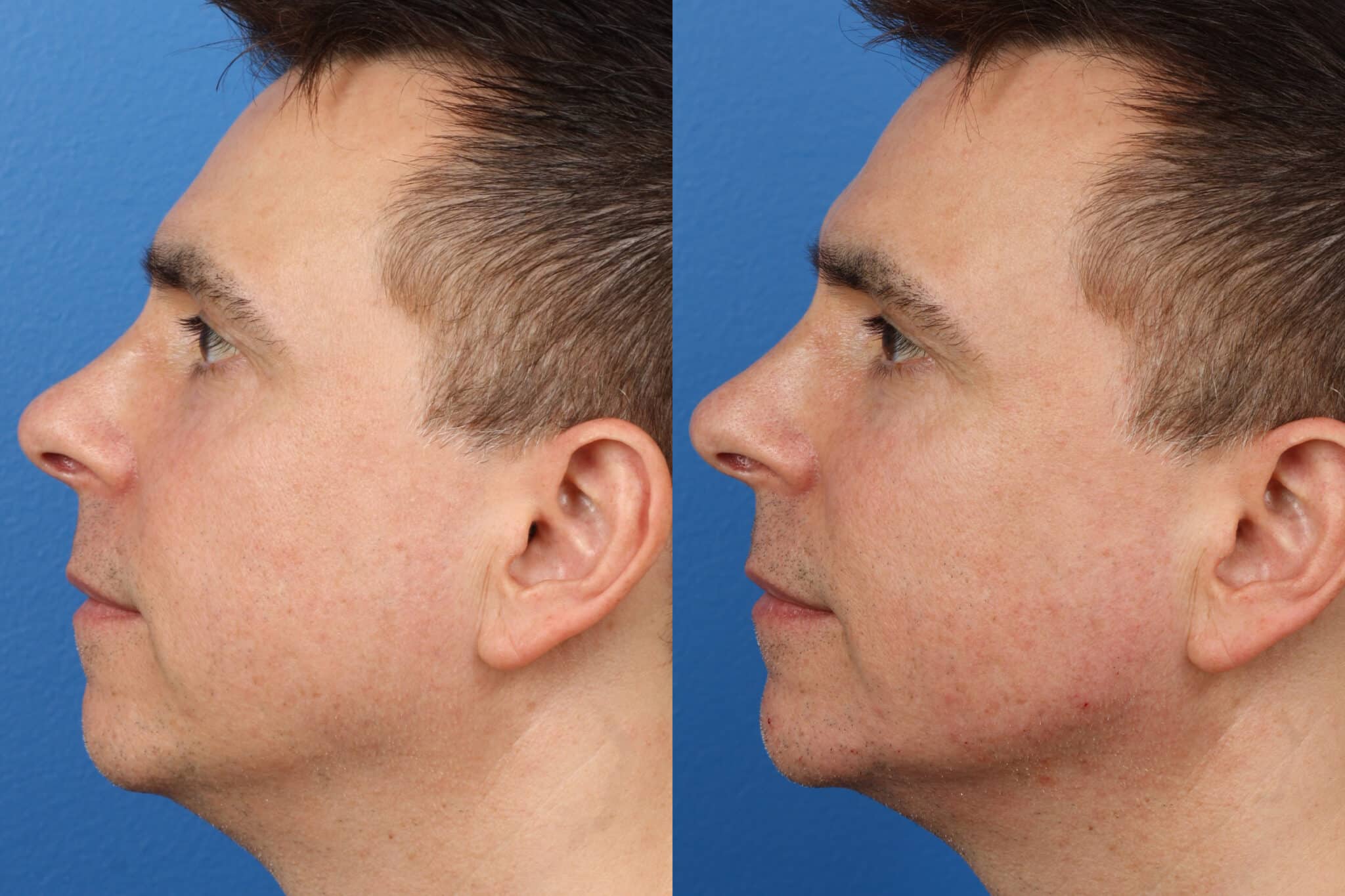
Once upon a time, you didn’t have many options after the signs of facial aging started to appear, other than smearing your face with ineffective cold cream or wearing a chin strap to try to lift up your jowls. Nowadays, though, there are so many choices offered in New York City for reversing signs of aging and rejuvenating your skin that you may be overwhelmed and uncertain of what choice to make.
You might even feel paralyzed by the number of options available to you — stuck in the “paradox of choice” that we sometimes experience in our abundant world. At Dr. Phillip J. Miller’s Facial Plastic Surgery practice, we want to make sifting through your abundance of choices easy for you. Here are a few questions that can help you decide whether you’re ready for a surgical facelift, or if another option better suits your needs and lifestyle.
Do you want immediate results for your face?
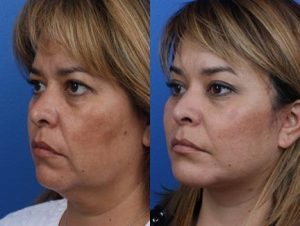
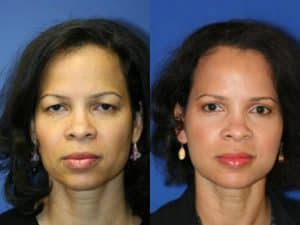
You’ve made up your mind to turn back the clock, but you don’t want to spend weeks to months in recovery from a surgical facelift. A liquid facelift is by far your best option if you want to leave our office looking anywhere from 5-10 years younger, with no recovery time at all. Dr. Miller developed his own variation on a liquid facelift — dubbed the Miller Lift — in which he resculpts and re-contours your face to look more youthful, using only injectable therapies.
Facelift, neck lift, dermabrasion and earlobe repair to enhance the appearance of a female patient by Dr. Miller.
Dr. Miller may choose from a variety of dermal fillers to find ones with the right consistency, longevity, and composition to reverse the signs of aging on your face. You can use a liquid facelift to:
Restore volume to your midface, which lifts up a slightly sagging lower face
Build up your cheekbones for greater elegance and more lift, too
Fill in hollows under your eyes or on your temples
Smooth out and un-do deep creases around your nose and mouth
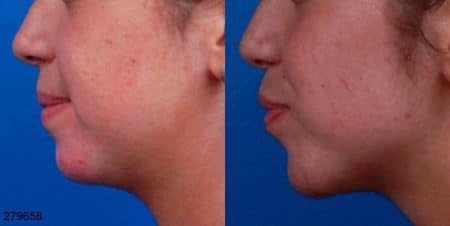
Re-contour your jawline and chin to be sharper and more youthful
Smooth out fine lines and wrinkles, including perioral lines
Rejuvenate and plump up your lips
Philip Miller, MD, may recommend combining hyaluronic-acid (HA)-based fillers (e.g., Juvéderm® and Restylane®) with collagen stimulators (e.g., Radiesse® and Sculptra®) to give you the best of both worlds. The HA fillers immediately add volume, lift, and add smoothness to your face so that you look visibly younger in less than an hour. The collagen stimulators work over the long-term, in the deeper layers of your dermis, to create more collagen that rebuilds and strengthens your skin from the inside out. Together, they provide a powerhouse of anti-aging benefits.
Your treatment could also include Botox® as part of your liquid rejuvenation. Botox smooths out wrinkles:
On your forehead
Between your brows
At the top of your nose
Around your eye corners
*Patient results may vary
However, Botox’s benefits don’t stop there. Dr. Miller can also use Botox to relax tensed muscles around your jawline, neck, and mouth to create cosmetic improvements such as:
Softer, more feminine jawline
Liquid neck lift
Nonsurgical lip flip
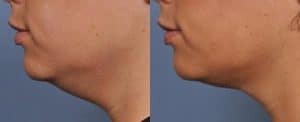
The final component in a Miller Lift is Kybella® — an injectable treatment that melts away unwanted facial fat. Dr. Miller uses Kybella to eliminate double chins and jowls, and tighten the skin along your jawline.
The downside of a liquid facelift is that some of your immediate and dramatic benefits are temporary. You will need periodic touch-ups of both the dermal fillers and Botox (though not of Kybella!), which can range from every 3-4 months for Botox, to up to 24 months for some fillers. We are able to schedule your maintenance checkups and send you reminders so that you always look great, but if you’d rather trade the time savings of a liquid facelift for the ultimately lower cost of more long-term anti-aging solutions, then keep reading.
Are you willing to wait (just a bit) for your facelift? There is an in-between option.
Non-surgical skin-tightening treatments can dramatically rejuvenate your look over time without incisions or scars. They work by stimulating collagen in the deep layers of your skin, which thickens and strengthens your skin, literally turning back time. Although you may notice a difference in the texture and firmness of your skin directly after your first treatment, your skin gets tighter and more youthful-looking over the next several months as your body produces new collagen and elastin. Dr. Miller offers:
Neck-Tite™ — Neck-Tite uses radiofrequency (RF) energy to melt and vacuum away excess fat around your chin and neck to firm and tighten your skin, permanently removing a “turkey neck”
Do you want to wow them with the best possible results?
Despite the advantages of anti-aging technologies, if you want the most dramatic, long-lasting rejuvenation possible,nothing can rival a beautifully performed surgical facelift. Dr. Miller performs a deep-plane lift that not only repositions and lifts up your skin, but also the underlyingsuperficial muscular aponeurotic system (SMAS) layer for superior, longer-lasting, and more natural-looking results. Using mini liposuction, he removes any excess fat from your lower face and chin, which causes jowls and drooping. Choose from:
Full facelift — entire lower face and neck area tighten, lifted, and recontoured
Mini lift — Only lower face and jowls lifted and tightened
Micro lift— this slight, skin-only lift mimics the rejuvenating effects and lift of wearing your hair in a tight ponytail
Depending on your needs, Dr. Miller also performs a neck lift, in which he tightens and lifts the neck’s platysma muscle. In most cases, he recommends fat grafting, which removes unwanted fat from an area where you don’t want it (such as your tummy or legs) and injects it into your cheeks, where it integrates with your tissues to create long-lasting volume. You might also benefit from a:
You won’t see your full results for 2-3 months and may be slightly uncomfortable or a little self-conscious as your facelift heals. You’ll also have slight scars behind your ears. However, Dr. Miller always makes sure to hide the scars in the creases of your skin. You can also later get laser treatments to minimize their appearance.
Your facelift lasts for at least 10 years. That means, even if you don’t do another thing to your face — other than using medical-grade skincare and getting regular chemical peels — you’ll look younger than your peers for a decade or more. So, although the initial investment is larger, you save money and time in the long run. To learn more about facelift, visit medlineplus.gov
Dr. Philip Miller – New York’s Top Facial Plastic Surgeon
Move from considering to choosing by calling our office for a consultation today at 646-791-3025. You can also book an appointment with the online contact form.
A defined jawline can be an attractive indication of youth, beauty, fitness, and vitality, and this is what facial slimming procedures are all about. Dr. Philip Miller is a highly regarded double-board certified facial plastic surgeon and artist who offers world-class rejuvenation in New York City.
How To Get A Skinnier Face?
These are the face slimming procedures that Dr. Miller can combine for optimal facial slimming:
Botox for jaw reduction
Buccal fat removal
G.I. Jaw
Fillers
Chin implants.
Botox For Jaw Reduction
That same injectable known worldwide for effectively diminishing lines and wrinkles around the face and neck can help you get a sharper jawline without surgery. Botox works by temporarily relaxing overactive facial muscles and for a slimming effect, can be injected into the masseter muscle.
The masseter muscle is a powerful muscle that’s wrapped around the jaw bone and whose primary function is to open and close the jaw while you speak or eat. When this muscle enlarges (usually caused by unconscious clenching or grinding of the jaw), the shape of the face changes as well. For women, an enlarged masseter presents the issue of looking more masculine (because of a squared jaw), instead of a feminine (oval) appearance.
When injected into the masseter muscle, Botox relaxes it, causing the muscle to return to a normal shape and size over time. Facial width is reduced and thereby softening and enhancing the appearance of the lower face, and slimming your overall facial structure into a more attractive heart shape.
Whether it’s because of genetics or weight gain, round, chubby cheeks may take away from the beauty of a well-balanced facial silhouette. If you’re looking to get a slimmer face, buccal fat removal surgery is your choice. Buccal fat pads lie within your cheeks and with increasing age, you will tend to lose the fat underneath the skin of your face. However, buccal fat pads remain the same size and do not respond to diet and exercise, resulting in a bottom-heavy or square-shaped face.
Dr. Miller can perform a surgical procedure designed to reduce fullness in the lower cheek by removing the fat pads themselves. In a buccal fat removal procedure, fat pads are removed through small incisions (2-4 cm) inside the mouth, between the cheek and gums. Once removed, the incision is closed with dissolvable sutures. This face reduction surgery can provide slimmer, smoother cheeks, resulting in a more sculpted, symmetrical, and youthful-looking appearance. To learn more about buccal fat removal, visit ncbi.nlm.nih.gov.
A sharp jawline and a square chin are common indicators of masculinity, often signaling strength, vitality, and attractiveness. Diet and exercise, however, rarely help sculpt the face shape you want.
Dr. Miller invented the G.I. Jaw procedure as a non-surgical approach to enhancing your features by outlining your jawline, augmenting your existing facial structures, and supplementing areas of the face, helping you achieve a more chiseled appearance. By using facial injectables, Kybella, liposuction, Neck-Tite, or implants (or a combination of these treatments), Dr. Miller can help you achieve facial symmetry, a strong, muscular jaw, a square chin, and sharp, well-defined cheekbones.
Have you noticed that your once well-defined jawline is slowly changing? That’s because we all lose volume in our faces as we age. And as we lose fat, folds and creases become more pronounced. To fix these issues, we need to restore that volume. Using fillers to achieve a slimmer face does sound contradictory, but in order to look younger and rejuvenated, adding volume to your jawline could be your best anti-aging and slimming solution. By injecting fillers such as Juvederm directly into the jawline, your mandible and the edge of your bony angle are instantly enhanced, giving you a healthier, firmer, and younger-looking appearance.
By correcting a small or weak chin, facial features such as the nose and cheeks are enhanced, giving your face more aesthetic balance. Typically, surgery will involve making a small incision along the crease below the chin, followed by the placement of an implant around your existing chin bone. This procedure will augment the size and shape of your chin, resulting in a more attractive balance between your facial features.
Consult With An Expert Facial Plastic Surgeon In New York
Dr. Philip Miller is a top-rated facial plastic surgery expert in New York who can help you achieve beautiful, natural-looking results for that Aesthetic Confidence® you deserve. To learn more, contact Dr. Miller’s office today to schedule a consultation.
One of the questions that Dr. Philip Miller, a board certified plastic surgeon from NYC, hears quite often from his Rhinoplasty candidates is how long the procedure takes.
Well, like all other invasive surgical procedures, questions and answers of this nature depends on multiple factors.
First, you must realize that all surgical procedures differ in multiple ways. There are a large variety of Rhinoplasty procedures that require different tools, techniques, etc. Along with this, the severity of each case varies from person to person.
You must take into consideration what the patient wants to have done. Is this a procedure for a more attractive nose or is this a more serious case where breathing is impaired or there are other health risks involved? This can change the type of procedure the doctor will perform and the severity of the techniques.
Depending on the individual, the duration of the procedure will have much to do with what the client wants and needs. Rhinoplasty’s can take as little as 10 minutes and can last upwards of several hours.
Also, the surgeon performing the procedure should be taken into consideration along with their experience and expertise. A well-seasoned specialist can do upward of 9 surgeries in any given week. Typically, these procedures may take less time to complete as those whom have been performing these surgeries for quite some time tend to develop a routine way of completing the Rhinoplasty surgery. They have their technique down to an art and their skills are more refined. If the surgeon is younger and newer to the field, their lack of experience and expertise tend to make the surgical process last longer.
For more information on the duration of the Rhinoplasty procedure, watch the video below.
You can learn more about Rhinoplasty by scheduling a consultation with Dr. Miller in NYC. Just fill out our convenient Contact Form or call (646) 791-3112, and one of our helpful Patient Advisers will help you.
When you are recovering, post-surgical rhinoplasty, it is a normal and natural reaction for there to appear to be slight swelling. An individual who has underwent said procedure will notice this immediately once the bandages are removed. The nasal bones tend to want to drift outward after the compression releases the restriction.
For this reason, it is extremely important to understand the techniques behind nasal exercises otherwise because of soft tissue memory shifting of the nasal bones may occur.
What are Nasal Exercises exactly?
Nasal exercises, also known as ‘digital’ exercises, refer to a postoperative instruction that involves massaging the nasal bones after rhinoplasty or revision rhinoplasty surgery. Nasal exercises would only be recommended in rhinoplasty patients where the nasal bones were ‘broken’ during the nose reshaping process. This is also referred to as an osteotomy when the nasal bone is repositioned or narrowed or both. This is commonly performed after a large hump deformity has been corrected and in cases where the nose is crooked. An osteotomy is also frequently done simply to narrow a wide nose during cosmetic rhinoplasty. Nasal exercises are done to help further contour the nose during the rhinoplasty recovery process. Whenever the nasal bone is reshaped as part of a rhinoplasty surgery, a nasal cast is placed to keep the bones in their new position. The nasal cast is usually removed in 5-6 days. In a majority of cases, the nasal bones are fairly well positioned in their new location. However, because the bones were completely cut and moved, they are also still mobile at 5-6 days out from surgery. Once the cast is removed, the nasal bones have the potential to move or drift out of the desired position. If they do so, they will typically trend toward moving back to their original position. And this movement or drifting can occur any time between cast removal and 6-8 weeks out from surgery. Why 6-8 weeks? Because this is the average amount of time it takes before the nasal bone fuses and heals in its new position.
Nasal exercises allow the surgeon to digitally manipulate the healing of the nasal bones, shift displaced grafts and increase the resorption rate of surgical edema in specific areas. Nasal exercises involve application of digital pressure over a specific location to improve nasal contour. The patient will press on the area of the deformity for one minute twenty to thirty times per day. It is crucial that the patient understands to press in the exact location with the appropriate amount of force. The exercises are generally well tolerated but should be done to the point of slight discomfort.
The Benefits of Nasal Exercises include:
The massive advantage of doing nasal exercises following rhinoplasty or revision rhinoplasty is that an individual can truly optimize the surgical results and achieve the best possible outcome.
This video by Dr. Philip Miller shows how to keep the nasal bones narrowed after rhinoplasty and to facilitate the reduction of swelling.
Rhinoplasty, more simply referred to as a nose job, is a nose surgery procedure that by now, we have all heard of. But, other than the fact that rhinoplasty is performed to change or repair the shape and structure of the nose, how much else do we really know? Probably not so much!
If you’re looking into rhinoplasty (or just curious about it), here are the top five interesting facts about it you should know:
1.The first rhinoplasty was performed over 2000 years ago.
The Sushruta samhita by Sushuruta is a medical book that was written in India around 5000 BCE that describes the techniques of rhinoplasty still used today. The techniques were used to restructure noses that had been cut off in battle or otherwise damaged.
Plus, even older then the Sushruta samhita is a papyrus from Egypt, the Ebers papyrus, that gave details on rhinoplasty for restoring a nose that had been cut off as punishment for a crime – apparently a common punishment in that culture.
The discovery of Indian rhinoplasty techniques, and later the Ebers papyrus, brought rhinoplasty to England in the 18th and 19th centuries.
2. Rhinoplasty uses other parts of the body.
Many people assume plastic surgery such as rhinoplasty uses implants to change the shape of the nose. While there are some times when implants are used, it is much more common to take skin or cartilage from other parts of the body and graft it onto the nose.
One common form of rhinoplasty uses skin from the forehead, cut and shaped into what is needed for the nose.
3. Rhinoplasty is much more common than you may think.
In fact, it’s one of the most common forms of cosmetic surgery. In 2007,12 million plastic surgeries were performed in the United States alone. Of these, the top five procedures were breast augmentation, liposuction, rhinoplasty, eyelid surgery and abdominoplasty.
And, since 2007, the demand for rhinoplasty has done the opposite of slow down — it’s continued to grow according to ASAPS stats which say that in 2015 alone 145,000 people headed to plastic surgeons for nose surgeries.
4. Technique for men’s and women’s rhinoplasty varies.
You may think a nose job is a nose job, but when it comes to rhinoplasty, it’s almost entirely art. The angle and slope of a man’s nose is different from a woman’s, and many experienced plastic surgeons will choose angles that feminize a woman’s nose.
5. Rhinoplasty surgery is pretty quick!
Believe it or not, the surgery itself only takes 1-2 hours, and that’s not all — recovery doesn’t take too long either. In most cases, patients are only required to wear a small cast for up to five days.
NEW YORK CITY RHINOPLASTY WITH BOARD-CERTIFIED FACIAL PLASTIC SURGEON PHILIP MILLER M.D., FACS
Leading NYC rhinoplasty surgeon, Dr. Philip J. Miller, M.D., FACS helps patients get the nose they desire through surgical and non-surgical nose job procedures. Dr. Miller has over 20 years experience and is widely regarded as a leading expert in rhinoplasty by peers and patients.
Check out Dr.Miller’s client Brittany only 2 months post-surgery!
Young Brittany came to Dr. Miller to fix the prominent bump that was on her nose and to give a little more definition and volume to her receding chin. She has made an impressive recovery in a very short amount of time. You can visibly see that she has little to no swelling in both the nose and chin area where typically, in other cases, there still may be some obvious puffiness.
It is important to remember that not all individuals heal the same nor do they heal within the same time frame. Undergoing a rhinoplasty procedure can be very traumatic to the face and skin along with the procedure that was done on Brittany’s chin. Her immaculate results are all in thanks to Dr. Miller and his unique, meticulous approach to satisfying his patients with safe, effective techniques.
Rhinoplasty is one of the most popular cosmetic surgical procedures that is performed in the U.S. Commonly referred to as a nose job, this procedure helps reshape your natural nose to a more desired contour. Whether you were born with an undesirable nose or are seeking repair to damage that was caused by trauma in an accident or injury or alleviate structural issues that obstruct breathing. Thousands of patients each year rely on nose surgery to gain relief from low self-esteem or functional issues.
Having work done on the chin to correct an inverted structure is performed using a pre-formed silicone implant and this will help the overall balance and symmetry of the face. This can improve the complete look of the facial features like the nose and cheek. The balance that this procedure provides can help dramatically enhance your overall appearance and restore confidence.
Brittany offers some words of advice for any individual that may be contemplating going in for a procedure such as these. She mentions the importance of research and how that can have a direct effect not only on the process from beginning to end but on the results of your procedure as well. She also advises others to be prepared for what you’re signing up for. Patience is key and the results will not pop-up the next morning. Great results take time and your body is undergoing a natural healing process. After the surgery you will be shocked with the way you look and feel but the end result will make it all worth it.
For a closer look, check out Brittany’s post-op video below.
Transforming Lives Through Results Is What Rhinoplasty Is All About…
Meet this patient of Dr. Miller’s. She can hardly believe her new nose. For most individuals who are seeking nose surgery, they are looking to alter more than just their aesthetic appearance. They are on an authentic quest to enhance their lives through the power of reclaiming one’s self-esteem. After all, looking good is meaningless if you do not truly believe that you are beautiful or have feelings of worthiness. Self-consciousness is a stressful and daily struggle. Yet, everyone from young adolescents to mature adults experience displeasure with their looks- especially their nose.
The nose is such an imperative feature and focus of everyone’s facial structure, restoring balance and symmetry from many different angles. Dr. Miller’s team was overwhelmed with joy after capturing this reveal of the results of the self-confessed, life-altering rhinoplasty surgery for this young patient. She not only acknowledges the contribution and impact that a new and improved nose will make on her overall life, but also she expresses her gratitude for the highly-skilled hands of Dr. Miller and leading his team under the right guidance and direction. From the assessment process throughout the procedure, all the way up until the total makeover moment, Dr. Miller is thrilled to change the lives of his patients for the better.
Watch this happy rhinoplasty patient of Dr. Philip Miller’s. Her reaction to her improved nose made us all happy to share the moment with her. See her final result.
We use cookies to enhance your browsing experience, provide personalized content, and analyze our traffic. By clicking "Accept All Cookies," you consent to our use of cookies. You can manage your cookie preferences or opt-out at any time by clicking "Cookie Settings." For more details, read our Privacy Policy.