Rhinoplasty and Allergies: What You Need to Know
While rhinoplasty cannot cure nasal allergies, it can treat conditions that may exacerbate an allergy, such as nasal polyps, turbinate hypertrophy, or a deviated septum. When a rhinoplasty is combined with a septoplasty, the functional changes made during septoplasty may relieve allergy symptoms and make breathing easier.
Can I Have Rhinoplasty Surgery With Seasonal Allergies?
You can have rhinoplasty surgery even if you have allergies. Allergic rhinitis is not a contraindication to rhinoplasty.
While allergies won’t affect the surgical techniques used in rhinoplasty, symptoms of allergic rhinitis (e.g., runny nose and postnasal drip) can worsen because of post-surgical swelling, possibly making your recovery time more challenging.
Sneezing can also be a challenge during your recovery. Many surgeons advise avoiding sneezing after rhinoplasty during the first week. Because your concern is to reduce nose swelling from allergies and avoid sneezing, it might be best to schedule your rhinoplasty around your allergy season.
If you have a mechanical obstruction in your nose, such as a deviated septum, this may also be improved during your surgery, allowing you to breathe better even in the worst allergy season.
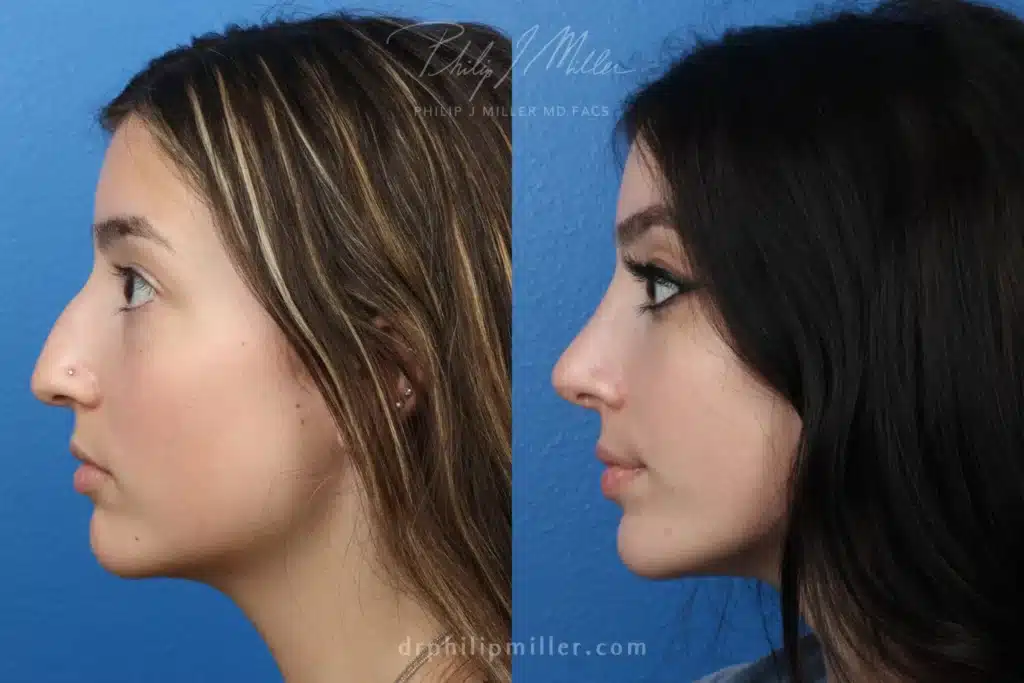
It is best to discuss your allergy history with your surgeon before undergoing nasal surgery. You can work out the right schedule for your surgery, and ideally, your surgeon will enhance the appearance of your nose while correcting any functional issues that affect your breathing.
How Rhinoplasty Can Help with Seasonal Allergies
Septoplasty, also referred to as corrective rhinoplasty, is a surgical solution for a deviated septum. If you have a deviated septum and seasonal allergies, straightening the septum can significantly ease your discomfort during allergy season.
Deviated septum and allergies often go together. While a deviated septum does not cause allergies, it can exacerbate the severity of allergy symptoms like congestion and sneezing.
Turbinates act like the tonsils of your nose. They are projected structures that help filter and humidify the air you breathe. They can become swollen when allergies flare up.
Turbinate reduction surgery can be performed as part of a rhinoplasty. By reducing the size of your turbinates, you experience less congestion and have an easier time breathing even with allergies.
Nasal polyps are small spherical growths that appear along the nasal passages, often as a result of the inflammation caused by allergies. Seasonal allergies may cause small nasal polyps to form. Large polyps can worsen allergy symptoms and affect airflow.
Polyps can be fixed during rhinoplasty to reduce congestion and improve breathing –both providing relief from your seasonal allergies.
Can a Nose Job Treat My Allergies?
No surgery is available to treat nasal allergies. Allergies are caused by immune responses to allergens (e.g., dust, pollen, and smoke) and not structural problems of the nose.
However, rhinoplasty can address conditions that worsen the symptoms of allergies, such as nasal polyps, turbinate hypertrophy, or a deviated septum. While these conditions aren’t responsible for the allergies themselves, they can make it more difficult to breathe when allergies strike.

Learn more about allergies at the Mayo Clinic.
Septoplasty vs. Rhinoplasty for Allergies
Rhinoplasty and septoplasty can improve the function of your nose so you can breathe easier. While a septoplasty is focused on fixing a deviated septum and addressing functional issues, a rhinoplasty will also improve the aesthetic appearance of your nose.
Deciding which nose allergy surgery is best should depend on your specific concerns and goals. Consulting with your surgeon is crucial. Your surgeon will ask about your medical history, allergy history, and medications, as well as the cosmetic and functional goals you want to achieve. Your surgeon can then recommend the best surgical approach for your unique case.
Getting Nasal Surgery for Allergies in New York City
Double-board certified facial plastic surgeon, Philip J. Miller, MD, FACS, blends art and science with innovation and skill to provide thousands of patients with impeccable results. Considered one of the country’s leading experts in rhinoplasty and facial rejuvenation, Dr. Miller and his highly acclaimed team are proud to offer patients the highest level of care and customized treatments in New York City.
Dr. Miller developed the NatraLook methodology for his cosmetic procedures for the face. NatraLook is a specialized consultation process through which Dr. Miller will evaluate your facial features and listen to your concerns and goals. He will reassure and support your opinions positively, creating a collaborative environment that gives you a real say in your own procedure. This opportunity allows patients and Dr. Miller to create a unified vision for optimal results and the most natural outcome possible.
If you’re considering nose surgery for allergies, other functional concerns, or cosmetic reasons, schedule a consultation with Dr. Miller in Manhattan, New York, or New Orleans, Louisiana today.
Next, read more about nose surgery for breathing here.
When to Choose a Nose Tip Surgery Over Full Rhinoplasty?
Sometimes the aesthetic improvements you’re looking for can be achieved with nose tip surgery rather than a full rhinoplasty. If your concerns are centered around the appearance of the tip, nasal tip refinement may be sufficient for you. If you’re looking for a more dramatic result that involves other parts of the nose, a full rhinoplasty may be a better choice.
A nose tip job can effectively address a number of issues to elevate your aesthetic appeal and improve your self-esteem. Before your consultation, check out these common aesthetic concerns to help you determine whether rhinoplasty tip refinement is the right choice for you.
Droopy Tip
A droopy tip can appear just when you smile or it may be apparent all the time. It can be a genetic trait or the result of a previous rhinoplasty. This cosmetic concern can be altered with a nasal tip rotation surgery that focuses exclusively on lifting and refining the nose tip.


This procedure internally points the tip of the nose upwards, increasing the angle between the upper lip and the bottom edge of the nose. This gets rid of the “droopy” appearance.
There are a variety of ways that Dr. Miller can effectively address a droopy tip. These can include trimming excess cartilage, shortening the nasal septum, or reducing the length of the lateral cartilage. Sutures can be used on lower lateral cartilage to lift the tip, or a graft could be used to increase nasal tip support.


Upturned Tip
An upturned tip requires the opposite of the fix for a droopy nose. A nose derotation procedure lowers the upturned tip, decreasing the angle between the upper lip and the bottom edge of the nose. A tip refinement rhinoplasty can often address this issue without the need for a full rhinoplasty.


Bulbous Tip
A bulbous tip appears round, like a bulb on the end of the nose. Making this shape less circular and more pointed involves nose tip refinement. By altering the cartilage or using sutures to pull the nasal structure forward, Dr. Miller can resolve a bulbous tip and create a more aesthetically pleasing profile.


Overprojected Tip
An over-projected tip extends out farther than the average nose. Dr. Miller can effectively reduce the overall size of the nose to bring it into proportion with the rest of the facial features. To refine the tip of the nose, Dr. Miller may remove cartilage from the area. This creates a smaller projection that matches the visual goals of the patient. A full rhinoplasty may also be required to adjust the nasal bridge as well as the tip.


Wide Nostrils
Wide nostrils can create a broader base to the nose that may look out of proportion with the other facial features. Dr. Miller can effectively reduce the lower lateral cartilage to create smaller nostrils, and pull them forward to produce a better aesthetic. If you’re dealing with wide nostrils, rhinoplasty for tip refinement may be a great choice for you. If you have wide nostrils and other nasal structure issues that you’d like to have addressed, a full rhinoplasty would be a better option.


Benefits of Nose Tip Surgery
There are some benefits to choosing a refined tip rhinoplasty over a full rhinoplasty:
- Recovery time may be quicker
- Less bruising and swelling after surgery
- Tip of nose rhinoplasty might cost less
- Results last as long as full rhinoplasty
- Very satisfying results for the right patient
A nasal tip rhinoplasty may not be the right choice if you want correction to your nasal bridge or you have structural issues that impact your breathing. A consultation with an experienced rhinoplasty surgeon will help you determine the best approach for you.
Getting Nasal Tip Surgery in New York City
Philip J. Miller, MD, FACS, is a double-board certified facial plastic surgeon who has a wealth of experience and expertise in all types of rhinoplasty techniques. He will customize your surgery to ensure a harmonious, beautiful, and natural result.
Dr. Miller’s proprietary Natralook consultation process helps you achieve aesthetic confidence in a safe environment. By understanding your goals and discussing your needs, Dr. Miller can align your results with your expectations for a positive experience and outcome.
Contact his office in Manhattan, New York, or New Orleans, Louisiana, to schedule your consultation with him today.
Tip Drop After Rhinoplasty
Tip drop is a potential consequence after rhinoplasty. While the nose changes over the first year after this surgery, some patients may find that they require revision procedures to address tip drop that does not resolve during the healing process.
Choosing to undergo plastic surgery is not a choice that you should make lightly. Rhinoplasty is no exception. Every invasive procedure has risks, but choosing an experienced facial plastic surgeon can help lessen the complications.
What is Tip Drop?
Tip drop is one complication that may occur after rhinoplasty. You may notice that the tip of your nose starts to look round. In other cases, you may see your nose has developed a new bump due to your nose tip being disproportionately lower than your bridge.
While your tip will drop slightly as your nose heals, a round nasal tip may indicate that a “dropped tip” has occurred.

Is it Common for a Tip to Drop After Rhinoplasty?
Will the tip of your nose drop after rhinoplasty? It might appear that way. This illusion is expected as the swelling goes down and your nose begins to heal. As the incision starts to contract, the tissue above your nose tip will rise, which causes your tip to look like it dropped.
Another reason your tip will drop after your nose job is due to gravity. Gravity naturally pulls your nose tip downward. If your remaining cartilage is too weak to hold your tip in position and overcome gravity’s tug, your tip may drop.
These are both predictable and preventable. Your plastic surgeon should consider gravity’s pull, the strength of your cartilage, and how much your incisions will contract before performing your rhinoplasty.
A significant tip drop is a common complication of rhinoplasty, especially if your surgeon is inexperienced. Therefore, finding an experienced surgeon is essential to diminish the chance of tip drop.
How Much Will My Tip Drop After Rhinoplasty?
Your tip should drop between five and ten degrees after rhinoplasty. This drop is due to gravitational pull and your incisions tightening. Any drop that is greater than that means there may have been a surgical complication.
When Will My Tip Drop After Rhinoplasty?
After rhinoplasty, your tip should drop over the next six weeks as swelling reduces and your incisions contract. However, it can sometimes take up to a year to see the full effect of your nose surgery. You likely won’t know if there were complications during your rhinoplasty until a year has passed.

What if My Tip Drops Too Much?
If your tip drops too much after your nose surgery, you may need a revision rhinoplasty. Surgical errors, outdated techniques, or recovery complications could be reasons your nose tip dropped too much. These revision nose jobs occur about one year after the initial surgery to ensure all post-surgical swelling is gone.
During revision rhinoplasty, your surgeon may need to place a graft to achieve your desired result. The amount of tip drop will affect the type of graft your surgeon will need to place. It is critical to choose a board-certified facial plastic surgeon with extensive experience and expertise in revision techniques, as revision rhinoplasty is typically even more complex than the initial procedure.
Reduce Rhinoplasty Complications by Choosing a Leading Expert in Rhinoplasty
Whether you are undergoing a rhinoplasty because you’re unhappy with the size or shape of your nose or due to trauma, finding the right surgeon is essential. The right surgeon can ensure the procedure is done the first time correctly and that you’ll be pleased with your results.
Regardless of your reason for rhinoplasty, Dr. Philip Miller, MD, FACS, should be your number one choice. Dr. Miller is a double-board certified plastic surgeon serving Manhattan, New York, and New Orleans, Louisiana.
He has honed his unique approach to facial surgery over decades. He works with you in a caring, patient-focused environment. Dr. Miller utilizes the NatraLook process, creating a collaborative treatment where your concerns are valued, your confidence is enriched, and your natural aesthetic beauty is enhanced.
Schedule your consultation with Dr. Miller and his highly-trained team by contacting our Manhattan office. Our acclaimed team is proud to offer customized procedures to make your dream nose a reality.