Insurance and Financing Basics
More and more people are turning to plastic surgery to improve their appearance. Most plastic surgery procedures are considered elective and are not covered by insurance plans, leaving patients to pay out-of-pocket. Many financing options are available to help patients pay for procedures.
Dr. Miller also offers nose surgery for medical reasons for some patients. For example, you may need a deviated septum straightened if it is causing nasal obstruction. In these situations, our office will work with you to ensure you receive your covered benefits from your insurance company.
Dr. Miller’s Manhattan office offers flexible financing solutions, so patients have the ability to choose treatments that suit their cosmetic needs regardless of cost. Dr. Miller is not affiliated with these financing companies but offers the plans to make plastic surgery available to all patients. Our financing options include:
CareCredit
CareCredit is a popular credit card option specifically created to help those with health and wellness needs not covered by insurance. CareCredit can finance different surgical and non-surgical cosmetic procedures such as:
- Tummy tuck
- Body sculpting
- Tattoo removal
- Reconstructive surgery
- Liposuction
- Injectables
- Laser hair removal
Patients need to apply for a care credit card, and it can be used like a regular credit card. It offers short and long-term financing with no interest options to make payments easy and affordable. You can learn more about the card and apply for the financing card here.
Alphaeon
Alphaeon is another financing option for board-certified plastic surgeon visits and procedures. The credit card offers short- and long-term options with no interest and low APR. Patients can complete an online application and find out their borrowing limit with credit lines up to $25,000. Learn more about the card and apply online.
Schedule a consultation
When you schedule a plastic surgery consultation, you will learn about the procedure, the cost, and financing options. If your procedure is not covered by insurance, our office staff will provide the information you need to make an informed decision and get your financing set up.
Dr. Miller is a distinguished double-board certified plastic surgeon specializing in cosmetic facial procedures and facial rejuvenation. Dr. Miller is also a leading expert in rhinoplasty and provides patients with exceptional results. He offers custom solutions to help patients feel confident and beautiful.
Contact us to schedule a consultation to learn more about our plastic surgery procedures and financing options.
8 Nose Imperfections People Correct with Rhinoplasty
No one’s face is perfect, but some people may have noses that can be a significant source of self-consciousness and low self-esteem. Nose surgery, also called rhinoplasty, can be performed on the nose to correct nasal imperfections and asymmetry.
Nose imperfections are common, which is why rhinoplasty procedures are one of the most popular cosmetic surgeries in the world. Take a look at these eight nose imperfections that can be corrected with rhinoplasty:
Dorsal Hump
A dorsal hump is a cartilage or bone irregularity on the nose that causes a hump in the outline instead of a seamless slope from the bridge to the tip. They do not cause health problems but can lead to dissatisfaction with one’s appearance. The dorsum bone and cartilage connect the nose to the face and is often called the bridge. Rhinoplasty can remove the hump to produce a more aesthetically-pleasing facial profile.


Philip J. Miller, MD, FACS, can also use his microrhinoplasty technique to correct unsightly humps without fracturing bones or using other more invasive approaches. It is an innovative procedure that utilizes an air-powered microrasp with local anesthesia. Using a small incision in the nostril, the specialized device removed the obtrusive layer with extreme precision for a contoured look. Patients experience minimal side effects like swelling and bruising and can return to normal activities within several days.
Wide Nose Bridge
The bridge of the nose extends from the top of the nose, below the eyes, to the tip of the nose and is used to help direct airflow to the nasal passages. In addition to its functional role, the nasal bridge is also considered an important feature of the face that can add to a person’s overall facial appearance and balance.


A wide nasal bridge is often common among many Asian, African, and Hispanic ethnicities. It is important to work with a board-certified facial plastic surgeon with experience in ethnic rhinoplasty procedures to ensure beautiful natural results that do not compromise your heritage in these situations. A wide nose bridge can be corrected with a specific technique during a rhinoplasty called an osteotomy, which narrows down a wide nasal bone for a more proportionate look.
Low Nasal Bridge
A low nasal bridge occurs when the bridge is flat and doesn’t protrude. It is a common characteristic among many ethnicities, such as Asian and African patients. A low nasal bridge doesn’t typically cause breathing problems but can be a cosmetic concern. The nasal bridge can be reshaped with a rhinoplasty to create a straighter profile and a more harmonious face shape.


Bulbous Tip
A bulbous tip is wide and round and can also be called a ball tip nose. The bulb-like shape of the nasal tip is typically due to excess cartilage or cartilage without definition. A bulbous tip can also be due to thick nasal tip skin, which is often seen in ethnic noses. During nose tip surgery, the edges of the cartilage are trimmed to create a more refined nasal tip.


Drooping Nose Tip
A drooping nose tip is characterized by a downward slope that can sometimes result in an unnatural appearance, nasal blockage, and breathing issues. The drooping tip can form due to excess cartilage around the nose, aging, and skin laxity. Rhinoplasty is a permanent solution that can remove excess cartilage and provide support for the nasal tip, lifting and refining the nose for a more pleasing profile.


Droopy Nose when Smiling
Many patients have concerns about a droopy nose when they smile. A droopy nose when smiling can form from a weak structural base and droopy tip. The muscles around the nose move to make the tip appear droopy with wide nostrils making the problems more exaggerated during the facial expression. An expert surgeon can correct this concern and in some cases, temporary non-surgical treatments like Botox injections can also improve the droopiness.
Wide Nasal Base
A wide nasal base features a broad spread at the base of the nose, which can include enlarged nostrils that are disproportionate to the rest of the nose. In this case, a nose reduction procedure known as alar reduction can focus on narrowing the base of the nose by making the nostrils smaller, removing excess cartilage, and refining the nasal tip. Some ethnicities naturally have a wider nasal base that can be corrected by a facial plastic surgeon with expertise in ethnic rhinoplasty techniques.


Hanging Columella
The columella is the tissue that separates the nostrils at the base of the nose. A hanging columella occurs when the connective structure drops lower than the base of the nose so it can be seen in the profile. Some patients are born with this feature, while others can have a long septum that pushes the columella downward. A hanging columella can be corrected with a rhinoplasty procedure and can be altered without reshaping any other portion of the nose.
Learn more about rhinoplasty here.


Concerns with Your Nose? Dr. Miller can Help
Dr. Philip Miller is a double board-certified facial plastic surgeon with more than two decades of experience in facial procedures including rhinoplasty. He provides a supportive environment for patients to explore their aesthetic beauty with his proprietary Natralook® process. Contact us to schedule a consultation and learn more about how rhinoplasty can change your appearance for the better.
Female Primary Rhinoplasty Case Study
6 Facts About Male Facelift You Didn’t Know
More men are now defying the aging process with cosmetic intervention, and the number of men seeking facelift procedures has drastically risen in the last few years.
While all facelifts are tailored to address a unique patient’s needs and goals, facelift surgery for men requires a different approach.
Here are 6 facts that make a male facelift unique:
1. Male Facelifts Occur More Often than You Think
Although women still represent the majority of plastic surgery patients by far, men are steadily increasing the number of procedures they want to maintain their youthfully masculine appearance.
According to the Aesthetic Society’s annual Aesthetic Plastic Surgery Statistics, following a year in which many practices closed temporarily and reduced hours, plastic surgery surged in 2021. Surgical procedures increased by 54%, and the average plastic surgeon performed 320 surgical procedures in 2021, compared with 220 in 2020.
Men, aged 36-50, comprised 40% of male patients who underwent a surgical procedure, with 5,061 males undergoing a facelift in 2021.
2. Male Facelifts Have Different Goals
While both men and women desire to stop the clock on aging, the dynamics of their facelift will have key differences. Women often get a facelift to eliminate deep lines and wrinkles around the cheeks, as well as sagging skin in the neck. While they want to look younger, they also want to maintain a feminine appearance and an aesthetically-pleasing heart shape to the face with well-defined cheeks and a slim, contoured jawline.
The opposite is true for men. Although they also want a facelift to address noticeable wrinkles around the mouth and nose, or sagging skin on the cheeks and jawline, they desire to have a more masculine or “rugged” appearance. They want their facelift to create a strong, chiseled, and defined jawline – without the loose folds on their neck that they often complain make it difficult for them to properly shave.

No two people are the same. The facelift procedure, whether for a male or female patient, will be customized to focus on the unique problem areas and desired results of each individual.
3. Male Skin Needs to be Treated Differently
Anatomy differs between men and women, and this includes skin structure. A man’s facial skin is generally thicker and oilier compared to a woman’s skin.
Men have stronger connective tissues, and they may not experience visible signs of aging for much longer. However, it is the thickness and heartiness of their skin that make their necks and jawline particularly vulnerable to folds and crepey skin.
A facial plastic surgeon performing a male facelift will need to exercise care to avoid pulling skin too tight, as this can result in a facelift with an overly done or pulled appearance.
Men also have more facial hair than women, and this means having more hair follicles that rely on blood supply to grow. Since male skin is also more vascular and will demand more blood supply, men are more susceptible to post-surgery bleeding, which is a factor facial plastic surgeons must take into consideration during and after a facelift on a male patient.
4. A Male Facelift Requires Different Incision Placement
Compared to women, men have shorter hair and hairlines that tend to recede with age. Surgeons may make the incisions at the spot where the ear connects with the head or under the chin, where they are less noticeable or can be hidden in the natural folds of the skin.
Surgeons will need to watch areas of the skin where facial hair grows because they would not want to shift skin with hair follicles to another area where hair does not typically grow. For instance, if skin with hair follicles is lifted and placed higher on the face, the patient might need to start shaving in that area.
5. Scarring Can be a Bigger Concern with the Male Facelift
Surgeons may need to modify incision placement on male patients who are bald or losing hair to keep scars hidden. For patients who don’t have hair to camouflage scarring, incisions are shortened and placed higher up along the ear. Incision placement has to be precise and should still enable the surgeon to have adequate access to underlying tissues while avoiding tension on any stitches and keeping scars discreet. The surgeon’s advanced skill and technique are required to ensure minimal scarring when performing facelifts for males.
6. Men Don’t Have to Stop at a Facelift
The facelift is a comprehensive anti-aging procedure that can produce dramatic results. Pairing a facelift with one or more other cosmetic procedures can produce even better results. Men are discovering that adding treatments to their facelift can produce an optimal outcome for them and when procedures are performed together, this approach does not impact the amount of time taken from work and other activities.
Male facelifts are often combined with a neck lift. The incision made under the chin for a neck lift allows the surgeon to also remove excess fat and tighten tissues and muscles in this area to enhance a man’s neck and jawline. When the face and neck are surgically rejuvenated together, the results will look more natural as well.

Other patients may find eyelid surgery, rhinoplasty, or laser skin resurfacing can help them achieve all of their aesthetic goals.
What exact surgical and non-surgical procedures will pair well with your facelift? Come in for a consultation to get a customized procedure plan that will help you achieve your aesthetic goals.
Considering a Male Facelift in New York? Consider Dr. Philip Miller for All Your Cosmetic Needs
Philip J. Miller, MD, FACS, is a double board-certified facial plastic surgeon who has extensive experience with plastic surgery procedures for men as well as women. He pioneered the NatraLook methodology for his cosmetic procedures for the face, which is a specialized consultation process through which Dr. Miller will evaluate your facial features and listen to your specific concerns. NatraLook creates a collaborative environment that ensures a unified vision for optimal results and the most natural outcome possible.
To learn more about facelifts for men, view male facelift before and after photos, or determine the cost of a male facelift, contact Dr. Miller in Manhattan, New York to schedule a consultation today.
Bifid Nose Tip
A bifid nose tip is characterized by a vertical line or split down the center of the nasal tip. While it does not typically cause functional problems, it can pose a significant cosmetic concern. Fortunately, there are ways to correct a bifid nose tip to enhance the appearance.
Why do I have a vertical split on my nose?
If you have a nose tip indentation or vertical line on your nose, it’s probably a trait that’s been inherited from your parents. Your genes determine the shape of your nose, and a split nose tip is no exception. Having a line on your nose tip is medically referred to as having a bifid tip nose.
When the soft tissue that spans the two sides of the nose is very thin, the outlines of the underlying cartilages are exposed and poorly camouflaged. The resulting appearance is called a bifid nasal tip or frontonasal dysplasia. The cartilage in the sides of your nose can consist of two separate parts, and when the gap between them is wide it creates a nose dimple tip. If the cartilages are convex in shape it can form a depression between them, also creating a dent on your nose, or bifid nose tip.
Is bifid nasal tip common?
A dent in the nose tip is generally a rare occurrence. It’s caused by a relatively uncommon malformation where the nasal cartilages are very prominent and displaced from one another or if the overlying skin is thin and the cartilage edges are exposed. Mild conditions may be hardly noticeable while severe conditions can result in a complete division of the nose, or a cleft nose tip.
While it’s typically inherited, it can present itself as a new condition with no prior family occurrences. In these cases, genetic material is still the cause of the defect. Due to the lower alar cartilages on the sides of the nose and the septum in the central tip region, the tip of the nose has the greatest amount of variability. This makes it particularly vulnerable to malformation.

Source: therealjasonbateman Instagram
Not actual patient
How to get rid of an indent on the tip of my nose?
In order to get rid of a dimple on your nose, the split in the nose needs to be corrected. This requires the restructuring of the nasal pyramid through a surgical procedure. The necessary rhinoplasty requirements will vary depending on the severity of the split. In some cases, the split may be corrected with minimally-invasive surgery involving sutures. Other patients may require a more extensive rhinoplasty with comprehensive nasal reconstruction.
Learn more about a bifid tip here.
Bifid Nose Treatment Options in New York
Double board-certified facial plastic surgeon Philip J. Miller, MD, FACS, is recognized as an expert in rhinoplasty in Manhattan, New York, and New Orleans, Louisiana. He offers personalized surgical plans for patients that achieve natural, beautiful results that fit their precise needs and goals. For a more comprehensive understanding of nose dimple treatment options, please consult our glossary.
Bifid Nose Rhinoplasty in NYC
Conveniently located in Manhattan, New York, Dr. Miller is available for rhinoplasty consultations. He will determine the severity of your nose split and the surgical procedures required to correct the condition. The two of you will discuss any aesthetic desires you have for the final shape of your nose.
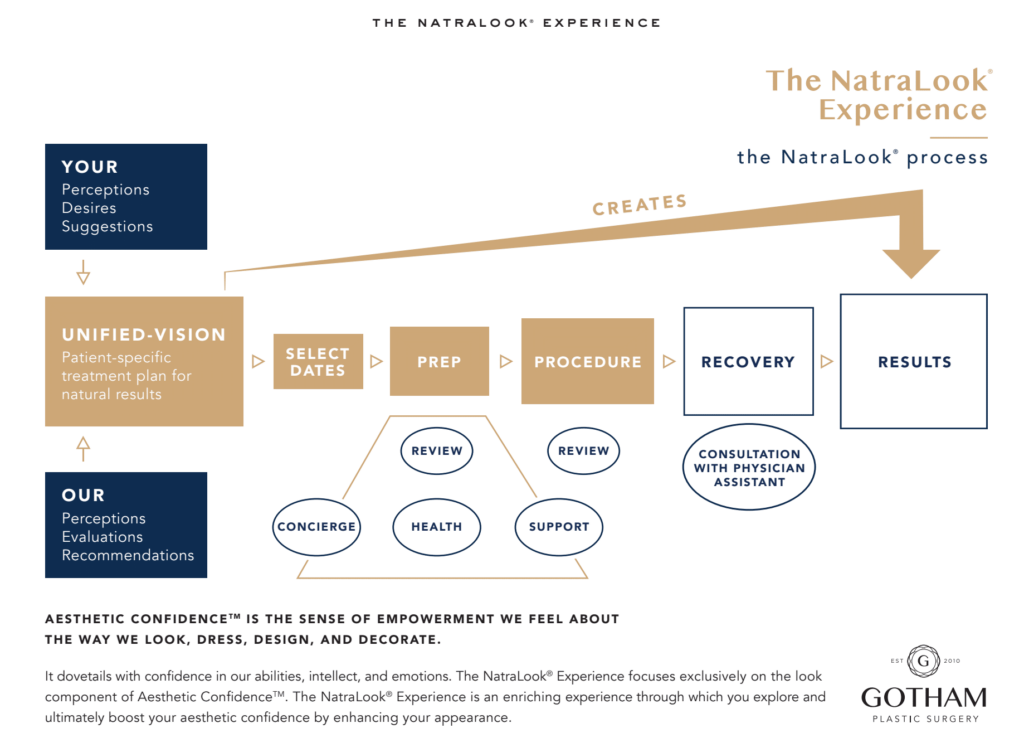
Using his proprietary NatraLook consultation process, which he developed to provide an enriching experience to patients that results in true aesthetic confidence. Dr. Miller will create an environment of safety and support for you, customizing your treatment plan to achieve your personal expectations.
How does Dr. Miller correct a bifid nasal tip?
There are different techniques Dr. Miller might use for your rhinoplasty, depending on your specific needs and expectations. The extent of your rhinoplasty will be tailored to your personal specifications.
For mild cases of bifid nose, Dr. Miller may sew the two cartilages of your nose together with internal sutures. Alternatively, he may place a columellar strut cartilage graft between the split cartilages to fill the defect to treat more severe conditions. In some convex cases, the cartilage may need to be reshaped, or a dermal graft needs to be placed on top of the cartilage in aid in camouflage. Depending on your unique needs, this condition may be corrected with a tip surgery or an entire nasal reshaping procedure.
Bifid Tip Before & After Photos
While bifid nose condition is a rare occurrence and examples are hard to come by, there are plenty of reasons why nose tip rhinoplasties can benefit clients. Here are some examples of nose tip refinement rhinoplasties conducted by Dr. Miller.
Coming soon!
Droopy Nose (How to Get a Pointy Nose)
Many people who are dissatisfied with the shape of their nose suffer from “droopy nose,” where the tip of the nose points downwards and creates a drooping appearance. Correcting a nose tip droop is one of the most common procedures in cosmetic rhinoplasty. If a droopy nose is the only thing you notice when looking in the mirror or smiling, rest assured there are many treatment options to achieve a more lifted nose tip and gain confidence in your appearance.
What is droopy nose tip?
Droopy nose tip is when the tip of the nose appears to droop downwards, often referred to as a downturned nose or a ptotic tip. The appearance of this drooping nose tip is often bothersome to patients, leading them to seek cosmetic treatments or surgery. Apart from its bothersome appearance, a down turned nose can also lead to breathing issues if the droopy nasal tip is so severe that it blocks the air passage.
What causes a droopy nose?
The most common causes of a droopy nose tip are:
- Genetics. An elongated septum and excessive cartilage in the tip of the nose are inherited characteristics that can run in some families. Or the very opposite, cartilage that supports the tip from the bottom are too short.
- Age. The cartilage and connective tissues in the nose weaken with age, causing the tip of the nose to droop downwards over time.
- Accidents or Previous Surgery. Traumatic accidents or poorly performed nasal surgery can leave the nose with insufficient nasal tip support, eventually leading to drooping that may require revision rhinoplasty.
Droopy Nose Tip When Smiling
Patients often experience a more pronounced droopy nose tip when smiling. While it appears the nose points further down during a smile, it’s more likely the result of the surrounding facial muscles contracting and pulling the surrounding tissue upwards during a smile—creating a more prominent droop. Nevertheless, this can make patients feel uncomfortable about their smile and seek corrective procedures.
What age does nose start to droop?
You can notice a droopy tip as early as your teenage years, but if the problem is due to aging, you’ll notice it around the age of 40. At that age, we start to notice the effects of the breakdown of collagen and connective tissue associated with aging. We often attribute this to wrinkles, sagging of the skin around the chin and jawline, and baggy eyes.
Another facial feature impacted by aging can be the nose. We might begin to notice the dreaded droopy nose as collagen and elastin is lost in the tip of the nose and surrounding tissue. Although we can’t stop the hands of time, there are many treatment options to correct the tip of nose drooping due to the effects of aging.

Droopy nose treatment options in New York
Wondering how to reshape your sagging nose or ptotic tip in New York? There are fortunately many treatment options to achieve that lifted nose tip you’re looking for. A rhinoplasty or injectable procedures are the most common methods of correcting a droopy nose. The best treatment for you depends on both your comfort level and how severe your case of drooping tip nose is. Regardless of the treatment you choose, you want a surgeon in Manhattan, New York, or New Orleans, Louisiana that is more than qualified to create your ideal nose.
Droopy nose tip rhinoplasty in NYC
A surgical rhinoplasty certainly creates the most dramatic, long-lasting results to correct the nose slope and lift the tip of the nose. There are many surgeons in Manhattan, New York, and New Orleans, Louisiana that perform these procedures for their patients. However, rhinoplasties aren’t one-size-fits-all. There are many techniques for surgical reconstruction of the tip of the nose and it’s important to find a skilled, experienced surgeon that will perform the best surgical technique for your unique nose.
Learn more about rhinoplasty here.

How does Dr. Miller correct a droopy nasal tip?
If you’re looking for a highly regarded facial plastic surgeon with a track record of amazing nose tip surgery results, meet Philip J. Miller, MD, FACS. Dr. Miller will perform a close examination of your nose to determine the best technique to correct your droopy nasal tip.
In mild cases, or when the patient wants to avoid a surgical procedure, Dr. Miller may recommend a non-surgical rhinoplasty with injectable fillers. Hyaluronic acid fillers such as Restylane®, Perlane®, and Juvéderm® can alter the shape of the nose to create a more upturned appearance. These fillers produce immediate results with exceptionally short recovery time. If your droopy nose is mild or you’re not comfortable with rhinoplasty surgery, a non-surgical nose job with the use of fillers may be your solution.
If the droopiness is only present when you smile, an injectable treatment using a neuromodulator like Botox may be another option. These treatments target the muscles that lead to concerns like a drooping nasal tip. As the muscle relaxes, the nose no longer droops when a smile forms.

While injectable treatments can provide immediate – albeit temporary – results, surgical rhinoplasty is the best solution for a severe nose droopy tip or for those who desire nasal reduction. Surgical rhinoplasty corrects the droopy nose with upward nasal tip rotation. If you’re considering rhinoplasty surgery in Manhattan, New York, or New Orleans, Louisiana, Dr. Miller can achieve the results you desire within the NatraLook® Experience, which empathizes with the patient experience and strives to achieve the most natural results.
Droopy Tip Before & After Photos


View our full gallery here.
Let Dr. Miller Help You with Your Droopy Nasal Tip
At his plastic surgery clinics in Manhattan, New York, and New Orleans, Louisiana, acclaimed double board-certified facial plastic surgeon Dr. Miller performs cosmetic procedures that achieve dramatic and long-lasting results. If you’re looking for how to lift the nose tip or how to get a pointy nose, schedule a consultation for rhinoplasty by calling (646) 791-3025, or filling out our online contact form.
Deep Plane Facelift in New York
Vertical Facelift in New York
If you’d like to achieve a natural-looking, youthful appearance while improving your complexion, a vertical facelift may be the right choice for you. This procedure diminishes common side effects of the aging process such as creases, wrinkles, and jowls while addressing skin laxity in the mid and lower face to turn back the clock on your appearance.
A vertical facelift is just one option for patients looking for full facial rejuvenation. This procedure is often recommended for patients who are noticing signs of aging in the mid and lower face and may be combined with other procedures like a neck lift or eyelid lift to produce comprehensive results.
What can a vertical facelift do for me?
A vertical facelift targets signs of aging in the mid and lower face to achieve a naturally youthful appearance. This procedure addresses the same concerns targeted in a traditional facelift but uses a revolutionary technique to pull the skin in a vertical, rather than lateral direction for a more natural-looking result. People who undergo a vertical facelift enjoy numerous aesthetic benefits, such as:
- Fewer signs of aging in the middle of the face
- Reduced excess skin and improved skin elasticity
- Less pronounced fine lines, wrinkles, and jowls
- Defined cheekbone and jawline contours
What areas can be treated by a vertical facelift?
A vertical facelift is ideal for targeting the middle and lower portions of the face. This procedure may improve the definition of your jawline, minimize loose skin, diminish wrinkles and jowls, and elevate drooping cheeks. The vertical technique ensures a more natural result, preventing the windswept facelift outcome patients used to get. This procedure repositions fat and tissue to restore definition to the midface and along the jawline.
Vertical facelift before and after
Viewing vertical facelift before and after photos is a great way to determine how this procedure may address your own cosmetic concerns. Take a look at some of these examples to determine whether a vertical facelift might be the right choice for you.


Why choose Dr. Miller for my vertical facelift procedure?
- Double board-certified
- More than 2 decades of experience
- Focus on cosmetic facial procedures
- Customized treatment plans
- Natural results
- Multiple facelift options
When you schedule a consultation for a vertical facelift, Philip J. Miller, MD, FACS will take you through his NatraLook process to gain a better understanding of your desires and concerns and to come up with the best option for your specific needs. He offers compassionate and meticulous care to his patients at his Manhattan, New York, and New Orleans, Louisiana, cosmetic surgery clinics.
Vertical facelift FAQ
1. What is a vertical facelift?
Similar to a traditional facelift, vertical facelifts address undesired signs of aging such as sagging skin, wrinkles, and jowl formation. The main difference is that this revolutionary procedure utilizes a vertical skin pull, rather than the traditional horizontal pull, to provide a more natural-looking result. A vertical facelift focuses mainly on the middle and lower portions of the face.
2. How much does vertical facelift cost in NYC?
When giving an estimate of a vertical facelift price, it’s important to remember that several factors can affect your overall costs, such as receiving additional services, fillers, or surgeries. Generally, a vertical facelift surgery cost in New York can range anywhere from $5,700 to $40,000. It is best to schedule a consultation with Dr. Miller to determine what your specific needs will be and what the total price will amount to.
3. How will the procedure go?
Before your vertical facelift procedure begins, Dr. Miller will ensure that you feel relaxed, comfortable, and informed. After applying the necessary anesthesia, incisions are made along the hairline in order to improve cheek contour and malar fat pad positioning with absorbable sutures. Small incisions are also made near the ears to remove excess skin in the mid and lower half of the face and to redefine the jawline.
Deeper skin tissues are lifted vertically and repositioned in an upward direction to achieve tighter, more youthful-looking skin. Surgical drains may be inserted to prevent fluid accumulation, but are removed within 48 hours following your procedure. Depending on other surgeries or fillers being combined with your vertical facelift, surgery timeframes can range from approximately two to six hours.
4. What does recovery from a vertical facelift look like?
Following your vertical facelift, you will need someone to drive you home and assist you for the first 24 hours. Patients may experience temporary bruising or swelling which can be alleviated by applying ice to these areas and keeping the head elevated. Most bruising and swelling will subside after about a week, at which point patients can return to regular activities.
5. Does it hurt?
Anesthesia is administered prior to your surgery so you will not feel any pain during your procedure. Many people experience bruising and swelling following their vertical facelift but find that keeping their heads elevated and applying an ice pack alleviates these side effects. Any other pain symptoms experienced can be alleviated with a mild prescription or over-the-counter pain medication.
6. Will insurance cover my vertical facelift?
Since facelifts are considered elective cosmetic surgery and not deemed medically necessary, your vertical facelift cost will not be covered by most insurance.
7. How long does a vertical facelift last?
The longevity of your vertical facelift results can be extended by maintaining a healthy weight, lifestyle, and skincare routine. While the benefits of a facelift are generally long-lasting, routine touch-ups are recommended every few years to reverse further signs of aging that will inevitably take place.
8. When will I start seeing results?
Once any swelling and bruising have subsided, you will begin to notice the results of your vertical facelift. Those improvements will continue to improve over the course of several weeks.
9. What are the associated risks and complications from this procedure?
Since a vertical facelift is somewhat less invasive than a traditional facelift, the associated risks are also reduced. Though Dr. Miller makes the safety of his patients one of his primary goals, rare side effects may include swelling, bleeding, scarring, nerve damage, allergic reaction, infection, or hair loss near the incision site.
10. Vertical facelift vs traditional facelift:
If you are primarily concerned with aging symptoms in the lower face and along the jawline, a vertical facelift might be right for you. This procedure uses smaller incisions and pulls the skin vertically to target this area. A traditional facelift is a better fit if you have sagging and loss of volume around the cheek area.
Mini Facelift in New York City
Nose Surgery for Breathing
If you’re having trouble breathing due to a deviated septum or experiencing chronic sinus infections that don’t respond to over-the-counter medication, it’s time to schedule a consultation with a board-certified facial plastic surgeon. Nose surgery for breathing can improve your airway and help you live a healthier life.
Types of Nose Surgery to Breathe Better
Different types of nose surgery help patients breathe better, including rhinoplasty and septoplasty.
Rhinoplasty
If your nose is too small, it can cause airflow to become restricted, which can cause you to feel like you’re suffocating. If your nose is too large, it can cause your air passages to become narrowed, which can cause breathing to feel like you’re breathing through a straw. Both of these issues can be corrected with nose surgery (rhinoplasty).
Septoplasty
Septoplasty is another type of nose surgery that is used to correct a deviated septum. While a deviated septum is the most common structural irregularity, other obstructions can impede airflow and make breathing challenging. Septoplasty surgery realigns the walls between the two nostrils for balance and symmetry in the nasal cavities. In some cases, it might be necessary to combine septoplasty with turbinate reduction, which removes or reduces the bony, mucosa-lined outgrowths on the sides of each nostril for easier air passage.

Rhinoplasty vs. Septoplasty
Rhinoplasty and septoplasty are both nose surgeries for breathing but are not the same procedures. A septoplasty can be performed independently from a rhinoplasty procedure to realign the septum into the midline using an incision by the nostrils. The septum is separated from the mucosa and repositioned for improved breathing. A crooked nasal septum is known as a deviated septum, which blocks the nasal passage and obstructs breathing.
A deviated septum is an internal obstruction that many patients do not know they have but can cause symptoms such as:
- Snoring
- Sinusitis
- Breathing difficulties
- Sleep apnea
- Respiratory complaints
A septoplasty surgery has many benefits, including:
- Better breathing: It clears the nasal passage for uninterrupted breathing patterns.
- Improved sleep: Clear airways and consistent airflow allows for a quality night’s sleep without snoring or sleep apnea.
- Fewer sinus infections: Drainage improves when the airway is clear and reduces reoccurring sinus infections.
- Improved smell and taste: When the nose works properly and has aligned passageways, it makes smell and taste more powerful.
Rhinoplasty for breathing problems is a more comprehensive solution that can correct a variety of issues involving both function and appearance. A septoplasty is specifically used to treat a deviated septum, while rhinoplasty for breathing can correct other nasal obstructions, and address issues that impact the appearance of the nose.
Rhinoplasty for breathing can correct nasal support if one or both nostrils have a structural collapse that impedes breathing patterns. Before nose surgery for breathing, a detailed examination will determine the cause of impaired breathing and evaluate different nasal structures to identify the most effective course of action.

A rhinoplasty procedure can treat cosmetic or reconstructive needs that improve the appearance by reshaping, reducing, and adjusting the angle. Rhinoplasty is ideal for patients looking to correct the nose’s appearance and breathing complications. The shape and size of nostrils and a hooked or crooked nose can make breathing more complex and can be fixed with a rhinoplasty. With an expert plastic surgeon, rhinoplasty is a diversified surgery that can improve various symptoms that impact form and function.
Considering nose surgery for breathing problems? Contact our office today
Rhinoplasty and septoplasty procedures are common plastic surgery procedures but are extremely complex and require an experienced, board-certified surgeon. Phillip J. Miller, MD, FACS, is a world-renowned double board-certified facial plastic surgeon with more than two decades of experience. He specializes in rhinoplasty procedures and has executed thousands of successful cosmetic and reconstructive nasal surgeries.
Dr. Miller uses the Natralook® process to evaluate and design a treatment plan to give patients more aesthetic confidence. It is an empowering process that creates a safe and supportive space for patients to discuss concerns and desires and prepare a unified vision between Dr. Miller and patients.
If you are interested in nose surgery for cosmetic or functional reasons, we can help. Contact us to schedule a consultation at our New York City or New Orleans office and learn more about nose surgeries for breathing.