While facial plastic surgery has evolved significantly in the last decade alone, facelifts continue to dominate the industry. A high-quality facelift is the gold standard of anti-aging treatments. When performed by a skilled surgeon, a facelift can transform your appearance by minimizing unwanted wrinkles and lifting saggy skin around the midface and jawline.
Philip J. Miller, MD, FACS, is a double board-certified facial plastic surgeon with more than 20 years of experience. He understands the importance of precision when performing facelifts and other facial plastic surgery procedures. With extensive training and an artistic eye, Dr. Miller delivers subtle, natural-looking results that can rejuvenate your face.
The question is: Which type of facelift is right for you? Dr. Miller performs several different types of facelifts at his plastic surgery clinic in New York City. From traditional facelifts to his proprietary Miller Lift, Dr. Miller utilizes the latest techniques and advanced technology to determine the right type of facelift for you.
To ensure your facelift delivers as promised, Dr. Miller offers a unique service called the NatraLook® process. This collaborative approach allows you to design your tailored treatment plan with Dr. Miller for the most natural, satisfying results possible.
Is a Facelift the Right Choice for You?
A facelift is a popular procedure that lifts and tightens aging skin. Facelifts address several different aging skin concerns in one treatment, from deep facial creases and wrinkles to droopy jowls and skin laxity. The results of a facelift are significant and often last for 10 years or more.
With the NatraLook® process, Dr. Miller can tailor a facelift for the precise needs and goals of each patient. This personalized consultation ensures that your results complement your natural facial anatomy and fulfill your expectations.
The type of facelift that addresses your unique needs and goals depends on several different factors. Patients whose signs of aging are exclusive to the jowls and neck may benefit best from a traditional facelift, while those with heavy cheeks and midface sagging may respond better to a different type.
Miller Lift (liquid facelift)
The Miller Lift is a proprietary treatment designed by Dr. Miller. As a liquid facelift, the treatment is nonsurgical. Rather than lifting and tightening the skin through surgery, Dr. Miller uses a combination of facial fillers, like Juvéderm and Restylane, to soften wrinkles and restore lost volume, as well as collagen stimulators, like Sculptra, to tighten collagen fibers in your skin tissue. He also injects fat eliminators, like Kybella, to improve facial definition.
Along with smoothing wrinkles and deep facial creases, the Miller Lift can address volume loss in the cheeks, chin, lips, and other contours of the face.
Benefits of the Miller Lift
Using a combination of injectables allows Dr. Miller to address a variety of aging concerns in one treatment. Common benefits of the Miller Lift include:
Chin augmentation
Elimination of dark under-eye circles
Subtle lift and skin tightening
Restoration of facial volume
Enhanced facial contours
Jawline definition
Reduction of wrinkles, creases, and folds
The Miller Lift is an in-office treatment that takes just 30 minutes to complete. Downtime is minimal and most patients only experience mild side effects, such as minor bruising, swelling, and redness at the injection site.
Micro-Lift (mini facelift)
While a traditional facelift addresses deep facial creases and advanced skin laxity, a micro-lift is a mini facelift that treats moderate signs of aging. A mini facelift is targeted toward individuals in their 40s and 50s who want to freshen up their appearance without undergoing more invasive surgery.
What sets a micro-lift apart from a traditional facelift is the length of the incisions. When performing a traditional facelift, Dr. Miller creates incisions along the temple the front of the ear. A micro-life requires a far more localized approach with much smaller incisions.
Benefits of A Micro-Lift
A mini facelift is the perfect treatment to minimize the signs of aging and improve your facial appearance without extensive downtime or costly surgery. Consider a micro-lift if you have:
Moderate facial wrinkles and creases
Minor sagging around the cheeks, neck, and jawline
Skin that is just beginning to wrinkle and sag
Dr. Miller performs the micro-lift using only local anesthesia. The procedure takes just 90 minutes to complete and has minimal downtime.
Traditional Facelift (SMAS facelift)
A traditional facelift is a comprehensive procedure that lifts and tightens the superficial musculoaponeurotic system (SMAS) that connects the facial muscles to the dermis. During the aging process, the muscles that support your skin weaken while the skin that sits atop them sags. By lifting and tightening the SMAS, and removing any excess skin and fat, Dr. Miller can rejuvenate the tissue around your jawline and jowls. To learn more about a SMAS facelift, please visit ncbi.gov.
Benefits of A SMAS Facelift
While a mini facelift treats minor signs of aging, a traditional facelift addresses more advanced symptoms, such as:
Deep wrinkles and facial folds
Significant facial sagging
Laxity around the jawline and jowls
Excess skin and fat around the face
Dr. Miller performs a traditional facelift through incisions near the temples and the front of the ears, so they’re hidden by your natural facial creases.
Deep Plane Facelift
A deep plane facelift is similar to a traditional facelift, but the dissection is continued further up into the midface to allow a restoration of the sagging midface tissue. The treatment involves releasing the ligaments that tether the skin and fat of the midface. This allows repositioning of the previously immobile soft tissue of the midface. Unlike a traditional facelift, a deep plane facelift places special importance on the midace, which includes the malar fat pads. Dr. Miller lifts and tightens these pads, which naturally sag and flatten with age.
Benefits of A Deep Plane Facelift
Older adults and individuals with advanced signs of aging can reclaim the youthful tone of their skin with a deep plane facelift. The procedure is especially effective at treating:
Sunken or fallen cheeks
Excess fat deposits
Hollow cheeks
Saggy jowls
Deep folds around the mouth
Many facial plastic surgeons shy away from performing deep plane facelifts, due to their invasive nature. It’s critical to choose a surgeon with extensive experience in facial plastic surgery to avoid complications, such as nerve damage. Fortunately, Dr. Miller is a leading facial plastic surgeon in Manhattan, NY with more than 20 years of experience.
Do I Need a Neck Lift Also?
Facelifts and neck lifts often go hand in hand. Individuals with deep creases and saggy skin around the jawline often have skin laxity around the neck. A neck lift is an excellent complement to a facelift, particularly if you have crepey neck skin or horizontal bands. Combining these two treatments delivers a comprehensive rejuvenating effect that can take years off of your appearance.
Our Plastic Surgery Clinic’s Combination Approach for More Dramatic Results
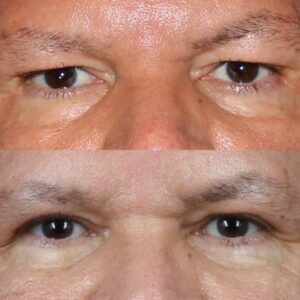
On its own, a facelift can revitalize your appearance. However, for treatment that addresses a full range of aging symptoms, talk to Dr. Miller about combining your procedure with blepharoplasty (eyelid surgery) or a brow lift. These treatments focus on the top half of your face, while a facelift targets the bottom portion.
Nonsurgical treatments, such as laser skin resurfacing, microneedling, and chemical peels can help you maintain your results as you navigate the aging process.
To schedule a consultation with Dr. Miller, contact his Manhattan, NY plastic surgery clinic today.
If you’re unhappy with the appearance of your nose, you’re not alone. According to the American Society of Plastic Surgeons, rhinoplasties, or nose jobs, are the most common facial plastic surgery procedures in the U.S. Many people feel that their nose is too prominent and detracts from other facial features, while others long for more definition of their nasal tip.
No matter your concern, double board-certified facial plastic surgeon, Philip J. Miller, MD, FACS, in New York City has the artistic skill and experience to reshape or reconstruct your nose for enhanced facial symmetry. His goal is to bring balance to your features by evaluating the prominence of your cheekbones and jawline, the width of your eyes, and even the texture of your skin before making recommendations regarding your nose.
The next step is determining whether you’re a better candidate for open or closed rhinoplasty. While both procedures can achieve exceptional results, each has its own advantages and drawbacks to consider during your consultation.
Open Rhinoplasty
During an open rhinoplasty at his plastic surgery clinic, Dr. Miller makes a small incision in the columella — the piece of tissue that separates the nostrils. Also called an external rhinoplasty, this technique opens the tip of the nose to reveal its internal structures.
An open rhinoplasty provides enhanced visibility when maneuvering through the bone, cartilage, and tissue that make up the nose. When performing this highly common type of rhinoplasty, Dr. Miller can reshape the nose and repair damage without jeopardizing its structural support.
Dr. Miller typically recommends open rhinoplasties for patients with complex structural concerns, such as:
A severely crooked nose
Nasal trauma or deformities
An asymmetrical tip
A large nasal tip
A large dorsal hump (bump on the nasal bridge)
An open technique is also best for revision rhinoplasty. If you’ve had rhinoplasty in the past and are unhappy with the results, Dr. Miller can perform open rhinoplasty to address your concerns.
Open Rhinoplasty Pros / Cons
Choosing an open rhinoplasty offers many advantages if you want to reshape your nasal structure, particularly if your case is complex. However, there are certain considerations to take into account before making your choice.
Pros: Improved Precision
Opening the columella allows Dr. Miller to see the internal structures of your nose. As a result, he can correct complex nasal deformities with precision and accuracy. Clear visibility also allows him to preserve as much of your tissue, cartilage, and bone as possible because he can reshape rather than remove it.
Pros: Enhanced Structural Support
By confining all incisions to the outside of the nose, Dr. Miller can maintain its structural stability. He’s able to create dramatic results without disrupting much of the surrounding bone, cartilage, and tissue.
Cons: Scarring
Since an open rhinoplasty requires an external incision, you may have minor scarring after the procedure. Fortunately, the Z-shaped incision is very small, so the scarring should fade with time. Furthermore, Dr. Miller carefully takes your skin and facial structure into consideration before making the incision. This step ensures that the scar is barely visible as it is between the nostrils at the base of the nose.
Cons: Longer Recovery
An open rhinoplasty is inherently more invasive than a closed rhinoplasty, so it’s no surprise that the recovery process is slightly longer. Many patients find that rhinoplasty is less painful than expected, but swelling and discomfort are common side effects of the procedure. You may also experience congestion for the first few days. Most patients can resume their normal activities within 7-14 days. To accelerate your recovery, keep the incision site clean, avoid strenuous exercise, and refrain from tobacco use.
Closed Rhinoplasty
Also called an endonasal rhinoplasty, a closed rhinoplasty is an internal procedure in which all incisions are confined to the inside of the nostrils. Patients concerned about visible scarring need not worry with a closed rhinoplasty. During the procedure, Dr. Miller carefully lifts the underlying bone, cartilage, and tissue through the nostrils, so you won’t be able to see any scarring.
Closed Rhinoplasty Pros / Cons
A closed rhinoplasty is especially appealing for those who want to make minor modifications to their nose. It’s also ideal if you have breathing problems, such as chronic sinusitis. As a more conservative type of rhinoplasty, however, this technique isn’t right for everyone.
Pros: No Visible Scarring
The primary benefit of a closed rhinoplasty is that there’s no external evidence of the procedure. All stitches are located inside the nose, so you may feel more comfortable resuming your normal activities sooner than you might after an open rhinoplasty.
Pros: Shorter Recovery Time
With no external incisions, the skin between the tip and bridge of the nose remains intact. This means blood circulation functions normally and fluid can drain rather than accumulate. As a result, most patients start to recover within one week. However, rigorous exercise, smoking, and blowing your nose can hinder your recovery.
Pros: Subtle Results
Closed rhinoplasties typically address less complex nasal concerns than open procedures. If you have a dorsal hump, wide nasal bridge, or enlarged nasal tip, a closed rhinoplasty can deliver subtle results with little impact to the surrounding tissue.
Cons: Low Visibility
Since a closed rhinoplasty is performed through the nostrils, visibility is limited during the procedure. An endoscope can provide a clearer view of the internal structures, but an open rhinoplasty will always have fewer obstructions.
Cons: Limited Modifications
With low visibility and limited access, a closed rhinoplasty is not the best choice for complex nasal modifications that require extreme precision. Instead, the closed technique is ideal for minor adjustments to the nasal tip and bridge.
Which one Should You Choose?
The best type of rhinoplasty for you depends entirely on the concerns you want to address. Neither technique is necessarily better than the other. To ensure you achieve the best results possible, Dr. Miller offers a proprietary consultation process called NatraLook. During your NatraLook consultation, he evaluates your nose and facial features while listening to your concerns and goals. This process establishes a collaborative environment in which you and Dr. Miller can create a unified vision for your results and the most natural outcome possible.
Contact Our Plastic Surgery Clinic Today
To learn more about the different types of rhinoplasty procedures Dr. Miller performs and find out which technique is best for you, contact our New York City plastic surgery clinic today.
The cosmetic industry boom isn’t showing any signs of slowing down. As pandemic restrictions have eased across the U.S., surgeons and dermatologists are noticing an increased demand from their male patients for both non-surgical and surgical treatments. Whether it’s the Zoom Boom or the lockdown-induced sedentary lifestyle, the pandemic has accelerated male desire for aesthetic enhancements. And now that the world is re-opening, their aim is to reveal better versions of themselves.
The Top Choice for Male Patients
Double-board certified facial plastic surgeon Dr. Philip Miller specializes in cosmetic facial procedures that help both women and men achieve their aesthetic goals. Considered one of the country’s leading experts in rhinoplasty and facial rejuvenation, Dr. Miller can create innovative and comprehensive procedure plans to provide natural-looking results. And with his Natralook® approach that empowers his patients to achieve Aesthetic Confidence®, he can produce life-changing outcomes.
A Rising Trend
There has been asignificant increase in the number of men seeking cosmetic procedures over the past decade. The American Society of Plastic Surgeons saw a 29% increase in total cosmetic procedures in men from 2000-2018. The Aesthetic Plastic Surgery National Databank Statistics recorded 5,037 nose surgeries in men in 2019 and 7,475 rhinoplasty procedures in 2020.
Whether men want sharper, more defined noses or brighter, younger-looking eyes, they are aware that they can benefit from the same procedures that women have long embraced. Men seeking cosmetic procedures is no longer a secret, and the pandemic has certainly given them the push they needed to finally pursue their aesthetic goals.
What is the Zoom Boom?
With the switch to remote work, online meetings, and virtual gatherings, people went from sparingly looking at their reflections while brushing their teeth to suddenly staring at their image on a screen for hours a day. As a result, there was greater scrutiny of their lines, wrinkles, and other signs of aging. Men are as concerned as women about their appearance and are becoming proactive about keeping aging symptoms at bay with the help of cosmetic procedures.
The COVID 15
For millions of Americans, one of the unintended consequences of the pandemic has been the “COVID 15,” which refers to the weight gain that people in lockdown may have experienced. With gyms and workout facilities closed, plus easy access to the pantry and fridge, the extra pounds stealthily crept on for many. Now that businesses are beginning to open and cities are now resuming normal activities, men want to improve their neglected body contours by undergoing body-contouring procedures to enhance their physiques.
Recovery: More Time, More Privacy
Men who were considering surgery, but had worries about the downtime, found a golden opportunity while on lockdown. Those working remotely could recover from procedures without taking as much time off or letting others know of their plans. Work-from-home wardrobes consisting of loose tops and sweats also made post-surgery recovery much more comfortable. In essence, quarantine life provides the best setup for privacy and a discreet recovery time.
Popular Procedures for Men
Even taking the pandemic out of the equation, there is less taboo surrounding cosmetic procedures for men today. Men are taking better care of their skin and bodies, and they want a more youthful appearance to match their energy and vigor with the help of the following procedures:
Eyelid Surgery
No matter their age, men like to look rested, energetic, and attentive. The eyes are one of the most vulnerable areas when it comes to aging and can make a man look tired and older than he feels. This delicate skin diminishes with age, resulting in droopy eyelids and puffy bags under the eyes. To address these concerns and achieve a younger-looking appearance, more men are now discovering the benefits of blepharoplasty or eyelid surgery in Manhattan, New York.
Neck Lift
Whether they blame it on heredity, gravity, fluctuations in weight, or the natural aging process, men will notice a distinct loss of skin elasticity on their face, neck, and jaw, along with increased fatty deposits. To reverse these signs of aging, men are turning to a neck lift procedure to achieve harmony between their appearance and the way they feel. Dr. Miller can perform a neck lift to remove excess fat and skin from the neck to improve visible signs of aging in the neck and jawline, creating a smoother, slimmer, firmer, and more refined neck appearance.
Rhinoplasty
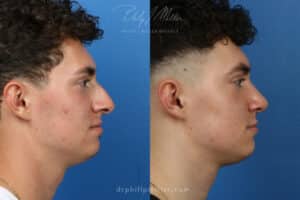
With Zoom meetings and more time spent on multiple social media platforms, men (like women) have become more focused on their imperfections. Research has found that selfies can also make people’s noses look larger than they actually are. Rhinoplasty is one of the most often requested procedures by male patients in Dr. Miller’s plastic surgery clinic. Since masculine features are the perceived key to male attractiveness, most men choose to have rhinoplasty to eliminate any unsightly features while maintaining a strong-looking nose.
Bro-Tox
A testament to the fact that Botox injections aren’t just for women, “Bro-tox” continues to be a popular trend over the last decade. As its man-friendly nickname suggests, Bro-tox refers to Botox procedures for men. In addition to its subtle results and minimally-invasive approach, the appeal of Botox injections also comes from its short treatment sessions and minimal downtime. Dr. Miller strategically injects Botox to specific facial areas to block nerve impulses to the muscles responsible for dynamic wrinkles, creating a smoother, more youthful appearance.
Why Gotham Plastic Surgery is the Best Plastic Surgery Clinic for Male Patients
Mostplastic surgeons only see a small fraction of male patients, and this gives them little experience with the unique needs of men. Dr. Miller understand the unique concerns of his male patients and creates improvements that are both natural and distinctly masculine.
Settle For Only The Best In Facial Rejuvenation
Can’t decide which procedure is best for you? During your consultation at our plastic surgery clinic, Dr. Miller will make recommendations based on your skin quality, signs of aging, and specific concerns. Together, you can create a Unified Vision® that will best meet your goals. Contact Gotham Plastic Surgery today to schedule an appointment.
When you’re considering cosmetic treatments to enhance and rejuvenate your own appearance, it is best to pair complementary treatments for optimal, long-term outcomes. One such perfect pair is a facelift and neck lift by Dr. Philip J. Miller.
At his Manhattan, NY plastic surgery clinic, Dr. Miller combines the best treatments for facial rejuvenation. As a double board-certified facial plastic surgeon, Dr. Miller focuses exclusively on treatments for the face and neck, so he is able to create custom treatment plans for each of his patients, using his proprietary NatraLook Process. Dr. Miller is revered as one of the country’s leading experts on facial rejuvenation, and he uses his expertise and years of experience to provide the best face and neck lifts possible. Dr. Miller has three good reasons why he often recommends combining these two treatments into one surgical procedure.
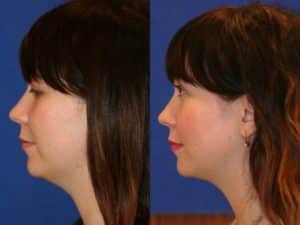
Facelift, neck lift, and dermabrasion to enhance the appearance of a female patient by Dr. Miller. Surgery removes loose skin, jowls, and wrinkles to produce a smoother, firmer facial profile.
1. The Combination Creates a Balanced Look
Many anti-aging and rejuvenation treatments focus on the face because the face is generally what others notice first. Just below, and about as visible as your face, is your neck. Unfortunately, it’s often forgotten when it comes to cosmetic treatments, despite its equal prominence. Both the face and the neck exhibit aging symptoms, but the skin on the neck is thinner and more delicate, so it can sometimes age faster and more dramatically. The aging symptoms you might see on the face and neck include wrinkles, lines, sagging skin, and loss of definition. Facelifts and neck lifts address all these symptoms, and pairing these procedures can give you a consistent youthful glow from the top of your forehead all the way down to your collarbone.
As the face and neck are both subject to the aging process, both should be treated equally. If you lift just one, the lack of balance will cause the treated area to look out of place. The untreated area will also likely be what others notice first, causing you to appear older.
Facelift and neck lift to remove loose skin from the lower face and the neck of a female patient by Dr. Miller.
2. Look Younger for Longer
When you treat a larger area, your overall results are more natural, dramatic, and durable. When Dr. Miller performs your face and neck lifts, he not only lifts the skin, but he also removes excess skin, tightens the underlying muscles, and repositions the natural fat. This ensures a long-lasting, youthful result. The results from both treatments will build on and enhance each other and address more issues than could be fixed with just one procedure. While a facelift alone can minimize jowl formations, a neck lift can further contour your jawline. A neck lift can smooth away wrinkles, while a facelift can remove excess skin on your lower face to reveal your youthful neck. Combining these procedures can give you much greater youthfulness than either one alone.
Facelift and neck lift to address skin laxity and restore definition to the lower face and neck of a female patient by Dr. Miller. After surgery, there is a smoother transition from the chin to the neck with a visible reduction in facial creases.
3. Reduced Cost and Risk
Getting two treatments at once means a quicker, less costly experience overall. You will only need to take one trip to our Manhattan plastic surgery clinic for your procedures, and any follow-up appointments can be used to monitor the recovery process for both lift treatments. The overall cost of your procedures will be less than if you underwent them separately, since combining procedures saves our practice time, money, and resources, too. You will only need to go under anesthesia once, which not only saves you money but also minimizes the risk of complications since anesthesia is a primary risk factor when undergoing any surgery. Perhaps most importantly, you can recover from your procedures at the same time, only needing to take time off work or out of your busy schedule once to heal. Undergoing two procedures does not typically extend the length of the recovery process either.
Miller Lift before and after
Facelift and Neck Lift Alternatives
You may not need a facelift or neck lift yet if your aging symptoms are less advanced or you are unsure about undergoing an invasive surgery. The good news is there are many alternative treatment options you can choose for face and neck rejuvenation.
A MicroLift is much less invasive than a traditional facelift, as Dr. Miller performs it in his Manhattan office in less than an hour and patients only need local anesthesia. This slight lift can diminish the appearance of wrinkles while lifting your face to give you a youthful look. The results from this procedure are long-lasting, and can be a great option for those with minimal aging symptoms looking to refresh their facial appearance without much downtime.
If you’re looking to completely avoid surgery, Dr. Miller offers his proprietary MillerLift technique to lift and refresh the face. This procedure is similar to a “liquid facelift,” and it can target concerns such as:
Wrinkles
Sagging skin
Hollowing
Volume loss
Dr. Miller assesses your facial structure and selects the best injectables to target your concerns and provide you with a complete facial transformation. To find out if a liquid facelift is right for you, please visit hopkinsmedicine.org.
Finally, Dr. Miller can combine either of these treatments with NeckTite therapy. NeckTite involves removing excess fat with submental liposuction, followed by the use of radiofrequency energy to tighten overlying skin under the chin for a smooth, contoured neck and jawline.
Schedule Your Face and Neck Rejuvenation Consultation at a NYC Plastic Surgery Clinic
If you are ready for a complete face and neck transformation, contact our office in Manhattan for a virtual or in-person consultation.
You have enough going on right now, between planning holiday festivities and trying to stay safe amidst COVID-19. You shouldn’t also have to worry about your appearance as you see friends and family. This “neckvember,” take time for yourself and focus on an area on the body that also doesn’t get enough attention: your neck. Your neck is about as visible as your face, and yet many tend to forget it when scheduling cosmetic treatments, so don’t forget it this month.
As a double-board certified plastic surgeon in New York City who focuses solely on treatments for the face and neck, Dr. Philip Miller can help you achieve a youthful-looking neck and overall appearance, whether you’re ready for a surgical procedure or want to try our many non-surgical options. Dr. Miller has more than 20 years of experience as a plastic surgeon and has written medical textbook chapters specifically on neck rejuvenation, so you can be sure you are receiving the best possible care for your neck rejuvenation treatment.
How Your Neck Changes Over Time
Much like your face, your neck shows signs of aging over time, like sagging skin, loss of definition, and wrinkles. Both these areas have skin that is more delicate than the skin on the rest of your body, which makes them more susceptible to aging symptoms. These aging symptoms stem from the decrease in production of collagen, elastin, and hyaluronic acid, proteins that give your skin volume and elasticity, characteristics associated with youthfulness and beauty. External influences can also heighten these symptoms. Sun exposure and smoking can both increase discoloration and wrinkles. Wrinkles on the neck can form what’s often called a “turkey neck,” which is a grouping of sagging, wrinkled skin that resembles a turkey’s wattle. Weight fluctuations can also add to this, as well as the formation of a double chin.
Get Your Youthful Neck Back
Aging symptoms may mostly be inevitable, but living with them is not. No matter your concern, Dr. Miller in New York City can help determine the best treatment for you. Consider your goals when selecting a treatment. You may need lifting or fat reduction to achieve a contoured jawline. Maybe you just have a few wrinkles that need to be filled or discoloration you want to be lightened. Whether you’re just starting cosmetic treatments or are ready for a more permanent surgery option, we can help.
No matter which treatment you select, Dr. Miller will take you through the NatraLook Process, an enriching experience to help you discover your full beauty potential and understand all your options for achieving this. Dr. Miller will talk you through your procedure so you can feel comfortable and confident in your choice.
Lift
Sagging skin on the neck is a very common aging symptom that can be treated with injectables, ultrasound and radiofrequency technology, and surgically. Dr. Miller can reduce lines, wrinkles, folds, and creases in your neck with his proprietary Miller Lift, a liquid lift technique he customizes to individual patient needs. By combining dermal fillers and other treatments, Dr. Miller can create a custom treatment plan for your specific needs.
Ultherapy uses ultrasound technology, while Neck-Tite utilizes radiofrequency technology to contour the neck and jowls. Ultherapy works by emitting ultrasound energy into the skin, which causes the skin to react with increased collagen production, a natural substance that keeps your skin firm and youthful. Neck-Tite’s radiofrequency technology can be combined with submental liposuction to remove fat and tighten the skin. That way, you won’t be left with loose skin where fat has been removed. Neck-Tite may also be used to treat jowls.
If your signs of aging are more severe and you are ready to say goodbye to wrinkles, bands, or a “turkey neck,” then it might be time for a neck lift. This surgical procedure can erase these signs of aging for typically between 10-15 years. A neck lift could involve the removal of excess fat with liposuction, the removal of extra skin, and the tightening of muscles and skin. You will need approximately two weeks to recover, then you can enjoy your results for years to come.
Line
A well-defined jawline might be what you’re seeking for a more pleasing, youthful appearance. At our Manhattan office, we offer a wide array of options for sculpting the jawline. With submental liposuction, Dr. Miller can remove fat from under the chin to reveal a contoured jawline. If you’re unsure about liposuction, you can opt for Kybella, the only injectable medicine FDA-approved for fat reduction.
For a more dramatic improvement, Dr. Miller sometimes recommends a chin implant. This can greatly increase the definition in your jawline while giving you a natural result. Dr. Miller uses medical grade silicone implants for the best results. During your consultation, Dr. Miller will take you through his proprietary NatraLook Process to determine if a chin implant is right for you.
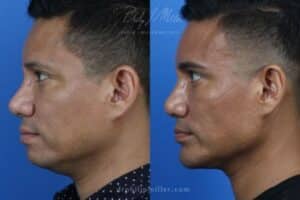
Men seeking to define their jawlines can experience the innovative G.I. Jaw® procedure, created by Dr. Miller himself. Dr. Miller combines all the above treatments to help you achieve a sharp jawbone, square chin, facial symmetry, and well-defined cheekbones, all telltale signs of masculinity associated with strength and attractiveness. To learn more about neck rejuvenation, visit ncbi.nlm.nih.gov.
Lessen
Wrinkles and platysmal banding on the neck are aging signs most people want to reduce as much as possible. Dr. Miller uses Botox® to relax the platysma muscles, which helps the wrinkles shrink and become less apparent. These muscles increase in size as you age because they are used so frequently to make facial expressions. Wrinkles found in the neck can be filled with dermal fillers. These fillers are made from hyaluronic acid, a natural substance found in the body. Your body will slowly absorb the fillers, so we can help you create a treatment schedule so you can maintain your results.
Before and After of CO2 Laser Resurfacing to rejuvenate the skin
Lighten
The changes you’re seeing in your neck might have less to do with structural changes and more to do with changes in pigment. CO2 Laser Skin Resurfacing can treat acne scars, blotchy skin, and discoloration caused by sun damage. While treating these pigment issues, the device can also address texture concerns and wrinkles, giving you a more complete transformation in one or more treatments.
Make it Last
Want to make sure your neck rejuvenation treatment this “neckvember” lasts even longer? Combine your neck lift with a facelift or mini facelift. These procedures are often performed together and can give you back your youthful face and neck long-term. A traditional facelift requires a longer recovery than a mini facelift, but the results last longer.
Schedule Your Neck Rejuvenation Treatment in New York City
If you’re ready to minimize wrinkles, correct discoloration, sculpt your jawline, or pursue another neck treatment this “neckvember,” contact us today to schedule your consultation with Philip Miller, MD.
When you are recovering, post-surgical rhinoplasty, it is a normal and natural reaction for there to appear to be slight swelling. An individual who has underwent said procedure will notice this immediately once the bandages are removed. The nasal bones tend to want to drift outward after the compression releases the restriction.
For this reason, it is extremely important to understand the techniques behind nasal exercises otherwise because of soft tissue memory shifting of the nasal bones may occur.
What are Nasal Exercises exactly?
Nasal exercises, also known as ‘digital’ exercises, refer to a postoperative instruction that involves massaging the nasal bones after rhinoplasty or revision rhinoplasty surgery. Nasal exercises would only be recommended in rhinoplasty patients where the nasal bones were ‘broken’ during the nose reshaping process. This is also referred to as an osteotomy when the nasal bone is repositioned or narrowed or both. This is commonly performed after a large hump deformity has been corrected and in cases where the nose is crooked. An osteotomy is also frequently done simply to narrow a wide nose during cosmetic rhinoplasty. Nasal exercises are done to help further contour the nose during the rhinoplasty recovery process. Whenever the nasal bone is reshaped as part of a rhinoplasty surgery, a nasal cast is placed to keep the bones in their new position. The nasal cast is usually removed in 5-6 days. In a majority of cases, the nasal bones are fairly well positioned in their new location. However, because the bones were completely cut and moved, they are also still mobile at 5-6 days out from surgery. Once the cast is removed, the nasal bones have the potential to move or drift out of the desired position. If they do so, they will typically trend toward moving back to their original position. And this movement or drifting can occur any time between cast removal and 6-8 weeks out from surgery. Why 6-8 weeks? Because this is the average amount of time it takes before the nasal bone fuses and heals in its new position.
Nasal exercises allow the surgeon to digitally manipulate the healing of the nasal bones, shift displaced grafts and increase the resorption rate of surgical edema in specific areas. Nasal exercises involve application of digital pressure over a specific location to improve nasal contour. The patient will press on the area of the deformity for one minute twenty to thirty times per day. It is crucial that the patient understands to press in the exact location with the appropriate amount of force. The exercises are generally well tolerated but should be done to the point of slight discomfort.
The Benefits of Nasal Exercises include:
The massive advantage of doing nasal exercises following rhinoplasty or revision rhinoplasty is that an individual can truly optimize the surgical results and achieve the best possible outcome.
This video by Dr. Philip Miller shows how to keep the nasal bones narrowed after rhinoplasty and to facilitate the reduction of swelling.
Rhinoplasty, more simply referred to as a nose job, is a nose surgery procedure that by now, we have all heard of. But, other than the fact that rhinoplasty is performed to change or repair the shape and structure of the nose, how much else do we really know? Probably not so much!
If you’re looking into rhinoplasty (or just curious about it), here are the top five interesting facts about it you should know:
1.The first rhinoplasty was performed over 2000 years ago.
The Sushruta samhita by Sushuruta is a medical book that was written in India around 5000 BCE that describes the techniques of rhinoplasty still used today. The techniques were used to restructure noses that had been cut off in battle or otherwise damaged.
Plus, even older then the Sushruta samhita is a papyrus from Egypt, the Ebers papyrus, that gave details on rhinoplasty for restoring a nose that had been cut off as punishment for a crime – apparently a common punishment in that culture.
The discovery of Indian rhinoplasty techniques, and later the Ebers papyrus, brought rhinoplasty to England in the 18th and 19th centuries.
2. Rhinoplasty uses other parts of the body.
Many people assume plastic surgery such as rhinoplasty uses implants to change the shape of the nose. While there are some times when implants are used, it is much more common to take skin or cartilage from other parts of the body and graft it onto the nose.
One common form of rhinoplasty uses skin from the forehead, cut and shaped into what is needed for the nose.
3. Rhinoplasty is much more common than you may think.
In fact, it’s one of the most common forms of cosmetic surgery. In 2007,12 million plastic surgeries were performed in the United States alone. Of these, the top five procedures were breast augmentation, liposuction, rhinoplasty, eyelid surgery and abdominoplasty.
And, since 2007, the demand for rhinoplasty has done the opposite of slow down — it’s continued to grow according to ASAPS stats which say that in 2015 alone 145,000 people headed to plastic surgeons for nose surgeries.
4. Technique for men’s and women’s rhinoplasty varies.
You may think a nose job is a nose job, but when it comes to rhinoplasty, it’s almost entirely art. The angle and slope of a man’s nose is different from a woman’s, and many experienced plastic surgeons will choose angles that feminize a woman’s nose.
5. Rhinoplasty surgery is pretty quick!
Believe it or not, the surgery itself only takes 1-2 hours, and that’s not all — recovery doesn’t take too long either. In most cases, patients are only required to wear a small cast for up to five days.
NEW YORK CITY RHINOPLASTY WITH BOARD-CERTIFIED FACIAL PLASTIC SURGEON PHILIP MILLER M.D., FACS
Leading NYC rhinoplasty surgeon, Dr. Philip J. Miller, M.D., FACS helps patients get the nose they desire through surgical and non-surgical nose job procedures. Dr. Miller has over 20 years experience and is widely regarded as a leading expert in rhinoplasty by peers and patients.
Check out Dr.Miller’s client Brittany only 2 months post-surgery!
Young Brittany came to Dr. Miller to fix the prominent bump that was on her nose and to give a little more definition and volume to her receding chin. She has made an impressive recovery in a very short amount of time. You can visibly see that she has little to no swelling in both the nose and chin area where typically, in other cases, there still may be some obvious puffiness.
It is important to remember that not all individuals heal the same nor do they heal within the same time frame. Undergoing a rhinoplasty procedure can be very traumatic to the face and skin along with the procedure that was done on Brittany’s chin. Her immaculate results are all in thanks to Dr. Miller and his unique, meticulous approach to satisfying his patients with safe, effective techniques.
Rhinoplasty is one of the most popular cosmetic surgical procedures that is performed in the U.S. Commonly referred to as a nose job, this procedure helps reshape your natural nose to a more desired contour. Whether you were born with an undesirable nose or are seeking repair to damage that was caused by trauma in an accident or injury or alleviate structural issues that obstruct breathing. Thousands of patients each year rely on nose surgery to gain relief from low self-esteem or functional issues.
Having work done on the chin to correct an inverted structure is performed using a pre-formed silicone implant and this will help the overall balance and symmetry of the face. This can improve the complete look of the facial features like the nose and cheek. The balance that this procedure provides can help dramatically enhance your overall appearance and restore confidence.
Brittany offers some words of advice for any individual that may be contemplating going in for a procedure such as these. She mentions the importance of research and how that can have a direct effect not only on the process from beginning to end but on the results of your procedure as well. She also advises others to be prepared for what you’re signing up for. Patience is key and the results will not pop-up the next morning. Great results take time and your body is undergoing a natural healing process. After the surgery you will be shocked with the way you look and feel but the end result will make it all worth it.
For a closer look, check out Brittany’s post-op video below.
Transforming Lives Through Results Is What Rhinoplasty Is All About…
Meet this patient of Dr. Miller’s. She can hardly believe her new nose. For most individuals who are seeking nose surgery, they are looking to alter more than just their aesthetic appearance. They are on an authentic quest to enhance their lives through the power of reclaiming one’s self-esteem. After all, looking good is meaningless if you do not truly believe that you are beautiful or have feelings of worthiness. Self-consciousness is a stressful and daily struggle. Yet, everyone from young adolescents to mature adults experience displeasure with their looks- especially their nose.
The nose is such an imperative feature and focus of everyone’s facial structure, restoring balance and symmetry from many different angles. Dr. Miller’s team was overwhelmed with joy after capturing this reveal of the results of the self-confessed, life-altering rhinoplasty surgery for this young patient. She not only acknowledges the contribution and impact that a new and improved nose will make on her overall life, but also she expresses her gratitude for the highly-skilled hands of Dr. Miller and leading his team under the right guidance and direction. From the assessment process throughout the procedure, all the way up until the total makeover moment, Dr. Miller is thrilled to change the lives of his patients for the better.
Watch this happy rhinoplasty patient of Dr. Philip Miller’s. Her reaction to her improved nose made us all happy to share the moment with her. See her final result.
Cartilage is the firm, whitish, flexible connective tissue found in various forms in the larynx and respiratory tract, in structures such as the external ear, and in the articulating surfaces of joints. It is more widespread in the infant skeleton, being replaced by bone during growth.
Structural Components of Cartilage
Cartilage is an important structural component of the body. The 3 main structural components of our bodies are bone, muscle, and cartilage. Bones are rigid, while muscles bend, stretch, and are flexible. Cartilage connective tissue is the perfect halfway point between these other tissues. It is a dense tissue, but it is softer and much more flexible than bone. Cartilage is a resilient and smooth elastic tissue, covering and protecting the areas which require conservation- for example the cartilage in one’s nose.
Cartilage is made up of specialized cells called chondrocytes. These chondrocytes produce large amounts of extracellular matrix composed of collagen fibres, proteoglycan, and elastin fibers. There are no blood vessels in cartilage to supply the chondrocytes with nutrients. Due to the lack of blood vessels, cartilage grows and repairs more slowly than other tissues.
Breaking Down Nasal Cartilage
The septal nasal cartilage, (cartilage of the septum or quadrangular cartilage) is composed of hyaline cartilage. It is somewhat quadrilateral in form, thicker at its margins than at its center, and completes the separation between the nasal cavities in front.
The nasal cartilages are the framework around in the inner/outer layers of the nose that provide form and support.
Including:
Accessory nasal cartilages
Accessory nasal cartilages are small nasal cartilages that link the greater alar (nostril) and lateral nasal cartilages.
Cartilage of the septum
Cartilage of the septum — also known as the quadrangular cartilage because it is roughly quadrilateral in shape — separates the nostrils. It also connects the nasal bones and the lateral cartilages.
Greater alar cartilage
Greater alar cartilage is a flexible cartilage that forms part of the structure of the nostrils.
Lateral nasal cartilage
Lateral nasal cartilage is a triangular structure, located below the nasal bone.
Lesser alar cartilages
Lesser alar cartilages are three or four small nasal cartilages connected to the upper jawbone.
Vomeronasal cartilage
Vomeronasal cartilage, also known as Jacobson’s cartilage, connects the nasal septum (the wall of cartilage that separates the two airways of the nose) and the vomer bone (a thin, flat bone that separates the nostrils). It was named in 1809 by Dutch anatomist, Ludwig Levin Jacobson. It is close to, but not actually connected with, the vomeronasal organ of Jacobson, which is the body’s scent organ that detects pheromones, chemicals that may affect the behaviors of others who smell them.
We use cookies to enhance your browsing experience, provide personalized content, and analyze our traffic. By clicking "Accept All Cookies," you consent to our use of cookies. You can manage your cookie preferences or opt-out at any time by clicking "Cookie Settings." For more details, read our Privacy Policy.