Buccal Fat Removal in New York City
Brow Lift
Drooping of the eyebrows and wrinkling of the forehead can make patients appear older and less energetic than they feel. In order to help patients regain the youthful look they once had, Dr. Philip Miller, a double board-certified facial plastic surgeon in New York, NY, performs the brow lift procedure.
The eyes are one of the most telling features of the face. Attention is drawn away from them when the eyelids are hooded and the forehead is wrinkled due to a falling or dropping brow. This can make patients appear tired, old, and/or angry. To combat this, a brow lift procedure can be performed. Men and women who have the height of their eyebrow slightly increased as a result of a brow lift appear younger and more alert and energetic.
The Brow Lift Procedure
A brow lift may be performed under IV sedation or general anesthesia. After the medication is delivered and the patient is completely comfortable or asleep, an incision is made within the hairline. The procedure is then performed through the following steps:
- Loose skin and weakened muscle are separated from the frontal, or forehead, bone
- Portions of weakened muscles near the eyelids are removed and the brow is lifted
- The lifted brow is fixated using sutures or absorbable fixation devices
The incision is then closed. Typical procedure time is approximately two hours at our NYC surgery office.

Brow Lift Recovery
Patients generally return home the day of surgery after the effects of surgical anesthesia and medications have worn off. While there is very little swelling and bruising, there may be numbness in the forehead and scalp and it may feel funny to raise the eyebrows. Patients are usually allowed to return to work ten days after surgery and return to routine activities and exercise in three weeks.
Brow Lift Results
After a brow lift procedure, the following results are seen:
- Wrinkle lines across the forehead, bridge of the nose, and between the eyes are reduced
- Frown lines are improved
- The brow is raised
Patients may look anywhere from five to ten years younger.
Good Candidates for a Brow Lift
Good candidates for a brow lift include the following:
- Men and women who have forehead features that have undergone age-related changes
- Men and women who look in the mirror and see a tired, angry, or sad version of themselves
- Patients who have blurred vision due to a drooping brow
The procedure is generally performed on healthy, nonsmoking adults who have realistic expectations and a positive mindset.
An Initial Consultation with Dr. Miller
Patients interested in a brow lift procedure will have an intensive initial consultation in our New York City surgery center. Dr. Miller’s proprietary NatraLook® Experience is a collaborative effort that enables each patient to achieve their desired results. A NatraLook consultation includes the following:
- A thorough medical history review
- A physical examination, in which Dr. Miller may take pictures for review
- A discussion regarding goals, expected results, and alternative treatment options
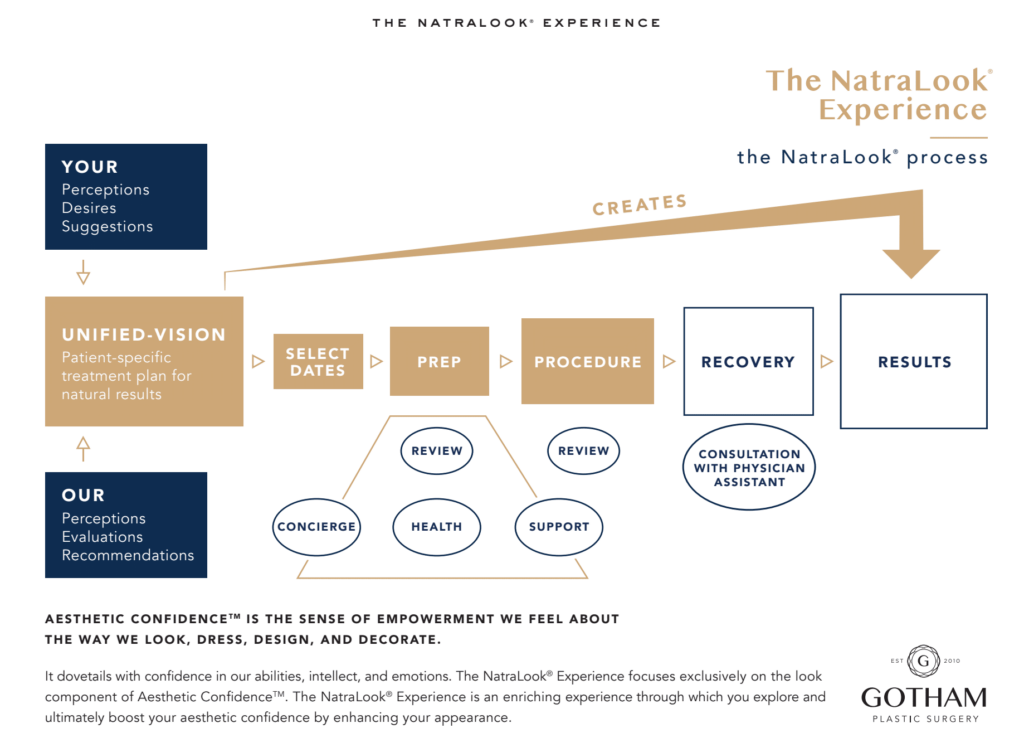
A question and answer session are also held. During this time, Dr. Miller patiently listens and thoroughly answers all questions and addresses any concerns.

Brow Lift FAQ
Q: Are there risks associated with a brow lift?
A: As with all surgical procedures, there are risks associated with a brow lift, including but not limited to the following: infection, bleeding, loss of hair, skin numbness and itching, and surgical anesthesia side effects. These risks will be explained by Dr. Miller at your initial consultation.
Q: Will I have a scar after my procedure? Will it be noticeable?
A: Scars always form after a surgical incision; however, the scar from a brow lift is generally unnoticeable because the incision is carefully placed and well concealed within the hairline.
Q: Can a brow lift be combined with other procedures?
A: A brow lift can, and very often is, performed in combination with any, all, or any combination of the following procedures:
- A facelift
- A neck lift
- An eyelid lift
The goal of combining procedures is to more thoroughly rejuvenate the facial appearance.
Q: How long does it take to see results?
A: Patients typically see maximum results approximately 6-8-weeks after surgery.
Q: Is it important to have my procedure performed by a specialist?
A: Because most facial specialists perform brow lift procedures on a routine basis, they typically are the most qualified surgeons to perform the procedure. Their expert training, knowledge, and skill set helps to provide patients with the best results.
Q: Are plastic surgeons the only physicians who can perform brow lifts?
A: Plastic surgeons are the only physicians who can perform brow lifts. When searching for a plastic surgeon, always look for one that is board certified.
Q: Does a brow lift make men look feminine?
A: The natural position of the male eyebrow is slightly lower than that of the female. Taking this into account, Dr. Miller takes special care to make his male patients look great without elevating the eyebrows too much.
Q: Are brow lifts performed to help patients with vision problems?
A: Patients, usually males, may develop blurry vision because of a sagging or drooping brow. When indicated, a brow lift may be performed to improve vision by raising the brow and opening the eyes.
Q: Does hair loss occur after a brow lift?
A: There is a small chance that hair loss may occur after a brow lift. In almost all cases, the positive outcomes of a brow lift far outweigh the chance that hair loss may occur.
Q: Will Dr. Miller take before and after photos?
A: Dr. Miller takes before and after photos so his patients can compare them and see their results.
Q: Can I see some before and after photos of some of Dr. Miller’s patients?
A: Yes, of course! Before and after photos are a great way to show you what you can expect after surgery. Dr. Miller has a long list of satisfied patients and will be able to show you which ones you most closely resemble to help you visualize your own potential results.
Q: Are there ways to maximize my results?
A: Healthy, non-smoking patients who take care of their skin and apply sunscreen typically see maximum results. Additional measures that may be taken include the following:
- Routinely exercising
- Eating a well-balanced diet
- Finding ways to reduce or eliminate stress
Getting an adequate amount of sleep is also recommended, as fatigue is one of the main reasons why wrinkles may redevelop.
Q: Will smoking affect my results?
A: Smoking negatively affects the body’s healing processes. Patients who want results are advised not to smoke after surgery.
Q: How do I determine if I am a candidate?
A: The best way to determine If you are a candidate is to schedule an initial consultation with Dr. Miller in New York. Your condition, medical history, and goals and expectations will be taken into account when determining if a brow lift is the right procedure for you.
Q: What should I bring to my initial consultation?
A: Before your initial consultation, you should have a clear idea of what your goals and expectations are. Some patients find it helpful to write them down and bring them with them. In addition, Dr. Miller encourages patients to bring the following:
- A list of all medications taken and a drug allergy list
- A list of questions for Dr. Miller
- A list of concerns
Patients who want to bring photos for comparison purposes may do so.
Q: How do I make an appointment?
A: Dr. Miller specializes in brow lifts and other facial plastic surgery procedures. When you are ready to make an appointment with him at his office in New York, NY, please call (646) 791-3025 or send us an email.
To learn more about a brow lift, visit med.stanford.edu
Next, read about Botox.
Dorsal (Nose) Hump
A dorsal hump is a projected bump on the nose caused by cartilage and bone irregularities. It appears on the slope of the nose from the bridge to the tip and is most noticeable when viewed from the side of the face.
A dorsal hump reduction rhinoplasty can correct a dorsal hump and give you an aesthetically pleasing and balanced profile.
Dorsal hump treatment options in New York
One non-surgical solution for dorsal hump removal is dermal fillers. When injected above and below the nasal hump, fillers can fill in gaps and round certain areas, reducing the hump’s pronounced appearance. This technique is also known as non-surgical or liquid rhinoplasty.
Those with small dorsal humps may begin with a non-surgical rhinoplasty to see how nose-reshaping procedures can change their appearance. Dermal filler results are reversible and temporary.
Removing a bump on the nose through surgery produces permanent results. Since it involves the removal and manipulation of cartilage, bone, and skin, rhinoplasty is the most effective way to remove a hump on the bridge of the nose.
Dorsal hump rhinoplasty in NYC
Dorsal hump rhinoplasty is a surgery that removes excess cartilage, bone, and skin from the nose, giving it a straighter, more streamlined look. The procedure can help enhance the appearance, create facial symmetry, and improve breathing through the nose by reducing nasal obstruction or deviation.
Rhinoplasty for dorsal humps can make the bridge of the nose narrower and straighter and is often performed on patients whose noses are too large for their facial features or who have noses with unusual shapes. Dorsal hump rhinoplasty is often performed on people with prominent noses, such as those of Italian or Greek heritage.
How does Dr. Miller correct a Dorsal hump?
Dr. Miller uses surgical and non-surgical techniques to correct dorsal humps in New York. These include:
Open Rhinoplasty – During an open rhinoplasty, Dr. Miller makes a small Z-shaped incision between the nostrils on the underside of the nose. The open approach enables him to make more precise and accurate adjustments to the nose’s shape. Although open rhinoplasty leaves a small scar, it fades quickly with proper care.
Closed Rhinoplasty – Closed rhinoplasty is a procedure in which Dr. Miller makes all incisions inside the nose. The primary disadvantage of this approach is that the bone, cartilage, and tissue are not visible, but this procedure results in less swelling than open rhinoplasty and can correct minor flaws.
MicroRhinoplasty – During a MicroRhinoplasty procedure, Dr. Miller accesses the treatment area via a small incision in the nostril. Using a specialized microrasp, he meticulously removes the protruding bony layers until the desired contour is achieved. Patients experience minimal discomfort, swelling, and bruising and typically resume normal activities within a few days.
Liquid Rhinoplasty – A liquid or non-surgical rhinoplasty uses dermal fillers to reshape the nose without stitches or incisions. While liquid filler can’t make a nose appear smaller, it can correct minor indentations or asymmetries without requiring surgical intervention.

Dorsal Hump Removal Before & After Photos


To see more rhinoplasty before and after photos, visit our gallery.
Dorsal hump FAQ
What is the cost for a dorsal hump rhinoplasty in New York?
Many factors contribute to dorsal hump rhinoplasty, including surgeon’s fees and experience, anesthesia, and your location.
Dr. Miller has a rhinoplasty cost-analysis guide for a complete overview of pricing in his Manhattan office.
What causes a dorsal hump?
The majority of nose humps are genetic. That means that if one of your parents or siblings have a prominent dorsal hump, you may have one as well. Dorsal humps may also occur due to a traumatic physical injury—such as a sports injury or car accident—if the bone or cartilage heals unevenly.
Medical conditions like bad allergies, polyps (painful growths), boils, and infections caused by bacteria and fungi in the hair follicles may also lead to humps on the nose or exacerbate a bump that is already present.
Can I get a revision rhinoplasty to address a dorsal hump?
Yes. Dorsal humps can be addressed after a prior rhinoplasty. Revision or secondary rhinoplasty is more complex than primary rhinoplasty and requires a skilled and experienced facial plastic surgeon for natural and desirable outcomes.
What is the recovery time after surgery?
Most patients are pleasantly surprised by how little pain they experience following nose bump removal. The most unpleasant aspect of postoperative recovery is difficulty breathing through the nose for several days because of swelling. This difficulty usually resolves within a week or two. Expect some swelling around your eyes as well. Once the swelling diminishes, you’ll start to see improvement.
You’ll need to follow certain precautions during your recovery period. Because bending or lifting can exacerbate swelling, resting for the first three weeks is recommended following surgery. Strenuous activities such as running, weightlifting, cycling, or cardio training can be resumed after three weeks in most cases. Contact sports should be avoided for at least six weeks to allow the bones to heal completely.
Schedule a Dorsal Hump Rhinoplasty Consultation in New York
Dr. Miller has over two decades of experience in facial plastic surgery and has performed over 5,000 successful procedures. With his skills and aesthetic eye, he can blend art and science to provide his patients with beautiful, natural-looking results.
Dr. Miller offers his patients the exclusive NatraLook process, which provides a safe, collaborative environment to help each patient achieve the Aesthetic Confidence® that they desire.
To learn more about dorsal hump rhinoplasty and other treatment options, contact our office to set up a consultation with Dr. Miller. You can fill out our convenient contact form or call us at our New York or New Orleans office.
Facial Liposuction in New York
Facial liposuction is a surgical procedure designed to permanently remove excess fat from the cheeks, chin, and neck. It effectively contours the face and jawline, restoring a more youthful appearance.
Philip J. Miller, MD, FACS, is a double board-certified facial plastic surgeon who performs facial liposuction as a stand-alone procedure or combined with a facelift for a more comprehensive anti-aging effect. With his ability to blend art and science, Dr. Miller can accentuate his patients’ features with beautiful and natural-looking results.
What can face liposuction do for me?
Face liposuction can sculpt your trouble areas in the face, such as a double chin or excess fatty deposits in the cheeks and jowls that often accumulate due to weight gain, genetics, or the aging process. It smooths the neck and contours the jawline for a more refined and youthful facial profile.
What areas can be treated by a face liposuction?
Face lipo can address the following areas and concerns:
- Submental fat/double chin
- Jowl formation
- Excess fat around the neck
- Fullness in the midface
Face liposuction before and after


Why choose Dr. Miller for my face liposuction procedure?
Dr. Philip Miller is a double board-certified facial plastic surgeon specializing in cosmetic surgeries, including cheek and jowl liposuction. He creates customized treatment plans to help patients look and feel their best.
Dr. Miller’s proprietary NatraLook™ process elevates the typical plastic surgery experience into an enriching and collaborative partnership that allows him and his patients to discuss the best approach to achieving Aesthetic Confidence and their desired results.
Facial liposuction FAQ
What is face liposuction?
Face liposuction is a common procedure involving the permanent removal of fat from the midface, chin, and neck. It is a powerful contouring technique for defining and sculpting the neck and jawline.
How much does face liposuction cost in NYC?
On average, face liposuction in NYC costs range from around $4,500 to $9,000. Several factors affect the total cost, including anesthesia and facility fees, amount of fat removed, surgeon’s experience, etc. The total cost of your procedure will be discussed during your consultation with Dr. Miller.
How will the procedure go
Facial liposuction normally takes less than one hour to perform. It is an outpatient procedure and is usually done under local anesthesia. Dr. Miller makes tiny incisions to insert a narrow cannula that breaks up the fat cells and suctions them out.
The incisions are too small to require suturing or leave visible scarring behind. Most patients are back to regular activities within a matter of days.
What does recovery from face liposuction look like?
Recovery after face liposuction is relatively minimal. While the recovery process differs for everyone, most patients resume their normal activities three days to one week after surgery. You will be required to wear a compression garment for at least one week after your procedure to minimize swelling and bruising.
Expect minor bruising and swelling in the days following your procedure. You may ice your face to alleviate them. Keep your head elevated at night for the first 1-2 weeks to prevent fluid build-up and swelling.
Bruising and swelling typically resolve within a week or two, and full results are usually evident at that time.
Does it hurt?
Dr. Miller uses local anesthesia to ensure the facial liposuction procedure is a comfortable experience. He also prescribes pain medications for the early part of the recovery process. Applying ice packs and wearing compression garments help alleviate swelling and bruising during those first days as well.
Will insurance cover my face liposuction?
Face liposuction, like most other cosmetic surgeries, is not covered by insurance.
How long does face liposuction last?
Liposuction results are permanent since fat is removed from the body during the procedure.
Mini Facelift in New York City
Facial Plastic Surgery

Our comprehensive practice offers the following surgical and non-surgical cosmetic, reconstructive, and facial plastic surgery procedures
Surgical Face Procedures
Facelift

Before and After of a Facelift to tighten the skin and create a more refreshed facial appearance
Designed to counteract the signs of aging in the mid to lower face and neck, a facelift involves the removal of excess skin and fat as well as tightening of the muscles to reduce the appearance of deep facial creases, improve sagging in the midface, and eliminate loose skin and fat beneath the chin and jaw to restore a more youthful and refreshed facial appearance.
Learn more about Facelifts.
Face-Tite
Face-Tite uses patented radiofrequency assisted liposuction (RFAL) technology to lift and tighten facial areas such as the brow, lower eyes, cheeks, jowls, and neck while also reducing unwanted fat. This revolutionary skin tightening procedure is completely non-surgical and effectively contours the face and neck. It is an excellent alternative to the more invasive facelift.
Learn more about Face-Tite.
G.I. Jaw
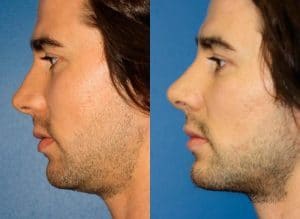
Before and After of the G.I. Jaw treatment to accentuate the jawline
Designed to outline the jawline, enhance existing facial structures, and to supplement areas men are dissatisfied with, the G.I. Jaw procedure effectively reshapes the face with prominent, well-defined features to create a classic look that’s considered to be the hallmark of masculinity.
Learn more about G.I. Jaw.
Chin & Cheek Facial Implants
Implants placed just beneath the chin or over the cheekbones are used to improve the harmony of the face, as well as to counter the effects of aging and to rejuvenate your overall appearance.
Learn more about Chin & Cheek Facial Implants.
Otoplasty
Also known as ear surgery or ear pinning, otoplasty corrects protruding or prominent ears by using special suture techniques to reshape the ear cartilage and achieve a more natural appearance.
Learn more about Otoplasty.
Facial Shaping
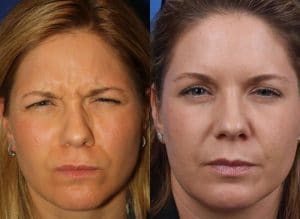
Before and After of Botox injections to treat forehead wrinkles
Surgical and non-surgical facial shaping procedures alter the definition, proportions, and contours of the face to create better symmetry of the forehead, eyes, nose, cheeks, mouth, and chin. Our facial shaping procedures include:
- Lip Augmentation – uses injectable fillers to add fullness to thinning lips.
- Botox, Dysport, Jeuveau, and Xeomin injections – these safe and effective neuromodulators correct dynamic wrinkles such as frown lines or crows feet giving you a more youthful-looking appearance.
- Buccal fat excision – removes the fat pads located in the lower part of the cheeks to achieve a more slender or chiseled appearance. It offers an effective solution to the appearance of round or full cheeks.
- Fat injections – also referred to as fat grafting or a fat transplant, fat injections provide an alternative to temporary dermal fillers. The fat that is harvested from an area of excess on the body, like the abdomen, which is used to reduce wrinkles and creases by filling in areas of lost volume resulting from age, injury, or surgery.
- Voluma – Juvéderm Voluma contours the face by restoring volume, targeting hollow cheeks and sagging skin in the areas of the mid-face and cheeks that are making you look tired.
- Kybella – an injectable that destroys fat cells under the chin, eliminating the troublesome double chin and yielding a more sculpted jawline and neck.
- Liposuction for face – an effective facial sculpting procedure that targets the fatty areas in the chin and neck that do not respond to diet and exercise.
Eye Procedures
Blepharoplasty

Before and After of a Blepharoplasty to lift the upper eyelid
Also referred to as eyelid surgery or an eyelid lift, blepharoplasty removes excess fat and skin from the upper and lower eyelids and alters the underlying muscles to improve a puffy, sagging, or tired-looking appearance. It can address cosmetic issues by improving aging symptoms as well as functional purposes by correcting droopy eyelids that can interfere with your vision.
Learn more about Blepharoplasty.
Non-Surgical Eye Rejuvenation
A personalized treatment plan will consist of facial fillers and/or neuromodulators to address your aesthetic aspirations. A simple series of injections will help reduce wrinkles, minimize dark areas, and restore facial volume.
Forehead And Brow Lift

Before and After of a brow lift to rejuvenate the brow and forehead region
Forehead or brow lift is a cosmetic surgery procedure that rejuvenates a drooping brow, restores the eyes’ appearance, and elevates the brows to produce a smoother, more youthful look. If you have a drooping brow that’s interfering with your peripheral vision or a lined forehead that makes you look tired, sad, or angry, this procedure can help remove or alter the muscles above the eyes to not only smooth lines and elevate the brows, but to also restore its proper, functional position.
Learn more about Forehead and Brow Lifts.
Nose
Rhinoplasty

Before and After of a Rhinoplasty to reduce a nasal bump
More commonly known as a nose job, a rhinoplasty improves the appearance of the nose by reshaping, reducing, or augmenting the nose. It can also remove a hump, narrow the nostril width, change the angle between the nose and mouth, as well as correct injuries, birth defects, and certain breathing problems. A micro rhinoplasty may also be performed to correct minor asymmetries, humps, or other cosmetic issues.
Learn more about Rhinoplasty.
Revision Rhinoplasty

Before and After of a Revision Rhinoplasty to straighten the nose
Because of the intricacies of the nasal structure and the sometimes unexpected course of tissue recovery, rhinoplasty may produce unexpected or undesirable results. If you’re unhappy with your rhinoplasty results from another surgeon, Dr. Miller offers revision rhinoplasty to correct and fix the appearance and function of your nose.
Learn more about Revision Rhinoplasty
Ethnic Rhinoplasty

Before and After of a Rhinoplasty to reduce the nasal bump and sharpen the tip
Although each patient is unique, there are basic similarities within each ethnicity that must be taken into account in order to ensure the patient’s desired results are achieved safely and effectively. Each ethnicity will have distinct nasal characteristics and it is the goal of an ethnic rhinoplasty procedure to preserve each patient’s unique identity and features.
Learn more about Ethnic Rhinoplasty.
Septoplasty
A septoplasty is performed to straighten a twisted or deviated septum (the partition between the left and right nasal cavities).
Learn more about Septoplasty.
Non-Surgical Rhinoplasty
Using a series of injectable fillers, a non-surgical rhinoplasty safely and effectively alters the shape of the nose to enhance your overall facial features without changing the cartilage or underlying bone of the nose.
Learn more about Non-Surgical Rhinoplasty.
Book a Facial Plastic Surgery Consultation in New York Today
When it comes to cosmetic surgery, trust your face to an expert. If you’re ready to improve Aesthetic Confidence® back, contact Dr. Miller and his staff at his New York office today.
Facelift NOLA PPC
GET YOUR NATURAL-LOOKING FACELIFT
from NOLA’s #1 double board-certified facial plastic surgeon
- 5000+ successful facelift surgeries performed
- 20+ years of experience in facelifts
- recognized as Top Doctor multiple years in a row

FACELIFT RESULTS WE’RE PROUD OF
Disclaimer: Results may vary from patient to patient. Results are not guaranteed.


#1 FACELIFT SURGEON IN NOLA SPECIALIZING IN:
Primary Facelift
A facelift is a cosmetic procedure designed to improve the appearance of the face and neck. It involves lifting and tightening the skin, reducing wrinkles and sagging. By rejuvenating facial features, a facelift can help restore a more youthful and refreshed look, boosting self-confidence and enhancing your natural beauty.
Vertical Facelift
Similar to a traditional facelift, vertical facelifts address undesired signs of aging such as sagging skin, wrinkles, and jowl formation. The main difference is that this revolutionary procedure utilizes a vertical skin pull, rather than the traditional horizontal pull, to provide a more natural-looking result. A vertical facelift focuses mainly on the middle and lower portions of the face.
Revision Facelift
A revision facelift is a surgical procedure designed to address and correct concerns or dissatisfaction following a previous facelift. During this procedure, Dr. Miller meticulously revises and enhances the results to achieve the desired outcome.
Necklift
A neck lift, also known as a cervicoplasty, is a surgical procedure that removes excess fat and skin from the neck while tightening the underlying muscles (platysmaplasty) to improve visible signs of aging in the neck and jawline, creating a smoother, slimmer, more elegant profile. Dr. Miller often performs neck lift and facelift procedures at the same time to restore a smoother, firmer, and more refined appearance.
Deep Plane Facelift
A deep plane facelift is a surgical procedure aimed at rejuvenating the face by repositioning the deeper facial tissues. This approach addresses sagging skin, jowls, and deep nasolabial folds, providing comprehensive and long-lasting results.
CLIENTS ARE SAYING


4.9 Stars from
336 Reviews

4.8 Stars from
85 Reviews

4.7 Stars from
164 Reviews

4.98Stars from
306 Reviews

4.8 Stars from
182 Reviews

Dr. Miller and his team is now the only team that I trust. The process of having a micro-lift is very scary but after a little swelling the results are amazing! You truly get more than what you expected. Pain is gain but in this case the gain is so much more. I highly recommend Dr. Miller. He totally undersells. I love my results.
– Jae Lee – Google Review
Dr. Philip Miller is a true artist when it comes to working with a patient’s face. He is just amazing. He knows exactly what to do without overdoing it and helping you achieve your best and most natural-looking results. His staff was also very professional and helpful every step of the way. I would highly recommend him to anyone considering any type of facial plastic surgery. Rest assured, he knows his profession well.
– Patient – RealSelf Review
Love, love Dr Miller and his exceptional team. He LISTENS, makes thoughtful suggestions and executes like an artisan. My confidence has gone through the roof and am very grateful for his ability to maximize even the subtlest of changes.
The Best!!!!
– Patient – Google Review
Your ideal face is one click away.
MEET THE DOCTOR
Philip Miller, MD, FACS
With 20 years of experience, Dr. Miller is highly regarded among his peers and as a pioneer in the industry. Consistently since 2007, he has been voted among the Best Doctors in America and Top Doctor of New York. Dr. Philip Miller has won the Castle Connolly award for the last 15+ years, including in 2026.
Dr. Miller is:
- a Diplomate of the American Board of Facial Plastic & Reconstructive Surgery
- a Fellow of the American Academy of Facial Plastic & Reconstructive Surgery
- a Fellow of the American Academy of Otolaryngology/Head & Neck Surgery
- a Diplomate of the American Board of Otolaryngology
- a Fellow of the American College of Surgeons
Dr. Philip Miller’s surgical facility at Gotham Plastic Surgery is officially accredited by The Joint Commission as an ambulatory surgery center. This certifies that Dr. Miller offers the most complete medical care while patients are ongoing surgery performed by him and his fully-trained staff.

[affiliations]
YOUR VISIT


- Schedule an appointment with Dr. Miller.
On the day of your appointment, visit our office at 1224 St Charles Ave, New Orleans, LA 70130 - During the initial consultation, you and Dr. Miller discuss your goals and expectations. Together, we develop a customized treatment plan for natural results.
- Your surgery will take approximately 1.5 – 4 hours. After your visit, you get recovery instructions to ensure the results last.
Etre Cosmetic Dermatology
Philip Miller, MD, FACS
1224 St Charles Ave,
New Orleans, LA 70130
631.430.4259
FACELIFT FAQ
What specific concerns can facelift address?
A facelift can address a range of specific concerns related to facial aging. It can effectively target sagging skin, deep wrinkles, jowls, and excess fat deposits in the face and neck area. By tightening the underlying muscles and removing excess skin, a facelift can provide a more youthful appearance, improved facial contours, and a reduction in visible signs of aging.
How long does a typical facelift procedure take, and what is the expected recovery time?
The length of a typical facelift procedure can vary depending on different factors, like the specific techniques used and the extent of the treatment. Generally, it takes around 3 to 5 hours. When it comes to recovery, it varies from person to person, but most people can expect a downtime of about 1 to 2 weeks. During this time, you’ll notice swelling and bruising gradually going away, and you can slowly get back to your normal activities as long as you follow the post-operative care instructions given to you by Dr. Miller.
How long do the results of a facelift typically last, and are there any maintenance treatments required to prolong the effects?
The results of a facelift typically last for several years, usually around 5 to 10 years. However, it’s important to remember that our face continues to age naturally over time. To keep the effects of the facelift lasting longer, some people choose to have maintenance treatments like injectables or laser treatments and follow a recommended skincare routine. These additional steps can help maintain and enhance the results of the facelift for a longer period. Please consult with Dr. Miller to receive personalized guidance on the best maintenance options
Rhinoplasty NOLA PPC
THE NOSE OF YOUR DREAMS AWAITS
brought to life by NOLA’s #1
double board-certified facial plastic surgeon
- 5000+ successful nose job and facelift surgeries
- 17+ years of experience in rhinoplasty & facelift
- New York’s best plastic surgeon now in NOLA

RESULTS WE’RE PROUD OF
Disclaimer: Results may vary from patient to patient. Results are not guaranteed.


#1 RHINOPLASTY SURGEON IN NOLA SPECIALIZING IN:
Primary Rhinoplasty
Rhinoplasty surgery, also known as a “nose job,” can change the shape of the whole nose or a small part, making it fit harmoniously with the rest of the face.
Dr. Miller offers his proprietary NatraLook® approach, which emphasizes the patient experience and strives to ensure the most rewarding and natural results. The goal of this process is for patients to find a new confidence, or empowerment, after their procedure.
Ethnic rhinoplasty
Ethnic rhinoplasty refers to rhinoplasty procedures performed on patients of ethnicity. Most ethnic rhinoplasty patients in our New York office are looking to improve upon their nose but still retain and preserve their ethnic identity. They typically do not want a fully westernized look, but they do want an improved nasal appearance that is in harmony with the rest of their facial features.
Revision Rhinoplasty
Revision rhinoplasty is a secondary surgical procedure performed to correct unsatisfactory results from a previous nose surgery. This specialized procedure addresses both aesthetic concerns and functional issues that may have arisen from the initial procedure.
Female Rhinoplasty
Female rhinoplasty is a customized surgical approach focused on creating a refined, feminine nasal appearance that enhances overall facial harmony. This procedure is designed to soften angles, delicately shape the nasal tip, and improve proportions while preserving each patient’s natural beauty. The goal is a balanced, elegant result that looks natural, timeless, and uniquely yours.
Teen Rhinoplasty
Teen rhinoplasty is the most-often requested procedure by teenage patients in New York City. This is not surprising given today’s societal pressure to fit in combined the popularity of social media websites and the “selfie” culture that comes with it.
Male Rhinoplasty
While most women seek reduction rhinoplasty because they want narrower, more feminine noses, men usually want the opposite. Since masculine features are the perceived key to male attractiveness, most men look to rhinoplasty to eliminate the unsightly features while maintaining a strong nose.
CLIENTS ARE SAYING
4.9 Stars from
336 Reviews
4.8 Stars from
85 Reviews
4.7 Stars from
164 Reviews
4.98Stars from
306 Reviews
4.8 Stars from
182 Reviews

Excellent rhino experience. Vetted all of the premiere NYC surgeons, including Miller. He’s open, smart, realistic. If you know what you want and you’re able to communicate it, he’ll get you there or he’ll explain why your expectations cannot be met and show you what he can achieve. Couldn’t be happier with the results.
– TomMP2 – Realself Review
I have been following Dr. Miller on social media for quite some time. I could see from his posts he is an absolutely fantastic surgeon and is great at explaining the surgical procedures he performs. So naturally I had to book my revision rhinoplasty with Dr. Miller. I am now six months postop and I love my results.
– Elizabeth Fini – Facebook Review
My surgery (rhinoplasty revision #2 due to injury) was extremely complicated, but Dr Miller was able to give me an excellent result. My breathing has improved to such an extent that it’s been almost life changing. I will always be grateful to Dr Miller and his caring staff for helping to improve my health.
– Michele Manuel – Google Review
Your ideal nose is one click away.
MEET THE DOCTOR
Philip Miller, MD, FACS
With 20 years of experience, Dr. Miller is highly regarded among his peers and as a pioneer in the industry. Consistently since 2007, he has been voted among the Best Doctors in America and Top Doctor of New York. Dr. Philip Miller has won the Castle Connolly award for the last 15+ years, including in 2026.
Dr. Miller is:
- a Diplomate of the American Board of Facial Plastic & Reconstructive Surgery
- a Fellow of the American Academy of Facial Plastic & Reconstructive Surgery
- a Fellow of the American Academy of Otolaryngology/Head & Neck Surgery
- a Diplomate of the American Board of Otolaryngology
- a Fellow of the American College of Surgeons
Dr. Philip Miller’s surgical facility at Gotham Plastic Surgery is officially accredited by The Joint Commission as an ambulatory surgery center. This certifies that Dr. Miller offers the most complete medical care while patients are ongoing surgery performed by him and his fully-trained staff.
[affiliations]
YOUR VISIT
- Schedule an appointment with Dr. Miller.
On the day of your appointment, visit our office at 60 E 56th St #300 (at Park Ave), New York, NY 10022. - During the initial consultation, you and Dr. Miller discuss your goals and expectations. Together, we develop a customized treatment plan for natural results.
- Your surgery will take approximately 1.5 – 3 hours. After your visit, you get recovery instructions to ensure the results last.
Etre Cosmetic Dermatology
Philip Miller, MD, FACS
1224 St Charles Ave,
New Orleans, LA 70130
631.430.4259
RHINOPLASTY FAQ
What age is good to get a nose job?
Rhinoplasty is one of the plastic surgery procedures that is frequently performed on younger patients. Dr. Miller has done this surgery for patients as young as their teens, as long as the nose is fully mature. That usually occurs between 15 and 17 years.
What is the difference between a nose job and rhinoplasty?
Nose job is another term used to describe rhinoplasty – they are the same procedure.
What are the benefits of rhinoplasty?
There are many different reasons for men and women to seek rhinoplasty. Benefits of nose surgery may include:
- Remove a hump or bump from the bridge of the nose
- Reduce / increase the size of the nose
- Changing the shape and angle of the nasal tip
- Reduce wide nostrils or widen the nostrils
- Correct a hooked or crooked nose
- Correct a deviated septum
How long can rhinoplasty last?
One of the greatest benefits of rhinoplasty is that it is typically a one-and-done procedure. Once the nose job surgery is completed and the nose has fully healed (which can take up to one full year), patients can enjoy the improvements to their nose over a lifetime.
Facelift PPC
GET YOUR NATURAL-LOOKING FACELIFT
from NYC #1 double board-certified facial plastic surgeon
- 5000+ successful facelift surgeries performed
- 20+ years of experience in facelifts
- recognized as Top Doctor multiple years in a row
FACELIFT RESULTS WE’RE PROUD OF
Disclaimer: Results may vary from patient to patient. Results are not guaranteed.
#1 FACELIFT SURGEON IN NYC SPECIALIZING IN:
Primary Facelift
A facelift is a cosmetic procedure designed to improve the appearance of the face and neck. It involves lifting and tightening the skin, reducing wrinkles and sagging. By rejuvenating facial features, a facelift can help restore a more youthful and refreshed look, boosting self-confidence and enhancing your natural beauty.
Vertical Facelift
Similar to a traditional facelift, vertical facelifts address undesired signs of aging such as sagging skin, wrinkles, and jowl formation. The main difference is that this revolutionary procedure utilizes a vertical skin pull, rather than the traditional horizontal pull, to provide a more natural-looking result. A vertical facelift focuses mainly on the middle and lower portions of the face.
Revision Facelift
A revision facelift is a surgical procedure designed to address and correct concerns or dissatisfaction following a previous facelift. During this procedure, Dr. Miller meticulously revises and enhances the results to achieve the desired outcome.
Necklift
A neck lift, also known as a cervicoplasty, is a surgical procedure that removes excess fat and skin from the neck while tightening the underlying muscles (platysmaplasty) to improve visible signs of aging in the neck and jawline, creating a smoother, slimmer, more elegant profile. Dr. Miller often performs neck lift and facelift procedures at the same time to restore a smoother, firmer, and more refined appearance.
Deep Plane Facelift
A deep plane facelift is a surgical procedure aimed at rejuvenating the face by repositioning the deeper facial tissues. This approach addresses sagging skin, jowls, and deep nasolabial folds, providing comprehensive and long-lasting results.
CLIENTS ARE SAYING
4.9 Stars from
336 Reviews
4.8 Stars from
85 Reviews
4.7 Stars from
164 Reviews
4.98Stars from
306 Reviews
4.8 Stars from
182 Reviews
Dr. Miller and his team is now the only team that I trust. The process of having a micro-lift is very scary but after a little swelling the results are amazing! You truly get more than what you expected. Pain is gain but in this case the gain is so much more. I highly recommend Dr. Miller. He totally undersells. I love my results.
– Jae Lee – Google Review
Dr. Philip Miller is a true artist when it comes to working with a patient’s face. He is just amazing. He knows exactly what to do without overdoing it and helping you achieve your best and most natural-looking results. His staff was also very professional and helpful every step of the way. I would highly recommend him to anyone considering any type of facial plastic surgery. Rest assured, he knows his profession well.
– Patient – RealSelf Review
Love, love Dr Miller and his exceptional team. He LISTENS, makes thoughtful suggestions and executes like an artisan. My confidence has gone through the roof and am very grateful for his ability to maximize even the subtlest of changes.
The Best!!!!
– Patient – Google Review
Your ideal face is one click away.
MEET THE DOCTOR
Philip Miller, MD, FACS
With 20 years of experience, Dr. Miller is highly regarded among his peers and as a pioneer in the industry. Consistently since 2007, he has been voted among the Best Doctors in America and Top Doctor of New York. Dr. Philip Miller has won the Castle Connolly award for the last 15+ years, including in 2026.
Dr. Miller is:
- a Diplomate of the American Board of Facial Plastic & Reconstructive Surgery
- a Fellow of the American Academy of Facial Plastic & Reconstructive Surgery
- a Fellow of the American Academy of Otolaryngology/Head & Neck Surgery
- a Diplomate of the American Board of Otolaryngology
- a Fellow of the American College of Surgeons
Dr. Philip Miller’s surgical facility at Gotham Plastic Surgery is officially accredited by The Joint Commission as an ambulatory surgery center. This certifies that Dr. Miller offers the most complete medical care while patients are ongoing surgery performed by him and his fully-trained staff.
[affiliations]
YOUR VISIT
- Schedule an appointment with Dr. Miller.
On the day of your appointment, visit our office at 60 E 56th St #300 (at Park Ave), New York, NY 10022. - During the initial consultation, you and Dr. Miller discuss your goals and expectations. Together, we develop a customized treatment plan for natural results.
- Your surgery will take approximately 1.5 – 4 hours. After your visit, you get recovery instructions to ensure the results last.
Gotham Plastic Surgery
Philip Miller, MD, FACS
60 E 56th St #300
New York, NY 10022
347.408.0045
FACELIFT FAQ
What specific concerns can facelift address?
A facelift can address a range of specific concerns related to facial aging. It can effectively target sagging skin, deep wrinkles, jowls, and excess fat deposits in the face and neck area. By tightening the underlying muscles and removing excess skin, a facelift can provide a more youthful appearance, improved facial contours, and a reduction in visible signs of aging.
How long does a typical facelift procedure take, and what is the expected recovery time?
The length of a typical facelift procedure can vary depending on different factors, like the specific techniques used and the extent of the treatment. Generally, it takes around 3 to 5 hours. When it comes to recovery, it varies from person to person, but most people can expect a downtime of about 1 to 2 weeks. During this time, you’ll notice swelling and bruising gradually going away, and you can slowly get back to your normal activities as long as you follow the post-operative care instructions given to you by Dr. Miller.
How long do the results of a facelift typically last, and are there any maintenance treatments required to prolong the effects?
The results of a facelift typically last for several years, usually around 5 to 10 years. However, it’s important to remember that our face continues to age naturally over time. To keep the effects of the facelift lasting longer, some people choose to have maintenance treatments like injectables or laser treatments and follow a recommended skincare routine. These additional steps can help maintain and enhance the results of the facelift for a longer period. Please consult with Dr. Miller to receive personalized guidance on the best maintenance options
Facial Plastic Surgery Procedures in NYC
Dr. Philip Miller is a double board-certified facial plastic surgeon specializing exclusively in the face and neck, with over 20 years of experience delivering natural, refined results. A comprehensive range of facial plastic surgery procedures is available, from brow lift, eyelid surgery, and rhinoplasty, to buccal fat removal, chin and cheek augmentation, ear surgery, and wrinkle reduction treatments.
Patients travel from across the United States and internationally to access this level of specialist facial expertise. Reconstructive surgery is also offered for patients seeking to correct complications or unsatisfactory results from a previous procedure.
Facial Plastic Surgery Procedures
Rhinoplasty
Also known as nasal surgery or a nose job, rhinoplasty is a plastic surgery procedure which can improve the appearance and/or function of the nose. Common cosmetic changes requested include a reduction in size, removal of a hump, fixing a bulbous tip and narrowing wide nostrils.
Learn more about rhinoplasty.
Facelift
The facelift, or rhytidectomy as it is technically known, can restore a more youthful appearance to the lower face and neck by tightening the underlying tissues and removing excess fat and skin.
Learn more about a facelift.
Necklift
The necklift addresses loose sagging skin in the neck and jawline. It can improve jowls and the appearance of a “turkey neck”. Excess skin and fat are removed and the underlying muscles are tightened.
Learn more about a necklift.
Forehead Lift
The forehead lift, also known as a brow lift, is a great alternative to Botox injections for people seeking more improvement. The browlift improves a drooping or heavy brow which may cause hooding of the eyelids, as well as deep forehead wrinkles and grooves.
Learn more about a forehead lift.
Eyelid Surgery
Also known as blepharoplasty, eyelid surgery can be performed on the upper eyelids, lower eyelids or both to restore a more youthful and rested appearance. Eyelid surgery specifically treats sagging upper eyelids and under-eye bags.
Learn more about eyelid surgery.
Chin Augmentation
Chin augmentation involves the use of a synthetic implant which is inserted over the jawbone. Chin augmentation can add more prominence to a weak chin and help to balance out the other facial features for a more harmonious overall facial appearance.
Learn more about chin augmentation.
Cheek Augmentation
With cheek augmentation, implants are inserted in the cheek area to add prominence or restore more fullness. This is a great procedure for those seeking the appearance of high cheekbones or whose cheeks have lost fullness with age.
Learn more about cheek augmentation.
Ethnic Rhinoplasty
Ethnic rhinoplasty refers to rhinoplasty performed on patients of ethnicity, including those of African American, Asian, Hispanic, and Middle Eastern descent. The goal of ethnic rhinoplasty is generally to improve the appearance of the nose but still preserve the sense of ethnic identity.
Learn more about ethnic rhinoplasty.
MicroRhinoplasty™
MicroRhinoplasty™ is a new technique in rhinoplasty which allows the nasal hump to be reduced without needing to break the nose. This simple, quick procedure can be performed in the office setting with just local anesthesia using a specialized air-powered micro-saw.
Learn more abut MicroRhinoplasty.
Buccal Fat Excision
Buccal fat excision is a procedure in which the fat pads in the cheeks can be removed to create a slimmer, more refined appearance in those with extra fullness in the cheeks. Patients who seek this procedure often complain of having “chipmunk cheeks.”
Learn more about buccal fat excision.
Otoplasty
Otoplasty, or ear surgery, improves the appearance of large or protruding ears. This procedure is commonly performed on children as it can greatly benefit their self-esteem.
Learn more about otoplasty.
Reconstructive Surgery
Reconstructive surgery refers to plastic surgery procedures which improve function and sometimes approximate a normal appearance. Therefore, reconstructive techniques include such techniques as the repair of facial fractures, improving scars or blemishes, and closing defects caused by tumor surgery.
Scar Reduction
Scar reduction improves the appearance of unsightly scars. While scars can never be completely removed, they can be greatly improved upon. A variety of procedures may be used including needling, dermabrasion, and laser resurfacing.
Learn more about scar reduction.
Lip Reduction Surgery
Lip reduction surgery reduces the appearance of extremely large lips. Very large lips can be uncomfortable and even interfere with speaking.
Learn more about lip reduction surgery.
Schedule Your Facial Plastic Surgery Consultation in NYC
Choosing facial plastic surgery begins with a thoughtful conversation about your goals, concerns, and the results you want to achieve. Dr. Philip Miller offers consultations in Midtown Manhattan and virtually for patients who are exploring facial rejuvenation, rhinoplasty, neck surgery, or other procedures focused exclusively on the face and neck.
With more than 20 years of experience in facial plastic surgery, Dr. Miller helps patients understand their options with clarity and confidence.