Ethnic Rhinoplasty
Revision Rhinoplasty in New York
An unfortunate reality of facial plastic surgery is that patients are not always satisfied with the final aesthetic outcome of an elective procedure. An inexperienced surgeon, the use of outdated techniques, a lack of doctor-patient communication, and complications that arise during the procedure or subsequent healing process can all impact the rhinoplasty result and become reasons for revision rhinoplasty.
When a nose job is performed to only create facial harmony by refining the size and shape of the nose, it can disrupt the pattern of airflow. Conversely, improvements in breathing may affect the look of the nose. Because of the intricacies of the nasal structure and the sometimes unexpected course of tissue recovery, rhinoplasty may produce unexpected or undesirable results.
Revision rhinoplasty is usually performed about a year after the surgery, and the costs of a secondary (or tertiary) procedure are higher than other types of rhinoplasty because of the increased difficulty (with every additional surgery, the tissues of the body become thicker and more difficult to work with, which makes obtaining the desired results is more of a challenge).
It is estimated that approximately 10-15% of patients who undergo cosmetic nose surgery will request a secondary procedure at some point. It is important to note that only a facial plastic surgeon should perform revision rhinoplasty. Manhattan New York facial plastic surgeon Dr. Philip Miller is known for his ability to produce the most natural and aesthetically appealing rhinoplasty results. He is also a skilled expert, with a high success rate, in correcting work performed by other plastic surgeons during revision rhinoplasty.
When is Revision Rhinoplasty the Right Solution?
During any facial cosmetic enhancement, patients may be presented with surgical limitations. Anatomy can impose parameters that might not be adjustable within the confines of the nose. In such cases where only less extensive improvements are possible, rhinoplasty patients may benefit from non-surgical rhinoplasty, where dermal injections enhance the appearance of the nose, or complementary procedures like mentoplasty (chin implant surgery).
Due to the lengthy healing process following rhinoplasty, patients should not undergo corrective surgery at our New York City surgery suite until the final results of the first procedure are fully visible. There are a number of solutions available for individual needs, but in the cases mentioned above, revision rhinoplasty may not be a viable option.
Revision rhinoplasty is, however, the best choice for patients who have remaining tissue that can be successfully modified through surgery. The procedure can also offer a permanent solution for nasal function issues, in cases of a deviated septum, nasal valve collapse, or irregular nostril shape. Dr. Miller may request patient records and X-rays from the former rhinoplasty surgeon to ensure a complete understanding of revision rhinoplasty cases.
Find out if revision rhinoplasty is right for you
Top Issues Corrected by Revision Rhinoplasty
While individual cases will differ, generally speaking, secondary cosmetic nose surgery can alter the shape, size, and function of the nose. A patient’s first plastic surgeon may not have removed enough tissue, and the nose may still appear too broad or over-projected. This follow-up surgery can also address a nose that is too wide. The first rhinoplasty may have produced unwanted side effects, like the build-up of scar tissue that must be surgically treated.
In results where too much tissue has been excised from the nose, the doctor may elect to use nasal implants or grafting techniques (commonly synthetic, animal-produced, or patient-derived) to rebuild the feature. In patients who suffer from nasal breathing issues, the doctor may opt to perform a septoplasty (deviated septum repair) or other reconstructive techniques to address anatomical concerns.
Issues that warrant revision rhinoplasty might include pinched nostrils, a progressive nasal obstruction, or scar tissue formation during the healing process. Sometimes additional surgery is required if the initial surgery did not achieve the patient’s goals.

Pinched Tip
A “pinched tip” is a frequent complaint of rhinoplasty patients, where the end of the nose appears compressed or “pinched,” resulting in less-than-ideal facial aesthetics and impaired breathing. The “pinch” is due to too much cartilage being removed from the tip of the nose. Over time, the tip loses support resulting in the “pinched nose” appearance, a collapse of the nostrils’ shape, and the illusion of a persistent bump.
Short Nose
Following rhinoplasty, some patients experience a “short nose” trait due to the removal of too much cartilage. This condition is often corrected by reinstating cartilage to establish support, and by using specialized grafts to restore a more natural-looking shape.
Crooked Nose
The “crooked” or “twisted nose” is typically derived from a nasal trauma and can sometimes persist even after the first rhinoplasty procedure. Revision rhinoplasty will rearrange the cartilage and bone to create an aesthetically pleasing, symmetrical look. Dr. Miller owns a unique technique for correcting the crooked nose problem that he has presented at rhinoplasty conferences around the United States


NatraNose®
Dr. Miller’s approach to rhinoplasty encompasses the NatraLook® Process, which optimizes the patient experience and strives to ensure the most rewarding results. The goal of this process is for patients to find new aesthetic confidence, or empowerment, after their surgery. It all starts at the consultation, when Dr. Miller will reassure and support your opinions in a positive way, creating a collaborative environment that keeps you involved in your procedure.
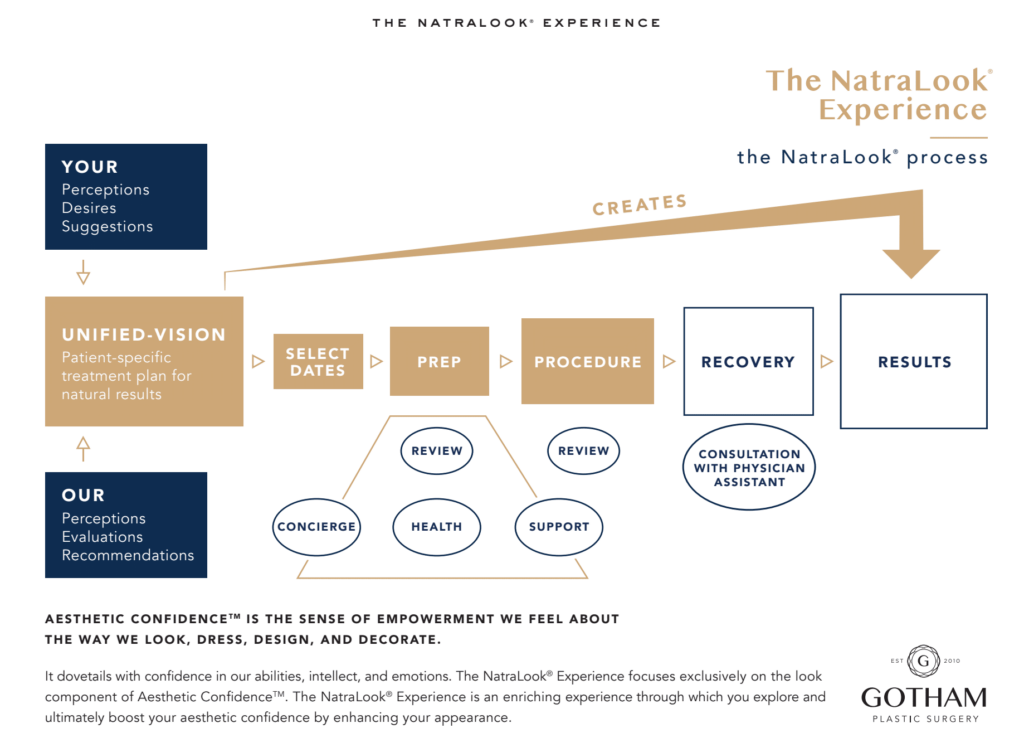
The consultation, at Dr. Miller’s rhinoplasty clinic in New York City, is the most important step in your rhinoplasty journey and the factor that will lead to nose surgery satisfaction. It is an excellent time to discuss your expectations and concerns, address any questions, and figure out what you want to take away from your surgery.
Additionally, Dr. Miller will examine and assess your nose and how it relates to your other facial features. He will also evaluate the thickness and quality of your skin. Computer imaging may also be used to help give you an idea of the changes that can be made to your nose and what you can expect from surgery. He will also review your medical history and overall health.
All details of the procedure will be reviewed, including the available options and rhinoplasty techniques, the facility, the anesthesia, the recovery, the risks and benefits, and the costs. Together, you and Dr. Miller can come up with a realistic goal for surgery with his NatraNose approach.
The Revision Rhinoplasty Surgery in New York City
Revision rhinoplasty is performed through an open or closed surgical approach here at our Manhattan facility, similar to primary rhinoplasty. In the closed approach, minimal additional scarring will be visible since the incision is created inside the nose and the work takes place through nostril access. When correcting the results of prior surgeries, it may be necessary to use an open approach with the incision created on the exterior of the nose between the two nostrils. This technique allows for better visibility so the surgeon can see and access the existing issues.
Revision rhinoplasty specialist, Dr. Miller will discuss more specific fixes with patients during a consultation at his New York City office. Some common changes are the removal of bone and cartilage when treating a nasal hump formation, and rebuilding tissues with cartilage when depressions form in the skin.
In instances where the requested fixes are relatively minor, a local anesthesia may be utilized for revision rhinoplasty, while general anesthesia or sedation is typically reserved for more extensive corrections. At the close of the surgery, a protective splint will be placed over the patient’s nose to protect it from damage and help maintain the shape during the critical first week in healing. Both bridge and septum splints will be removed one week postoperatively. Sutures will be taken out several days after the procedure.
Revision Rhinoplasty Recovery: Be Careful
Secondary nose job patients may experience some difficulty breathing during the first 1-2 weeks of the recovery period, which is largely due to swelling. Both inflammation and bruising typically occur around the eyes as well. Prescription pain medications can control any pain or discomfort that may be present during healing.
Normal activity is resumed by most patients at around the 10-day mark, though exercise and heavy lifting should be avoided for about 3 weeks. Contact sports, or any activity that could cause trauma to the nose, should be avoided until after the bones have fully healed in 6 weeks.
Revision Rhinoplasty Following a Healed Rhinoplasty
Most doctors will request that patients wait about 12-18 months before undergoing secondary nose surgery. The healing process after the initial rhinoplasty is lengthy and the duration can vary. In addition, the nose will not take on its final form or function for some time. Swelling can take many months to subside, causing the nose to appear larger or of a different shape than it will truly be.
A revision surgery that is performed too soon can result in further disappointment in the look of the nose. Added trauma to an already healing nose and an incomplete recovery can negatively impact the outcome of future facial plastic surgery. Patience is vital during the healing process.

Revision Rhinoplasty Alternatives
Revision rhinoplasty is common when a surgeon makes an error during the procedure or unexpected complications arise. At times, due to the extensive nature of a reconstruction or repair, a patient may understand that revision rhinoplasty is highly likely. When the nose is affected by genetics, disease, or trauma, a patient may require multiple procedures to restore or improve their looks. Often times, reconstructive procedures occur in stages, and it is possible that some patients may undergo one or more revision rhinoplasties to obtain the best cosmetic results.
Revision Rhinoplasty Detailed FAQ
Q: Is revision rhinoplasty painful?
A: Dr. Miller will prescribe pain medication to patients as a precautionary measure, but most report very little discomfort associated with the procedure. There may be some nasal congestion or sinus pressure that can be relieved by non-narcotic medications. More information can be found here.
Q: How many revision rhinoplasty surgeries can be completed on a patient’s nose?
A: While there is technically no limit because the tissue will be manipulated and sometimes removed during each surgery, each case will vary. Revision rhinoplasty becomes more complicated with each procedure, and patients should choose a board-certified facial plastic surgeon who specializes in these cases. The nose is a delicate feature and even small changes by the millimeter will create significant changes. Dr. Miller has a high success rate and should be able to revise the nose during a single surgery.
Q: Who are the best candidates for reliable revision rhinoplasty?
A: Prospective patients seeking to undergo a secondary nose surgery should have a fully developed nose, which will have typically stopped growing in a person’s mid to late teen years. The individual should be healthy and fully healed from the initial procedure. Candidates should have realistic expectations about the changes Dr. Miller can create.
Q: How long will the exact surgery last?
A: Revision rhinoplasty cases in NYC often require 2-3 hours to complete. In more complicated cases, there may be additional time needed for the surgery.
Q: Is the recovery different from the first rhinoplasty procedure?
A: As with the initial procedure, revision rhinoplasty will require approximately 12-18 months for a full recovery. In cases where Dr. Miller has harvested a patient’s own cartilage (sources may be the ears or ribs), there may be some discomfort at these sites as they heal too. There may be additional swelling with the addition of nasal implants or the removal of extra material, especially if the first surgeon took a very conservative approach.
Q: Will insurance cover revision rhinoplasty?
A: When the facial plastic surgery, or a portion of the surgery, is performed to improve nasal breathing, insurance may pay for those specific costs. Dr. Miller’s office can contact the patient’s insurance company for an estimate of care to determine what the patient’s responsibility will be.
To learn more about revision rhinoplasty, visit med.stanford.edu.
The Best Revision Rhinoplasty Surgeon in NYC: Philip Miller, MD, FACS
Revision rhinoplasty specialist, Dr. Philip Miller has over two decades of experience in cosmetic medicine, a high success rate of facial plastic surgery procedures, and has been voted among the Best Doctors in America for the past 10 years and Top Doctor of New York City. Dr. Miller is sought after for his innovative techniques in both rhinoplasty and revision rhinoplasty, which he has lectured and written textbook chapters on. Contact Dr. Miller’s Manhattan office to schedule a revision rhinoplasty consultation.
Nasal Surgery
Coming soon…
Next, learn about body & breast surgery.
G.I. Jaw® – Jawline Augmentation
Invented by New York facial plastic surgeon Dr. Philip J. Miller, the non-surgical and innovative G.I. Jaw® procedure enhances your jawline and chin to create the chiseled appearance you want and others desire.
Before and After G.I. Jaw® Jawline Contouring Photos
*Patient results can vary


Why choose Dr. Miller?
Dr. Miller is the pioneer and exclusive provider of the G.I. Jaw procedure, offering innovative solutions for male jawline enhancement. Choosing Dr. Miller as your surgeon ensures you receive the following:
- Treatment from the inventor of the G.I. Jaw procedure, specifically designed for masculine enhancement
- Expert care from a double board-certified facial plastic surgeon specializing in male aesthetics
- Access to a comprehensive range of techniques, from non-surgical options to custom implants
- Personalized consultations through the innovative NatraLook process, ensuring results align with your masculine aesthetic goals
- Care from a surgeon consistently recognized as a Castle Connolly Top Doctor for over ten years
- Treatment in a state-of-the-art surgical facility in the heart of Manhattan
Transform Your Profile with G.I. Jaw
- Request a consultation with Dr. Miller, and our team will respond within 24 hours
- We work with you to set a date and time for your 60-minute consultation
- During your consultation, Dr. Miller uses his NatraLook process to understand your goals for masculine enhancement
- Using advanced imaging technology, Dr. Miller provides a preview of your expected results
- Once you align on the treatment plan, our team schedules your procedure
- Procedure time varies based on chosen treatments (30 minutes to 2 hours)
- After completion, our team monitors you before you return home, with transportation assistance if needed
Frequently Asked Questions
What is the G.I. Jaw procedure?
The G.I. Jaw procedure, invented and trademarked by Dr. Miller, is a customized approach to masculine jawline enhancement that can include any combination of facial injectables (Botox®, Restylane®, Juvederm®, Voluma), Kybella®, liposuction, Neck-Tite™, and medical-grade 3D custom implants. This innovative procedure specifically targets the angle of the mandible and the area underneath the jaw to create a more defined, masculine appearance.
Who is a candidate for G.I. Jaw?
Ideal candidates for the G.I. Jaw procedure are men in relatively good overall health who desire more definition in their facial features. This includes men who are seeking a more defined jawline, those dissatisfied with a “weak” chin, and those looking for a more sculpted transition between the jaw and neck. According to the American Society of Plastic Surgeons, 54% of all chin augmentation and jaw enhancement procedures are performed on men, highlighting the procedure’s popularity among male patients.
What results can I expect from G.I. Jaw?
The G.I. Jaw procedure delivers several key improvements to your facial profile:
- A broader, more masculine lower facial shape
- A stronger, more defined profile
- Enhanced overall facial symmetry
- Sharp, well-defined cheekbones
- A more prominent, square chin
Results can last 12 months or longer with proper maintenance, while implants provide permanent enhancement.

What is the recovery process like?
Recovery varies depending on the specific treatments included in your G.I. Jaw procedure. Injectable treatments typically result in minimal downtime with mild swelling and bruising for 7-10 days. Procedures involving Neck-Tite™ or implants may require slightly longer recovery periods but still involve minimal discomfort. Most patients can return to normal activities within 1-2 weeks.
How does the G.I. Jaw procedure differ from traditional jawline enhancement?
Dr. Miller’s innovative G.I. Jaw procedure is specifically designed for male facial enhancement, focusing on creating strong, masculine features while maintaining natural-looking results. The procedure’s versatility allows for customization using various techniques and technologies, from non-surgical options to permanent implants, all tailored to achieve the classic masculine jawline associated with strength and attractiveness.

Why is jawline enhancement important for men?
A strong jawline has both psychological and social benefits for men. In today’s digital age, where social media presence is increasingly important, men are more conscious of their facial profiles. A well-defined jawline can enhance overall attractiveness, create a fitter, healthier-looking appearance, and significantly boost confidence in both personal and professional settings.
Can G.I. Jaw be combined with other procedures?
Yes, the G.I. Jaw procedure is often combined with other facial enhancement treatments for comprehensive results. Dr. Miller can create a customized treatment plan that may include neck contouring, chin augmentation, or other facial rejuvenation procedures to achieve optimal masculine definition and balance.
What should I expect during my consultation?
During your consultation, Dr. Miller will conduct a thorough evaluation of your facial structure and discuss your goals for enhancement. Through his proprietary NatraLook Experience, you’ll collaborate to create a unified vision of your expected results. This process ensures that your treatment plan aligns with your desired outcome while maintaining natural-looking masculinity.
To learn more about jaw contouring procedures, visit ncbi.nlm.nih.gov
To Know More about the G.I. Jaw® Procedure, Contact Dr. Miller
For men interested in reshaping their lower face, the G.I. Jaw® procedure could be the ideal way to achieve it. For more information about the procedure, schedule a consultation with New York facial plastic surgeon Dr. Miller by calling (646) 791-3025 or visiting us online.
Next, learn about Juvéderm.
Lip Reduction in New York
Facial features combine to the give the appearance an aesthetic appeal. When one area is out of proportion, a look will be unbalanced. The lips are a vital feature that sets off the rest of the face; when overly big, they can take away from an otherwise elegant appearance.
A lip reduction is a state-of-the-art outpatient procedure designed to bring the lips into proportion with the other facial features, accentuating the face instead of distracting attention. The source of large lips can include genetic/race, congenital defects, an injury to the lips, as well as a previous and poorly executed lip augmentation. Your lip reduction surgery in our New York City surgery center will be tailored to fit your needs and desires as the patient, taking into account the form and dimension of other facial features.
Who is a Good Candidate for Lip Reduction in NYC?
The best candidate for lip reduction are individuals in generally good health and with realistic surgical expectations. Patients dealing with overly large lips that are out of proportion with other facial features, for any reason, can make excellent candidates for the procedure. A consultation appointment with Dr. Miller will be set up before scheduling the surgery so that he can determine if a lip reduction is a right procedure for your individual needs.
Lip Reduction Before and After Results


The Lip Reduction Procedure
Dr. Miller will perform the lip reduction procedure in his office surgical suite in New York City. The procedure will take between 15 and 30 minutes to complete, using a light sleep anesthetic; although this can change should an additional procedure be included.
First, Dr. Miller will apply a local anesthetic to the lips. An small incision will then be made across the inner lip. From here, excess tissue and fat will be excised. Finally, the lip will be sutured for appropriate healing.
A lip reduction may be performed alone, or it may be paired with another cosmetic procedure to produce optimum results. Patients can find satisfying results by including a lip lift, rhinoplasty, cheek augmentation, or a facelift.
Potential Risks from a Lip Reduction
While lip reduction is considered a safe and efficient procedure, like any type of surgery, there remains a very small chance of complications. Utilizing a board certified surgeon like Dr. Miller greatly reduces the chance for any problems after a lip reduction. Although rare, complications can include infection, poor healing, scarring, or asymmetry.
Recovering From a Lip Reduction Procedure
Patients should expect the recovery from a lip reduction to take about two weeks. Initially, there may be mild discomfort, swelling, and bruising; these diminish over the first several weeks following surgery. Temporary numbness or tingling of the lips is common. Patients should keep their head elevated for the first few days, and refrain from any vigorous activities. A soft diet is often required for several days, while the lips begin to heal. Normally, patients feel well enough to return to work or school in two to three days.
Lip Reduction FAQ
Q: How much does a lip reduction procedure cost in New York?
A: In New York, cost of lip reduction surgery varies from $1,000 to $5,000* depending on the surgeon and the extent of correction. The average lip reduction cost is $2,500*.
*Prices reflect an average cost of the procedure in the area. For an actual quote, please contact Dr. Miller directly.
Q: How do I prepare for a lip reduction procedure?
A: After your consultation with Dr. Miller, look over his post-operative instructions. Contact our office in New York City if you have any questions or concerns. Fill prescriptions for pain medication early and arrange for rides/assistance, should it be required.
Q: How long is the recovery period?
A: The recovery from a lip reduction will take approximately 1 week. During this time, most of the swelling and bruising will diminish. Patients will feel well enough to return to work in five to seven days.
Q: How long does it take to perform a lip reduction surgery?
A: Lip reduction generally takes between 15 and 30 minutes to complete.
To learn more about the lip reduction procedure, visit ncbi.nlm.nih.gov
Next, learn about the Micro Lift.
Scar Reduction
There are many facial rejuvenation techniques currently available for those looking to address fine lines, wrinkles and acne scarring at our New York City office. Resurfacing techniques like chemical peels, laser resurfacing and dermabrasion have been used for years to rejuvenate the skin by removing the top layer of damaged skin and stimulating the production of collagen and elastin.
While effective, these techniques often include significant side effects such as whitening of the skin, hypo-pigmentation, hyper-pigmentation, thinning of the skin and increased sun sensitivity. These treatments are also not recommended for the delicate eye area.
Skin needling, also referred to as medical needling or facial needling, offers an effective alternative for reducing facial wrinkles and lines as well as acne scars, chicken pox scars, and other shallow depressed scars. Needling can also help to flatten and smooth raised or hypertrophic scars, such as those from skin grafts and surgery, and relax contracted scar tissue from burns or accidents that limits movement.
This is a natural method of skin rejuvenation that does not require chemicals, lasers, fillers or injections. Instead, a process is used in which hundreds of microscopic pin pricks are created on the skin, triggering the body’s natural wound healing process and the production of new collagen. With repeat sessions, new collagen is gradually and continually produced, plumping and filling wrinkles, lines and depressed scars naturally.
First discovered in the 1940’s, today’s methods of needling are much more sophisticated and are used routinely around the world. This technique often goes by other names including dry needling, needle abrasion, needle dermabrasion, dry tattooing, facial mesotherapy, multitrepannic collagen actuation (MCA), percutaneous collagen induction (PCI), and collagen induction therapy (CIT).
Benefits of Skin Needling
There are many benefits of needling compared to other skin resurfacing methods. There is no removal or damage to the outer layer of skin, resulting in less risk of pigmentation changes and fewer side effects like skin thinning, increased sun sensitivity, allergic reaction and infection. This also results in less downtime and faster healing. In fact, recovery and downtime only last a few days. Because there are fewer risks, repeat or ongoing treatments with needling are possible. In fact, with repeat treatment, the skin becomes thicker rather than thinner. Needling can also be used around the eyes to treat conditions like crow’s feet.
What to Expect
During the needling procedure, a topical anesthesia is used to minimize pain and ensure the patient’s comfort. Once the skin is numbed, a sterile needle is inserted 1 to 2mm into the skin, creating a shallow puncture wound which triggers the body’s natural healing process and the production of new collagen. Multiple insertions are made on the skin throughout the treatment area.
After treatment, swelling is minimal and patients heal within a few days. Redness is common in the treatment area and lasts for three to five days. Ointment must be applied regularly during the first 3 to 7 days after treatment. Patients may see improvement in as little as a few weeks after each procedure with continued improvement occurring over the course of several months. The skin will appear smoother and tighter with diminished lines and wrinkles. Repeat treatments should be spaced at least 6 to 8 weeks apart.
To learn more about scar revision, visit medlineplus.gov
Facial Reconstruction
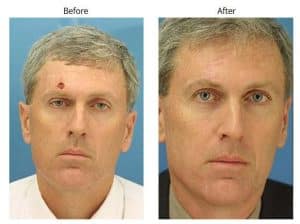
Facial reconstruction is the process of repairing and restoring the physical or functional appearance of the face. This can include congenital malformations and birth defect, facial scars or blemishes, problems resulting from an accident, or alterations after cancer or tumor surgery. Dr. Miller in New York City can correct areas of the face and neck, as well as improve the proportion of the features with facial reconstructive surgery; providing dramatic, life-changing results; improving a patient’s confidence and self-esteem.
Who is a Candidate for Facial Reconstruction Surgery?
Ideal candidates for facial reconstruction surgery should be in generally good health, with reasonable expectations from the procedure. Satisfactory results can be seen in young children all the way up to older adults; and can benefit any ethnicity.
A consultation with Dr. Miller in his New York City office will be initially set up to discuss the potential improvements from facial reconstruction surgery. A brief physical exam will be performed, recent Before/After photos shown, and an explanation of the exact procedure will be given. Dr. Miller will evaluate if a facial reconstructive procedure is best suited for your individual situation. If so, a unique surgical plan will be created, keeping your needs and desires in mind.
Potential Risks from Facial Reconstruction
While reconstructive procedures are considered safe and efficient, they are invasive and may hold some small degree of risk. Problems that may occur after surgery include poor wound healing, excessive bleeding, infection, scarring, and asymmetry. Using an experienced, skilled, board-certified surgeon – like Dr. Miller – is the best way for patients to guarantee a complication-free procedure and recovery.
Recovery After Facial Reconstruction Surgery
There are a wide variety of facial reconstruction procedures, each of which will have its own specific expected recovery time. Patients should be prepared to experience mild to moderate pain over the first few days; Dr. Miller will prescribe appropriate pain medications for comfort while healing. Swelling and bruising are common after a surgical procedure and make take several weeks to fully disappear. A compression garment is required after some surgical procedures, others may have drain tubes or bandages. Patients should commit to the full amount of suggested downtime, after a reconstructive procedure; only returning to work or school when adequate healing has occurred. At your consultation appointment in New York City, very clear recovery information will be provided.
Patient Testimonials
Dr. Philip Miller Restores a Patient’s Injured Lip
Dr. Philip Miller Removes a Patient’s Scar on Her Face
Facial Reconstruction FAQ
Q: What is facial reconstruction surgery?
A: Facial reconstruction surgery is an invasive procedure designed to improve the appearance of the facial features, by addressing such issues as trauma or congenital abnormalities.
Q: Where is facial reconstruction surgery performed?
A: Dr. Miller performs all of his reconstructive procedures at the nearby, fully-accredited surgical facility.
Q: When can I return to work after a facial reconstruction procedure?
A: Patients can return to work or school when the healing process is appropriately underway. This can range from a few days to three or four weeks, depending on the specific reconstruction procedure performed.
Q: Can I finance a facial reconstruction procedure?
A: Yes, patients are welcome to apply for healthcare financing through Care Credit. Applications will be reviewed immediately, and if approved, the amount may be used right away.
To learn more about facial reconstruction, visit medlineplus.gov
Dr. Philip Miller is a Top Rated Surgeon
Dr. Miller is a board-certified plastic surgeon considered a top-rated expert in his field. In 2025, Dr. Miller won the Castle Connolly Top Doctor Award, a prestigious award for outstanding physicians who were nominated by their peers, screened by researchers, and deemed the best in their specialty. Not only is Dr. Miller highly qualified, but he also utilizes the NatraLook Process to make sure his patients’ results are rewarding in both physical and emotional ways. For more information on the facelift procedure, please contact Dr. Miller at his Manhattan New York plastic surgery office.
Next, learn about Fractora.
Otoplasty
While many people never give a second thought to the ears, when they are poorly shaped or unusual in size, the ears can grab the unwanted attention of others. Misshapen or protruding ears can be devastating and humiliating; the sense of self-esteem can be severely impacted, especially in children and adolescents. Teasing and bullying because of ‘different’ looking ears is common. Adults as well, can experience a loss of confidence. Only a surgical intervention can improve the appearance of the ears.
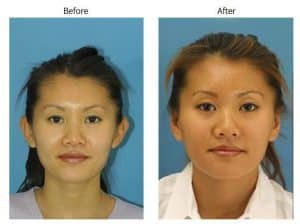
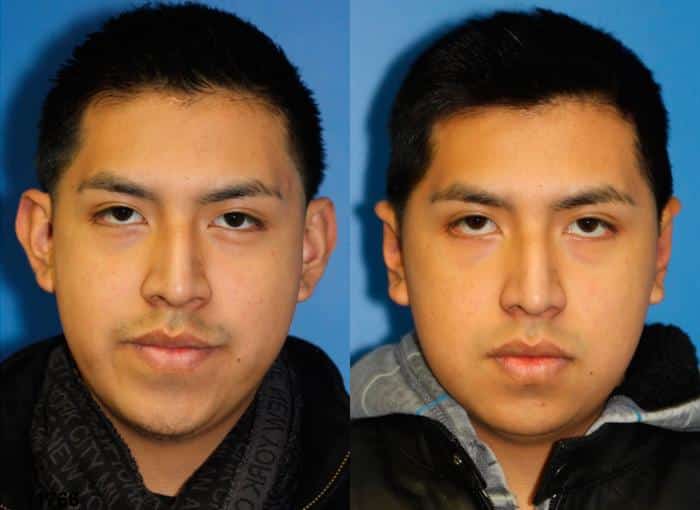
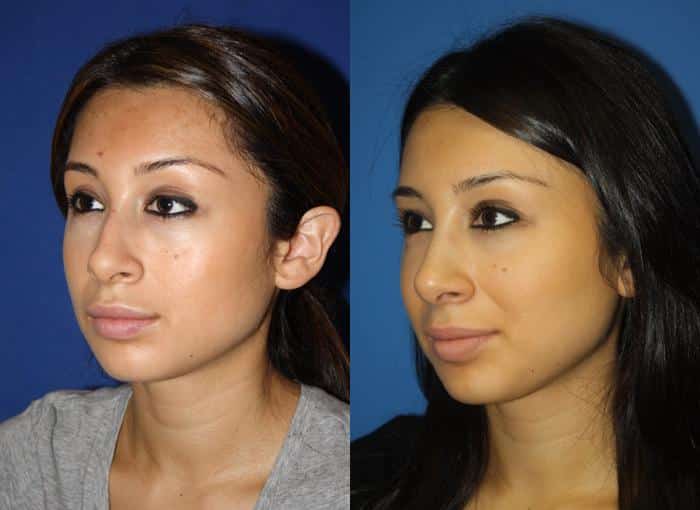
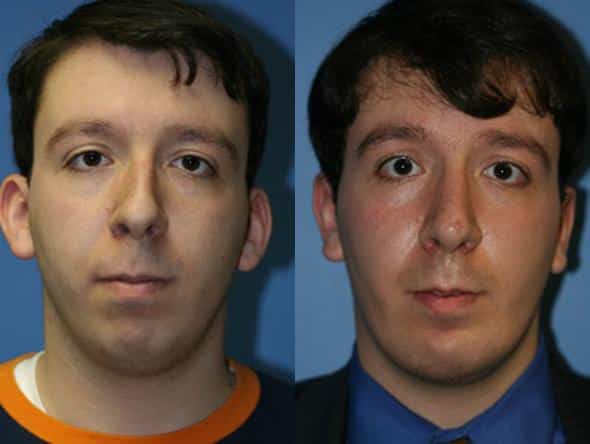
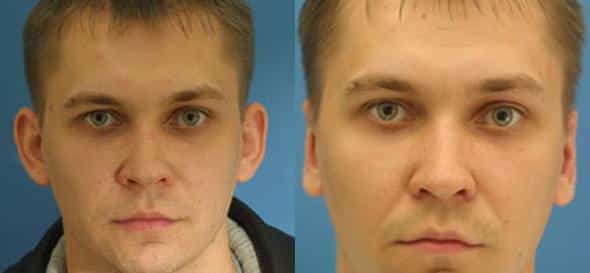
Otoplasty is a surgical procedure designed to improve the appearance of the ears. Patients with oversized, misshapen, or protruding ears can see dramatic improvement after an otoplasty procedure. The reconstructive surgery in Dr. Miller’s New York City surgery center can fix all aesthetic issues of the ear, ranging from a birth defect to an unnatural shape after an injury.
A successful otoplasty can be performed on both an adult patient, as well as children. Once the ears are close to fully developed, the surgical procedure can effectively reshape their size, shape, and position on the head.
Am I a Good Candidate for Ear Surgery?
Healthy men and women, as well as children as young as five, may make an excellent otoplasty candidate. People experiencing a malformation, asymmetry, or an unusual protrusion of the ears can find satisfying results through an otoplasty. It is recommended that the ears be between 85-90% developed prior to surgery, which occurs between the ages of five and six. The ideal patient will understand the procedure, commit to the recovery time required, and have realistic surgical expectations.
What Can I Expect During Otoplasty Surgery?
In our New York office, Dr. Philip Miller normally performs his otoplasty procedure under a local anesthetic. For children, however, general anesthesia may be recommended. The procedure will take between one and two hours to complete. To begin, Dr. Miller will make a small crease behind the ear, or depending on the desired correction, a tiny incision on the front crease of the ear. From here, the cartilage of the ear will be reshaped, and the repositioned closer to the head. Abnormalities of the earlobe will be addressed. Finally, sutures will be used to hold the ear in place while it heals.
How Long is Recovery After Ear Surgery?
Patients should expect the recovery from an otoplasty to take from one to two weeks. Initially, there may be mild discomfort, but Dr. Miller will make sure patients are resting comfortably at home with the appropriate pain medications. Bruising and swelling may occur, but will diminish over the next two to three weeks. A headband may be required, to assist in the appropriate healing of the ears. Patients are normally feeling well enough to return to work or school in seven to ten days.
Preparing for Otoplasty Surgery
Potential patients should first take time to research the otoplasty procedure. Today, excellent resources are available online. If you are still interested after reading up on the procedure, contact Dr. Miller’s office in New York City.
Before scheduling your otoplasty, a consultation with Dr. Miller will be scheduled. This will provide a time for the surgeon to review your medical history, previous procedures, and the current surgical options, as well as the goals and desires for ear reconstruction. Dr. Miller will carefully explain how the otoplasty is performed and detail the recovery period through his proprietary NatraLook® Process. If an otoplasty is the right procedure for your specific needs, a unique surgical plan will be created. Once the exact cost of your otoplasty is determined, the patient coordinator will detail your payment choices, including healthcare financing.
Once an otoplasty has been decided upon, it is time to prepare for the procedure. Dr. Miller will give patients clear post-surgical directions when the otoplasty is scheduled. To ensure a safe and satisfactory healing process, patients should also remember a few key points before their scheduled procedure:
- Carefully review post-surgical instructions that are given during the consultation appointment with Dr. Miller. If you have any questions or concerns, call the office to have before the day of your scheduled Otoplasty procedure.
- If prescription medications will be required, pick them up at the pharmacy before the day of the surgery. You will not feel like waiting hours to pick up pain medication in a crowded pharmacy the evening of your surgery.
- Arrange for a ride home from the surgical center. Otoplasty is an outpatient procedure, but you will need someone to drive you home.
- Be sure to place important numbers in an easy to see place. It is not wise to wait until a problem arises to search for a phone or insurance number.
- Plan ahead and schedule all of your follow-up appointments with Dr. Miller. Get these on your calendar; follow-up visits are important for a safe and efficient recovery.
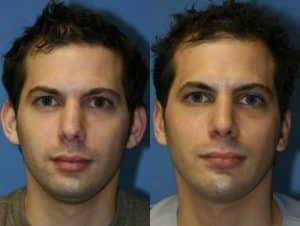
Otoplasty Before and After Photos
Otoplasty Video Testimonials
FAQ
Q: What are the potential risks of ear surgery?
A: Otoplasty is considered an extremely safe and effective procedure. As it is an invasive surgery, though, there is the rare chance for complications. If occurring, these can include infection, delayed wound healing, scarring, and asymmetry.
Q: How much does an otoplasty cost?
A: Depending on the extent of correction required, an otoplasty will cost between $5,000 and $7,000.
Q: What should I do before my otoplasty procedure?
A: Potential patients should research the otoplasty online, and set up a consultation appointment with Dr. Miller. At this time, if an otoplasty is right for you, information on the procedure and post-surgery instructions will be given. Read these carefully and ask any questions that arise.
Q: How long is the otoplasty procedure?
A: Otoplasty will take between one and two hours to complete. The length of time will depend on the extent of correction required.
Q: When can I return to work after my otoplasty?
A: Patients generally feel well enough to return to work or school between seven and ten days after surgery. By this time, the majority of bruising and swelling will have diminished.
To learn more about otoplasty, visit ncbi.nlm.nih.gov
Next, read about Pellevé.
Buccal Fat Removal in New York City
Chin and Cheek Augmentation
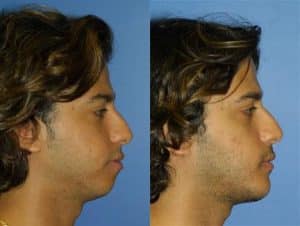
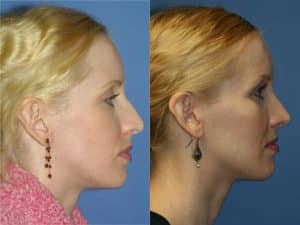
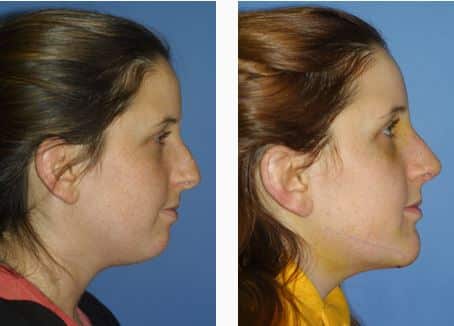
A chin augmentation is a surgical procedure performed by New York surgeon Dr. Philip Miller that uses a pre-formed silicone implant to improve the overall facial appearance. Correcting a small or weak chin, a chin implant can benefit the proportion of the lower face and jaw; improving the look of all the features, such as the nose and cheeks. The aesthetic balance provided by a chin implant can provide dramatic results for patients frustrated with their appearance.
The ideal chin implant patient will be in overall good health, with realistic surgical expectations. Anyone, man or woman, dealing with an underdeveloped or weak chin, may find excellent results from the chin implant procedure.
Preparing for Chin Implant Surgery in NYC
To begin your chin implant journey, take some time to research the procedure and the recovery process online. If you are still interested, contact Dr. Miller’s office in New York City to arrange for a confidential consultation. At this time, he will review your medical history, perform a brief physical exam, and discuss your goals for the surgery. Dr. Miller will show you Before/After photos to assist in a visualization of potential results. Should a chin implant be the right procedure for your situation, an individualized surgical plan will be created.
What to Expect During a Chin Implant
The chin implant procedure will take approximately 30 minutes, performed under a local anesthetic. A small incision will be made along the crease below the chin, or inside the lower lip, through which Dr. Miller will place the chin implant. This will be anchored in place, and finally, sutures are placed.
The chin implant procedure can be combined with other cosmetic procedures for optimal results. These can include Botox Cosmetic, dermal fillers, and cheek implants. The procedure can also be easily combined with fat removal of the chin and neck – referred to a submental lipectomy.
Chin Augmentation FAQ
Q: What are the potential risks with a chin augmentation procedure?
A: Chin augmentation is considered a safe procedure. Patients rarely experience complications, but on the rare chance, they may include scarring, delayed wound healing, or permanent numbness. When patients choose an experienced, Board Certified cosmetic surgeon, like Dr. Miller, the chance for complication decreases farther.
Q: How long does the actual chin implant procedure take?
A: A chin implant surgery, performed by Dr. Miller, will take from 30 minutes to one hour to complete. Patients are able to return home about four hours after their procedure.
Q: Will my chin implant procedure leave scars?
If Chin Implant incision is made along the crease below the chin, a small, well-concealed scar may occur. When possible, the incision may be placed on the inside of the lower lip; this does not leave visible scars.
Q: Am I able to finance my chin implant procedure?
A: Yes, Dr. Miller accepts cash, major credit cards, and health care financing through Care Credit. Contact our office for more information.
To learn more about chin augmentation, visit med.stanford.edu
Cheek Implants New York City Overview
Facial features are meant to work in harmony with one other, creating an attractive appearance. When one feature is out of proportion with other areas, facial balance is lost. Small, or flat cheekbones will rob the face of a healthy contour, and cause other features, like the nose, to look overly large.
Cheek implants are designed to improve the look shape of the cheekbones, adding an appropriate proportion to the facial features. Dr. Miller utilizes a special medical-grade material, that both looks and feels like bone, to restore healthy contour to the cheeks. These come in a variety of shapes and sizes, easily tailored for each individual patient. By simply addressing the cheeks, all of the features can come together for an aesthetically pleasing look. A dramatic improvement can be seen in the appearance.

Who is a Candidate for Cheek Implants?
Patients in good health, with realistic surgical goals, can make an excellent candidate for a cheek implants procedure. Patients frustrated with flat cheekbones or disproportional features may find they benefit from this invasive surgery. A good augmentation patient may also have small cheekbones, lack of fullness in the cheeks, poor facial asymmetry, or the desire to permanently improve the harmony between all of their facial features.
Preparing for Cheek Implant Surgery in Manhattan
First, go online and research the cheek implant procedure. Understand how the procedure is performed and look over multiple Before/After photos. If cheek implants still seem right for you, schedule a consultation appointment with Dr. Miller. As a pioneer in the field of facial aesthetics, Dr. Miller uses his proprietary NatraLook® Process to ensure you achieve your desired results. The consultation appointment is a vital part of the surgical process. Dr. Miller will take this opportunity to review your medical history, perform a quick exam, and discuss goals for surgery. He will explain the procedure in detail, as well as what to expect from the recovery period. If cheek implants are right for your situation, a unique surgical plan will be developed with your goals in mind.
What to Expect for a Cheek Implant
The cheek implant procedure will take between one and two hours to complete, performed under general anesthesia. Dr. Miller will make a small incision on the inside of each cheek; from here the implant will be inserted. The implants are placed into a pocket, located within the targeted area of the cheek. Dr. Miller will safely secure the implants, so they will remain in place. The incisions are sutured closed, allowing for appropriate healing.
Cheek Implant FAQ
Q: What are the risks from a cheek implant procedure?
A: The cheek implant procedure is considered both safe and effective. Rarely do complications occur, but they do, can include scarring, infection, asymmetry, implant migration, and nerve injury. Patients should only see a board certified cosmetic surgeon, like Dr. Miller, for their Cheek Implant procedure. This will further reduce the risk for complications.
Q: What is the recovery period like after cheek implants?
A: The recovery time from cheek implants is approximately two weeks. Initially, patients may notice some bit of swelling and bruising along the cheek or under the eye. This will fade over the first week or two. Keeping your head elevated and applying cold compresses will help to alleviate swelling. Mild pain may be experienced, but Dr. Miller will prescribe appropriate medications to keep his patients healing comfortably at home. Dr. Miller utilizes dissolvable sutures, so these will not need to be removed, although a follow-up appointment will be scheduled. Patients are normally feeling well enough to return to work in a week, possibly sooner. Strenuous exercise, however, should be postponed for four to six weeks.
Q: When can I return to work after cheek implants?
A: Most patients feel well enough and are comfortable enough with their appearance, to return to work or school in three to five days.
Q: How should I prepare for my cheek implant procedure?
A: Do your homework. Understand the cheek implant procedure and recovery. If there are any questions remaining after the consultation appointment with Dr. Miller, contact our office in New York City immediately.
Q: How long is the cheek implant procedure?
A: The cheek implant procedure will take between one and two hours to complete, from start to finish.
To learn more about cheek augmentation, visit med.stanford.edu
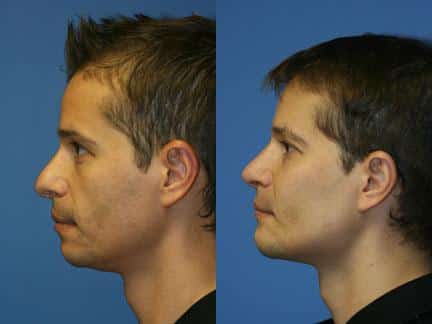
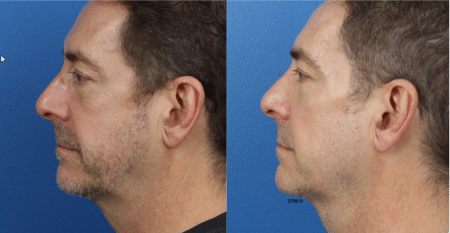
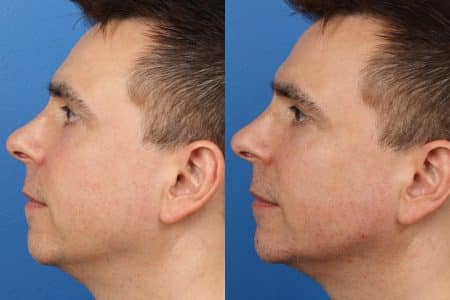
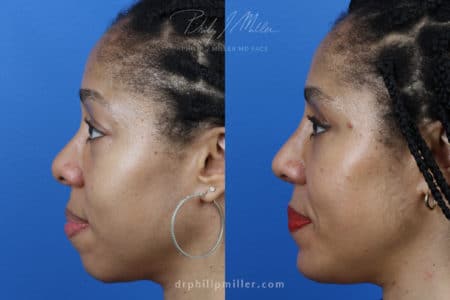
Cheek and Chin Implant Before and After Photos
Patient Testimonials
About NYC’s Facial Plastic Surgeon Philip Miller, MD, FACS
Facial plastic surgeon Dr. Philip Miller has over two decades of experience in cosmetic medicine, a high success rate of facial plastic surgery procedures, and has been voted among the Best Doctors in America for the past 10 years and Top Doctor of New York City. Dr. Miller is sought after for his innovative techniques in both rhinoplasty and revision rhinoplasty, which he has lectured and written textbook chapters on. Contact Dr. Miller’s Manhattan office to schedule a revision rhinoplasty consultation.
Next, learn about C02 laser resurfacing.
* Patient results may vary