Could a Facelift Be Your New Beginning?

If you’ve been thinking about having a facelift surgery, you might already know what your motivation is. Even if you haven’t pinpointed your one real reason for having this surgery, it does exist and it drives you to book a consultation, plan ahead for the procedure, and cash in your sick days for a proper recovery. More often than not, the men and women seeking facelift surgery are looking for a new beginning, in one way or another.
What Can a Facelift Do to Help?
A facelift procedure is a surgery performed in order to restore a youthful appearance to the face. It can correct unwanted effects of aging, such as drooping and wrinkled skin, fat deposits around the chin and jaw, and loosened facial muscles. All of these effects can contribute to a tired, older-looking face that may make you look worn down to those around you. Facelift surgery can help rejuvenate your appearance by alleviating the saggy, lax look from the lower part of the face.
Facelift surgery, or rhytidectomy, begins with incisions placed around the hairline and ears, as determined by your plastic surgeon. With the incisions in place, your surgeon will redistribute the fat deposits collected around your chin and jaw to other areas of the face that have lost volume; any excess fat will be removed, sometimes using liposuction for best results. The muscles of the face are then lifted and tightened, followed by the skin. With the skin now adjusted to a firmer position, the excess is trimmed away and the incisions are sutured closed. The result is a more well-defined profile and more youthful look.
New Beginning #1 – A New Job or Promotion
Today’s workforce is a competitive place to be, especially with so few jobs available to those with years of experience and qualifications. Pink slips abound as companies cut back on unneeded employees, sometimes bringing in younger workers to fill the empty spots. In other cases, promotions are going to younger employees, whom management perceived to be younger with more energy and a longer career ahead of them. As a middle-aged worker with the right qualifications, getting passed over in favor of someone who looks younger can be quite a blow to your self-esteem and even your commitment to your job.
Facelifts are on the rise in recent years, with male and female patients alike citing their desire to stay competitive at work as a major motivator. By improving the way you look and feel, your self-confidence is naturally bolstered. Upper-level management takes notice of confidence and the qualities that come with it. While a facelift alone can’t get you a new job or help you climb the corporate ladder, it can certainly trigger changes in you that can help. Starting a new beginning in your career could be just the boost you need.
New Beginning #2 – A Special Occasion to Debut the New You
Many patients see an upcoming event or special occasion as the perfect reason to get a facelift. From 20-year high school reunions to awards banquets to a child’s wedding, the special events that qualify as a facelift motivator are diverse in purpose. Still, each of them share three things in common: the event is a life milestone with heavy meaning to the patient, the event will likely involve taking many pictures, and the event will include many other people, some of whom the patient hasn’t seen in a long time. Looking your best at big events like these doesn’t just mean getting a haircut and a new outfit anymore. When you reach the point where your facial features don’t look like you anymore, it’s time to start a new beginning with a facelift.
Bear in mind that planning a surgery in time for a special event can be a delicate business. Do yourself a favor and book your facelift out far enough to allow for a full and proper recovery. With enough time to rest and relax, you’ll certainly look like the youthful you for those friends, family, and photos. Follow your surgeon’s instructions carefully to ensure that the smoothest recovery and best results are achieved with your facelift.
New Beginning #3 – The End of One Era, Start of the Next
Another popular reason that patients seek facelift surgery really is a beginning of a new phase of life: divorce. Men and women often find themselves stuck in a rut after ending a relationship with their partner, even if it was mutual and amicable in nature. Whether you’re planning to reenter the dating scene or just spending more time caring for you, facelift surgery can give your self-confidence and self-image a boost. When you look in the mirror and go out into the world, you will have this confidence with you. Achieving this feeling is a good way to begin any major transition. It may also be a good way to psychologically mark a change in yourself.
New Beginning #4 – The Recommitment to Caring for Yourself First
Finally, the best reason of all for a facelift surgery is yourself. While a new career, special event, or ended relationship can be significant, the root of each of these motivators is a desire to better yourself. You don’t always need the bigger reasons to spend the time and money investing in how you look and feel. Many patients reach the decision for a facelift just by realizing that they would feel better if they addressed their aging concerns.
If you have noticed sagging skin and muscles around the lower portion of your face, you could be a good candidate for facelift surgery. You should also be in good overall physical health, not smoke, and have realistic expectations about what plastic surgery can do for you. If you’re not sure, consult with a credentialed plastic surgeon experienced in facelift surgeries to be evaluated. This could be the new beginning you’ve been waiting for.
Schedule Your New Beginning with a Facelift Specialist
Any new beginning can’t get very far if your procedure doesn’t go smoothly. Get the best results from a facelift procedure with a low rate of risks when you plan your surgery with a reputable, specialist facial plastic surgeon. Dr. Philip Miller has specialized exclusively in facial plastic surgery, offering over 20 years of experience and knowledge to his patients. A recognized expert in facial rejuvenation procedures, Dr. Miller has been frequently invited to share his specific techniques with his peers at various national facial plastic surgery meetings. He has been voted among the Best Doctors in America each year since 2007 and has also been named a Top Doctor of New York. To schedule a consultation with Dr. Miller, contact his office located at 60 East 56th Street, Third Floor in New York City, by calling (646) 791-3025.
Next, learn How to Pick the Perfect Time for a Facelift
NatraNeck and NatraLift to rejuvenate the neck and lower face, 2 months post-op, by Dr. Miller
Is Your Selfie Addiction a Reason for Rhinoplasty?

Social media has changed so much about the world, and the rise in popularity of “selfie” photos has only added to those changes. A “selfie” is a photograph taken of yourself, by yourself, and usually involves striking a playful pose. Many young men and women are snapping selfies everywhere they go—with friends, in front of their favorite restaurant, and with random strangers if the occasion calls for it. All of these photos, it seems, have started to take a toll on young people’s self-images. In fact, some selfie habits are sending would-be patients straight to the nearest NYC plastic surgery clinic for rhinoplasty surgery.
What Makes Selfies So Different?
Photographs have been around for generations, causing a fair amount of angst for those who don’t like to have their pictures taken. When a person often avoids having pictures taken, this is an indicator of a typical amount of self-image trouble. Eventually, these people will put up with a few snapshots or group photos, even if they aren’t thrilled about the idea.
Social media connects us all in a much more visual way. Profile photos are required for most social networking sites, so there is a tremendous amount of pressure to take a really great picture to post. Then, of course, that picture must be updated again and again and again. Social media and selfie culture have shifted the focus of our interactions to a very visual level. Not only are young men and women aware that everyone is looking at photos of them all the time, but they themselves are taking and studying photos of themselves. Suddenly, those flaws seem magnified and the need for procedures, like nasal surgery, becomes more apparent.
Who Can Have Rhinoplasty Performed?
People seek rhinoplasty surgery to resolve many of their unwanted nasal features. Rhinoplasty is a procedure designed to change the size and shape of the nose in order to improve form without impeding function. Typical concerns that bring patients in for a nasal surgery include a nose that is too large or too small, a nose that is too flat or too pointy, a crooked nose, and nostrils that are too narrow or too wide.
Good candidates for the rhinoplasty procedure are in good physical health with realistic expectations about their potential results. Rhinoplasty can improve inherited characteristics like bumps or humps on the bridge of the nose, nasal deformities, or old injuries from a past nasal fracture. Other patients opt for rhinoplasty to improve asymmetry or a crooked appearance, to refine or narrow the tip, to adjust the projection of the tip, to reduce width of the nasal passages, to increase or decrease the overall size of the nose, or to reduce the size of the nostrils.
Are Self-Image Problems a Good Reason for Rhinoplasty?
Regardless of how you’ve come to think rhinoplasty might improve your self-image, learning more about this procedure can help you make an educated decision that is right for you. If looking at your album full of selfies uncovers a feature you’ve always disliked about yourself, your reason is no less valid than anyone else’s. The intensity of your dislike might be a bit heightened, due to the amount of photos you’re faced with daily, but it doesn’t change the fact that you don’t like your nose. If you think you might be a candidate for rhinoplasty, start with a one-on-one consultationwith a facial plastic surgeon.
During your consultation, the doctor will talk about the features you don’t like about your nose and what lead you to decide that rhinoplasty could be a good option. He will evaluate your physical health, your facial features, and your nasal features. The goal of any cosmetic rhinoplasty surgery is to create an improved nasal shape that is proportionate to the face. Your surgeon will be able to discuss the projected results of a rhinoplasty so you can get a real idea about how this surgery can help you.
Can Rhinoplasty Solve Self-Image Problems?
As mentioned already, good candidates for rhinoplasty have realistic expectations for their surgery. While surgical results can definitely help alleviate some of the strain on your self-image, they cannot provide an instant cure. Following surgery, you will need to give yourself time to adjust to your new nose and accept the way you look with these changes. A good self-image starts within, but sometimes making the right change to undesirable features can be a life-changing experience. If you’re unsure whether plastic surgery is the right answer for you, be sure to discuss these feelings openly with your plastic surgeon. He should be happy to work with you to give you a better understanding of the procedure, how it can change your look and your life, and what you should expect. Getting started with a consultation is the best way to decide if your selfie-inspired rhinoplasty is the right choice for you.
Where Can I Consult for a Rhinoplasty in New York?
If you want to get the bets rhinoplasty results for yourself, it’s important to choose the best surgeon possible. Dr. Philip Miller has specialized exclusively in facial plastic surgery, offering over 20 years of experience and knowledge to his patients. A recognized expert in rhinoplasty, Dr. Miller has been frequently invited to share his specific techniques with his peers at various national facial plastic surgery meetings. He has been voted among the Best Doctors in America each year since 2007 and has also been named a Top Doctor of New York. To schedule a consultation with Dr. Miller, contact his office located at 60 East 56th Street, Third Floor in New York City, by calling (646) 791-3025.
Rhinoplasty to adjust the nasal bridge and raise the tip by Dr. Miller
Pick the Perfect Time for Your Facelift

There’s a lot more that goes into planning a facelift surgery in New York than just picking a date for your procedure. In fact, as your plastic surgeon will discuss with you in detail, a key component to the process of having a facelift is your recovery period. While the surgery may only last a few hours, your recovery can take days and weeks. To benefit from the results you truly want from your facelift, you must plan ahead to book your procedure at the perfect time, a time when you have plenty of time to recover.
What Brings You In for a Facelift?
If you’re frustrated by the idea of missing work or being restricted from certain activities, it may be helpful to keep in mind the life-changing benefits this surgery will provide you. Facelifts are designed to help men and women of nearly any age achieve a more youthful look. This surgery can address drooping, sagging skin and other problems with the lower portion of the face. When the aging process and the effects of gravity form jowls at your jawline, a double chin, or deep folds you despise, a facelift surgery could help you to recover the contour of a more youthful jaw and chin. For many patients, a facelift can take years off their look.
Before booking your facelift consultation, you should be in good physical health without any illness that could impair your ability to heal. You should have an overall healthy lifestyle, eating a proper diet and getting regular exercise. There’s no correct age to receive a facelift procedure. Start planning your facelift if you believe you’re a good candidate for the procedure.
What Should You Expect from Surgery?
If it seems like the recovery period is excessive, it might benefit you to understand the facelift procedure itself. It may seem straightforward to you, but a facelift involves manipulating many delicate features of the face and jaw. Your surgeon will work on fine-tuning this area gently and effectively, leaving the skin, muscles, and tissue to heal themselves in their new formations. Rushing through the recovery process can only hurt your results or over-tax your body.
The facelift surgery can be performed as a traditional procedure or a limited procedure. With a traditional facelift, the incisions are made along the hairline and extending in front of and behind the ear, then continuing to the lower scalp. If your surgeon suggests a limited facelift, your incisions will be shorter in length and restricted to the area around the ear. The technique chosen for your procedure will depend on the extent of work that is required to achieve your desired results and the location of your main concerns.
With the incisions in place, your plastic surgeon will now work to lift and tighten the underlying sheet of facial tissues. Secondly, your surgeon will also redistribute the fat deposits that often accumulate throughout the lower face and neck before re-draping the skin to create a more taut but natural-looking appearance. The result of your successful facelift surgery is a refined, youthful profile that still appears natural, as if you have magically melted away the years overnight. Of course, it’s key to make it through your recovery period to reach these final results.
How Much Time Should I Plan for a Facelift Recovery?
We’re not talking about a year for recovery, or even six months. In fact, most patients recover from their facelifts enough to return to work within two weeks, can resume most activities within four weeks, and no longer have swelling after a few months. Your facelift recovery begins with bandages and dressings, as well as drainage tubes to remove excess fluids during the first day or two. The first 48 hours of your recovery will be dedicated to rest and recuperation, while keeping your head elevated to reduce swelling and changing the bandages to keep the incisions clean. Your plastic surgeon will prescribe pain medication to help with any discomfort and most likely will recommend using cold compresses to soothe the swelling and inflammation.
After five to 10 days, your surgeon will remove your sutures at a follow-up appointment and examine your incisions and surgery area to determine how well they are healing. At this stage, he may be able to give you a more definite time frame for returning to work and resuming activities like exercise. After continuing to care for themselves and their face for a few more days, most patients are cleared to return to work at two weeks after surgery. At this point, bruising and redness should be gone and only minimal swelling will remain. On your first day back on the job, you’ll look refreshed and youthful, but it won’t be obvious that you’ve had a facelift unless you spread the word yourself.
If you’re planning your facelift for a specific event, such as a wedding or class reunion, give yourself enough time in advance to come through the entire recovery process. Don’t schedule your facelift two weeks out; instead, give yourself two or three months if you can to fully heal and let all of the swelling subside. Picking the perfect time in advance can make your facelift experience seem much smoother and much less stressful.
Where Can I Get Help to Plan My Facelift?
There’s certainly no perfect time to have a facelift, but there will be a good time for you to undergo this life-changing procedure. If you’re unsure when the right time is for you, the plastic surgeon you choose should be able to walk you through all the details to pick your perfect time. One such plastic surgeon, Dr. Philip Miller, has specialized exclusively in facial plastic surgery in NYC, offering over 20 years of experience and knowledge to his patients. A recognized expert in facial rejuvenation procedures, Dr. Miller has been frequently invited to share his specific techniques with his peers at various national facial plastic surgery meetings. He has been voted among the Best Doctors in America each year since 2007 and has also been named a Top Doctor of New York. To schedule a consultation with Dr. Miller, contact his office located at 60 East 56th Street, Third Floor in New York City, by calling (646) 791-3025.
Five Things to Consider Before Your Rhinoplasty

Any plastic surgery can make lasting changes to your appearance, especially a rhinoplasty. Sometimes called a nose job, this surgical procedure can alter the features of your nose that you don’t like or that seem out of proportion with your face. While changing your unwanted nasal characteristics may seem like a dream come true, you should consider undergoing this surgery very seriously. As you make your decision, keep these questions in mind to be sure rhinoplasty in NYC is the right choice for you.
What Are the Concerns I Have About My Nose?
Obviously, it’s helpful to know what you would change about your nose before having rhinoplasty performed. Even if you don’t know exactly what you would like changed but have some vague notion that you simply don’t like your nose, a qualified plastic surgeon can help you develop a plan for surgery. Most patients who seek rhinoplasty have struggled with self-image problems related to their nose for a long time, maybe most of their lives. They are often unhappy with the size, shape, and/or structure of their nose and wish to make changes. Typical concerns leading patients to seek rhinoplasty include a nose that is too large, too small, too flat, too pointed, too crooked, too straight, too wide, too narrow, or too round.
The most common changes requested to the nose include the removal of a hump or bump; improvements to nasal asymmetry or crookedness; refining or narrowing the tip; adjusting the projection of the tip; reducing nasal width; increasing or decreasing the overall size of the nose; and reducing the size of the nostrils. In some cases, patients seek rhinoplasty because they have experienced trouble breathing from one or both sides of the nose. This could be an indication that there is an underlying problem with your nasal function, which can also be corrected with rhinoplasty. This surgery can change the shape of the whole nose, focus on one small part, or concentrate on the functionality of the nasal passageways. Whether you are looking to correct function or form, a rhinoplasty surgery could be the right procedure to address your concerns.
Do I Have Realistic Expectations About My Surgery?
Rhinoplasty is indeed a surgery, one that is very intricate and complex. Nasal surgeries are among the oldest plastic surgery procedures and the most difficult to perform. Before undergoing this surgery, or any surgery for that matter, it’s essential to know what to expect from your surgery. Your plastic surgeon will likely walk you through the surgery step by step during your rhinoplasty procedure, but it never hurts to make sure you’re prepared.
You may have either an open rhinoplasty or a closed rhinoplasty, depending on the extent and location of the changes required to achieve your desired results. A closed rhinoplasty, or endonasal rhinoplasty, begins with incisions made inside the nostrils only, leaving behind no visible scars. The skin is then lifted from the underlying cartilage and bone, allowing the surgeon to recontour and reconstruct the nose. To perform an open rhinoplasty, or external rhinoplasty, one very small incision is made between the nostrils on the underside of the nose. This incision allows the surgeon access to the tip of the nose, which can be opened to reveal the structures of the lower and middle third of the nose.
Once the desired changes are made to the nose, your incisions will be sutured and the nose will be bandaged. You will experience some bruising and swelling, but as these side effects subside, the results of your rhinoplasty will begin to emerge and your new nose will be revealed.
Do I Have Time for a Full Recovery?
An important consideration when you’re thinking about scheduling a rhinoplasty is the time it will take you to recover. You don’t want to book your surgery the week before a vacation, for example, or during a week that you can’t miss an important meeting at work. Your post-operative care will require some time off from work, some restrictions from your regular activities, and a little bit of rest and recuperation.
Following your surgery, you will experience only a small amount of pain and discomfort. Your nose will stay swollen for several days, sometimes causing breathing difficulties at first. Most patients also experience some swelling around the eyes for a few weeks following surgery. While your face and nose are healing after surgery, you will be instructed to take several precautions. Activities like bending and lifting can prolong your swelling, so these should be avoided for three weeks after surgery, along with running, cycling, and aerobics. You should avoid contact sports for six weeks to give the bones enough time to fully heal.
When you book your rhinoplasty procedure, be sure to take into account these various restrictions and the time you will need to be away from work and your daily activities. Planning your recovery is an essential piece of preparing for a surgery, so make sure to follow your surgeon’s instructions in total.
Am I Really Ready to Look Different?
Many patients go into their surgery without considering the fact that they will look different afterwards and it may take some getting used to. Even if your nose is reshaped exactly the way you wanted it, you might not be prepared for the shock of seeing it on your face for the first time. You’ll adjust to this significant change, of course, but it can take some time.
If you’re worried about the shock of that huge change, discuss this with your plastic surgeon. He should be able to provide you with images or projections of the way your nose will look after surgery. Some surgeons might be able to show photos of past patients with similar nasal structures to yours to help you start imagining your new look. To quell your anxieties, try visualization to emotionally prepare yourself for the new way you’ll look. Chances are very good that you’re going to love it.
How Experienced Is Your New York Surgeon?
The success of your rhinoplasty hinges on the plastic surgeon you select to perform the procedure. Choosing an experienced, credentialed plastic surgeon can minimize your risk of side effects and complications, as well as increase your chances for a successful result. If you’re in the process of selection a surgeon, ask or find the answers to these questions to ensure he is the quality surgeon you need and deserve:
Next, these are The Top 3 Reasons for a Revision Rhinoplasty
Top Three Reasons for Revision Rhinoplasty
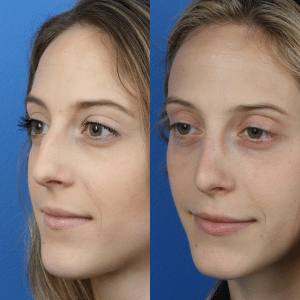
Although rhinoplasty is one of the most complex and delicate plastic surgeries, it still carries a high success rate, leaving many patients satisfied with their improved nose. Unfortunately, not every rhinoplasty is deemed successful by the patient, leading some to seek a second, or revision, rhinoplasty. Sometimes, it’s just disappointment that leads to a revision rhinoplasty, but there are other reasons that might cause a second stop at the plastic surgeon’s office, such as Dr. Philip Miller’s New York plastic surgery clinic.
Reason #1: A Disappointing Result
Many of the patients seeking revision rhinoplasty do so because they do not feel that their surgical results met the expectations they had prior to surgery. Disappointing results can occur when surgeons use outdated or ineffective techniques, when problems arise during the surgery or healing process, or because a patient and surgeon had a miscommunication about what was expected. Some patients may have an idea in mind that isn’t practical; other times the surgeon might have left a nose too pointy or too narrow, leading the patient wanting more.
If a patient had a strong trust in their first rhinoplasty surgeon, he or she might return for a second procedure, but this is less likely. Typically, after an unsatisfactory nasal surgery, most revision patients are keen to find a revision rhinoplasty specialist to perform their secondary rhinoplasty. Finding a second plastic surgeon, preferably one who specializes in revision rhinoplasty, should involve doing thorough research, asking many questions, and talking specifically about the expectations not met during the first surgery and the desires you have for a second surgery.
Reason #2: A Post-Surgical Complication
Rhinoplasty is a highly complex surgical procedure, requiring the surgeon to have the utmost level of skill and a close attention to detail. Because the appearance and functionality of the nose are so closely connected, every move the surgeon makes must be exactly right. For example, when the size and shape of the nose are altered, it can easily disrupt the patient’s ability to breathe properly. On the other hand, a rhinoplasty performed to improve breathing might affect the way the nose appears.
Some of the post-surgical complications that can occur include a change in nasal function such as trouble breathing, a bump or depression that forms after surgery, and an excess of scar tissue growth during the healing process. Although it is rare, more serious complications can follow rhinoplasty, such as a deviated septum or nasal valve collapse. Working with a board certified and experienced plastic surgeon to resolve these issues can prevent further damage and complications.
When a first rhinoplasty results in unwanted changes which affect the functionality of the nose, a revision surgery is almost always necessary to correct these errors. Whether due to outdated techniques, a miscalculation, or an unforeseen complication, post-operative problems involving the function of the nose may need to be addressed right away. Many patients in this situation are willing to work with the same surgeon to correct the issue, because it is not always the result of poor training or a lack of expertise. Sometimes, as with any surgery, the risks involved with rhinoplasty may become real. The importance of working with a plastic surgeon with proven credentials, a reputation for success, and the most up-to-date techniques cannot be stated enough.
Reason #3: An Unexpected Visit
For some patients, returning for a second rhinoplasty has absolutely nothing to do with their first surgery or the outcome. Sometimes, injuries and accidents can ruin the beautiful nose that was hand-crafted for you by a skilled plastic surgeon. Your first rhinoplasty does nothing to protect your nose; it will still be as naturally vulnerable as ever before. Just as many patients find themselves having a first rhinoplasty to repair nasal damage, so too can patients wind up back in the office for a second rhinoplasty. Other patients may find that years after their initial successful rhinoplasty, aging has created unwanted to changes to the nose, just as it can to an un-operated nose.
What makes this surgery a revision, especially if it’s months or years after the first one? The simple fact that you have had a previous surgery may change the surgeon’s approach to your nasal repair strategy. The nose is a delicate place to operate, so your surgeon must have a complete understanding of yours in order to keep it looking and working great at the same time. And on a technical level, he really will be revising that surgery you had all that time ago. With this in mind, make sure to locate a skilled facial plastic surgeon with experience performing revision rhinoplasty before you schedule your own surgery. To learn more about rhinoplasty, visit medlineplus.gov.
Where to Go for First- and Second-Time Rhinoplasty
Whether you’re looking for a revision rhinoplasty or this is your first time around, it is equally important to carefully select the plastic surgeon to perform your surgery. Make sure you choose only the very best revision rhinoplasty surgeon for your surgery. Dr. Philip Miller has specialized exclusively in facial plastic surgery, offering over 20 years of experience and knowledge to his patients. A recognized expert in rhinoplasty, Dr. Miller has been frequently invited to share his specific techniques with his peers at various national facial plastic surgery meetings. He has been voted among the Best Doctors in America each year since 2007 and has also been named a Top Doctor of New York. To schedule a consultation with Dr. Miller, contact his office located at 60 East 56th Street, Third Floor in New York City, by calling (646) 791-3025.
Rhinoplasty to enhance appearance of nose, one week post-op, by Dr. Miller
Could a Facelift Save Your Job?

Prospective patients seeking facelift surgery in New York often do so for their own personal reasons: looking younger, feeling good about themselves, improving their profile. However, they may be facing much larger concerns than just how they look. For some men and women, a facelift can have huge implications in their personal life and even their careers. Are patients really seeking facelift surgery to save their jobs? And does it really make a difference?
Motivating Factors for the Facelift
A facelift surgery is a procedure designed to add definition and improved contour to the lower portion of the face, primarily the jawline, chin, and upper portion of the neck. Many men and women opt for facelift surgery because they have begun to experience the effects of aging on this area. Candidates for facelift may experience loosening of the face on the skin and neck, sagging skin in this area, a collection of fat deposits at the jawline, the gradual formation of wrinkles throughout the face, jowls at the jawline, and/or extra folds at the front of the neck to create a double chin. The loss of elasticity in skin and the effects of gravity combine for a less balanced look than the V-shaped face of youth.
Typically, men and women who opt for plastic surgery to rejuvenate the face want to improve their appearance by reversing some of the effects of aging. Some motivating factors include increased self-esteem and self-confidence, the desire to recapture youth, a fresh new start in life, and just wanting to look like themselves again. Facelift surgery can tighten the skin in the lower third of the face, redistribute fat deposits to places in the face that have lost volume, and remove excess fat and skin that is not needed. Doing so can help patients to achieve their personal goals through facelift. Prospective patients should be in overall good health, not smoke, and have realistic goals achievable through facelift surgery.
Opting for the Career-Saving Facelift
For some patients, those realistic, personal goals can turn into something more career-oriented. Today’s job climate is challenging, with many new graduates entering the workforce every year and older, more mature workers facing the threat of replacement. The economy in the United States has put pressure on companies to retain only essential personnel and to do so at the lowest cost possible, leaving many higher-earning and more experienced workers without their jobs. One typical practice companies have been using in recent years is to cut out middle-aged workers for less expensive personnel who can be easily trained in specific areas. In other situations, workers keep their jobs but are constantly passed over for promotions that are going to younger workers; there’s no way to get ahead in their careers anymore. Other older workers may be finding themselves jobless and newly on the job hunt. It’s an ugly truth, but it has increased the need of many of these aging workers to take drastic steps to maintain a successful career.
While a facelift can’t boost your technology skills or suddenly reform you into a better public speaker, it can offer many profound benefits to its patients. When men and women seek facelift surgery for their careers, they are often doing it for two reasons: 1.) To appear younger and maybe not attract notice as part of that aging workforce; and 2.) to boost their own confidence, thus improving work performance. As companies begin to deal with cases of age discrimination and handing out pink slips to those too young for retirement, some workers are choosing to do all they can to fire-proof themselves in any way they can.
Of course, there is no guarantee that workers who have a facelift won’t get fired. Yet, even if you are let go, the surgery can help you in the long run. Like middle-aged employees, middle-aged job seekers sometimes opt for facelifts as a strategy to break into a new corporate workplace, perhaps looking as young and vibrant as they did years ago. Even if your company doesn’t retain you because of that newly redefined jawline, there is no end to where your new self-confidence might take you.
Facelift Surgery & Recovery
If you’re considering a facelift for personal or professional reasons, you’ll want to plan your schedule accordingly. Use sick time or vacation days to give yourself enough time for the surgery and recovery period, so you can return to work refreshed and renewed. You might even have coworkers scratching their heads to figure out what’s so new and different about you.
The traditional facelift surgery is performed using incisions made at the hairline and extending in front of and behind each ear, then continuing down to the lower scalp. Some patients may have the option for a limited facelift surgery, which uses shorter incisions made just around the ear. The technique used for your surgery will be determined during a one-on-one consultation with your plastic surgeon, after you have discussed your desires from surgery and he has analyzed the features and concerns of your face. Once the incisions are in place, your surgeon will lift and tighten the underlying sheet of facial tissue in order to re-drape the skin; he will then redistribute the fat collected in the lower face and neck to restore volume to areas like the cheeks and mid-face. With everything in place, the incisions are sutured closed and you’re left with a more refined, more youthful profile.
Allow yourself the time necessary to recover before returning to work or getting back to the job search. Your plastic surgeon will go over the timeline for your projected recovery, but plan to take at least one to two weeks off. After your surgery, any drainage tubes and dressings will be removed within one to two days. Your sutures will be removed around five to 10 days after surgery. During this time, you will experience some swelling of the face and mild to moderate discomfort which can be managed with cold compresses and prescribed pain medication. Most patients return to work after a facelift looking and feeling refreshed within two weeks, but everyone heals differently. Discuss any questions you have about your post-operative care and activity restrictions with your physician.
Find the Right NYC Surgeon for Your Facelift
Making the decision to have a facelift is the first step toward reclaiming your face from the effects of aging, and it can reap big benefits in both your personal and professional life. Work with your chosen plastic surgeon during a facelift consultation to understand the procedure, what benefits it can offer you, and what your post-operative expectations should be. Looking for a specialist surgeon with a good reputation? Dr. Philip Miller has specialized exclusively in facial plastic surgery, offering over 20 years of experience and knowledge to his patients. A recognized expert in facial rejuvenation procedures, Dr. Miller has been frequently invited to share his specific techniques with his peers at various national facial plastic surgery meetings. He has been voted among the Best Doctors in America each year since 2007 and has also been named a Top Doctor of New York. To schedule a consultation with Dr. Miller, contact his office located at 60 East 56th Street, Third Floor in New York City, by calling (646) 791-3025.