Bulbous Nose Tip
Bulbous nose tips look rounded, wide, and bigger than the average nose. Rhinoplasty is a popular and permanent solution to reshape the nose, changing the appearance of this type of tip.
Bulbous nose tips are the result of lower lateral cartilages that lack definition. Convex nasal cartilage, cartilage position, or an excessive amount of soft tissue can also contribute to this appearance. Bulbous tip rhinoplasty reshapes this structure to form a more pointed tip. If you have a bulbous tip that’s oversized, rounded, or bulging, bulbous nose tip surgery may be right for you.
Bulbous Nose Treatment Options in New York
If you’re in New York, Dr. Miller can help you redefine the shape of your nose with a nose tip rhinoplasty. By reconfiguring cartilage, nose surgery for a bulbous tip can elevate your overall aesthetic appearance.
Dr. Miller utilizes a variety of methods in order to reshape a bulbous tip nose. Sutures can be used to narrow the structure by bringing lower lateral cartilages together. Cephalic trimming can be used to remove part of the lower alar cartilage for a narrower look. Cartilage grafting can be used to add shape and volume during bulbous nose surgery.
Open or closed rhinoplasty can be used to improve your bulbous nose tip. Open rhinoplasty involves an external incision for more access so extensive work can be done. The small incision is placed at the base of the nose between the nostrils and post-surgical scarring is nearly invisible in most cases. Closed rhinoplasty for a bulbous tip uses an internal incision that leaves no residual scarring and may result in less swelling after surgery.

Bulbous Tip Rhinoplasty in NYC
At his office in Manhattan, New York, Dr. Miller conducts bulbous nose rhinoplasty procedures for patients looking for improved nasal definition. Round or wide tips are reshaped through surgical procedures that are limited to the tip or can be done along with other corrections of the nasal bridge or alar base.
Upturned or droopy tips can also be altered during a nose job for a bulbous tip. Other nasal structural issues involving the bridge can be operated on during the same surgery for a full rhinoplasty.
How does Dr. Miller Correct a Bulbous Nasal Tip?
Dr. Miller is a board-certified facial plastic surgeon with over 20 years of experience. He uses a combination of science and art to create natural-looking results with elevated aesthetic value. He develops patient-centric treatment plans during consultations in order to tailor his work to the unique desires of every patient.
Dr. Miller corrects this type of nasal tip with surgery for the bulbous nose. This results in better facial symmetry and balance, improving the look and self-esteem of his patients. With his NatraLook® process, Dr. Miller helps patients explore their options in a safe environment to get them the aesthetic confidence they seek. To learn more about your rhinoplasty options, contact our New York office today.
Bulbous Tip Before & After Photos


Bulbous Tip FAQ
Can a bulbous tip be corrected with thick skin?
A nose job for a bulbous nose can be conducted for patients with thick nasal tip skin. Cartilage sharping and sutures can be used for this type of bulbous nose job after the skin is thinned. Thinning thick skin helps create the functional and aesthetic results patients are looking for.
What is the cost for a bulbous tip rhinoplasty in New York?
The cost of a nose tip rhinoplasty will vary from patient to patient. It depends on the work that needs to be done to achieve a patient’s specified results. A full rhinoplasty will cost more than one focused fully on the tip. An estimate may be given during a patient’s consultation. Typical pricing ranges anywhere from 3-30 thousand dollars. For more information, please contact Dr. Miller at his office in Manhattan, New York.
What causes a bulbous tip?
Bulbous nose tips are typically caused by the structure and amount of cartilage in the lower part of the nose. Excessive thick skin can also lead to the appearance of a bulbous nose. Wide nostrils can create the look of a rounded tip as well.
Can I get rhinoplasty for just the bulbous nasal tip?
Nose tip surgery can be conducted rather than a full rhinoplasty. This procedure is less invasive than a complete rhinoplasty. Meeting with Dr. Miller to speak about your aesthetic goals can help you decide whether you’d like work done on the tip or if you’d like a more intricate operation. Once he understands your goals, he can make recommendations to suit your unique needs.
Can I get a revision rhinoplasty to address a bulbous tip?
Dr. Miller can perform a revision rhinoplasty to address a bulbous tip that resulted from a previous rhinoplasty. Patients with thick nasal tip skin may have more scarring from a prior operation, and this should be discussed during your consultation. It’s important to note that patients should wait at least one year after their original rhinoplasty to have additional procedures provided for them.
What is the recovery time after surgery?
Full recovery typically takes up to one year. One week after surgery, Dr. Miller will typically remove the cast and any sutures from the area. Patients will experience bruising and swelling during this time. After two weeks, patients will see improvement in bruising and inflammation. After one month, patients can usually be proud to show off the revealed results. Within three months patients are typically able to resume all of their normal activities. By one year after the procedure, any residual swelling and inflammation have usually subsided completely.
Boxy Nose Tip
When viewed from the base, the ideal nasal tip forms an equilateral triangle, but for those with a boxy nose tip, the nasal cartilage has a broad, squared-off shape. A boxy nasal tip gives the nose a wide and thick appearance that makes the lower third of the nose look very large compared to its upper portion.
Correction of a boxy nose in New York is similar to that of the bulbous tip, which involves trimming and reducing nasal cartilage during rhinoplasty.
Boxy Nose Treatment Options in New York
One non-surgical option for treating a boxy nose tip is a dermal filler procedure. Through strategically placed injections, fillers can deemphasize a boxy tip by enhancing the tip’s projection, creating better overall nose symmetry, and making the nose more proportionate with the rest of the face.
Permanently treating a boxy nose tip requires surgery. Rhinoplasty for a boxy nose tip involves reshaping the nasal tip to create a better balance with the rest of the nose and other facial features. It is tip rhinoplasty’s goal to improve the appearance of the nose by changing the size or projection of the tip.
Typically, after surgically correcting a boxy nasal tip, results can be dramatic and can improve both appearance and breathing function.

Boxy Nose Tip Rhinoplasty in NYC
Boxy nasal tip rhinoplasty involves tip narrowing techniques to refine the nasal tip and includes trimming of the lower lateral cartilages, removal of tissue between the tip cartilages, and placement of sutures within the nasal domes and between the domes to create a narrower nasal tip.
How Does Dr. Miller Correct a Boxy Nasal Tip?
Dr. Miller typically performs boxy nasal tip surgery using an open rhinoplasty technique. He will conservatively trim the lower lateral cartilages to improve the rotation of the nasal tip, remove soft tissue between cartilages to reduce the boxy shape, and use sutures to bring the tips of the cartilages together to create an enhanced, more defined nasal tip.
A columellar graft can be used to further shape the nasal tip and repair the nasal tip support mechanism. Once the desired nasal tip shape has been achieved, the incisions will be closed.
Dr. Miller can perform surgery for a boxy nasal tip between 20 mins to 1 hour.
Boxy Tip Before & After Photos


View our full gallery here.
Boxy Tip FAQ
Can a boxy tip be corrected with thick skin?
Dr. Miller can refine the shape of a boxy nose tip in NYC despite the thickness of the skin. He achieves this by using meticulous cartilage reshaping, cartilage grafts, and advanced suturing techniques. He customizes each surgical procedure depending on the patient’s unique nasal anatomy and skin type.
What is the cost of a boxy tip rhinoplasty in New York?
Many factors contribute to nose tip refinement cost, including:
- Surgeon’s Fees: Experience and complexity
- Anesthesia: Type, length, and who administers
- Location: Doctor’s own surgical suite vs. hospital
- Pre and Post Surgery Care: Tests, garments, and medication
Dr. Miller has a rhinoplasty cost-analysis guide that includes nose tip surgery for a complete overview of pricing in his Manhattan office.
What causes a boxy tip?
The excessive separation of the lower lateral cartilages or having naturally wide lower lateral cartilages contributes to a boxy nasal tip. This type of nasal tip is most common in people of Middle Eastern or Hispanic descent.
Can I get rhinoplasty for just the boxy nasal tip?
Yes, but it requires a different surgical approach. One possible procedure that typically requires less extensive surgery is a nasal tip plasty or nose tip surgery.
Tip plasty is a nose job that focuses specifically on the nose tip. The tip plasty procedure may involve tip reduction or adjustments to the tip of the nose to create a better angle and more pleasing look without having to undergo a complete rhinoplasty procedure.
A boxy tip nose job may not be as extensive as a full rhinoplasty, but the procedure is still complex and requires a skilled plastic surgeon for natural and desirable outcomes.
Can I get a revision rhinoplasty to address a boxy tip?
Yes. During revision rhinoplasty, Dr. Miller can refine the shape and appearance of the nasal tip. It is best to consult with a facial plastic surgeon who specializes in revision rhinoplasty.
Dr. Miller creates patient-centric treatment plans in his Manhattan office to ensure each procedure is tailored to the patient’s unique facial structure and desires.
With a focus on natural-looking outcomes, Dr. Miller uses the NatraLook® process to evaluate and expand the typical plastic surgery experience into a safe and collaborative opportunity to explore aesthetic confidence. NatraLook ensures that patients receive natural and pleasing results, whether from a tip rhinoplasty or revision rhinoplasty. Dr. Miller considers your desires, facial structure, and features to create a unique treatment plan that will achieve a balanced and natural-looking nose shape.
What is the recovery time after surgery?
Every patient experiences a different boxy tip rhinoplasty recovery process, but it is generally shorter than recovery after a full rhinoplasty. Patients can expect to remain home resting for 1-2 weeks after a nasal tip surgery.
Patients should avoid strenuous activities, direct sun exposure, and activities where the nose could get bumped or damaged. After a nose tip surgery, patients should sleep facing upright and elevated to avoid pressure on the nose and keep swelling to a minimum.
Schedule Your Boxy Nasal Tip Consultation in NYC Today
Dr. Philip Miller has over two decades of experience in facial plastic surgery and has been voted among the Best Doctors in America for the past 10 years and Top Doctor of New York City. Dr. Miller is sought after for his innovative techniques in both rhinoplasty and revision rhinoplasty, on which he has lectured and written textbook chapters. Contact Dr. Miller’s Manhattan or New Orleans office to learn more about your boxy nose tip treatment options or to schedule a consultation.
Male Plastic Surgery in New York
Whether to achieve a younger-looking appearance, enhance one’s natural features, or increase the competitive edge in the workplace, men benefit from cosmetic enhancements just as women do.
Male plastic surgery procedures will differ, as addressing male concerns will require a different approach. Factors such as skin thickness and facial hair must be considered, and men need to seek treatments from surgeons who have the skill and experience in male plastic surgery to ensure the most natural, masculine results.
Philip J. Miller, MD, FACS, is a double board-certified facial plastic surgeon with over 20 years of experience working with male and female patients. He specializes in facial plastic surgery and is recognized as an expert in facial rejuvenation procedures. Utilizing the most advanced surgical techniques, Dr. Miller can maintain or enhance masculine features while producing the most natural-looking results.
Male Plastic Surgery Procedures Offered
Dr. Miller helps men achieve their desired goals and gain new self-confidence with the following plastic surgery procedures in New York:
Male Rhinoplasty
Male rhinoplasty involves reshaping or augmenting the nose to create facial symmetry and balance. A nose job also repairs and restructures the nose to improve breathing functions or provide relief from conditions such as sleep apnea.
Surgical techniques for male rhinoplasty are designed to improve nasal proportions without making the nose look feminine. While females desire narrower, more delicate-looking noses, males want strong noses that are proportionate to the rest of their facial features.
Dr. Miller can augment the nose with a variety of techniques, such as strengthening the nasal bridge, enhancing nasal tip projection, or creating more angular contours. The overall goal of male rhinoplasty is to ensure that the new nose better fits the man’s face.
Male Facelift
Male facelifts create a more masculine appearance while reversing signs of aging. A male facelift’s main objective is to create a chiseled jawline by removing loose skin on the lower face and neck.
Dr. Miller uses a variety of facelift techniques to customize each treatment according to the precise needs and goals of his male patients and ensure the most natural-looking results possible. Examples of Dr. Miller’s facelift procedures are:
- Facelift (rhytidectomy) – The traditional facelift is a comprehensive surgical process that produces dramatic and long-lasting results. It effectively smooths wrinkles, improves sagging skin, and defines the mid and lower face.
- Deep Plane Facelift – This more extensive surgery enables men to reverse more severe signs of aging. In some cases, Dr. Miller combines this procedure with neck liposuction or a neck lift to further enhance the results.
- Miller Lift – A non-surgical facelift procedure, also known as a liquid facelift that uses neuromodulators and dermal fillers to smooth out lines and wrinkles, restore lost volume, and enhance facial contours for a more youthful and lifted appearance.

Male Chin Implants
Chin augmentation through chin implants enhances the appearance by creating a stronger, firmer, and more masculine-looking lower face. Chin implants for males can correct a weak or recessed chin by increasing its projection and definition while enhancing the jawline. The procedure may also restructure the chin after injuries due to accidents or trauma. Silicone male chin implants or devices composed of Medpor or Gore-Tex are typically used for this type of chin augmentation.
Custom 3D Implants
Custom 3D implants are meticulously designed to fit each patient’s unique facial structure, ensuring a seamless integration with their existing features. By leveraging cutting-edge imaging technology like 3D scanning and computer-aided design (CAD), Dr. Miller can address asymmetries, irregularities, or deficiencies with unmatched precision. This tailored approach not only enhances aesthetics but also improves functionality, providing structural support to weakened areas of the face. Patients experiencing breathing difficulties, chewing problems, or speech impediments due to facial structure deficiencies can greatly benefit from customized implants. Moreover, these implants minimize the risk of complications and allow for minimally invasive procedures, resulting in reduced scarring and faster recovery times.
Male Jawline Surgery
A lower face accentuated with a strong, square chin and sharp jawline is the hallmark of a masculine appearance. Jawline surgery can correct weak jawlines in males by adding definition along the jaw and neck. Dr. Miller sharpens the angles of the mandible and the area underneath the jaw to create a more contoured jawline. Facial implants, liposuction, and dermal filler injections may be added to further enhance facial contours.
Through surgery, Dr. Miller can address the following signs of aging:
- Double chin
- Jowl formation
- Crepey neck skin
- Sagging skin under the chin
- Sagging skin on the neck
- Horizontal bands around the neck
- Soft jawline
Dr. Miller can also inject saline into a patient’s jawline area to simulate the results of implants or fillers during the consultation.
Male Blepharoplasty
Eyelid surgery or blepharoplasty is a popular procedure men choose to reduce signs of aging. In 2021, a total of 18,688 men underwent blepharoplasty, according to The Aesthetic Society.
Blepharoplasty for males involves removing excess skin and fat from the upper and lower eyelids (eyebags) to address puffy, sagging, or tired-looking eyes. For male hooded eyes or eyelids that have begun to droop or sag, an eyelid lift is an excellent procedure that improves vision while rejuvenating one’s appearance.
Male Neck Lift
The neck is one of the first areas to show signs of aging, such as loose skin, extra fat deposits, and a double chin. A lower rhytidectomy, or a neck lift for males, is a surgical procedure that addresses these common issues in the jawline and neck.
During a neck lift, Dr. Miller removes excess fat and skin and tightens the underlying muscles to improve the jowls and loose skin and restore a more refreshed and youthful appearance.
Schedule a Male Surgical Procedure Today
Dr. Miller can create custom procedure plans to help his male patients achieve their aesthetic goals. He utilizes the Natralook process to ensure patients can comfortably explore their cosmetic treatment options and achieve a unified vision of their desired outcome.
Are your tired-looking eyes or jowls betraying your age? Do you look older than you feel? Dr. Miller’s surgical procedures can take years off your face and neck and restore your self-confidence. To learn more about our procedures or to schedule a consultation, contact Dr. Miller in his Manhattan, New York, or New Orleans, Louisiana office.
Why do you have to wear a cast after rhinoplasty?
There are many types of rhinoplasty procedures, and some require a nose cast, or nasal splint, after the procedure to protect, compress, and position the nose. Nose casts can be created with a series of nasal tape applications and adhesive foam applied outside the nose during the initial healing process. The type of cast and suggested timeframe to wear the nose cast after surgery depend on your personalized treatment recovery plans.
Why Dr. Miller Uses a Cast After Rhinoplasty
Dr. Miller strives to provide patients with a positive rhinoplasty experience. To ensure optimal healing, he uses nasal casts to aid in post-operative recovery. A nose cast after rhinoplasty is a protective tool that ensures an effective recovery. The cast can be used to:
- Protect the nose from injury while it is healing
- Compress the nose to reduce swelling and minimize side effects such as drainage or bleeding
- Position the nose correctly so it remains in place during healing
There are many factors that can be addressed during a rhinoplasty procedure that can produce different side effects and recovery time. For example, restructuring bones may require additional healing and a different type of nose cast than a rhinoplasty that focuses on a bulbous tip or nostril reshaping. Dr. Miller takes time with each patient to review appropriate aftercare instructions and recovery expectations.

How is the cast applied?
After the rhinoplasty procedure, the nose cast is applied outside the nose to provide support and help reduce side effects such as swelling. Depending on your surgical procedure, the cast may vary. Surgical-grade tape is cut to length and secured with adhesive foam. Several layers of this process create a stiff cast-like covering to protect the nose and keep it in place. Gentle pressure is applied to the nose cast to ensure it forms in the correct shape and provides compression. The splint is durable and should not move or become loose before the appropriate time to remove it.
When is it safe to remove the cast after rhinoplasty?
A typical surgical rhinoplasty procedure requires a nose cast for six to seven days. Patients with a liquid rhinoplasty do not require a nose cast, and patients who received a micro rhinoplasty procedure only require a nasal splint for three days.
The nose cast is meant to allow the nose to set into its new shape and begin healing without harm or injury. The post-operative protective tool significantly impacts the long-term results and recovery after surgery.
Philip J. Miller, MD, FACS, is a world-renowned facial plastic surgeon with more than two decades of experience. He specializes in cosmetic facial procedures and is a leading expert in rhinoplasty and facial rejuvenation. Dr. Miller strives to create natural results with the NatraLook® process. This enriching experience helps patients explore their aesthetic beauty goals in a safe and supportive environment. NatraLook allows patients to partner with Dr. Miller and design a unified vision for natural and unmatched surgical results.

As part of his expertise and distinguished research and training, Dr. Miller uses nose casts to set patients up for success after a surgical rhinoplasty. From pre-operative consultations to post-operative care and questions, he provides patients with unsurpassed care.
Contact us to schedule a consultation and learn more about nose casts after rhinoplasty.
Pollybeak (Supratip) Deformity
Nose imperfections are a common cosmetic concern that can be fixed with a rhinoplasty or revision rhinoplasty procedure. Nose jobs are the most common way to improve a nose’s appearance and can correct many formations like dorsal humps, wide nostrils, and pollybeak deformity.
What is pollybeak deformity?
Pollybeak deformity occurs when a rhinoplasty procedure leaves too much tissue above the tip of the nose, fails to remove the bridge cartilage closer to the tip of the nose, or forms scar tissue in the tip of the nose. It is a condition that results from an improperly performed rhinoplasty procedure. This fullness on the bridge above the nasal tip can look like a bird’s beak and is most likely to present within a year after a rhinoplasty procedure. It is unlikely to resolve on its own, requiring revision surgery to correct.
What does pollybeak deformity look like?
Pollybeak deformity is seen in the portion of the nose above the tip, also called the supratip, which is the highest part of the nose when seen from a profile view. The term suggests the imperfection looks like the beak of a bird.


Why does beak nose occur after rhinoplasty?
There are several reasons a beak nose can form after a rhinoplasty procedure. A common cause is the removal of a dorsal hump. The hump may be addressed during the procedure, but the surgeon does not account for the entire length of the nose, which leaves additional height on the septum and a full supratip. This excess cartilage can be trimmed during a revision rhinoplasty to create a natural-looking nose.
Pollybeak deformity can also form due to:
- The prominence of the tip cartilage, which needs to be trimmed during revision surgery
- The development of scar tissue
- Inadequate support due to a series of rhinoplasty errors
- Over-resection of the bridge near the supratip that leads to excessive fullness
Rhinoplasty procedures are one of the most challenging and complicated plastic surgery procedures. Each nose is different and requires personalized adjustments and corrections for a cohesive and natural look. Rhinoplasty should be performed by a board-certified facial plastic surgeon with expertise in rhinoplasty procedures to ensure imperfections like pollybeak deformity do not occur.
Is it pollybeak deformity or just swelling?
Sometimes patients might worry they have a pollybeak deformity, when it may just be typical swelling after rhinoplasty. Swelling after rhinoplasty is common and should resolve on its own within a year after surgery. Swelling that lasts for more than one year is less likely to dissipate on its own and may require steroid injections or revision surgery.
Pollybeak occurs when the swelling or tissue in the supratip pushes the nose downward into the beak-like formation. This deformity is a serious imperfection that will not resolve on its own and require revision surgery to adjust the cartilage and bridge for a natural and balanced nose.

Correcting Pollybeak Deformity in New York
Philip J. Miller, MD, FACS, is a double-board certified facial plastic surgeon with a state-of-the-art Manhattan facility that offers exceptional treatment and superior results. Dr. Miller is a distinguished surgeon specializing in rhinoplasty and revision rhinoplasty and is a leading expert in the procedures.
Since the nose is a central, prominent feature, it is vital that it looks natural and balanced with other facial features. Dr. Miller uses innovative techniques to ensure rhinoplasty procedures result in a harmonious appearance to the face overall. He developed his proprietary Natralook® process, which is an enriching experience that allows men and women to explore their aesthetic confidence. The process is about expanding and evaluating typical plastic surgery experiences into a more collaborative experience where patients have a safe and supportive space to discuss their needs and desires. It also allows Dr. Miller to form a unified vision so that patients have clear expectations.
If you are unhappy with the results of your initial rhinoplasty, help is available. Contact us to schedule a consultation and learn more about pollybeak deformity and rhinoplasty.
Do I need rhinoplasty or septoplasty?
Noses can have a range of issues that patients want corrected. Septoplasty and rhinoplasty are two common surgical procedures used to correct various nasal abnormalities. Despite being similar in name, the two procedures are actually quite different. A septoplasty focuses on the internal structure of the septum to correct functionality, while a rhinoplasty focuses more on the outer appearance and aesthetics of the nose.
While both procedures are centered around the nose, each method has a designated goal and outcome that can provide patients with a better-looking and functioning nose. Do you need rhinoplasty or septoplasty? Take a look:
Rhinoplasty vs septoplasty: what’s the difference?
Septoplasty is a common procedure to correct breathing problems, and rhinoplasty is used to correct aesthetic features like nose shape and size. Septoplasty is used to correct septal deviations. The septum is the cartilage that separates the nasal passages. When this cartilage shifts to the side, known as a deviated septum, it can affect your ability to breathe easily and lead to nasal blockages and frequent nosebleeds. Septoplasty realigns the septum to achieve symmetry in the nasal cavities and improve nasal function.

A rhinoplasty, also known as a nose job or nose reshaping surgery, is used to improve the appearance of the nose. Many patients feel the shape or size of the nose detracts from other facial features, and a nose job can make minor changes or reconstruct an entire nose to make it fit harmoniously with other facial features. It is a highly complex procedure that can be personalized to fit each patient’s desires and aesthetic beauty goals.
While they have their differences, septoplasty and rhinoplasty are both surgical procedures that require the care and expertise of a board-certified facial plastic surgeon. It is critical to work with a surgeon that has years of experience to ensure your results are seamless and natural.
When to choose rhinoplasty?
Although rhinoplasty is a popular cosmetic procedure, it is not for everyone. You may be a candidate for rhinoplasty if you:
- Are in good overall health
- Want to improve facial balance
- Have an irregularity like a bulbous tip
- Want to address ethnic nose characteristics
A rhinoplasty can address many irregularities, including:
- Size of the nose
- Shape of the nasal tip
- Wide or narrow nostrils
- Angle of the nose
- Nose and upper lip that are too close together
- Hooked or crooked nose
- Hump or bump
- Nose asymmetry

When to choose septoplasty?
You may be a candidate for septoplasty if you experience:
- Excessive snoring
- Sleep apnea
- Recurrent sinusitis
- Breathing difficulties
- Respiratory complaints
- Deviated septum due to injury or trauma
Septoplasty has many benefits associated with clearing the nasal passage, including:
- Uninterrupted breathing patterns
- Better sleep
- Improved airflow
- Self-maintained airways and drainage passageways
- Reduced sinus infections
- Improved smell and taste
Can I get rhinoplasty with septoplasty at the same time?
Yes, rhinoplasty with septoplasty is a common surgical combination. Having rhinoplasty and septoplasty at the same time is a popular choice for patients in need of improved functionality and appearance. It allows you to receive the best of both worlds – the improved breathing offered by septoplasty while adjusting cosmetic irregularities like a hump or bulbous tip. It is safe and effective to correct all issues with one procedure to reduce recovery time and ensure all changes are cohesive.
Your expert facial plastic surgeon should comprehensively evaluate your needs to determine if you need septoplasty and rhinoplasty procedures to achieve your desired results and eliminate any functional issues you might have. There are several benefits to having the procedures done together, such as:
- One surgical cost
- One recovery time
- Convenience
- Possible insurance coverage for the septoplasty portion of the procedure
- Better outcomes aesthetically and functionally
Septoplasty and rhinoplasty surgeon in New York
Philip J. Miller, MD, FACS, is a world-renowned plastic surgeon who is double board-certified in facial plastic and reconstructive surgery of the head and neck. He has more than 20 years of experience with facial plastic surgery and is considered a leading expert in rhinoplasty and facial rejuvenation. He is a highly acclaimed surgeon offering custom treatment plans to help patients meet their aesthetic goals.
Dr. Miller uses the NatraLook® process, an enriching experience that allows patients to explore their confidence in a safe and supportive environment. He creates a unified vision with patients by discussing their personal desires and obstacles. Contact us to schedule a consultation and learn more about septoplasty and rhinoplasty.
Upturned Nose Correction: Refine Your Profile for Natural Facial Harmony
Performed by New York City’s #1 double board-certified facial plastic surgeon with 20+ years of experience in rhinoplasty and facial contouring.
Upturned Nose Correction Photos Before and After
Transform your appearance and achieve a more balanced profile with expertly performed upturned nose correction. See before and after photos of real patients and envision your own transformation.


Our Upturned Nose Correction Treatments
Achieve comprehensive nasal refinement through precise surgical techniques that reshape cartilage and bone structure, creating a more balanced nasal tip angle and improved facial harmony. This procedure addresses the underlying structural causes of an upturned nose by lengthening the nasal tip and reducing nostril show for natural-looking results.
Correct complications from previous nasal surgery that may have resulted in an overly upturned appearance, restoring natural nasal positioning and improving both function and aesthetics. Dr. Miller specializes in complex revision cases, using advanced techniques to address scar tissue and structural challenges from prior procedures.
Focus specifically on tip refinement and projection to address upturned positioning while maintaining nasal harmony and creating natural-looking results with targeted precision. This specialized approach allows for focused correction of tip rotation and projection without affecting other areas of the nose.
Why Choose Dr. Miller?
Dr. Miller is a recognized leader in rhinoplasty and upturned nose correction, offering expert care and innovative techniques for nasal refinement. Choosing Dr. Miller ensures:
Specialized expertise from a double board-certified facial plastic surgeon with a focus on nasal harmony and facial proportion
Customized treatment plans using the NatraLook® process to align your specific anatomy and aesthetic goals with natural results
Treatment in a fully accredited, state-of-the-art surgical facility in New York City
Peace of mind from Dr. Miller’s recognition as a Castle Connolly Top Doctor for over a decade

Refine and Balance Your Profile
- Request a consultation with Dr. Miller, and our team will respond within 24 hours
- We’ll work with you to schedule a 60-minute consultation with a $400 consult fee that applies to your procedure
- Dr. Miller will use his NatraLook® process to assess your nasal structure and listen to your goals
- You’ll receive a customized upturned nose correction plan
- Once aligned on a treatment approach, we’ll schedule your procedure at your convenience
- Procedures typically take 1-3 hours, depending on complexity and surgical technique
- Our team provides attentive post-op care before you return home with transportation assistance if needed
Frequently Asked Questions
What causes an upturned nose?
Upturned noses can result from genetics, birth defects, nasal trauma or injury, or complications from previous rhinoplasty procedures. The nasal tip appears angled upward, making the nose look short and the nostrils more prominent. This creates an imbalanced facial profile that many patients wish to refine.
Who is a good candidate for upturned nose correction?
Ideal candidates are in good health and want to improve their nasal profile by reducing the upturned appearance of their nose tip. Candidates should have realistic expectations about results. A consultation will help determine if surgical rhinoplasty or revision surgery is right for you.
What is recovery like after upturned nose correction?
Recovery varies by procedure. Surgical rhinoplasty typically requires 1-2 weeks before returning to normal activities, with swelling and bruising subsiding within 2-3 weeks. Full results are visible after 6-12 months as healing progresses.
How long do upturned nose correction results last?
Results from surgical rhinoplasty are permanent, though natural aging continues. Maintaining a healthy lifestyle and following post-operative instructions helps preserve your refined nasal profile.
What are the risks of upturned nose correction?
As with any cosmetic procedure, there are potential risks including temporary numbness, bruising, swelling, asymmetry, or scarring. These complications are rare, and Dr. Miller uses meticulous techniques and detailed follow-up care to minimize risks and ensure optimal results.
Can upturned nose correction be combined with other procedures?
Yes. Many patients choose to combine nasal correction with chin augmentation, facelift, or other facial procedures for comprehensive facial harmony. Dr. Miller will create a personalized plan to help you achieve natural-looking, balanced results that enhance your entire facial profile.
What should I expect during my consultation?
During your consultation, Dr. Miller will evaluate your nasal structure, discuss your goals, and review treatment options. You’ll receive a detailed surgical plan and a clear understanding of what to expect before, during, and after your upturned nose correction procedure. The NatraLook process ensures natural-looking results that complement your facial features.
Rhinoplasty and Allergies: What You Need to Know
While rhinoplasty cannot cure nasal allergies, it can treat conditions that may exacerbate an allergy, such as nasal polyps, turbinate hypertrophy, or a deviated septum. When a rhinoplasty is combined with a septoplasty, the functional changes made during septoplasty may relieve allergy symptoms and make breathing easier.
Can I Have Rhinoplasty Surgery With Seasonal Allergies?
You can have rhinoplasty surgery even if you have allergies. Allergic rhinitis is not a contraindication to rhinoplasty.
While allergies won’t affect the surgical techniques used in rhinoplasty, symptoms of allergic rhinitis (e.g., runny nose and postnasal drip) can worsen because of post-surgical swelling, possibly making your recovery time more challenging.
Sneezing can also be a challenge during your recovery. Many surgeons advise avoiding sneezing after rhinoplasty during the first week. Because your concern is to reduce nose swelling from allergies and avoid sneezing, it might be best to schedule your rhinoplasty around your allergy season.
If you have a mechanical obstruction in your nose, such as a deviated septum, this may also be improved during your surgery, allowing you to breathe better even in the worst allergy season.
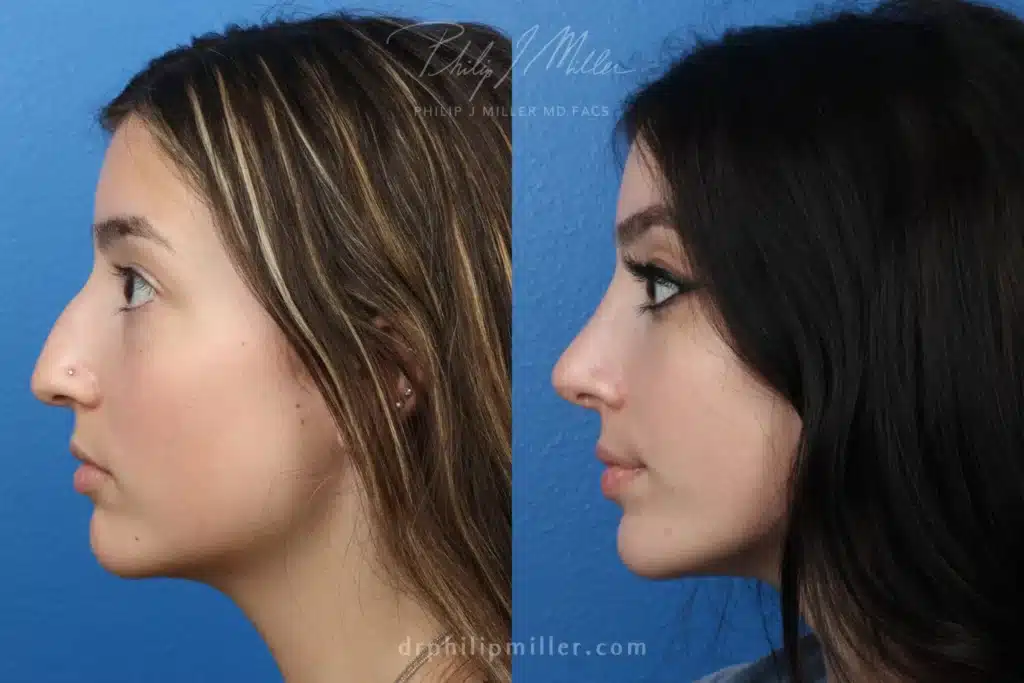
It is best to discuss your allergy history with your surgeon before undergoing nasal surgery. You can work out the right schedule for your surgery, and ideally, your surgeon will enhance the appearance of your nose while correcting any functional issues that affect your breathing.
How Rhinoplasty Can Help with Seasonal Allergies
Septoplasty, also referred to as corrective rhinoplasty, is a surgical solution for a deviated septum. If you have a deviated septum and seasonal allergies, straightening the septum can significantly ease your discomfort during allergy season.
Deviated septum and allergies often go together. While a deviated septum does not cause allergies, it can exacerbate the severity of allergy symptoms like congestion and sneezing.
Turbinates act like the tonsils of your nose. They are projected structures that help filter and humidify the air you breathe. They can become swollen when allergies flare up.
Turbinate reduction surgery can be performed as part of a rhinoplasty. By reducing the size of your turbinates, you experience less congestion and have an easier time breathing even with allergies.
Nasal polyps are small spherical growths that appear along the nasal passages, often as a result of the inflammation caused by allergies. Seasonal allergies may cause small nasal polyps to form. Large polyps can worsen allergy symptoms and affect airflow.
Polyps can be fixed during rhinoplasty to reduce congestion and improve breathing –both providing relief from your seasonal allergies.
Can a Nose Job Treat My Allergies?
No surgery is available to treat nasal allergies. Allergies are caused by immune responses to allergens (e.g., dust, pollen, and smoke) and not structural problems of the nose.
However, rhinoplasty can address conditions that worsen the symptoms of allergies, such as nasal polyps, turbinate hypertrophy, or a deviated septum. While these conditions aren’t responsible for the allergies themselves, they can make it more difficult to breathe when allergies strike.

Learn more about allergies at the Mayo Clinic.
Septoplasty vs. Rhinoplasty for Allergies
Rhinoplasty and septoplasty can improve the function of your nose so you can breathe easier. While a septoplasty is focused on fixing a deviated septum and addressing functional issues, a rhinoplasty will also improve the aesthetic appearance of your nose.
Deciding which nose allergy surgery is best should depend on your specific concerns and goals. Consulting with your surgeon is crucial. Your surgeon will ask about your medical history, allergy history, and medications, as well as the cosmetic and functional goals you want to achieve. Your surgeon can then recommend the best surgical approach for your unique case.
Getting Nasal Surgery for Allergies in New York City
Double-board certified facial plastic surgeon, Philip J. Miller, MD, FACS, blends art and science with innovation and skill to provide thousands of patients with impeccable results. Considered one of the country’s leading experts in rhinoplasty and facial rejuvenation, Dr. Miller and his highly acclaimed team are proud to offer patients the highest level of care and customized treatments in New York City.
Dr. Miller developed the NatraLook methodology for his cosmetic procedures for the face. NatraLook is a specialized consultation process through which Dr. Miller will evaluate your facial features and listen to your concerns and goals. He will reassure and support your opinions positively, creating a collaborative environment that gives you a real say in your own procedure. This opportunity allows patients and Dr. Miller to create a unified vision for optimal results and the most natural outcome possible.
If you’re considering nose surgery for allergies, other functional concerns, or cosmetic reasons, schedule a consultation with Dr. Miller in Manhattan, New York, or New Orleans, Louisiana today.
Next, read more about nose surgery for breathing here.
When to Choose a Nose Tip Surgery Over Full Rhinoplasty?
Sometimes the aesthetic improvements you’re looking for can be achieved with nose tip surgery rather than a full rhinoplasty. If your concerns are centered around the appearance of the tip, nasal tip refinement may be sufficient for you. If you’re looking for a more dramatic result that involves other parts of the nose, a full rhinoplasty may be a better choice.
A nose tip job can effectively address a number of issues to elevate your aesthetic appeal and improve your self-esteem. Before your consultation, check out these common aesthetic concerns to help you determine whether rhinoplasty tip refinement is the right choice for you.
Droopy Tip
A droopy tip can appear just when you smile or it may be apparent all the time. It can be a genetic trait or the result of a previous rhinoplasty. This cosmetic concern can be altered with a nasal tip rotation surgery that focuses exclusively on lifting and refining the nose tip.


This procedure internally points the tip of the nose upwards, increasing the angle between the upper lip and the bottom edge of the nose. This gets rid of the “droopy” appearance.
There are a variety of ways that Dr. Miller can effectively address a droopy tip. These can include trimming excess cartilage, shortening the nasal septum, or reducing the length of the lateral cartilage. Sutures can be used on lower lateral cartilage to lift the tip, or a graft could be used to increase nasal tip support.


Upturned Tip
An upturned tip requires the opposite of the fix for a droopy nose. A nose derotation procedure lowers the upturned tip, decreasing the angle between the upper lip and the bottom edge of the nose. A tip refinement rhinoplasty can often address this issue without the need for a full rhinoplasty.


Bulbous Tip
A bulbous tip appears round, like a bulb on the end of the nose. Making this shape less circular and more pointed involves nose tip refinement. By altering the cartilage or using sutures to pull the nasal structure forward, Dr. Miller can resolve a bulbous tip and create a more aesthetically pleasing profile.

Overprojected Tip
An over-projected tip extends out farther than the average nose. Dr. Miller can effectively reduce the overall size of the nose to bring it into proportion with the rest of the facial features. To refine the tip of the nose, Dr. Miller may remove cartilage from the area. This creates a smaller projection that matches the visual goals of the patient. A full rhinoplasty may also be required to adjust the nasal bridge as well as the tip.


Wide Nostrils
Wide nostrils can create a broader base to the nose that may look out of proportion with the other facial features. Dr. Miller can effectively reduce the lower lateral cartilage to create smaller nostrils, and pull them forward to produce a better aesthetic. If you’re dealing with wide nostrils, rhinoplasty for tip refinement may be a great choice for you. If you have wide nostrils and other nasal structure issues that you’d like to have addressed, a full rhinoplasty would be a better option.


Benefits of Nose Tip Surgery
There are some benefits to choosing a refined tip rhinoplasty over a full rhinoplasty:
- Recovery time may be quicker
- Less bruising and swelling after surgery
- Tip of nose rhinoplasty might cost less
- Results last as long as full rhinoplasty
- Very satisfying results for the right patient
A nasal tip rhinoplasty may not be the right choice if you want correction to your nasal bridge or you have structural issues that impact your breathing. A consultation with an experienced rhinoplasty surgeon will help you determine the best approach for you.
Getting Nasal Tip Surgery in New York City
Philip J. Miller, MD, FACS, is a double-board certified facial plastic surgeon who has a wealth of experience and expertise in all types of rhinoplasty techniques. He will customize your surgery to ensure a harmonious, beautiful, and natural result.
Dr. Miller’s proprietary Natralook consultation process helps you achieve aesthetic confidence in a safe environment. By understanding your goals and discussing your needs, Dr. Miller can align your results with your expectations for a positive experience and outcome.
Contact his office in Manhattan, New York, or New Orleans, Louisiana, to schedule your consultation with him today.
Daxxify – Now Available!
If you are looking for a way to reduce dynamic wrinkles and expression lines with longer-lasting results than other injectable treatments, Daxxify might be the right option for you.
What is Daxxify?
Daxxify is a new neuromodulator that targets dynamic wrinkles formed due to repetitive facial movements like laughing and frowning. Daxxify was created by Revance Therapeutics, Inc, the same maker of RHA dermal fillers. The neuromodulator is injected into the target area to reduce muscle contraction and create smoother skin with fewer wrinkles and lines.
The Daxxify Procedure Process in New York City
Daxxify is a safe and efficient treatment option for glabellar lines, more commonly known as frown lines or 11’s. It can also be used to diminish the appearance of crow’s feet and horizontal creases that form across the forehead.
When you work with an experienced, board-certified facial plastic surgeon for your treatment, you will receive a comprehensive facial evaluation to pinpoint the correct injection site and dosage for you. The formulation is injected into the target area with a tiny needle. The process takes approximately five to 15 minutes, and you can immediately return to your regular daily activities.
The Recovery Process
Like other injectables, Daxxify requires no downtime. You may experience minimal swelling or redness at the injection site that typically subsides within a few hours. You can return to daily activities immediately following your treatment.
Best Candidates for Daxxify in NYC
The best candidates for Daxxify are concerned about dynamic wrinkles around the forehead or eyes. As we age, expression lines and wrinkles can become etched into the skin and remain even when you are not making facial expressions like squinting or frowning. Patients in reasonably good health who want to reduce the appearance of these wrinkles are good candidates for the treatment.
Daxxify Consultation with Dr. Miller
During a Daxxify consultation, Dr. Miller provides a complete facial examination that considers facial symmetry, structure, and potential treatment options. The consultation will also involve a health evaluation where you can discuss any medical history and health concerns that could impact cosmetic treatments. Dr. Miller creates custom treatment plans that help you achieve your specific goals.
To learn more about Daxxify or schedule your appointment, contact us today.

NYC Daxxify FAQs:
Will my Daxxify injections be obvious to others?
Most patients leave Dr. Miller’s NYC office without any evidence of a cosmetic treatment. Some patients may experience mild side effects that should dissipate within one to two days. The treatment minimizes the appearance of lines without impacting your ability to make natural facial expressions.
Is the treatment painful?
Many patients have a nearly painless treatment with Daxxify. The needle used is very fine and the injections only take a few minutes to complete. A topical anesthetic is available for patients concerned about their comfort level, although most patients do not find this step necessary.
What risks are associated with the procedure?
Daxxify is approved by the FDA and is considered a safe treatment option for glabellar lines and other expression lines. Some patients may experience mild, temporary side effects at the injection site, such as:
- Swelling
- Redness
- Bruising
- Tenderness
How long will my results last?
Daxxify injections last 6-9 months for most patients. We can help you create a treatment schedule to ensure your results last indefinitely.
Are there any limitations on my activities after treatment?
No, you can immediately return to your daily activities, although Dr. Miller recommends avoiding strenuous exercise for a day or two. Some patients may experience tenderness or swelling at the injection site for a few hours, but it should not keep you from your usual schedule. Patients should avoid excessive or harsh rubbing of the treatment area to prevent the injectable from moving to unwanted areas.
Did the FDA approve Daxxify?
Yes, Daxxify is an FDA-approved treatment for glabellar lines. Daxxify underwent clinical studies for ten years to test its efficacy.
Is Daxxify appropriate for men and women?
Yes, Daxxify is an appropriate treatment option for men and women with glabellar and other expression lines.
What makes Daxxify different from other neuromodulators?
Daxxify has a proprietary peptide formulation that is proven to last longer than other neuromodulators like Botox. Its unique formulation acts as a stabilizing agent and can eliminate dynamic lines for up to 6-9 months.
Can Daxxify be combined with other treatments?
Yes, Daxxify can be combined with other facial treatments like RHA dermal fillers, laser treatment, chemical peels, and more. Your facial plastic surgeon will create a custom treatment plan with appropriate combination treatments to help you look natural and youthful.
How do I know if Daxxify is the right treatment choice for me?
Dr. Miller works closely with patients to educate them on different cosmetic treatments and how the treatments can help them achieve their beauty goals. Schedule a consultation with Dr. Miller to find out if Daxxify is right for you.