Reasons to Have a Refinement Rhinoplasty

How to Plan Your Tip Rhinoplasty
Just as you would begin any rhinoplasty process, you should meet with a board-certified, experienced facial plastic surgeon who can discuss tip rhinoplasty with you. During this one-on-one consultation, you will have the chance to talk about your nasal tip and how it could be improved. A true tip rhinoplasty only involves the tip of your nose, although refinement of the tip can be included with other changes in a broader scope rhinoplasty. If you do have other concerns about the size and/or shape of your nose, talk to your facial plastic surgeon for advice and guidance on making changes with rhinoplasty surgery.
A tip rhinoplasty is a popular procedure, since concerns about the nasal tip are a top-ranking reason that many patients seek nasal surgery. When a nasal tip points up, points down, has a bulbous shape, or narrows too much, it is common for patients to see surgical correction. Choose your facial plastic surgeon wisely to avoid unnatural looking results.
How Tip Rhinoplasty Is Performed
Rhinoplasty procedures can be performed using one of two surgical methods: an open rhinoplasty or a closed rhinoplasty, which differ mainly on the placement of incisions. With a closed, or endonasal, rhinoplasty, your surgeon will place the incisions carefully inside of your nostrils, leaving no visible stitches behind. With this method, the cartilage and bone of the nose can be lifted to be reshaped or reconstructed.
On the other hand, an open or external rhinoplasty begins with a small incision placed between the nostrils, just on the underside of the nose, where any scars will be well hidden. With this approach, your facial plastic surgeon can access the tip of the nose and the supporting structure of the lower and middle nose. Most tip rhinoplasties are performed through the open incision approach. From here, your surgeon can fine-tine your nasal tip to be more pleasing and complementary to your other facial features. Depending on the concern, your surgeon may add or remove cartilage and/or tissue to the tip to redirect or refine its shape and the direction it points. The exact technique that your facial plastic surgeon uses will be determined by your unique concerns and nasal structure.
How to Plan for Your Tip Rhinoplasty After-Care
All rhinoplasty surgeries involve the same amount of downtime and type of post-operative care as you transition to a newly healed nose which better suits your face. You will not have any specific limitations or special instructions following a tip rhinoplasty and must exercise the same caution as you would following any facial surgery. Be patient with your body as it heals and your new results will show gradually as your swelling subsides. Following a true tip rhinoplasty, your results will be subtle but make a big impact, since changing the tip of your nose can change the whole appearance of your face. To learn more about rhinoplasty, visit medlineplus.gov
Get Started on Your Own Tip Rhinoplasty
Get the best advice about refinement or tiprhinoplasty from a facial plastic surgeon with extensive experience in the field. An experienced facial plastic surgeon can provide more in-depth knowledge about the changes that will help your nose look its very best alongside your facial features. Dr. Philip Miller has specialized exclusively in facial plastic surgery, offering over 20 years of experience and knowledge to his patients.
A recognized expert in rhinoplasty, Dr. Miller has been frequently invited to share his specific techniques with his peers at various national facial plastic surgery meetings. He has been voted among the Best Doctors in America each year since 2007 and has also been named a Top Doctor of New York. To schedule a consultation with Dr. Miller, contact his office located at 60 East 56th Street, Third Floor in New York City, by calling (646) 791-3025.
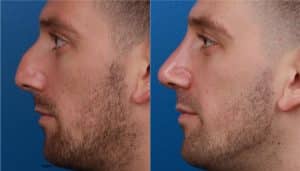
Rhinoplasty to remove hump from nasal bridge, one week later, by Dr. Miller
Every Face Is Different: Customizing Facelift Surgery

The Facelift Procedure
Facelift surgery, or rhytidectomy, is an anti-aging procedure designed to correct sagging skin, weak tissue and muscle in order to create a more youthful appearance. During a facelift surgery, changes will be concentrated to the lower portion of the face, where aging and gravity tend to leave the most noticeable marks.
A facelift procedure begins with the placement of incisions to give the surgeon access to the tissues that need to be corrected. With a traditional facelift, these incisions are made along the hairline, continuing in front of and behind the ears, then extending to the lower scalp. The incisions for a limited facelift approach are placed in the same locations but do not extend as long. All of the incisions used to perform a facelift surgery will be well-hidden in your natural facial creases.
Once the incisions are in place, your surgeon will work to redistribute or remove excess fat that has accumulated along the jaw and under the chin. He may use liposuction techniques to remove small pockets of excess fat cells if needed. The lower facial muscles are then lifted and tightened, followed by the excision and tightening of the skin. If the chin is a specific problem area, an additional incision may be made just beneath it to target these concerns. To learn more about facelift, visit medlineplus.gov
Evaluating Each Unique Face
Many prospective facelift patients have preconceived notions about what makes them eligible for a facelift surgery. The truth is that every face is different, so there is no set guideline for how old you should be, how many wrinkles you must have, or whether you have grandchildren or not. Facelift patients now range in age from their early 30s to well beyond their 60s, and the average age is getting younger and younger every year. Beyond that, patients are men and women alike, with a wide variety of ethnic roots and facial characteristics. To design a facelift surgery for each and every one of these unique patients, a facial plastic surgeon must evaluate them individually.
During your facelift consultation, your facial plastic surgeon will spend some time getting to know you, learning about what signs of aging frustrate you the most, and discovering what desired results you have for your facelift surgery. Building on this, he or she will examine your facial features, facial structure, skin laxity, and other factors to create recommendations. A skilled facial plastic surgeon will customize his or her surgical techniques and approach to fit the needs of the patient, rather than the other way around. The surgeon understands how important it is to provide natural-looking results that work with the patient’s features rather than against them.
Customizing the Male Facelift
More and more men are discovering the benefits of the facelift procedure and how it can help them to achieve the youthful look they want. Nothing about a facelift makes it strictly feminine, so men will experience the same caliber of results as female patients. Likewise, they will be evaluated during a consultation in much the same way, with only a few exceptions.
The male face is different in some slight ways, sometimes necessitating a shift in the surgeon’s approach to accommodate them. For example, skin on the male face tends to be thicker and can be more challenging when the time comes to place the incisions. A male facelift must also take into consideration the natural hairline of the side burns and beard, taking extra care not to distort these areas when tightening the skin. During a male facelift consultation, these slight differences will be discussed, along with the facial plastic surgeon’s plan to address them. While none of these differences will make any male patient ineligible for facelift surgery, they should always be considered when designing a customized male facelift procedure.
Customize Your Facelift Surgery With the Right Surgeon
Choosing the right facial plastic surgeon to perform your facelift procedure will both maximize your results and minimize your risks as a patient. Dr. Philip Miller has specialized exclusively in facial plastic surgery, offering over 20 years of experience and knowledge to his patients. A recognized expert in facial rejuvenation procedures, Dr. Miller has been frequently invited to share his specific techniques with his peers at various national facial plastic surgery meetings. He has been voted among the Best Doctors in America each year since 2007 and has also been named a Top Doctor of New York. To schedule a consultation with Dr. Miller, contact his office located at 60 East 56th Street, Third Floor in New York City, by calling (646) 791-3025.
Next, learn about The Optimal Age for Facelift Surgery
Five Tips for Designing Your New Nose
When it comes to rhinoplasty surgery in NYC, there is no one-size-fits-all strategy for choosing a shape and size for your new nose. In fact, the changes planned for your nose will be a collaboration. You will work with facial plastic surgeon Dr. Miller to share your specific concerns about your nose and listen to his or her specific recommendations. Keep these tips in mind when it comes time to plan for your own new post-rhinoplasty look.
Consider Your Other Facial Features
Before your facial plastic surgeon will make any recommendations at all, he or she will study both your nose and your other facial features. Yes, your rhinoplasty will strictly make changes to the nasal structure, but it’s impossible to make changes to one part of the face without affecting your entire look. Your other facial features will be impacted by your surgery, like it or not. Your rhinoplasty results will also be impacted by the rest of your features; after all, your cheekbones, chin, forehead, and other features will provide the backdrop for your new post-operative piece of artwork.
As much as you might like to have the same nose as your favorite celebrity, be prepared for a different answer from your facial plastic surgeon. If the surgeon is skilled and knowledgeable, he or she will be able to create a different nasal structure that is unique to you and completely in proportion to your facial structure.
Speak Up About Your Concerns
While you’re meeting with your facial plastic surgeon to design your rhinoplasty approach, it’s essential that you take an active role in this planning. If you aren’t vocal about the bump on the bridge of your nose or the way your nostrils flare, your surgeon won’t know you want them changed. Remember that your rhinoplasty consultation must involve good, open communication between patient and surgeon in order to result in the nose you really want. Your surgeon won’t be annoyed or bothered by your requests and will happily consider them alongside his or her own recommendations to create a new nasal shape, size, and structure that better suits your preferences.
Trust Your Facial Plastic Surgeon
Communication during your rhinoplasty consultation must also be a two-way street, with you listening and considering your facial plastic surgeon’s advice. While the surgical design is largely up to you, a smart patient understands that years of experience with similar nasal structures and facial features gives the surgeon a unique kind of expertise. The relationship you establish with your facial plastic surgeon must include trust for your rhinoplasty results to be as fantastic as you expect them to be.
Aim for Natural-Looking Rhinoplasty Results
All of the previously mentioned tips can be combined to help you achieve the most natural look for your nose. Ultimately, no one wants to have rhinoplasty surgery that looks obviously out of place for the rest of their lives. One of the defining factors of your rhinoplasty success actually includes how natural it looks against the backdrop of your other features and your facial structure. Always aim for a natural choice that will work with, and not against, what already exists. No rhinoplasty surgeon can make something from nothing, nor can he or she replace the entire structure of your nose. What’s there can be embraced and used to create a new look that better suits you. Have a rhinoplasty surgery that is individually designed with your unique look in mind and you’ll be on your way to successful results in no time.
Choose the Right NYC Surgeon to Help You Plan
For the best advice for your new nose, it’s important to contact the right facial plastic surgeon to handle your unique case. An experienced facial plastic surgeon can provide more in-depth knowledge about the changes that will help your nose look its very best alongside your facial features. Dr. Philip Miller has specialized exclusively in facial plastic surgery, offering over 20 years of experience and knowledge to his patients.
A recognized expert in rhinoplasty, Dr. Miller has been frequently invited to share his specific techniques with his peers at various national facial plastic surgery meetings. He has been voted among the Best Doctors in America each year since 2007 and has also been named a Top Doctor of New York. To schedule a consultation with Dr. Miller, contact his office located at 60 East 56th Street, Third Floor in New York City, by calling (646) 791-3025.
Is There Really an Optimal Age for Your Facelift?

Facelifts and Maintenance Facelifts
Facelift surgery is designed to address the drooping, wrinkled skin that comes with exposure to time and gravity. Other factors can also contribute to how early and how quickly this damage becomes evident, including heredity and genetics, sun damage, and other environmental exposure. Today, many younger patients in their 30s are wandering into facial plastic surgery clinics in search of their “first facelift,” the foundation surgery that will turn back the clock and help them age gracefully for years to come.
Traditional facelift surgery in New York begins with incisions that are made at the hairline, continuing in front of and behind the ears, then extending to the lower scalp. Your facial plastic surgeon will then redistribute fat from the lower face and neck to other areas or remove the excess with liposuction techniques. The muscles will then be lifted and tightened to provide firmer support to the lower portion of the face. Finally, the skin is repositioned and the excess trimmed away before the incisions are closed.
Most facelifts will deliver results that last over a decade, with many patients seeking a secondary or maintenance facelift within eight to 12 years (on average). A maintenance facelift may include many of the same techniques and steps, but will likely be conducted more delicately so as not to overcorrect the lower portion of the face. Discuss your options for first and subsequent facelift surgeries with your facial plastic surgeon for the best advice tailored to your unique needs.
Patients With the Best Long-Term Results
When it comes to having a facelift procedure with staying power, there may just be a “perfect age.” According to recent research, patients who have their first facelift surgery before the age of 50 tend to experience the longest-lasting satisfaction with their surgical results. Compared to patients ranging from 50 to 60 and then over 60 years old, patients under 50 had the highest and most consistent satisfaction rates at their short- and long-term check-ins. They were also perceived to be better able to care for their results in the long-term, thus preserving their youthful appearance for a longer period of time. Patients in the other groups were less satisfied as time went on and felt the need for a secondary facelift much sooner than their younger counterparts.
What That Means for You
If you’re under 50 and considering a facelift, it’s time to get moving! Your age group on average sees the best results that last the longest, so you’ll get the most for your money by investing in a facelift at this time in your life.
If you’re in the 50 to 60 age group, don’t let these research results discourage you. There are many patients in this age bracket who still experience high rates of satisfaction over the long-term.All this means is that you may need to add a little bit of extra skincare to your daily routine. Wear sunscreen, learn about medical-grade skin care, and consult with professionals who can help you devise a strategy to maintain your facelift results.
If you’re over 60 and having your first facelift, you may experience more sudden age-related changes following your procedure than younger patients would. Still, this is nothing to prevent you from having the surgery that will help you achieve the look you want. Your facial plastic surgeon can guide you through the process and what to expect from your results; even if your results last eight years instead of 12, nothing can take back the 10 years you removed with your facelift surgery! Keep a positive attitude and be involved in your treatment; success will be yours if you know how to plan your facelift right.
Get Started With the Right NYC Facial Plastic Surgeon
If it feels like the perfect time to start planning your own first (or maintenance) facelift surgery, connect with the right facial plastic surgeon. By choosing a credentialed, experienced plastic surgeon, you can maximize the results of your procedure. Dr. Philip Miller has specialized exclusively in facial plastic surgery, offering over 20 years of experience and knowledge to his patients.
A recognized expert in facial rejuvenation procedures, Dr. Miller has been frequently invited to share his specific techniques with his peers at various national facial plastic surgery meetings. He has been voted among the Best Doctors in America each year since 2007 and has also been named a Top Doctor of New York. To schedule a consultation with Dr. Miller, contact his office located at 60 East 56th Street, Third Floor in New York City, by calling (646) 791-3025.
Next, learn How to Fight Tech Neck with Facelifts and Neck Lifts
Rhinoplasty to improve the nose shape, 8 months post-op, by Dr. Miller
Tips for Choosing Your Facelift Surgeon

Where to Start Looking
Sure, you can Google it, but looking for a reputable facial plastic surgeon is a lot easier when you focus in your efforts. Go to the websites of the American Board of Plastic Surgery or the American Academy of Facial Plastic and Reconstructive Surgery, for example, to find specific results about the credentialed surgeons in your area who are licensed to perform facelifts. Not only does this take out much of the guesswork for you, but it will also save you a whole lot of time. Search by zip code or by name to locate facial plastic surgeons and then narrow your results from there. Make sure that the surgeons you look up are specifically facial plastic surgeons instead of general surgeons.
Certifications, Education, and Training
Before you step foot in your facial plastic surgeon’s office, you need to verify that he (or she) has all of the right qualifications to perform your surgery. If you’ve found your surgeon through the specialized websites above, you’re halfway there. Now, you can visit the American Board of Plastic Surgery to check the doctor’s board certification records and other documents. Contact your state to confirm that your intended surgeon’s medical license is still valid.
Finally, visit the doctor’s website as well to gather more personal information about him, where he comes from, where he was education, in what specialty he performed his residency, etc. If you’re comparing several potential facial plastic surgeons, you may discover something about one doctor that really speaks to you, helping you to make your decision.
Patient Satisfaction and Results
Through websites like RealSelf, you should be able to read real patient reviews about your intended facial plastic surgeon’s work. Many surgeons also post reviews to their own websites, as well as before and after photos of actual surgeries. You might ask around to learn more about this specific doctor or check in with your own physician to learn more about his reputation, if possible. There’s rarely anything better than patient reviews to speak for a facial plastic surgeon’s real abilities, so get as much information as you can.
Meet for a Consultation
Sitting down for a one-on-one facelift consultation is both the final step in choosing your facial plastic surgeon and the first step toward your facelift surgery. During this meeting, you will have an open conversation about the procedure, how it could benefit you, and also why you should work with this surgeon for the procedure. You will have a chance to ask your facial plastic surgeon questions about his background, patient history, and specific training, if you so desire. For many prospective patients, hearing the answers from their doctor can help to put them at ease and agree to move forward. If you still have unanswered questions, don’t be afraid to bring the list to your consultation and start asking away!
Make Dr. Miller Your Top Choice
Choosing the right facial plastic surgeon to perform your facelift procedure will both maximize your results and minimize your risks as a patient. Dr. Philip Miller in NYC has specialized exclusively in facial plastic surgery, offering over 20 years of experience and knowledge to his patients.
A recognized expert in facial rejuvenation procedures, Dr. Miller has been frequently invited to share his specific techniques with his peers at various national facial plastic surgery meetings. He has been voted among the Best Doctors in America each year since 2007 and has also been named a Top Doctor of New York. To schedule a consultation with Dr. Miller, contact his office located at 60 East 56th Street, Third Floor in New York City, by calling (646) 791-3025.
Next, read our blog, Keeping Your Nose Job a Secret.
Keeping Your Nose Job a Secret
Plan It Right
If you don’t want anyone to see you with your nose cast and your bruises, you’re going to need a good strategy for when to have your surgery. Sit down with your facial plastic surgeon and lay out your schedule. If you’re trying to keep the surgery a secret, then you need to plan around all of the big events you’re supposed to attend. You don’t want to miss something important; that always looks suspicious. Instead, try to work around your busy calendar. Choose a date for your surgery that is at least three weeks out from a special event, six weeks out if it’s an athletic event where you’ll be expected to participate. That should give you enough time to heal so people won’t immediately notice the changes to your nose. Instead, they might wonder, “What looks different about you today?” And that’s good enough!
Keep It Subtle
Of course, the more dramatic changes you make to your nose, the harder it will be to keep it a secret. If your surgical changes are more subtle, like a slight widening of the nostrils or rounding of the tip, it’s a lot easier to leave people wondering. On the other hand, if you walk into a room for the first time in six weeks with an entirely different nose, people are going to start talking about the “work” you’ve had done. Obviously, if drastic changes are necessary, you’ll have to work around this. Your happiness should always come before what other people will think of you. It’s really none of their business anyway, right?
Change Something Else
The ultimate rhinoplasty-hiding tactic is to distract your audience with something more dramatic. After all, a successful plastic surgery is something to celebrate. It’s a time of great change, a time to embrace that change. Why not get a daring new haircut? Unveil your weight loss in a stunning new outfit. Maybe just try a new lipstick out for the first time. When you make your debut with your new nose, have something else prepared to draw the attention away from your rhinoplasty. By the time the night is over, no one will even remember what they were going to ask you about.
Plan Your New York Rhinoplasty the Right Way
Get the dramatic or subtle results you want from a facial plastic surgeon who can guide you along the way from your consultation to your first post-rhinoplasty event. Dr. Philip Miller has specialized exclusively in facial plastic surgery, offering over 20 years of experience and knowledge to his patients.
A recognized expert in rhinoplasty, Dr. Miller has been frequently invited to share his specific techniques with his peers at various national facial plastic surgery meetings. He has been voted among the Best Doctors in America each year since 2007 and has also been named a Top Doctor of New York. To schedule a consultation with Dr. Miller, contact his office located at 60 East 56th Street, Third Floor in New York City, by calling (646) 791-3025.
Next, here’s What to Expect from your Rhinoplasty Consultation
Rhinoplasty, chin implant, and fat grafting for facial enhancement by Dr. Miller
Tips to Minimize Your Post-Op Facelift Risks

Risk #1 – Reaction to Anesthesia
Facelift surgeries are most often performed under general anesthesia, which can carry some mild risks for patients. There is a potential for an adverse reaction to anesthesia, but this is typically very short-lasting in nature. Facelift patients who do react most often experience some nausea and sickness as the drug wears off. The whole process should last only a few hours.
While there’s not much you can do to prevent a mild reaction to the anesthetics used during your facelift, you should communicate any serious concerns you have about it to your surgeon. If you have had a more serious reaction in the past, speak up. You should also disclose all of your current medications, vitamins, supplements, tobacco use, and alcohol consumption to your facial plastic surgeon ahead of time. Any of these could negatively interact with your anesthesia and expose you to more serious risks.
Risk #2 – Bleeding Issues and Hematoma
It is common for facelift patients to experience some bleeding after their procedure, but sometimes this normal side effect becomes more serious. Rarely, excess bleeding may occur after facelift surgery. If untreated, this can lead to a hematoma, a more complicated type of bleeding that occurs beneath the skin.
Avoiding this dangerous post-operative complication begins with an open dialogue between patient and surgeon. You may be at an increased risk of hematoma if you:
- Have high blood pressure or hypertension.
- Use blood thinners.
- Are taking herbal medications.
- Are taking ibuprofen, aspirin, or a similar form of pain medication.
- Smoke.
Talk about your risk factors for bleeding and hematoma with your doctor so you can work together to develop an appropriate surgical plan that will keep you safe and healthy. After your facelift, alert your surgeon if you experience nausea and vomiting at all, as this increases pressure on the incision site and can lead to bleeding complications later. Finally, follow your doctor’s post-operative instructions carefully to be sure you have minimized your risk factors for this complication.
Risk #3 – Post-Operative Infection
An infection is a risk following any surgical procedure and can be caused when bacteria is transferred from the skin’s surface, through the incision, and inside the body. Since you can’t be awake to supervise your own facelift surgery, you want to work with a facial plastic surgeon you trust to take every measure necessary to prevent a potential infection.
Surgeons have many ways to cut down on the risk of infection before, during and after your procedure. First, he may opt to administer a single dose of antibiotics to be proactive against any potential bacteria transfer. The area around your incision sites will be cleaned thoroughly with an antibacterial agent in order to eliminate potential threats. Your surgeon and all those assisting with the procedure should wear proper surgical gloves, masks, and clothing at all times while in the operating room. All of the tools used should be sterilized as well to prevent the passing of infection between patients. Finally, when your facelift is complete and your incisions sutured shut, your face will be bandaged appropriately with clean dressings to protect the area from outside contaminants while it heals.
Choose a surgeon with a proven history of success with his facelift patients and who has also demonstrated a good working knowledge of safe techniques and methods for preventing infection. During your consultation, ask your surgeon directly what steps he will take to clear up any of your worry.
Find the Right Surgeon for Your Facelift
Of course, there are other minor risks associated with the facelift procedure, including nerve damage, healing problems, and scarring. By choosing a credentialed, experienced plastic surgeon, you can minimize all of the risks associated with a facelift procedure. Dr. Philip Miller has specialized exclusively in facial plastic surgery, offering over 20 years of experience and knowledge to his patients.
A recognized expert in facial rejuvenation procedures, Dr. Miller has been frequently invited to share his specific techniques with his peers at various national facial plastic surgery meetings. He has been voted among the Best Doctors in America each year since 2007 and has also been named a Top Doctor of New York. To schedule a consultation with Dr. Miller, contact his office located at 60 East 56th Street, Third Floor in New York City, by calling (646) 791-3025.