Rhinoplasty to enhance nose – 1 week post-op by Dr. Miller
Why Fix a Broken Nose?
When you break your nose, you’re probably first most concerned about the pain and swelling. We don’t often give any thought to undergoing broken nose surgery in NYC to repair the damage right away. In some cases, we can’t even be sure the nose is broken in the first place. Still, although the popular approach is to let broken noses heal on their own, patients in this situation would often be better served by seeking plastic surgeons to fix the nose as soon as possible. Consider these reasons to turn to rhinoplasty to fix the damage as soon as possible.
Immediate Healing and Repair
Through rhinoplasty surgery in New York, your broken nose can be addressed right away. Many prospective patients assume there is a waiting period to allow the nose to heal before surgery, but this simply isn’t true. When your nose is broken, consult with a plastic surgeon to assess the damage and make a surgical plan. As little as one week after your nose has been broken, you can have the surgery required to repair the damage. Your nose will be reset, any fractures will be corrected with spreader grafts, and the septum will be repaired if needed with a septoplasty. These are all frequent problems that result from a broken nose, so a rhinoplasty performed for this reason will be fairly straightforward.
Restoring Your Nose
After a nose has been broken, the bones and cartilage will heal on their own over time. However, they will often leave behind bumps or humps on the nose, distort the shape of the nose, or leave the nose crooked as a result. When you consult with a plastic surgeon about rhinoplasty surgery, these effects of self-healing will never become a reality. During your consultation, discuss your nose as it once was and bring photos of yourself from before the accident occurred. Your surgeon will be able to devise a surgical plan to restore your nose to the way it was prior to your injury. If you already have a long-standing nasal injury and a resulting deformity in your nose, it’s not too late. Your surgeon will be able to correct them.
Eliminate Breathing Problems
Sometimes, the nose doesn’t do a great job of healing itself, leaving you with major functionality issues. After the healing has completed, some patients experience trouble breathing through one or both nostrils, often the result of an obstructed airway. Rhinoplasty surgery is designed to address both functional and cosmetic nasal issues, so surgeons are able to treat these breathing issues. An X-ray of your nose will likely be performed to determine what has caused the change in your breathing and a surgical plan will be treated. Make sure to consult with a specialist physician for this issue, as it can be very delicate to resolve properly.
Find a Rhinoplasty Surgeon in New York to Help
To determine whether or not your broken nose needs to be fixed, consult with a facial plastic surgeon experienced with rhinoplasty surgeries. Dr. Philip Miller has specialized exclusively in facial plastic surgery and offers his patients over 20 years of experience.
A recognized expert in rhinoplasty, Dr. Miller is frequently invited to share his specific techniques with peers at various national facial plastic surgery conferences. He has been voted among the Best Doctors in America each year since 2007 and has also been named a Top Doctor of New York. To schedule a consultation with Dr. Miller, contact his office located at 60 East 56th Street, Third Floor in New York City, by calling (646) 791-3025.
Rhinoplasty to enhance the appearance of the nose, 3 months post-op, by Dr. Miller
Leaving the House After a Facelift

Recognize the Types of Recovery
As many plastic surgeons in New York will explain to their patients, the recovery process after a facelift involves many different types of recovery. There’s the obvious physical recovery, where the swelling goes down and the incisions heal. Then there’s the recovery of your sensation, which may occur along with your other physical healing but may take longer to go from tingling feelings to real nervous sensations. Finally, you’ll be faced with your social and emotional recovery, where you’ll address your new look and how it may (or may not) impact your social life. This recovery is often the hardest to manage. By giving a name to these separate kinds of recovery, you can prepare yourself for that adjustment from resting to reentering the world.
Give Yourself Time
Many patients get bored in the house and want to rush back out to complete some errands, meet up with friends, and the like. Some patients might get a little cabin fever, suddenly itching for a hiking trip or a visit to the beach. It’s tough to force yourself to stay inside and rest when it’s beautiful outside, but it’s definitely worthwhile to give yourself the time you need to heal.
To avoid temptation, clear your schedule for at least two to three weeks so you have enough time to completely recover. Talk to your surgeon during your consultation about how much time he expects you to need for proper healing, Then tell your friends and family in advance that you’ll have to bow out of any ski trips or summer barbecues during that timeframe so they aren’t expecting you. In fact, they might send you home if you do show up! It’s always nice to have a backup plan if you do give into temptation.
If you have any high-profile events coming up, such as a wedding or class reunion, you’ll want to add extra cushion time to allow for your swelling to subside and your incisions to fully heal. Schedule your facelift accordingly to give yourself at least six weeks for a complete recovery. By then, you’ll also have the time to adjust to your new appearance so it’s not as nerve-wracking to attend this special event.
Use Makeup Wisely to Transition
When it is time to finally come out and rejoin the world, you might be worried about any swelling, redness, or bruising that’s still hanging around. Sometimes these symptoms will hang on after you have healed, making you self-conscious about your appearance. For women, and maybe even some men, strategic makeup can do much to ease your nerves and hide some of your after-effects. Talk to your doctor about when it is safe to apply makeup to the area and don’t break the rules; you may risk infection or other complications if you do. He may even suggest certain brands that work better than others for the task.
When you’re ready to start using makeup again, use a concealer to camouflage bruises and redness. Concealer and foundation, either liquid or powder, can be combined to achieve the layered coverage you may need. To hide swelling, makeup contouring techniques can be especially useful. By using bronzers, blushes and darker powders, you can create an optical illusion that will hide the effects of any residual swelling you may be experiencing.
Don’t know how to do either of these things? Make it a part of your pre-op planning to visit a makeup counter where a skilled aesthetician can walk you through the steps to creating camouflage and contour. Ask your plastic surgeon if any of the skincare clinicians or spa staff at his practice are able to help you. After surgery, you’ll be fully prepared to unveil your facelift results.
Choose the Right Facial Plastic Surgeon in NYC
The speed of your recovery can cut down on your anxiety to reenter the world after a facelift. A speedy recovery comes from a successful surgery performed by an expert in the field. Plan two steps ahead by choosing the right surgeon to perform your facelift. Dr. Philip Miller has specialized exclusively in facial plastic surgery and offers over 20 years of experience to his patients. A recognized expert in facial rejuvenation procedures, Dr. Miller has been frequently invited to share his specific techniques with peers at various national facial plastic surgery conferences. He has been voted among the Best Doctors in America each year since 2007 and has also been named a Top Doctor of New York. To schedule a consultation with Dr. Miller, contact his office located at 60 East 56th Street, Third Floor in New York City, by calling (646) 791-3025.
Next, learn about Selfie Addiction being the Reason for a Rhinoplasty
Chin implant to augment chin and define the jawline by Dr. Miller
Weight Loss and Facelifts

The Facelift and the Ideal Candidate
A facelift surgery is performed to improve the overall appearance of the face by tightening the facial muscles and supporting tissues, removing or redistributing excess fat from the lower third of the face, and relaying the skin to appear firmer and more youthful. It can have a profound impact on a patient’s appearance, sometimes wiping away a decade or so from their looks. Planning ahead for such an important procedure is key to your success and to your eligibility for surgery.
The ideal facelift candidate is an adult man or woman in good overall physical health,who does not smoke or abuse alcohol or drugs. For best results, they should be as close to their ideal weight as possible and have the healthy habits to maintain their current weight, such as proper diet and regular exercise. If you are not at your ideal weight, losing the pounds can greatly affect your overall health as well as your final surgical results.
Losing Weight Before a Facelift
When you talk about losing weight with nearly any plastic surgeon, he will almost always suggest that you do so before your procedure. Many plastic surgeries, including the facelift, deal with the redistribution and removal of fat cells. Losing weight before your procedure, and subsequently keeping it off afterwards, is the best way to ensure that all of your physical goals for your body and face are reached in tandem.
If you are going to lose weight before a facelift, it’s important to get the timing right. You should never make dramatic changes like this between your consultation and surgery date, since it will change the surgical plan created for you by your New York plastic surgeon. Surprises like that, however healthy they may ostensibly be, can greatly affect how your surgery is performed. If you do attend a consultation but have plans for weight loss, disclose these intentions to your plastic surgeon, who may plan ahead to meet with you a second time and draw up your surgical plan once you have achieved your weight loss target. Ideally, however, the best time to lose the weight is before you step foot into the surgeon’s office. The trick, of course, is to maintain your new weight loss through the date of your surgery and then for years after.
For healthy weight loss at any time, be sure to eat a balanced diet and adopt a regular exercise routine. Avoid crash or fad diets, as these can achieve great initial results before ending in disastrous weight fluctuations after the fact. Such diets can also affect your overall health, perhaps making you a poor candidate for a facelift. Remember that losing weight at a good, steady pace is the best way to achieve lasting results, and that’s really the true goal of any initiative to get healthy.
Losing Weight After a Facelift
Chances are good that you’re going to do a lot of living and enjoying your new look after you have your facelift surgery. In the long run, especially the first few years after your facelift, do you have any plans to lose weight? If you’re not at your ideal weight or within about five to 10 pounds, the choice to lose a large amount of weight could be tempting. After all, it’s only natural to want your whole body to look as thin, trim, and fit as your new facial profile. Who can blame you?
The truth is that significant weight loss following your facelift may not be the wisest decision, especially if you lose that weight at a fast pace. Most people will experience some loss of fat from their faces during weight loss, not an ideal side effect when you’ve just had a procedure to adjust the distribution of fat to create the right look. Sagging and laxity of the skin may also result from fast, dramatic weight loss after a facelift, resulting in the need for a secondary facelift procedure.
While you can and should always lose weight in order to be a healthier person, most patients are not willing to jeopardize their surgical results so quickly. It doesn’t have to be complicated, however, if you plan your weight loss goals carefully. To preserve your facelift results and still achieve your ideal weight, follow these tips:
- Lose weight slowly and at a healthy pace. Most doctors recommend 1-2 pounds of weight loss per week for safe and lasting results.
- Check in at 5-pound milestones to see how you look. Some people lose weight from their face first and others can drop several pounds before they see results in their face. Monitor your own progress as you go.
- Keep your options open. You should never sacrifice your health to preserve your facial appearance, especially when you have the ability to add volume and contour in other ways. Talk to your plastic surgeon about fat transfer or injectable fillers to replace any lost volume from your weight loss.
It is possible to manage weight loss following a facelift procedure, especially with the help of your plastic surgeon. During your consultation, be open and honest about your weight loss goals to find out what his recommendations for your specific case may be. This is the best way to ensure that your surgical and healthful goals are all met in due time.
Plan Your Weight Loss and Surgical Goals Together for Success
For guidance on your own weight loss and surgical needs, consult with a reputable, credentialed facial plastic surgeon. Dr. Philip Miller specializes exclusively in facial plastic surgery and offers over 20 years of experience. A recognized expert in facial rejuvenation procedures, Dr. Miller has been frequently invited to share his techniques with his peers at various national facial plastic surgery meetings. He has been voted among the Best Doctors in America each year since 2007 and has also been named a Top Doctor of New York. To schedule a consultation with Dr. Miller, contact his office located at 60 East 56th Street, Third Floor in New York City, by calling (646) 791-3025.
Next, learn How to Leave the House After a Facelift.
How to Be a Great Candidate for Facelift Surgery

Learn more about what it means to be a good candidate for facelift surgery in NYC before you walk into your first consultation.
The Facelift and Signs of Aging
First and foremost, any candidate for facelift surgery should be experiencing noticeable signs of aging. Facelifts can help correct symptoms like loose, sagging skin on the face, fatty deposits gathered around the chin and jaw, the formation of jowls in that area, and lines and wrinkles in the lower third of the face. These factors are all caused by aging and the effects of gravity, which team up to break down the elastin in skin and drag it downward. Fat is also susceptible to gravity, shifting downward throughout the years, leaving the upper portion of the face with less volume and accumulating where it’s not wanted.
Still not sure a facelift can help you? Some surgeons recommend you stand in front of a mirror and, with two fingers, gently lift and pull back the skin around the bottom jaw. If this makes you look instantly younger, imagine what could happen if the effect was created surgically. Check one off the list; you may be a candidate for a facelift if these symptoms sound familiar.
The Patient’s Health and Habits
Another large factor in determining your eligibility for surgery involves your own personal health and well-being as well as your lifestyle and habits. As your surgeon might tell you, a facelift surgery is meant for men and women who are in overall good health and do not smoke. Good health means that your recent medical history does not include any serious illness that might hinder your ability to heal. Checking to be sure that you are in good health is the surgeon’s best way to minimize your risks of complications following surgery, so be open and honest about your medical status.
The very best candidates for facelift surgery are also committed to caring for their skin, even before walking in for their surgery. These people understand that caring for their skin can help it to look younger and fresher over time, and they will continue to care once the surgery is over and they are focused on preserving their results. Skin that is well cared for responds well to these surgeries and helps the results last much longer than they might otherwise.
Your Weight: A Surprising Factor
There’s no magical number on the scale or BMI calculation to determine whether you are a good facelift candidate, but there are some interesting points to consider about being overweight and seeking this procedure. For starters, if you are overweight, but at a stable weight, many doctors may consider performing the surgery for you. If you are overweight but planning to lose more than 20 pounds, it’s better to wait until you have stabilized at your target weight.
Why all the fuss about weight? Your surgeon in New York won’t deem your surgery successful unless your results look natural. For overweight patients, it can be more difficult to gauge how much fat and skin to remove. Your face may be left looking unnaturally puffy or too thin, directly disproportionate to the rest of your body. Depending on how overweight a patient is, facelift surgery may also be an unsafe option. If weight is a concern you have, talk to your doctor. Every surgeon has his own level of comfort (and experience) when dealing with overweight patients, so you’ll never know if and how much weight you need to lose unless you ask.
Facelift Results and Satisfaction
Finally, the last important factor in determining your eligibility for a facelift is whether or not you have realistic goals for your surgery. On average, a facelift can deliver results that make patients look about 10 years younger. If you’re expectations are too far off that mark, you’re going to be unpleasantly surprised. An experienced, credentialed plastic surgeon doesn’t want to promise you just anything to make you get the surgery; in actuality, he is much more concerned with making sure you understand the capabilities and limitations of the surgery. Discuss your expected facelift results at length with your plastic surgeon to be sure you are both in agreement on the changes and finished look. You should have a good understanding of what is possible with this procedure before walking into your consultation, but definitely a better one as you walk out of it. If you’ve given your results a thought and you feel you’re a good candidate for facelift surgery, then it’s time to make your move and book an appointment.
Get Started With a Consultation In Our New York Office
Determining if you and a facelift are the right match for each other can be hard without the right plastic surgeon to guide you. To make sure your results are the best they can be, be sure to schedule your facelift surgery with a reputable, specialist facial plastic surgeon. Dr. Philip Miller has specialized exclusively in facial plastic surgery, offering over 20 years of experience. A recognized expert in facial rejuvenation procedures, Dr. Miller has been invited frequently to share his specific techniques with peers at various national facial plastic surgery conventions. He has been voted among the Best Doctors in America each year since 2007 and has also been named a Top Doctor of New York. To schedule a consultation with Dr. Miller, contact his office located at 60 East 56th Street, Third Floor in New York City, by calling (646) 791-3025.
Next, learn about the effects of weight loss and facelifts
Ways to Speed Up Your Rhinoplasty Recovery

When you’ve waited so long to have changes made to your nose and the day of your surgery finally arrives, it might be frustrating to then wait days or weeks to see your final results and show them off to friends and family. Granted, all good things do take time, including the recovery process following a rhinoplasty in NYC. If you’re hoping to speed it up a little bit, follow these tips to have a smoother, faster road to your rhinoplasty recovery.
Healthy Patients Recover the Fastest
If you want to set yourself up for the easiest, fastest recovery possible, you’ll need to start before your surgery date even arrives. Patients who live a healthy lifestyle and take care of themselves see the best recoveries following any surgery, including rhinoplasty. To have your smoothest recovery, you should be a non-smoker, have a healthy BMI, and have blood work and other tests performed to determine your complete health. It also helps to eat a balanced, healthy diet and get regular exercise to keep your body in good health.
Be Totally Ready for Surgery
A smooth, quick recovery happens when you are able to dedicate yourself to the required amount of rest and relaxation. Get all of your bills paid, your errands run, your housework finished, and your plans for child or pet care arranged. By relieving the stressful aspects of your life ahead of time, you’ll free yourself up for total relaxation. You must spend the recommended amount of time in a comfortable spot, dedicated to following your rhinoplasty post-operative instructions for your recovery. Investing time at the beginning of your recovery can help to keep you on track or even speed up your timeline.
Stay Away from Certain Medications
In order to heal quickly, your blood needs to be able to clot where needed. This means that blood-thinning agents that enhance your bleeding can actually delay your healing. Before and directly after your rhinoplasty, follow the list your plastic surgeon gives you and avoid everything on it. These will most likely include aspirin, vitamin E, herbal treatments, and Motrin, among many others. To ensure your blood platelets are functioning normally at the time of your surgery, avoid these products for two weeks or more prior to your rhinoplasty.
Keep a Calm and Positive Attitude
You might not realize it, but staying calm and thinking positively can greatly enhance your healing experience. Stress and negativity in your life can trigger an excess production of cortisol, a natural hormone in the body. Studies have shown that too much cortisol in the body can have many negative consequences, including delays to the healing process and an increase in the amount of scar tissue that is created. Both of these factors can add up for a terrible recovery from your rhinoplasty procedure, even one that is drawn out for longer than your original timeframe.
Build a Support Network to Help You
By relying on the supportive relationships in your life, you’ll reduce stress, increase positivity, and heal more quickly. Your friends and family can help you to manage the tasks that you aren’t able to do while you heal. They may pick up your groceries, take the kids for a weekend, or even come over to keep you company while you marathon-watch a TV series. Surrounding yourself with people who support and encourage you and your efforts is one of the best ways to let your body properly heal. While you don’t want to overdo it with social time, it might even help you to have a good laugh or too. As they say, it is the best medicine.
Skip Out on Exercise…For a Little While
Yes, exercise is great for your body and can encourage the skin to heal. However, vigorous or strenuous activity during your recovery time after a rhinoplasty is strictly prohibited. The strain that gravity will put on your nose as you do your jumping jacks or run a few miles is too great. You may increase your risk of complications, delay your healing process, or cause nasal damage to your newly renovated nose. Always follow your doctor’s instructions for when and how to reincorporate exercise into your routine once again. The time will come soon enough, so try to get your fill with long walks and other low-impact exercise until you can resume your intense workouts.
Keep Your Head Up
Literally, keeping your head elevated can boost your healing process. Use two or three pillows beneath the head to maintain this position, which will prevent excessive blood flow to the head. Lying down flat will delay healing as the increased blood flow will cause the tender tissues around your nose to swell even more. As you heal, you will gradually become more comfortable lying down flat. Follow your plastic surgeon’s advice to get the timing right and avoid delaying your post-rhinoplasty healing.
Choose the Right Plastic Surgeon in NYC
If you want to get the best rhinoplasty results and the fastest recovery, it’s important to choose the best surgeon possible. Dr. Philip Miller has specialized exclusively in facial plastic surgery, offering over 20 years of experience and knowledge to his patients. A recognized expert in rhinoplasty, Dr. Miller has been frequently invited to share his specific techniques with his peers at various national facial plastic surgery meetings. He has been voted among the Best Doctors in America each year since 2007 and has also been named a Top Doctor of New York. To schedule a consultation with Dr. Miller, contact his office located at 60 East 56th Street, Third Floor in New York City, by calling (646) 791-3025.
Rhinoplasty to refine the nasal bridge, 3 months post-op, by Dr. Miller
Fast Facts About Ethnic Rhinoplasty
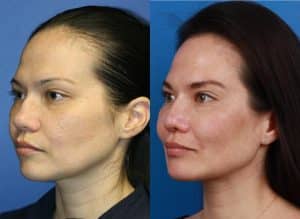
While most patients assume that all nasal surgeries can be performed identically to one another, this is simply not true. Each rhinoplasty in NYC is uniquely designed to meet the needs of a particular patient. In many cases a person’s ethnic background plays a role. If you’ve been considering an ethnic rhinoplasty to correct problems you see with your own nose, read up on these quick facts so you know what to expect from your procedure.
No. 1 – Ethnic Rhinoplasty Is Narrowly Defined Into Four Main Backgrounds
Technically, each one of us is a person with an ethnic background. But for the purposes of rhinoplasty, ethnicities are very specifically defined. Given the population breakdown of the country in which we live, the most common rhinoplasty performed is on those of Caucasian descent. Because Caucasians make up the majority of those seeking the procedure, it is considered the standard approach to rhinoplasty, leaving the distinction of “ethnic rhinoplasty” to those of other cultures.
Patients who are Asian, African American, Hispanic, and Middle Eastern may find that the characteristics inherent to noses of these ethnicities may require a slightly different approach. They may also be limited in terms of how much can be changed, but more on that later.
No. 2 – The US Population’s Shift Makes Ethnic Rhinoplasty More Important
Rhinoplasty has been around for decades, but the term ethnic rhinoplasty has only become popular in recent years. Why? As the population of the United States has shifted to include more of the ethnicities mentioned above, the needs of the patients seeking rhinoplasty have also changed. Couple this change in demographics with the higher standards of today’s leading plastic surgeons, and it’s easy to see why the cookie cutter approach to this facial procedure just won’t work anymore. Now, surgeons will take the time to study the intricacies and key features of any nose, in order to determine what changes would be most helpful.
No. 3 – Matching the Nose to the Face Is Key
Most patients and surgeons accept that the features of the rest of the face help to determine what changes should be made to the nose to keep it looking natural. For example, you can’t select a nose off of a celebrity, have it copied onto your face, and look as natural as possible. You certainly can do that, but the results might not be what you expected.
The same is true for men and women of all ethnicities, even in spite of the current fashion trends. While the current standard of beauty is typically a nose with European features, that’s not going to work for everyone who gets a rhinoplasty. Patients who are Asian, African American, Middle Eastern, and Hispanic just won’t look right with a German nose because there will be too much deviation in the feature and overall look. If the reverse were attempted, such as a Scandinavian opting for an Asian type of nose, the results would end just as badly. Many changes can be made to the nose, but it is important that any of those changes remain a good fit for the background, i.e. the face.
No. 4 – Ethnic Rhinoplasty Consultations Are Essential
Given the restrictive nature of rhinoplasty, it is essential to begin your journey toward nasal surgery with a one-on-one consultation. During this meeting, you and your plastic surgeon can discuss your specific nose, any challenges your surgery may include, and what options are available to you. It’s necessary to keep an open mind about your rhinoplasty, so leave the fashion magazine photos at home and really focus on how you want your specific nose to be improved. If you’re having any difficulty planning the changes you want or visualizing the final result, this is where your consultation can come in handy.
No. 5 – An Ethnic Rhinoplasty May Be Performed Differently
There are many reasons men and women of all backgrounds and ethnicities seek rhinoplasty, so your plastic surgeon should be well-versed and experienced in a wide range of techniques and approaches. If you’re seeking an ethnic rhinoplasty, your procedure may include some changes due to slight differences in the nasal structure. The changes that are made to your nose will likely also be a bit different, with narrowing of the nasal passageways and nasal tip extensions among the most common reasons for ethnic rhinoplasty.
Another common reason for ethnic rhinoplasty is to flatten a curved bridge of the nose or remove bumps and humps. During your rhinoplasty, your surgeon may alter the shape of bone and cartilage inside the nose to create the needed external reshaping. Performing this task can add both time and effort to the surgery. Once this is completed, your nostrils may be made narrower and the end of the nose may be extended with cartilage harvested from elsewhere in the body. Sometimes, synthetic implants are used to achieve the desired results.
As these procedures become more popular throughout the US, surgeons are becoming more adept at the various techniques required to perform a successful ethnic rhinoplasty. Discuss your options with an expert rhinoplasty surgeon with a background in a wide range of procedures, including ethnic rhinoplasty.
Choose the Right Surgeon for a Successful Ethnic Rhinoplasty in New York
If you want to get the best rhinoplasty results available for patients of any ethnicity, you must be sure to choose the best surgeon possible. Dr. Philip Miller has specialized exclusively in facial plastic surgery, offering over 20 years of experience and knowledge to his patients. A recognized expert in rhinoplasty, Dr. Miller has been frequently invited to share his specific techniques with his peers at various national facial plastic surgery meetings. He has been voted among the Best Doctors in America each year since 2007 and has also been named a Top Doctor of New York. To schedule a consultation with Dr. Miller, contact his office located at 60 East 56th Street, Third Floor, in New York City, by calling (646) 791-3025.
Next, learn How to Speed up Your Rhinoplasty Recovery