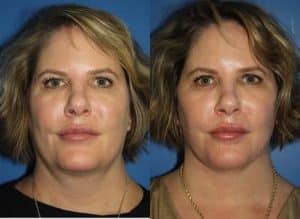
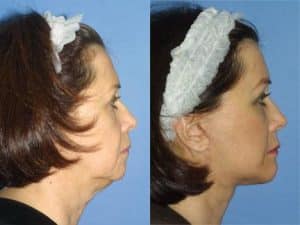
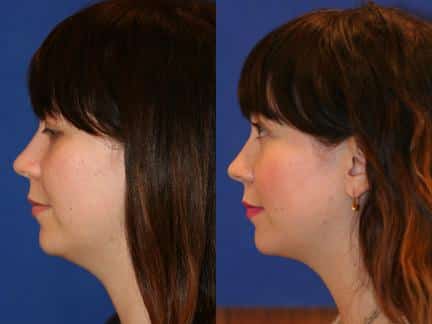
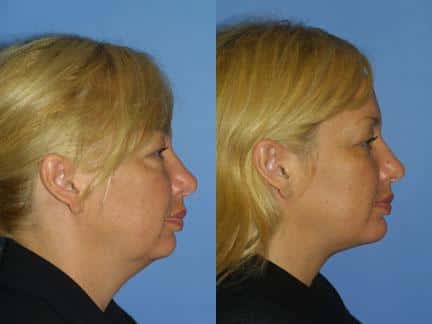
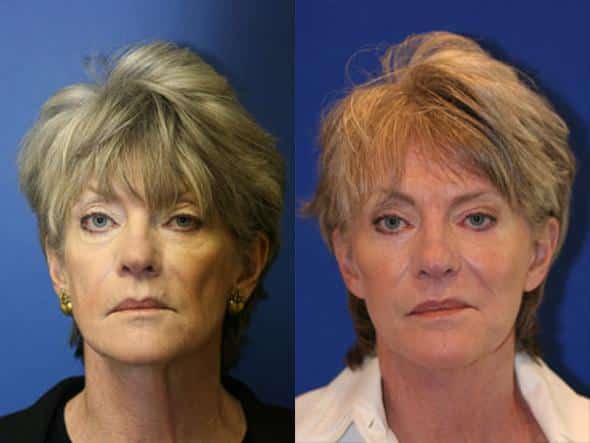
You’re considering a facelift but you’re wondering if it’s really worth the expense and downtime. If you’re listing the pros and cons while trying to come to a decision, a study from the Journal of the American Medicine Association (JAMA) Facial Plastic Surgery, supplies a number of new entries for your “pro” column. As it turns out, women who’ve had facelifts and other upper-face rejuvenation procedures aren’t just perceived as looking younger, but also as being more attractive, healthier, and more successful.
Dr. Phillip J. Miller, an expert facial plastic surgeon in New York City, has long promoted facelifts as one way to attain what he calls “Aesthetic Confidence®.” Dr. Miller’s patients relay that his surgeries do not just improve their appearance, but they have other life-changing benefits.
Some of these benefits include feeling happier and more confident after their surgery, and also that people react more positively to them than they did before. The following study, “Association Between Facial Rejuvenation and Observer Ratings of Youth, Attractiveness, Success, and Health” confirms his patients’ perceptions. Let’s explore each benefit so you can fully understand how, in the right hands, life-changing a facelift can be.
Before and After
The study included before-and-after photographs of twelve older women who’d either had eyelid surgery and a facelift, or eyelid surgery, a facelift, and a brow lift. Each of the 504 participants who looked at these photos in an online survey either saw the “before” or the “after” photograph from each of the twelve patients, but never saw both views.
When the researchers looked at how the observers rated all of the photos, they found that…
The “Afters” Looked Younger
On average, women were estimated 4 to 5 years younger in their “after” shots than they were in their “before” shots.
Technique plays an important role in creating this youthful result. When performing a facelift, Dr. Miller always lifts the underlying SMAS (submucosal aponeurotic system) layer, along with the skin. Lifting the SMAS both vertically and horizontally creates a more youthful, uplifted face that appears much more natural than when lifting skin alone. The re-positioned SMAS also provides better support for your skin, allowing your facelift to last longer.
The “Afters” Were More Attractive
On a scale of 1 to 100, the “before” photos were rated “50” on attractiveness. The “after” photos jumped up to 68.
Another technique that Dr. Miller utilizes to restore a youthful visage is fat grafting. Dr. Miller often recommends fat grafting in combination with a facelift to get the best outcome for facial rejuvenation. The fat grafts fill in areas of lost volume on your face by using fat you’ve donated from a place where you have excess fat, such as your abdomen. Using an artist’s eye, Dr. Miller uses fat grafts to give your face more youthful and balanced contours. Another added benefit is the fat grafts also help your facelift heal.
The “Afters” Looked Much Healthier
Using the same scale, the average of the “before” photos was just “50” on how healthy they looked. But the “after” shots gained 20 points.
Youthful vitality and health go hand in hand. To accelerate your healing and improve the quality of your skin overall, Dr. Miller recommends a skin rejuvenation procedure such as Fractora(TM) laser or microneedling in tandem with your facelift. Lasers and microneedling devices stimulate your skin to produce rejuvenating collagen. Your skin becomes thicker, stronger, smoother, and glows with health.
The “Afters” Looked More Successful
The study participants also rated that the women in the “after” pictures appeared more successful. The average “before” rating was only 50 but jumped to 61 for the “after” photos.
And, as Dr. Miller’s patients report, getting positive feedback on their appearance after a facelift or other cosmetic surgery really does give them a confidence boost. That confidence translates into more willingness to take risks in romance and on the job, leading to more success … and more confidence.
Rate Your Own “After” Photo
Not sure about getting a facelift, but still considering? As part of your facelift consultation, Dr. Miller can create a computer image that shows you what your life-changing results will be. Call Dr. Miller and his facial rejuvenation team to book your facelift consultation in NYC today. You deserve to live your after.
If you have sagging upper eyelids or dark, hollow or baggy areas under your eyes, you may have tried — and discarded — a number of ineffective creams, lotions, and devices. Unfortunately, the skin around your eyes is thin and delicate, which is why it’s one of the first areas to show your age. And although medical-grade skin care with retinoids or other rejuvenating agents can hold back the earliest signs of aging, once your eye skin starts to bag or sag, surgery may be your best option.
Dr. Philip Miller in New York knows that deciding to undergo cosmetic eyelid surgery is a major step that takes careful consideration and research. As the inventor of The Natralook Process™, Dr. Miller is committed to procedures that rejuvenate you while still maintaining your unique beauty and a natural, healthy appearance.
The Ideal Eyelid Surgery Candidate
Following are some tips that can help you determine the best procedure to get the results you want:
Are your upper lids sagging?
When your upper eyelids lose fat, collagen, and elastin, they start to droop and make you look tired or older than you feel. If the sagging is extreme, the excess skin can even hood your eyes, obscuring your vision.
Fat deposits in the upper lids also collect and droop with age, making your eyelids look thicker, too. Heavy, drooping lids are best remedied with a surgical procedure called upper blepharoplasty, otherwise known as an eyelift.
Dr. Miller hides eyelift incisions in the creases of your eyelids, then tightens the underlying lid muscle, which is one of the causes of your drooping lids. He removes excessive fat but leaves enough to make your eye look natural and youthful. He then tightens the eyelid skin and trims away any extra skin.
After you’ve healed from your surgery, your eyes look naturally more alert and youthful. Your incisions are so tiny that the hidden scar is barely visible.
Does your forehead look heavy or wrinkled?
Another sign of aging is a sagging brow that lowers the position of your eyebrows. If your eyelid skin also sags, you may benefit from both upper blepharoplasty and a brow lift.
During the procedure, Dr. Miller conceals the brow lift incisions in your forehead. He tightens the muscles in your forehead and eyelids. He lifts your brow skin — thereby smoothing out wrinkles — and trims away the extraneous skin. His skilled, artistic eye ensures that your eyebrows maintain a natural and youthful position.
If your eyelid skin hasn’t yet started to droop excessively, but you still notice that you don’t look as energized as you feel, Dr. Miller may suggest a forehead lift alone without or instead of upper blepharoplasty. This minimal surgery gives you the vibrant and energized look you deserve.
Do you have bags, wrinkles, or deep hollows under your eyes?
The first signs of aging under your eyes may be fine wrinkles, or just a darkening of your skin as it thins out due to aging or sun damage. Over time, your lower lids can sag so much that they reveal the white of your eye under your iris, a look that’s unflattering and aging. Fat also collects in the delicate under-eye area, creating puffy looking bags that make you seem perpetually tired, no matter how much sleep you’ve gotten.
Dr. Miller reverses age-related changes in the lower lid with a lower blepharoplasty. These incisions can be camouflaged under your lower lashes or inside your lid, then Dr. Miller tightens the underlying muscles, removes excess fat, tightens your skin, and trims away redundant skin.
Free from bags, sags, and dark circles you look youthful and rested. Many women and men elect to have both upper and lower blepharoplasty at the same time, with or without a brow lift.
Do you want to change your look?
If you have a monolid and desire a double eyelid, talk to Dr. Miller. He’s an expert at natural-looking facial plastic surgeries — including eyelid surgeries — that respect your ethnicity while giving you the improvement you want.
Are you still not sure about surgery?
If you’re still not sure you’re ready for surgery and your eye droop or bagging is minimal, there are a few options. Fillers used in combination with Botox are an alternative that may give temporary improvement to the under eye area. This is a great choice for patients looking for a non-surgical option or can be used in conjunction with surgery to meet your aesthetic goals.
Another non-surgical option Dr. Miller may recommend to revive your eyes is laser therapy. He employs groundbreaking Face-Tite™ radiofrequency(RF)-assisted liposuction technology by InMode to remove excess fat and tighten skin in the facial area. Dr. Miller offers a variety of non-surgical options to treat the eyelid problem areas.
Face-Tite works by sending pulses of RF energy through a tiny cannula. The energy heats up the fat, killing excess fat cells, while simultaneously initiating a collagen-remodeling process in your skin. Over the next weeks to months, your face tightens and your skin rebuilds itself with new, strong strands of collagen and elasticizing elastin.
Face-Tite can be used as a standalone therapy or in conjunction with facial plastic surgery. In addition to tightening your skin, Face-Tite makes it stronger and more pliable and also aids in the postsurgical healing process.
Either with Face-Tite or on their own, dermal fillers and fat grafts offer yet another way to rejuvenate your eye area. Dr. Miller performs nonsurgical eyelifts and fills tear troughs using state-of-the-art fillers, such as Restylane and fat grafts.
Restore Your Vitality
Whether you’re ready to rejuvenate your eyes, or still just curious, contact Dr. Miller for a consultation. Dr. Miller is committed to creating a unified vision of your desired results. Call his New York City office or use the online form.
Wrinkles get a lot of press when it comes to aging, but they’re not the only issue that can make you look older than you really are. In fact, sagging skin is one of the most frustrating signs of aging. This is skin that has lost its elasticity and firmness and has begun to droop and hang as a result. So what can you do about sagging skin? First, you need to understand why it happens. Collagen is a structural protein that gives the skin its firmness and youthful elasticity. As we age, collagen begins to break down and new production also slows. This means that the skin no longer has the support it needs to stay youthful and it begins to sag.
The good news? Your skin isn’t doomed once collagen production slows down. You can encourage new collagen to form by choosing to undergo skin treatments with a plastic surgeon in New York. A series of “Tite” treatments is a great choice for sagging skin, whether you need face, body, or neck skin tightening. Let’s take a look at the options!
Face-Tite
For many people, the face is the most pressing area of concern when it comes to aging. It’s easier to hide sagging skin and other issues in other areas of the body with clothing. But our faces are the first impression people get of us. Face-Tite is a great solution for sagging skin that can help contour the face for a more youthful appearance.
Using radiofrequency energy combined with gentle liposuction, the face is contoured by using small cannulas (tubes) to remove unwanted fat through tiny incisions. It’s a minimally invasive procedure that helps stimulate collagen production for tighter skin, while the liposuction removes any unwanted fatty deposits, allowing the skin to contract. The fat removed is minimal, but the overall results can be dramatic. Patients can look more youthful and refreshed, often gaining enhanced confidence following treatment!
Just like Face-Tite, Neck-Tite makes use of radiofrequency-assisted liposuction to tighten the neck and jowls. While sagging in the face is common and noticeable, sagging in the neck can be even more troublesome. Many people develop a “turkey wattle” look that can make them look much older than they really are. Neck-Tite contours the neck and jowls and helps the skin to tighten and contract for a fresh new look. Another option to tighten skin and get a more youthful appearance is with a traditional neck lift.
BodyTite
Stubborn fat and cellulite can be some of the most frustrating problems you can face, as no amount of diet and exercise can help resolve certain problem areas. BodyTite is a great solution for people who just want a sleek physique without the little lumps and bumps that persist, despite a healthy lifestyle.
Radiofrequency assisted liposuction is a gentle procedure that can help create a more toned appearance with little downtime. It also assists with tightening the skin, due to increased collagen production. Good results from liposuction require the skin to retract properly, and the subtle but powerful results of BodyTite accomplish just that.
Tite-FX
Tite-FX uses the same radiofrequency technology as the other procedures, but instead of combining the energy with liposuction, it uses vacuum technology to remove excess fat non-invasively. This treatment is fantastic for people with busy lives because it effectively reduces fat and improves the overall body contours with no downtime. Cellulite is a difficult problem to treat. Yet some patients have noticed a reduction in cellulite after undergoing Tite-FX treatment, which can help boost confidence and self-esteem. This procedure can also be combined with liposuction for even better results.
Gradual, Lasting Improvement
The best part about getting “Tite” is that the results are gradual and long-lasting. You’ll notice a difference right away, of course, due to the contouring of the treated area, but the radiofrequency energy will produce other benefits that will become apparent gradually. You should notice your skin tightening over several months following treatment as new collagen is produced to support the skin. While this won’t last forever, the new collagen is long-lasting and should help slow down the effects of aging for a while. Maintaining a healthy weight and lifestyle is a great way to keep the results looking good for a long time to come!
Choosing the Right Doctor
As with any plastic surgery procedure, choosing the right surgeon is absolutely essential to your success. If you’re interested in the power of radiofrequency-assisted liposuction, you will want to make sure you choose an expert to perform your procedure—someone who has the experience and the artistic eye to make your dream a reality.
There are many excellent plastic surgeons in New York, NY, but Dr. Philip Miller is a seasoned provider of all four “Tite” treatments. He knows how powerful the procedure can be, and he helps patients regain their confidence and self-esteem by helping them choose a treatment plan that’s right for their needs. If you’d like to schedule a consultation with Dr. Miller, call (646) 791-3025 today!
Planning your rhinoplasty procedure? Starting to feel nervous? Don’t worry! It’s normal to feel a mixture of excitement and anxiety before your procedure, and you’re probably speculating on how you’ll look and feel after your undergo the surgery.
While most people find that the recovery process isn’t as bad as they expected, it still pays to be prepared and set yourself up for a comfortable recovery and a beautiful result. Here are 5 tips for ensuring that your rhinoplasty recovery goes as smoothly as possible.
Tip #1: Give Yourself Enough Recovery Time
When you’re planning your recovery period, you may think that you don’t need the full 1-2 weeks of recovery time recommended by most surgeons. However, even if you feel fairly normal after the first few days, it’s important to give your body the rest it needs to recover and heal. Block off at least 10 days for the process. When you’re ready, start resuming normal activities slowly—it doesn’t pay to overdo things. Additionally, you may have some bruising during the first few weeks, which may not have you feeling very social!
Tip #2: Set up a Dedicated Recovery Area
You won’t be able to go about your normal routines during your recovery, so it’s a good idea to anticipate what you’ll need before you need it. The day before your surgery, set up a dedicated recovery area to maximize your comfort and rest.
You’ll need to sleep with your head elevated above your heart initially (to reduce swelling and to keep the nose from shifting), so it’s best to outfit an easy chair with pillows and blankets. If you don’t have a suitable chair, your bed will work as long as you add extra pillows and something to stabilize you as you sleep (such as pillows on either side of you). Make sure you have ice packs ready, along with books, magazines, or other entertainment close at hand. Finally, make sure you have your painkillers close at hand to help control any discomfort.
Tip #3: Plan Ahead for Meals
It’s easy to default to takeout when you’re not feeling well enough to cook, but salty or sugary junk food and takeout won’t cut it when you’re recovering from surgery. You need nutritious food for cellular renewal, and it’s best to prep your food ahead to make sure you’re fueling your recovery properly.
Try make-ahead recipes that can be frozen or refrigerated. That way, when it’s dinnertime, all you’ll have to do is pop a meal into the microwave with no additional hassle. Frozen meals can also often be heated in a slow cooker all day so dinner is ready by evening.
Tip #4: Take Your Meds
While it may be tempting to skip your meds and just suffer through any discomfort, this approach really doesn’t do you any favors. Take your meds according to your doctor’s guidelines, and just make sure you’re not taking more of them than you’re supposed to.
Tip #5: Treat Your Nose with Respect
Your surgeon and his team will work their magic in the operating room, but they can’t be there every step of your recovery to make sure you’re giving your nose every chance to heal properly. A surgery performed by the best surgeon can still end in a poor outcome if the nose is bumped or jostled too much during surgery, or isn’t given the opportunity to heal.
Smoking, drinking, the wrong supplements, overdoing it, or jostling the nose can all have a major negative impact on the healing process. Poor healing can lead to scarring, infection, and a poor aesthetic outcome—not something you want from a surgery that is supposed to help you look and feel better about yourself!
You’re ready to do it: Build your Aesthetic Confidence® by contouring your neck and jawline to look more defined and attractive. But as you look into the procedures that could give you the strong, new profile you desire, you wonder whether submental liposuction is the way to go, or if you’d do better with a neck lift.
Dr. Philip Miller in New York City is a double-board certified facial plastic surgeon who was raised by an artist, so he not only has expert surgical skills but also a highly developed sense of aesthetics, proportions, and balance. He’s an expert in using the Golden Ratio, which refers to the ideal proportion of the nose and mouth along with the distance between the eyes and chin. Dr. Miller uses this guide to create symmetry and beauty in your facial features, while also harmonizing with your ethnicity and gender.
When you meet with him for a one-on-one consultation, he takes the time to evaluate your skin tone, bone structure, and fat-concentrated areas to determine the right procedure or combination of procedures to make you look like the absolute best and most confident version of yourself.
If you’re wondering whether submental liposuction or a neck lift is the right choice for you, ask yourself the following questions:
Submental Liposuction Candidate
If you have submental fat (fat underneath your chin, otherwise known as a double chin), but your skin is smooth, resilient, and snaps back into place immediately after you pinch or stretch it, then submental liposuction may be enough to give you a stronger, more attractive jawline and profile.
Today’s tumescent liposuction procedures are highly refined and can be performed under local anesthesia at the Gotham Plastic Surgery office. Dr. Miller only needs to make two small incisions underneath your chin or behind your ears.
By first injecting the treatment area with a special solution, Dr. Miller breaks up the fat cells so that they can easily be aspirated with small metal tubes called cannulas. The thinness of the cannulas allows him to sculpt away tiny packets of fat that mar your chin and jawline to create smooth, uniform, and finely-detailed results.
Since liposuction is a surgical procedure, you should arrange to take a week off from work. You also need to wear a chin strap for a few days to control bruising and swelling. You should be able to return to most of your normal activities within two weeks.
Neck Lift Candidate
One of the most frustrating signs of aging is a drooping, sagging neck, sometimes called a “turkey neck.” Your neck is often the first place where your age becomes apparent because neck skin is thin and poorly attached to the underlying muscle. If the skin underneath your chin and on your neck is wrinkled, crepey, or saggy, the best procedure for you is a surgical neck lift. Neck lifts are one of the top 5 cosmetic surgery procedures performed in the United States.
When Dr. Philip Miller performs a neck lift at his New York practice, he does more than just tighten the skin underneath your chin and around your neck. He also improves jowling, in order to create a more youthful facial shape. Unlike less skilled surgeons who advertise a “skin-only” lift, Dr. Miller always tightens and lifts the underlying neck muscles to give tighter neck skin extra support. After tightening and lifting your neck skin, he trims away any redundant skin, leaving you with a smooth and youthful-looking neck and jawline.
A neck lift is the most dramatic, satisfying, and long-lasting remedy for loose, wrinkled, or drooping neck skin. Dr. Miller hides the scars from your lift behind your ears. You need to arrange for about a two-week recovery period. You’ll wear bandages to control bruising and swelling, and may need surgical drains as well.
As your neck lift heals over the weeks to months after your surgery, your jawline, chin, and neck area look tighter, fresher, and more youthful. After about six months, you’ll notice that your neck lift took about 10 years off of your appearance, and it should keep you looking young for another 10 years. You can enhance the length of your neck lift with regular procedures that help your skin produce new rejuvenating collagen, such as laser skin revitalization. To learn more about necklift, visit clinicaltrials.gov
When You Need a Neck Lift with Submental Liposuction
If you’re unhappy with your profile and you have already begun to age, chances are you have both excess submental fat and loose inelastic skin. To completely re-contour your chin, jaw, and neck, you’d benefit most from combining submental liposuction with a neck lift. Dr. Miller performs both surgeries during one procedure to minimize your expense and recovery time.
Treating a Recessed Chin
Even if you sculpt away excess fat and tighten up wrinkled skin, if the point of your chin lies behind the line of your lips, you may benefit from a chin implant. A custom-fitted silicone implant lines your chin up with your lips to impart strength and confidence into your profile. You can have an implant as a stand-alone procedure or as part of submental liposuction with or without a neck lift. Dr. Miller can help you decide if a chin implant is right for you.
Creating a Movie Star Jawline
If you’re a man who’s looking for a jaw and profile that’s as chiseled as an A-list movie star’s, you may be a candidate for Dr. Miller’s G.I. Jaw™ technique. Based on your needs, he selects from a series of procedures, such as chin liposuction, jaw and chin implants, or dermal fillers, to create a strong and masculine look to your lower face and profile.
Schedule a Consultation in New York Today
Before you settle on which procedure you want, you have a more important decision to make: choosing your surgeon. Be sure to interview the most highly skilled surgeons in your area or consider traveling to get the best, longest-lasting, most natural-looking results. To schedule a consultation with Dr. Miller in New York City, call our office today, or use our online contact form.
Let’s face it: getting older is hard. Have you been poking and prodding at your face, trying to smooth out the wrinkles you see? If so, then the signs of aging are probably bothering you more than you think. Fortunately, plastic surgeons have many tools for non-invasive rejuvenation available. In fact, there are so many options that no one needs to spend even another minute worrying about how their skin looks.
Laser treatment in NYC is one of the most popular treatment types available for many different skin and aging concerns. Laser treatment uses light to control the skin’s natural processes and gradually heal the skin. The result is a refreshed and more youthful appearance. There are so many different types of laser treatments that choosing one can be totally overwhelming (a good problem to have)! If you’re thinking about laser treatments to look and feel younger, here’s what you need to know about choosing the laser that’s right for you—whether that’s a full laser option like Fractora, or a radiofrequency treatment like Face Tite or Tite-FX.
What are Your Goals?
Before you choose the laser treatment that’s right for you, you need to think about what your goals are for the procedure. Are you interested in repairing the sun damage to your face? Do brown spots and rough skin have you wearing layers of makeup to hide the damage? Are you seeing the beginnings of deep wrinkles? Or are you feeling that your body contour just never makes you feel good, no matter how much you exercise?
Ask yourself these tough questions and pinpoint what’s really behind your desire for cosmetic treatments. It’s much easier to choose the perfect treatment if you’re fully aware of your goals and motivations.
Learn About Types of Laser & Radiofrequency Treatments
Once you know what you want to achieve, you’ll need to know what some of your options are. Take some time to research the many laser and radiofrequency treatments available. This will help prepare you to talk with your plastic surgeon about the procedures you’re interested in. Here are just a few great choices:
Face Tite
While many people are focused on wrinkles and sun damage, others face different problems like sagging skin and excess fat in the face. If you’re struggling with these issues, Face Tite is a great option for improving the overall appearance of the face. This treatment combines radiofrequency energy with gentle liposuction. This will help to contour and tighten the face for a youthful, refreshed appearance.
Fractora
Fractora is a laser radiofrequency technology that helps stimulate and resurface the skin. This is a minimally-invasive procedure that can be completed in just one visit! Like many other laser resurfacing treatments, Fractora uses fractional energy to address skin concerns. The benefit is that there is no prolonged downtime or extensive side effects. Fractora treatments can address many different problems, including fine lines, wrinkles, pigmentation issues, poor skin tone and texture, visible blood vessels and the overall appearance of the skin.
Tite-FX
We all know that exercise and a healthy diet are a key part of any wellness plan. Unfortunately, it’s not always possible to achieve your desired cosmetic results through these methods alone. Tite-FX is a great way to help tone and contour the body when exercise alone isn’t working. Using a combination of vacuum technology and radiofrequency energy, this treatment can help improve body contour and even address cellulite. Some patients prefer to combine Tite-FX with liposuction treatments for more comprehensive results.
Talk to a Plastic Surgeon in New York
After you know your options, it’s time to choose a plastic surgeon and discuss your treatment options with an expert. Your consultation is the most important step in choosing the perfect laser treatment. You’ll get an opportunity to receive personalized recommendations based on your goals and the condition of your skin. Be sure to come to your consultations prepared to make the most of them. Ask questions, get to know your surgeon, and make sure you feel comfortable before you commit to any treatment.
If you’re looking for an experienced plastic surgeon to help you make this important decision, consider a consultation with Dr. Philip Miller. Dr. Miller is an acclaimed facial plastic surgeon in the competitive New York area. His distinguished credentials have earned him respect from both colleagues and patients. If you’d like to schedule a consultation with Dr. Miller in New York, call (646) 791-3025 today!
A facelift is a type of plastic surgery procedure designed to make improvements to your face in order to reduce signs of aging in these areas. The following will provide a detailed look at the many benefits of a facelift and why this procedure, offered in New York, is right for you.
When You Should Receive a Facelift
It’s important to understand that aging, stress, heredity and environmental conditions are just a few of the factors as to why you may begin to lose your youthful appearance. However, this exceedingly safe procedure will ensure that your face remains as youthful at the age of 40 as it was at 25.
If you notice signs of aging and believe that you could look better, a facelift if perfect for you. Full confidence with your appearance can do wonders to your personal and professional lives. These signs of aging include a loss of skin tone in the lower portion of the face, creases below the eyelids and along the nose, sagging around the middle portion of the face and drooping fat.
What a Facelift Procedure Entails
The primary procedure for a facelift is minimally invasive and only takes a small amount of time to complete. The procedure begins with the administration of anesthesia in order to make you comfortable during the surgery. This can include either general anesthesia or intravenous sedation. Once the anesthesia has been administered, the incision will be made. Where this incision takes place largely depends on the type of facelift you are looking to have done.
For a traditional facelift, the incision begins at the hairline and extends around the ear and towards the lower scalp. For a limited incision facelift, the incisions at the temple are smaller and only extend around the ear. Once the fat has been sculpted and rearranged for a better looking face, the incisions will be closed and will fade relatively quickly.
Ideal Candidates for This Procedure
Thankfully, it doesn’t require much to be an ideal candidate for this procedure, so there’s practically no reason to worry about being denied for it. The best candidates largely include people that don’t have health conditions that would cause problems with the healing process.
Non-smokers are preferable over smokers as well. It’s also important that you have realistic expectations of what this procedure will do for you and have a generally positive outlook about the results from the procedure, which will make preparations for a facelift much easier.
Benefits of a Facelift
There are a wide variety of benefits that you will receive when getting a facelift. For instance, you’ll automatically have a much more youthful and natural look to your face, which will aid in aging gracefully as the years pass by. This will also help to boost your confidence levels.
A few of the primary advantages of having this procedure done include repairing loose skin for a smoother look, providing improvements for facial contours for a better looking jawline and tightening your facial muscles for less tension in the face. To learn more about facelift, visit medlineplus.gov
Risks and Recovery Time
Like any surgical procedure, there are a few risks involved as well. These include bleeding, risks with anesthesia, infections, fluid accumulation, skin discoloration, prolonged swelling, numbness, pain that persists and poor wound healing.
As for recovery time, you will generally be provided with instructions on how to treat your face once the surgery has been completed. Overall, recovery time is typically anywhere from two to three weeks.
Call us today to find out more about the facelift procedure and to schedule a consultation with Dr. Miller at his New York plastic surgery office.
We use cookies to enhance your browsing experience, provide personalized content, and analyze our traffic. By clicking "Accept All Cookies," you consent to our use of cookies. You can manage your cookie preferences or opt-out at any time by clicking "Cookie Settings." For more details, read our Privacy Policy.