Do I need rhinoplasty or septoplasty?
Noses can have a range of issues that patients want corrected. Septoplasty and rhinoplasty are two common surgical procedures used to correct various nasal abnormalities. Despite being similar in name, the two procedures are actually quite different. A septoplasty focuses on the internal structure of the septum to correct functionality, while a rhinoplasty focuses more on the outer appearance and aesthetics of the nose.
While both procedures are centered around the nose, each method has a designated goal and outcome that can provide patients with a better-looking and functioning nose. Do you need rhinoplasty or septoplasty? Take a look:
Rhinoplasty vs septoplasty: what’s the difference?
Septoplasty is a common procedure to correct breathing problems, and rhinoplasty is used to correct aesthetic features like nose shape and size. Septoplasty is used to correct septal deviations. The septum is the cartilage that separates the nasal passages. When this cartilage shifts to the side, known as a deviated septum, it can affect your ability to breathe easily and lead to nasal blockages and frequent nosebleeds. Septoplasty realigns the septum to achieve symmetry in the nasal cavities and improve nasal function.

A rhinoplasty, also known as a nose job or nose reshaping surgery, is used to improve the appearance of the nose. Many patients feel the shape or size of the nose detracts from other facial features, and a nose job can make minor changes or reconstruct an entire nose to make it fit harmoniously with other facial features. It is a highly complex procedure that can be personalized to fit each patient’s desires and aesthetic beauty goals.
While they have their differences, septoplasty and rhinoplasty are both surgical procedures that require the care and expertise of a board-certified facial plastic surgeon. It is critical to work with a surgeon that has years of experience to ensure your results are seamless and natural.
When to choose rhinoplasty?
Although rhinoplasty is a popular cosmetic procedure, it is not for everyone. You may be a candidate for rhinoplasty if you:
- Are in good overall health
- Want to improve facial balance
- Have an irregularity like a bulbous tip
- Want to address ethnic nose characteristics
A rhinoplasty can address many irregularities, including:
- Size of the nose
- Shape of the nasal tip
- Wide or narrow nostrils
- Angle of the nose
- Nose and upper lip that are too close together
- Hooked or crooked nose
- Hump or bump
- Nose asymmetry

When to choose septoplasty?
You may be a candidate for septoplasty if you experience:
- Excessive snoring
- Sleep apnea
- Recurrent sinusitis
- Breathing difficulties
- Respiratory complaints
- Deviated septum due to injury or trauma
Septoplasty has many benefits associated with clearing the nasal passage, including:
- Uninterrupted breathing patterns
- Better sleep
- Improved airflow
- Self-maintained airways and drainage passageways
- Reduced sinus infections
- Improved smell and taste
Can I get rhinoplasty with septoplasty at the same time?
Yes, rhinoplasty with septoplasty is a common surgical combination. Having rhinoplasty and septoplasty at the same time is a popular choice for patients in need of improved functionality and appearance. It allows you to receive the best of both worlds – the improved breathing offered by septoplasty while adjusting cosmetic irregularities like a hump or bulbous tip. It is safe and effective to correct all issues with one procedure to reduce recovery time and ensure all changes are cohesive.
Your expert facial plastic surgeon should comprehensively evaluate your needs to determine if you need septoplasty and rhinoplasty procedures to achieve your desired results and eliminate any functional issues you might have. There are several benefits to having the procedures done together, such as:
- One surgical cost
- One recovery time
- Convenience
- Possible insurance coverage for the septoplasty portion of the procedure
- Better outcomes aesthetically and functionally
Septoplasty and rhinoplasty surgeon in New York
Philip J. Miller, MD, FACS, is a world-renowned plastic surgeon who is double board-certified in facial plastic and reconstructive surgery of the head and neck. He has more than 20 years of experience with facial plastic surgery and is considered a leading expert in rhinoplasty and facial rejuvenation. He is a highly acclaimed surgeon offering custom treatment plans to help patients meet their aesthetic goals.
Dr. Miller uses the NatraLook® process, an enriching experience that allows patients to explore their confidence in a safe and supportive environment. He creates a unified vision with patients by discussing their personal desires and obstacles. Contact us to schedule a consultation and learn more about septoplasty and rhinoplasty.
Rhinoplasty and Allergies: What You Need to Know
While rhinoplasty cannot cure nasal allergies, it can treat conditions that may exacerbate an allergy, such as nasal polyps, turbinate hypertrophy, or a deviated septum. When a rhinoplasty is combined with a septoplasty, the functional changes made during septoplasty may relieve allergy symptoms and make breathing easier.
Can I Have Rhinoplasty Surgery With Seasonal Allergies?
You can have rhinoplasty surgery even if you have allergies. Allergic rhinitis is not a contraindication to rhinoplasty.
While allergies won’t affect the surgical techniques used in rhinoplasty, symptoms of allergic rhinitis (e.g., runny nose and postnasal drip) can worsen because of post-surgical swelling, possibly making your recovery time more challenging.
Sneezing can also be a challenge during your recovery. Many surgeons advise avoiding sneezing after rhinoplasty during the first week. Because your concern is to reduce nose swelling from allergies and avoid sneezing, it might be best to schedule your rhinoplasty around your allergy season.
If you have a mechanical obstruction in your nose, such as a deviated septum, this may also be improved during your surgery, allowing you to breathe better even in the worst allergy season.
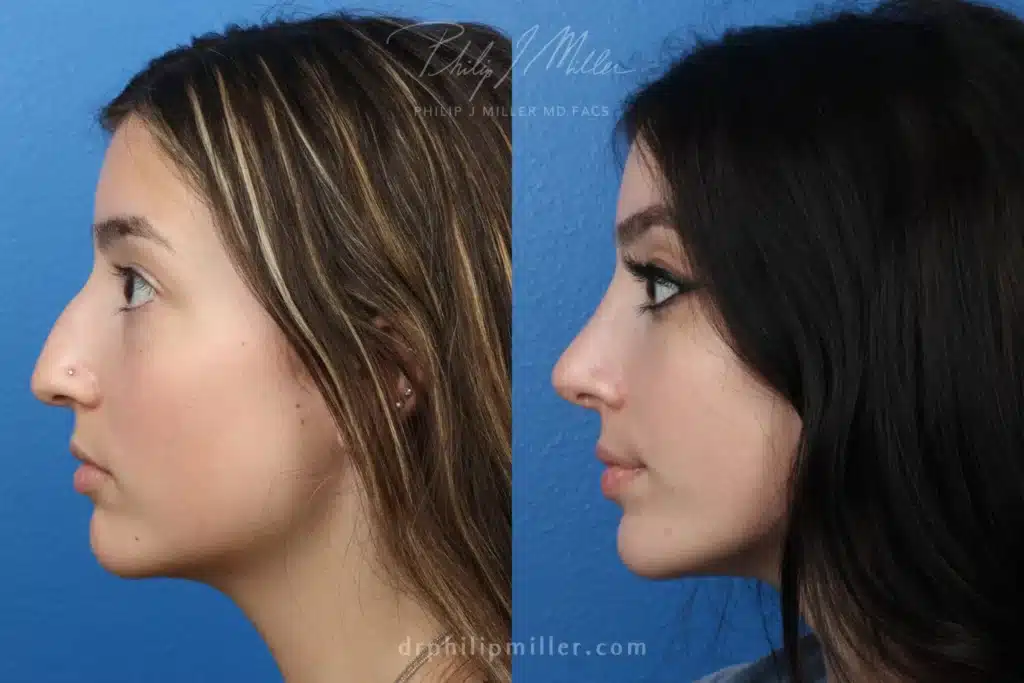
It is best to discuss your allergy history with your surgeon before undergoing nasal surgery. You can work out the right schedule for your surgery, and ideally, your surgeon will enhance the appearance of your nose while correcting any functional issues that affect your breathing.
How Rhinoplasty Can Help with Seasonal Allergies
Septoplasty, also referred to as corrective rhinoplasty, is a surgical solution for a deviated septum. If you have a deviated septum and seasonal allergies, straightening the septum can significantly ease your discomfort during allergy season.
Deviated septum and allergies often go together. While a deviated septum does not cause allergies, it can exacerbate the severity of allergy symptoms like congestion and sneezing.
Turbinates act like the tonsils of your nose. They are projected structures that help filter and humidify the air you breathe. They can become swollen when allergies flare up.
Turbinate reduction surgery can be performed as part of a rhinoplasty. By reducing the size of your turbinates, you experience less congestion and have an easier time breathing even with allergies.
Nasal polyps are small spherical growths that appear along the nasal passages, often as a result of the inflammation caused by allergies. Seasonal allergies may cause small nasal polyps to form. Large polyps can worsen allergy symptoms and affect airflow.
Polyps can be fixed during rhinoplasty to reduce congestion and improve breathing –both providing relief from your seasonal allergies.
Can a Nose Job Treat My Allergies?
No surgery is available to treat nasal allergies. Allergies are caused by immune responses to allergens (e.g., dust, pollen, and smoke) and not structural problems of the nose.
However, rhinoplasty can address conditions that worsen the symptoms of allergies, such as nasal polyps, turbinate hypertrophy, or a deviated septum. While these conditions aren’t responsible for the allergies themselves, they can make it more difficult to breathe when allergies strike.

Learn more about allergies at the Mayo Clinic.
Septoplasty vs. Rhinoplasty for Allergies
Rhinoplasty and septoplasty can improve the function of your nose so you can breathe easier. While a septoplasty is focused on fixing a deviated septum and addressing functional issues, a rhinoplasty will also improve the aesthetic appearance of your nose.
Deciding which nose allergy surgery is best should depend on your specific concerns and goals. Consulting with your surgeon is crucial. Your surgeon will ask about your medical history, allergy history, and medications, as well as the cosmetic and functional goals you want to achieve. Your surgeon can then recommend the best surgical approach for your unique case.
Getting Nasal Surgery for Allergies in New York City
Double-board certified facial plastic surgeon, Philip J. Miller, MD, FACS, blends art and science with innovation and skill to provide thousands of patients with impeccable results. Considered one of the country’s leading experts in rhinoplasty and facial rejuvenation, Dr. Miller and his highly acclaimed team are proud to offer patients the highest level of care and customized treatments in New York City.
Dr. Miller developed the NatraLook methodology for his cosmetic procedures for the face. NatraLook is a specialized consultation process through which Dr. Miller will evaluate your facial features and listen to your concerns and goals. He will reassure and support your opinions positively, creating a collaborative environment that gives you a real say in your own procedure. This opportunity allows patients and Dr. Miller to create a unified vision for optimal results and the most natural outcome possible.
If you’re considering nose surgery for allergies, other functional concerns, or cosmetic reasons, schedule a consultation with Dr. Miller in Manhattan, New York, or New Orleans, Louisiana today.
Next, read more about nose surgery for breathing here.
When to Choose a Nose Tip Surgery Over Full Rhinoplasty?
Nose tip surgery may be the better option when your concerns are limited primarily to the nasal tip and the bridge does not need significant correction. Full rhinoplasty is generally more appropriate when changes are needed to the bridge, overall nasal structure, or multiple areas of the nose. The right approach depends on your anatomy and the specific changes you want to achieve.
Key Takeaways
- Nose tip surgery focuses on refining the lower portion of the nose without changing the entire nasal structure.
- It may be appropriate for a droopy, upturned, bulbous, wide, or over projected nasal tip.
- Full rhinoplasty may be recommended when the nasal bridge or other structural areas also need correction.
- Tip surgery may involve less bruising, swelling, and recovery than full rhinoplasty.
- A consultation can determine whether tip refinement alone can achieve the desired result.
Droopy Tip
A droopy tip can appear just when you smile or it may be apparent all the time. It can be a genetic trait or the result of a previous rhinoplasty. This cosmetic concern can be altered with a nasal tip rotation surgery that focuses exclusively on lifting and refining the nose tip.


This procedure internally points the tip of the nose upwards, increasing the angle between the upper lip and the bottom edge of the nose. This gets rid of the “droopy” appearance.
There are a variety of ways that Dr. Miller can effectively address a droopy tip. These can include trimming excess cartilage, shortening the nasal septum, or reducing the length of the lateral cartilage. Sutures can be used on lower lateral cartilage to lift the tip, or a graft could be used to increase nasal tip support.


Upturned Tip
An upturned tip requires the opposite of the fix for a droopy nose. A nose derotation procedure lowers the upturned tip, decreasing the angle between the upper lip and the bottom edge of the nose. A tip refinement rhinoplasty can often address this issue without the need for a full rhinoplasty.


Bulbous Tip
A bulbous tip appears round, like a bulb on the end of the nose. Making this shape less circular and more pointed involves nose tip refinement. By altering the cartilage or using sutures to pull the nasal structure forward, Dr. Miller can resolve a bulbous tip and create a more aesthetically pleasing profile.


Overprojected Tip
An over-projected tip extends out farther than the average nose. Dr. Miller can effectively reduce the overall size of the nose to bring it into proportion with the rest of the facial features. To refine the tip of the nose, Dr. Miller may remove cartilage from the area. This creates a smaller projection that matches the visual goals of the patient. A full rhinoplasty may also be required to adjust the nasal bridge as well as the tip.


Wide Nostrils
Wide nostrils can create a broader base to the nose that may look out of proportion with the other facial features. Dr. Miller can effectively reduce the lower lateral cartilage to create smaller nostrils, and pull them forward to produce a better aesthetic. If you’re dealing with wide nostrils, rhinoplasty for tip refinement may be a great choice for you. If you have wide nostrils and other nasal structure issues that you’d like to have addressed, a full rhinoplasty would be a better option.


Benefits of Nose Tip Surgery
There are some benefits to choosing a refined tip rhinoplasty over a full rhinoplasty:
- Recovery time may be quicker
- Less bruising and swelling after surgery
- Tip of nose rhinoplasty might cost less
- Results last as long as full rhinoplasty
- Very satisfying results for the right patient
A nasal tip rhinoplasty may not be the right choice if you want correction to your nasal bridge or you have structural issues that impact your breathing. A consultation with an experienced rhinoplasty surgeon will help you determine the best approach for you.
Getting Nasal Tip Surgery in New York City
Philip J. Miller, MD, FACS, is a double-board certified facial plastic surgeon who has a wealth of experience and expertise in all types of rhinoplasty techniques. He will customize your surgery to ensure a harmonious, beautiful, and natural result.
Dr. Miller’s proprietary Natralook consultation process helps you achieve aesthetic confidence in a safe environment. By understanding your goals and discussing your needs, Dr. Miller can align your results with your expectations for a positive experience and outcome.
Contact his office in Manhattan, New York, or New Orleans, Louisiana, to schedule your consultation with him today.
8 Nose Imperfections People Correct with Rhinoplasty
No one’s face is perfect, but some people may have noses that can be a significant source of self-consciousness and low self-esteem. Nose surgery, also called rhinoplasty, can be performed on the nose to correct nasal imperfections and asymmetry.
Nose imperfections are common, which is why rhinoplasty procedures are one of the most popular cosmetic surgeries in the world. Take a look at these eight nose imperfections that can be corrected with rhinoplasty:
Dorsal Hump
A dorsal hump is a cartilage or bone irregularity on the nose that causes a hump in the outline instead of a seamless slope from the bridge to the tip. They do not cause health problems but can lead to dissatisfaction with one’s appearance. The dorsum bone and cartilage connect the nose to the face and is often called the bridge. Rhinoplasty can remove the hump to produce a more aesthetically-pleasing facial profile.


Philip J. Miller, MD, FACS, can also use his microrhinoplasty technique to correct unsightly humps without fracturing bones or using other more invasive approaches. It is an innovative procedure that utilizes an air-powered microrasp with local anesthesia. Using a small incision in the nostril, the specialized device removed the obtrusive layer with extreme precision for a contoured look. Patients experience minimal side effects like swelling and bruising and can return to normal activities within several days.
Wide Nose Bridge
The bridge of the nose extends from the top of the nose, below the eyes, to the tip of the nose and is used to help direct airflow to the nasal passages. In addition to its functional role, the nasal bridge is also considered an important feature of the face that can add to a person’s overall facial appearance and balance.


A wide nasal bridge is often common among many Asian, African, and Hispanic ethnicities. It is important to work with a board-certified facial plastic surgeon with experience in ethnic rhinoplasty procedures to ensure beautiful natural results that do not compromise your heritage in these situations. A wide nose bridge can be corrected with a specific technique during a rhinoplasty called an osteotomy, which narrows down a wide nasal bone for a more proportionate look.
Low Nasal Bridge
A low nasal bridge occurs when the bridge is flat and doesn’t protrude. It is a common characteristic among many ethnicities, such as Asian and African patients. A low nasal bridge doesn’t typically cause breathing problems but can be a cosmetic concern. The nasal bridge can be reshaped with a rhinoplasty to create a straighter profile and a more harmonious face shape.


Bulbous Tip
A bulbous tip is wide and round and can also be called a ball tip nose. The bulb-like shape of the nasal tip is typically due to excess cartilage or cartilage without definition. A bulbous tip can also be due to thick nasal tip skin, which is often seen in ethnic noses. During nose tip surgery, the edges of the cartilage are trimmed to create a more refined nasal tip.


Drooping Nose Tip
A drooping nose tip is characterized by a downward slope that can sometimes result in an unnatural appearance, nasal blockage, and breathing issues. The drooping tip can form due to excess cartilage around the nose, aging, and skin laxity. Rhinoplasty is a permanent solution that can remove excess cartilage and provide support for the nasal tip, lifting and refining the nose for a more pleasing profile.


Droopy Nose when Smiling
Many patients have concerns about a droopy nose when they smile. A droopy nose when smiling can form from a weak structural base and droopy tip. The muscles around the nose move to make the tip appear droopy with wide nostrils making the problems more exaggerated during the facial expression. An expert surgeon can correct this concern and in some cases, temporary non-surgical treatments like Botox injections can also improve the droopiness.
Wide Nasal Base
A wide nasal base features a broad spread at the base of the nose, which can include enlarged nostrils that are disproportionate to the rest of the nose. In this case, a nose reduction procedure known as alar reduction can focus on narrowing the base of the nose by making the nostrils smaller, removing excess cartilage, and refining the nasal tip. Some ethnicities naturally have a wider nasal base that can be corrected by a facial plastic surgeon with expertise in ethnic rhinoplasty techniques.


Hanging Columella
The columella is the tissue that separates the nostrils at the base of the nose. A hanging columella occurs when the connective structure drops lower than the base of the nose so it can be seen in the profile. Some patients are born with this feature, while others can have a long septum that pushes the columella downward. A hanging columella can be corrected with a rhinoplasty procedure and can be altered without reshaping any other portion of the nose.
Learn more about rhinoplasty here.


Concerns with Your Nose? Dr. Miller can Help
Dr. Philip Miller is a double board-certified facial plastic surgeon with more than two decades of experience in facial procedures including rhinoplasty. He provides a supportive environment for patients to explore their aesthetic beauty with his proprietary Natralook® process. Contact us to schedule a consultation and learn more about how rhinoplasty can change your appearance for the better.
Nose Surgery for Breathing
If you’re having trouble breathing due to a deviated septum or experiencing chronic sinus infections that don’t respond to over-the-counter medication, it’s time to schedule a consultation with a board-certified facial plastic surgeon. Nose surgery for breathing can improve your airway and help you live a healthier life.
Types of Nose Surgery to Breathe Better
Different types of nose surgery help patients breathe better, including rhinoplasty and septoplasty.
Rhinoplasty
If your nose is too small, it can cause airflow to become restricted, which can cause you to feel like you’re suffocating. If your nose is too large, it can cause your air passages to become narrowed, which can cause breathing to feel like you’re breathing through a straw. Both of these issues can be corrected with nose surgery (rhinoplasty).
Septoplasty
Septoplasty is another type of nose surgery that is used to correct a deviated septum. While a deviated septum is the most common structural irregularity, other obstructions can impede airflow and make breathing challenging. Septoplasty surgery realigns the walls between the two nostrils for balance and symmetry in the nasal cavities. In some cases, it might be necessary to combine septoplasty with turbinate reduction, which removes or reduces the bony, mucosa-lined outgrowths on the sides of each nostril for easier air passage.

Rhinoplasty vs. Septoplasty
Rhinoplasty and septoplasty are both nose surgeries for breathing but are not the same procedures. A septoplasty can be performed independently from a rhinoplasty procedure to realign the septum into the midline using an incision by the nostrils. The septum is separated from the mucosa and repositioned for improved breathing. A crooked nasal septum is known as a deviated septum, which blocks the nasal passage and obstructs breathing.
A deviated septum is an internal obstruction that many patients do not know they have but can cause symptoms such as:
- Snoring
- Sinusitis
- Breathing difficulties
- Sleep apnea
- Respiratory complaints
A septoplasty surgery has many benefits, including:
- Better breathing: It clears the nasal passage for uninterrupted breathing patterns.
- Improved sleep: Clear airways and consistent airflow allows for a quality night’s sleep without snoring or sleep apnea.
- Fewer sinus infections: Drainage improves when the airway is clear and reduces reoccurring sinus infections.
- Improved smell and taste: When the nose works properly and has aligned passageways, it makes smell and taste more powerful.
Rhinoplasty for breathing problems is a more comprehensive solution that can correct a variety of issues involving both function and appearance. A septoplasty is specifically used to treat a deviated septum, while rhinoplasty for breathing can correct other nasal obstructions, and address issues that impact the appearance of the nose.
Rhinoplasty for breathing can correct nasal support if one or both nostrils have a structural collapse that impedes breathing patterns. Before nose surgery for breathing, a detailed examination will determine the cause of impaired breathing and evaluate different nasal structures to identify the most effective course of action.

A rhinoplasty procedure can treat cosmetic or reconstructive needs that improve the appearance by reshaping, reducing, and adjusting the angle. Rhinoplasty is ideal for patients looking to correct the nose’s appearance and breathing complications. The shape and size of nostrils and a hooked or crooked nose can make breathing more complex and can be fixed with a rhinoplasty. With an expert plastic surgeon, rhinoplasty is a diversified surgery that can improve various symptoms that impact form and function.
Considering nose surgery for breathing problems? Contact our office today
Rhinoplasty and septoplasty procedures are common plastic surgery procedures but are extremely complex and require an experienced, board-certified surgeon. Phillip J. Miller, MD, FACS, is a world-renowned double board-certified facial plastic surgeon with more than two decades of experience. He specializes in rhinoplasty procedures and has executed thousands of successful cosmetic and reconstructive nasal surgeries.
Dr. Miller uses the Natralook® process to evaluate and design a treatment plan to give patients more aesthetic confidence. It is an empowering process that creates a safe and supportive space for patients to discuss concerns and desires and prepare a unified vision between Dr. Miller and patients.
If you are interested in nose surgery for cosmetic or functional reasons, we can help. Contact us to schedule a consultation at our New York City or New Orleans office and learn more about nose surgeries for breathing.
Tip Drop After Rhinoplasty
Tip drop is a potential consequence after rhinoplasty. While the nose changes over the first year after this surgery, some patients may find that they require revision procedures to address tip drop that does not resolve during the healing process.
Choosing to undergo plastic surgery is not a choice that you should make lightly. Rhinoplasty is no exception. Every invasive procedure has risks, but choosing an experienced facial plastic surgeon can help lessen the complications.
What is Tip Drop?
Tip drop is one complication that may occur after rhinoplasty. You may notice that the tip of your nose starts to look round. In other cases, you may see your nose has developed a new bump due to your nose tip being disproportionately lower than your bridge.
While your tip will drop slightly as your nose heals, a round nasal tip may indicate that a “dropped tip” has occurred.

Is it Common for a Tip to Drop After Rhinoplasty?
Will the tip of your nose drop after rhinoplasty? It might appear that way. This illusion is expected as the swelling goes down and your nose begins to heal. As the incision starts to contract, the tissue above your nose tip will rise, which causes your tip to look like it dropped.
Another reason your tip will drop after your nose job is due to gravity. Gravity naturally pulls your nose tip downward. If your remaining cartilage is too weak to hold your tip in position and overcome gravity’s tug, your tip may drop.
These are both predictable and preventable. Your plastic surgeon should consider gravity’s pull, the strength of your cartilage, and how much your incisions will contract before performing your rhinoplasty.
A significant tip drop is a common complication of rhinoplasty, especially if your surgeon is inexperienced. Therefore, finding an experienced surgeon is essential to diminish the chance of tip drop.
How Much Will My Tip Drop After Rhinoplasty?
Your tip should drop between five and ten degrees after rhinoplasty. This drop is due to gravitational pull and your incisions tightening. Any drop that is greater than that means there may have been a surgical complication.
When Will My Tip Drop After Rhinoplasty?
After rhinoplasty, your tip should drop over the next six weeks as swelling reduces and your incisions contract. However, it can sometimes take up to a year to see the full effect of your nose surgery. You likely won’t know if there were complications during your rhinoplasty until a year has passed.

What if My Tip Drops Too Much?
If your tip drops too much after your nose surgery, you may need a revision rhinoplasty. Surgical errors, outdated techniques, or recovery complications could be reasons your nose tip dropped too much. These revision nose jobs occur about one year after the initial surgery to ensure all post-surgical swelling is gone.
During revision rhinoplasty, your surgeon may need to place a graft to achieve your desired result. The amount of tip drop will affect the type of graft your surgeon will need to place. It is critical to choose a board-certified facial plastic surgeon with extensive experience and expertise in revision techniques, as revision rhinoplasty is typically even more complex than the initial procedure.
Reduce Rhinoplasty Complications by Choosing a Leading Expert in Rhinoplasty
Whether you are undergoing a rhinoplasty because you’re unhappy with the size or shape of your nose or due to trauma, finding the right surgeon is essential. The right surgeon can ensure the procedure is done the first time correctly and that you’ll be pleased with your results.
Regardless of your reason for rhinoplasty, Dr. Philip Miller, MD, FACS, should be your number one choice. Dr. Miller is a double-board certified plastic surgeon serving Manhattan, New York, and New Orleans, Louisiana.
He has honed his unique approach to facial surgery over decades. He works with you in a caring, patient-focused environment. Dr. Miller utilizes the NatraLook process, creating a collaborative treatment where your concerns are valued, your confidence is enriched, and your natural aesthetic beauty is enhanced.
Schedule your consultation with Dr. Miller and his highly-trained team by contacting our Manhattan office. Our acclaimed team is proud to offer customized procedures to make your dream nose a reality.
What Is the Best Age for a Nose Job?
The best age for a nose job will depend on a variety of factors, including the patient’s reason for seeking the procedure. Although there are no concrete age guidelines, this overview can help you determine whether now is the right time to pursue nose surgery.
Rhinoplasty is the surgical reconstruction of the nose. In nose surgery, doctors reshape the nose by removing excess tissue, correcting crooked cartilage, and augmenting the nose to improve its appearance. The type of rhinoplasty procedure performed depends on the results you hope to achieve and the unique characteristics of your nose.

There are also medical reasons an individual may choose to have a nose job. The nose is a complex structure that plays an important role in the health and well-being of the body. The nose is responsible for airflow into and out of the mouth, which is essential for breathing, eating, and talking. The nose also plays a critical role in the sense of smell.
The nose has both cosmetic and medical functions that require surgical corrections. Many young patients feel insecure about their noses and seek rhinoplasty for cosmetic reasons. But how young is too young for a rhinoplasty procedure?
At what age can you get a nose job?
There are no concrete age requirements for a rhinoplasty procedure, but many surgeons suggest waiting until around 18 years old for a nose job to ensure facial features are fully developed.
Facial features mature at different rates and patients have different reasons for a rhinoplasty procedure. This is why speaking with a board-certified expert rhinoplasty surgeon who can evaluate your nose and give you a personal recommendation is so important.

Can I get a nose job at 14, 15, 16, or 17?
Yes, teenage patients can get a nose job between the ages of 14-17 in some circumstances. However, a cosmetic rhinoplasty procedure for 14-17 year-olds is less common because their facial features may still be changing. In the younger age group, a medical rhinoplasty is more common to fix issues like a cleft palate or breathing problems.
A rhinoplasty procedure for young patients should be an open discussion between the patient, parents, and the plastic surgeon. Outside of facial maturity for the process, it is essential to consider emotional maturity to understand the life-changing effects of a nose job. Rhinoplasty surgeries are complex procedures that require significant recovery. Final results can take up to one year and requires patients to follow careful post-operative instructions to ensure an optimal outcome.
Boys and girls reach facial maturity at different ages. Girls typically have full development around 14-15, while boys don’t tend to fully mature until around 16-18. It is a very individualized decision that is less about age and more about developmental and emotional maturity.
Philip J. Miller, MD, FACS, is double board-certified facial plastic surgeon specializing in rhinoplasty procedures and facial rejuvenation. With more than two decades of experience, Dr. Miller provides customized and innovative care to all patients. When it comes to teenage rhinoplasty patients, he is very conservative in his approach to evaluating candidates. Expectations are critical when determining if a young patient is ready for the procedure.
Dr. Miller assumes professional responsibility for involving parents in a thorough assessment of psychological and developmental maturity. In some cases, Dr. Miller asks trusted psychologists to help during the process to ensure a comprehensive evaluation of each patient. Teens that move forward with surgery can expect many benefits from working with an expert, including:
- Improved self-confidence
- Better health and structural harmony
- Comfortable breathing
- Natural results
Dr. Miller uses the Natralook® procedure to help patients explore their aesthetic confidence. It is an enriching process that provides a safe and supportive space to discuss personal challenges and desires. For any patient, regardless of age, it is essential to work with a surgeon that has a unified vision and experience creating natural results.
Are you thinking about rhinoplasty? Contact us to schedule a consultation and learn more about teenage rhinoplasty procedures.
I Hate My Nose After Rhinoplasty: What to Do?
If you’re having some regrets after your rhinoplasty, keep in mind final results won’t present themselves right away. You’re not going to be able to see the true aesthetic results of your rhinoplasty until it’s fully healed, which will take up to a year or longer.
But what about when you’ve healed from your original procedure, and you still regret your rhinoplasty? Let’s dive into some of the reasons why this might happen, and what you can do about it – especially if you can get to Manhattan, New York or New Orleans, Louisiana for revision rhinoplasty.
Is it normal to not like your nose after rhinoplasty?
If you’ve been watching your rhinoplasty heal over time and you’re still thinking “I don’t like my nose”, it’s not unheard of. As many as 10-15% of cosmetic nose surgeries result in unhappy clients who will choose to undergo a second procedure to fix it. This commonly occurs for a few reasons:
- You may have trusted an inexperienced surgeon with inferior talent, resulting in lackluster nose surgery results. Rhinoplasty is one of the most complex of all facial plastic surgeries, requiring a great deal of precision, skill, and artistry to perform correctly. This is one reason why so many rhinoplasty procedures result in revisions.
- A lack of communication between you and your doctor may have led to bad rhinoplasty results. Many failed nose jobs stem from the doctor thinking that their patient was looking for something that they didn’t express.
- Complications can present themselves during the procedure or healing process that can lead to a bad rhinoplasty result overall.
- Even in the best of hands and the most simple of procedures, rhinoplasty is not an entirely predictable operation as there are many factors after the surgery that play a role in forming the final result that you and your surgeon have no control over.
When does your nose stop changing after a nose job?
There are a variety of rhinoplasty changes that occur over time during your healing process. That’s part of why it’s strongly encouraged to hold off on a revision rhinoplasty until you can see the full results after 12-18 months of healing. Until that time, the final form or function of the nose won’t be apparent.
Swelling and unactualized results may make your nose seem too big, too short, look the same as it did before, look fat, or feel weird after rhinoplasty. This can lead to post-rhinoplasty depression – but if you let yourself heal, you will find you have options to improve your results.
What Do I Do If I’m Unhappy with My Rhinoplasty?
After you’ve given your nose adequate time to heal, what happens if you’re still unhappy with the results? First, let’s go through the types of issues that commonly manifest as undesirable results, or a nose job fail.
Pinched Tip
This happens when too much cartilage is removed from the tip of the nose, leading to less than ideal aesthetic results. This can also reduce functionality, leading to breathing troubles. Over time, a lack of support to the tip will result in a collapse of the shape of the nostrils.
Here’s a correction of a nasal tip through a revision rhinoplasty performed by Dr. Miller:


Short Nose
If too much cartilage is removed during the initial rhinoplasty, the appearance of a “short nose” may result. Through the use of specialized grafts and reinstating cartilage, a more natural-looking shape can be returned to the nose with a revision rhinoplasty.
Here’s an example of some of Dr. Miller’s work in this area:


Crooked/Twisted Bridge
A “crooked” or “twisted” appearance can occur as a result of nasal trauma. This can be corrected by making the nose symmetrical again by rearranging the cartilage and the bone.
Here are some examples of Dr. Miller’s work that focus on symmetry:


How to tell your plastic surgeon you are unhappy?
After going through the emotionally and physically exhaustive process of planning and completing your initial rhinoplasty, it can seem daunting to consider going through those steps again. After experiencing a bad nose surgery, you wouldn’t want to spend that time and money again for another rhinoplasty fail. However, the first logical step is to address your concerns with the surgeon who performed your initial surgery.
If your original surgeon cannot provide you with a satisfactory response to your issues, you may need to look for another surgeon to perform revision rhinoplasty for you. The most important factor here is the plastic surgeon you choose.
A board-certified facial plastic surgeon is often the best choice for a revision rhinoplasty procedure. These specialists have intimate knowledge of the nose, studying first as an ear, nose, and throat specialist. The addition of plastic surgery training ensures these surgeons have both the expertise and the artistry to enhance the appearance of the nose while preserving function.
How Can I Fix My Rhinoplasty?
Philip J. Miller, MD, FACS, is a board-certified facial plastic surgeon who specializes in procedures for the nose and face. He offers his proprietary NatraLook® Process, which is a patient-centric approach to understanding your needs, listening to your expectations, and going through every step with communication and trust. With a technique that combines artistry and science, Dr. Miller has performed over 5,000 successful surgeries.
You need a surgeon with proven abilities, who has achieved a high success rate in producing the most natural-looking and aesthetically-pleasing rhinoplasty results in Manhattan, New York, and New Orleans, Louisiana. Schedule your consultation with Dr. Miller today by calling 646-791-3025, or booking online.
Learn how rhinoplasty can make a nose appear smaller here.
Surgical or Liquid (Non-Surgical) Rhinoplasty: Which one is right for me?
When it comes to getting a nose job, there are two basic options: surgical or non-surgical. Surgical rhinoplasty requires anesthesia, incisions, and downtime, but produces permanent improvement. A non-surgical rhinoplasty, commonly known as a liquid rhinoplasty, is a less invasive option that utilizes injectable fillers to temporarily change the appearance of the nose.
When considering a rhinoplasty, it is essential to realize that different types of rhinoplasty procedures are used, depending on the severity of alterations. Individualizing a rhinoplasty procedure ensures that results are natural and balanced to your unique facial features.
What is liquid rhinoplasty?
Liquid rhinoplasty is a non-surgical alternative to a surgical rhinoplasty procedure that uses injectable dermal fillers to make the nose more appealing. This less invasive option may produce pleasing results with a quicker approach and less recovery time.
Juvederm® and Restylane® are two common dermal fillers used for liquid rhinoplasty. Juvederm is an FDA-approved volume enhancer containing hyaluronic acid, a naturally occurring substance in the body. Restylane is another hyaluronic acid injectable that restores and rejuvenates the skin. These fillers can add hydration and volume to the nose and alter the shape for a more appealing appearance.
Even though liquid rhinoplasty is not a surgical procedure, it still requires skill and experience to inject the filler into the correct area for intended results. The process is quick and patients can return to normal daily activities after the injection. It is an effective alternative with many benefits, including:
- Non-invasive
- Minimal downtime
- Safe and effective
- Instant results
- Smoother nose shape
- More balanced appearance
What’s the difference between liquid and regular rhinoplasty?
Surgical and liquid rhinoplasty are two very different procedures with different processes, results, recovery, costs, and expectations. Take a look at the breakdown:

Surgical Rhinoplasty:
- Requires anesthesia
- Manipulates the skin, bone, and cartilage to reshape and resize the nose
- Repairs medical conditions like a deviated septum or other functional issues
- Requires downtime of at least one week before returning to work and daily activities
- Is associated with side effects like swelling, bruising, and tenderness
- Provides a permanent solution
- Offers the option to combine procedures for complete facial balance
Liquid Rhinoplasty:
- Is minimally invasive
- Requires minimal downtime and discomfort
- Can improve the shape of the nose
- Camouflages bumps and adds volume
- Takes little time to perform
- Provides instant results
- Is associated with minimal swelling, bruising, and tenderness
- Requires regular appointments to maintain results
How much does liquid rhinoplasty cost in NYC?
The cost of rhinoplasty procedures varies by patient and depends on the treatment plan. Non-surgical rhinoplasty costs typically range from $2,500 – $3,000 per treatment. Some of the factors that impact price include:
- Type of dermal fillers used
- Number and amount of filler injected
- Experience and expertise of injector
It is also important to understand that liquid rhinoplasty is not a permanent solution and requires regular appointments to maintain the desired shape. Patients can learn more about the specific costs of liquid rhinoplasty during a consultation with Dr. Miller.
@drphilipjmiller #liquidrhinoplasty ! In 10 minutes, no down time, you will have a new nose that last about 2 years. Call today and book a session with me! #nonsurgicalrhinoplasty ♬ original sound – Sam Smith
How much does surgical rhinoplasty cost in NYC?
Surgical rhinoplasty encompasses a wide range of possible alterations and additional steps, such as a graft or implant. Due to the variance in procedure possibilities, there is also a wide range of costs. An average surgical rhinoplasty procedure in New York City ranges from $26,000 – $28,000. During a consultation, Dr. Miller will explain the treatment plan and expected costs.
How long does liquid rhinoplasty last?
Unlike a surgical rhinoplasty, liquid rhinoplasty is not a permanent solution. This treatment requires regular appointments to maintain your pleasing results. Results vary by patient depending on how many dermal fillers were used, where they were injected, and the level of correction required. Many patients see results for around 18 months before needing a touch-up session. Dr. Miller and his expert team will evaluate your nose and treatment plan for a suggested maintenance schedule to keep a natural and well-balanced nose shape.
How long does surgical rhinoplasty last?
Surgical rhinoplasty is a permanent procedure that has lifelong results. Once the nose is reshaped and altered, it will remain in its new state with proper care.
Which one is better: surgical or non-surgical rhinoplasty?
Both procedures are practical and effective solutions, depending on the patient’s specific needs and desires. Philip Miller, MD, FACS, strives to help patients achieve aesthetic confidence and natural results using the NatraLook® process. During your consultation, Dr. Miller discusses your concerns and expectations to identify which procedure is right for you and create a unified treatment plan.
Dr. Miller is a double board-certified surgeon in facial plastic and reconstructive surgery and head and neck surgery. He is a world-class surgeon and leading expert in rhinoplasty and facial rejuvenation. With more than 20 years of expertise, Dr. Miller works closely with patients to identify their needs and desires to create unmatched results.
Contact us to schedule a consultation and learn more about which rhinoplasty procedure is right for you.
Nose Taping After Rhinoplasty
Nose taping is a common practice among rhinoplasty patients. It is a bandage or tape used during rhinoplasty recovery to support the nose, decrease swelling, and improve the nose’s appearance. Philip Miller, MD, FACS, often recommends nose taping to enhance a patient’s healing process after nose surgery, provided it’s done correctly.
What are the benefits of nose taping after rhinoplasty?

Nose taping after rhinoplasty is beneficial for many reasons. The primary benefit is that it helps to decrease swelling fluctuations after the procedure. It also helps improve:
- Bruising
- Bleeding
- Breathing
- Healing process
- Final appearance
Some patients choose to tape their noses daily or multiple times per day to help them feel better. However, it is most commonly recommended at night when swelling is most likely to occur. It is not necessary to tape during the day unless specified by Dr. Miller.
What if I don’t tape my nose after rhinoplasty?
Not all patients have to tape their nose after rhinoplasty surgery; it should only be done following instructions from a skilled board-certified facial plastic surgeon. Dr. Miller works closely with each patient to determine the benefit and necessity of nose taping. There are cosmetic and health benefits associated with taping. If the nose taping process is not followed as directed, it could lead to:
- Nose deformity
- Extended healing time
- Additional complications
- Increased swelling
How to Tape Your Nose after Rhinoplasty
There are multiple kinds of tape to use after rhinoplasty. Common choices are adhesives, like medical tape and bandages, and those that use pressure, like dental bandages. Speak to your surgeon about taping instructions best suited for your situation and healing expectations. Generally, patients should:

1. Tape the nasal bridge: Use 3-5 strips of tape about two inches long. Start at the tip of your nose and overlap upward to cover the entire bridge.
2. Wrap the tip: Use a longer piece of tape to wrap the end of the nose, creating a “U” shape while avoiding the nostrils.
3. Repeat the first step: Repeat the first step using strips to cover the bridge and ensure the “U” tape stays in place.
At first, nose taping may be necessary 24/7, depending on your specific circumstances. In this case, the tape should be removed every 2-3 days and new tape applied. After several days or weeks, nose taping may only be done at night to help with swelling and removed each morning.
Removing tape should be done with as much care as applying the tape to prevent any harsh movements or pressure. Tweezers can be used to gently peel the tape or remove it after a shower when it is damp and starting to lose adhesiveness, or apply baby oil on the tape and that will loosen it.
How long should I tape my nose after rhinoplasty?
Nose taping is often recommended for 1-3 months after a rhinoplasty procedure. Dr. Miller provides patients with clear instructions for recovery care and taping. Patients will also visit Dr. Miller for follow-up appointments to ensure proper healing and appearance.
Schedule Your Nose Job in NYC
Dr. Philip Miller, MD, FACS, is a world-class, double board-certified plastic surgeon and a leading expert in rhinoplasty procedures and facial rejuvenation. Dr. Miller has more than 20 years of experience in surgical and non-surgical facial procedures and an artistic eye for helping patients meet their cosmetic goals. After a rhinoplasty or revision rhinoplasty procedure, may instruct patients to tape their nose, but it is not always recommended.
Dr. Miller is an innovative expert that offers personalized care and treatment plans. His goal is to empower patients and support aesthetic confidence. Dr. Miller uses the NatraLook® Process to create a positive environment where patients can discuss obstacles and desires for a unified and natural rhinoplasty result.
Contact us to schedule a consultation and learn more about nose taping after rhinoplasty.