Sitemaps
XML Sitemap
Pages
- MedSpa Treatments
- Dr. Philip Miller
- Lower Facelift in New York City
- VR and Other Technologies
- RealSelf Reviews
- RealSelf Questions & Answers
- MailChimp for WordPress: Form Preview
- About
- Meet the Team
- Contact
- About New York City
- Traffic in New York
- Insurance and Financing Basics
- Lip Lift in New York City
- Microsurgery Procedures: Minimally Invasive Facial Rejuvenation
- The Subway in New York City
- Shopping in New York City
- Pizza in New York
- TV Shows in New York
- The Metropolitan Museum of Art
- Central Park in New York
- Broadway in New York
- Wall Street
- Patients
- Out of Town Patients
- Dr. Miller's Rhinoplasty Booklet
- Daxxify - Now Available!
- Reviews
- Subscriber thank you
- Chin Implants and Reduction in New York
- Thank You
- Pixie Ear Deformity Correction in New York
- New York City Office
- Areas We Serve
- Resources
- Restylane
- Common Rhinoplasty Terms
- Saddle Nose Surgery in New York
- Rhinoplasty Recovery 101
- Videos
- Post Operative Rhinoplasty Instructions
- Mini Facelift in New York City
- Cobra Neck Deformity Correction in New York
- Upturned Nose Correction: Refine Your Profile for Natural Facial Harmony
- Press
- Skin Color & Scar Camouflage
- Vertical Facelift in New York
- Privacy Policy
- Deep Plane Facelift in New York
- Pollybeak (Supratip) Deformity
- Droopy Nose (How to Get a Pointy Nose)
- Turkey Neck Treatment in New York
- Book Online Consultation
- Media
- Bulbous Nose Tip
- Bifid Nose Tip
- Ski Slope Nose Job in New York
- Weak (Receding) Jaw and Chin Correction in New York
- Unified Vision
- Neck Fat Removal in New York City
- Dorsal (Nose) Hump
- Tech Neck Lines Treatment in New York
- Male Plastic Surgery in New York
- Rhinoplasty & Facelift Case Studies
- Our Online Reputation
- Neck Liposuction in New York
- Neck lines removal in New York
- Dermal Fillers in New York
- Facial Liposuction in New York
- Double Chin Removal: Refine Your Profile for a More Sculpted Look
- Photo landing
- Crooked Nose
- Vectra 3D Imaging
- Blog
- Universities in New York
- Homepage
- Hotels in New York City
- Fashion in New York City
- Live Entertainment in New York City:
- Architecture in New York
- Bridges in New York
- The Neighborhood of Harlem
- Hell’s Kitchen NYC
- Double Chin Removal: Refine Your Profile for a More Sculpted Look
- Non-Surgical Facelift in New York
- Boxy Nose Tip
- Privacy Policy
- Revision Facelift in New York
- Facial Plastic Surgery Procedures
- Non-Surgical Medical Spa Services
- Facial Plastic Surgery
- Face-Tite™
- Neck-Tite™
- Neck Fat Removal in New York
- NatraLook
- Facial Surgery
- Neck Lift
- Facelift in New York
- Midface Lift in New York City
- Microsurgery: MicroLift Face in New York
- Brow Lift
- Blepharoplasty in New York City
- Chin and Cheek Augmentation
- Buccal Fat Removal in New York City
- Otoplasty
- Facial Reconstruction
- Lip Reduction in New York
- PDO Thread Lifts in NYC
- G.I. Jaw® - Jawline Augmentation
- Non-Surgical (Liquid) Facelift in New York
- Neck Lift in New York City
- Preservation Rhinoplasty in New York: A New Solution To an Old Problem
- Nose Surgery Options in New York
- Male Rhinoplasty
- Teen Rhinoplasty
- Alarplasty / Wide Nostril Reduction Surgery in New York
- Microsurgery: MicroRhinoplasty™ in New York
- Nose Reduction Surgery in New York
- Broken Nose Surgery
- Anatomy of the Nose
- Nose Reshaping
- Non-Surgical Rhinoplasty in New York City
- Balloon Sinuplasty
- Septoplasty
- Nose Tip Surgery in New York
- Septoplasty/Turbinate Reduction
- Virtual Rhinoplasty
- Nasal Surgery
- Rhinoplasty and Nose Jobs in New York
- Revision Rhinoplasty in New York
- Ethnic Rhinoplasty
- African American Rhinoplasty in New York
- Asian Rhinoplasty in New York
- Korean Rhinoplasty in New York
- Hispanic Rhinoplasty in New York
- Middle Eastern Rhinoplasty
- Indian and Pakistani Rhinoplasty in New York
- Jewish Rhinoplasty
- Body Surgery Procedures
- Spreader Grafts Rhinoplasty in New York
Posts
- 8 Nose Imperfections People Correct with Rhinoplasty
- Revision Rhinoplasty in NYC: What to Expect When Perfecting Your Results
- These Will Be the Biggest Facial Plastic Surgery Trends for 2025
- Tip Drop After Rhinoplasty
- What is the Best Age for a Neck Lift?
- 8 Common Signs of a Bad Rhinoplasty
- Nose Surgery for Breathing
- How to Make My Face More Symmetrical
- What Age is Normal to Get Wrinkles?
- When to Choose a Nose Tip Surgery Over Full Rhinoplasty?
- What to Expect from Your Neck Lift Results
- How to Reduce Swelling after Lip Fillers
- Redefining Masculinity: The Rise of Male Rhinoplasty
- Which Facelift Lasts the Longest? Understanding Your Options
- Unveiling the True Costs of Facelift Procedures in 2024 in New York City
- Upturned Nose: What It Means and How Rhinoplasty Can Refine Your Profile
- Mommy Makeovers for the Face: Natural Rejuvenation for Every Mom
- Surgical or Liquid (Non-Surgical) Rhinoplasty: Which one is right for me?
- Rhinoplasty and Allergies: What You Need to Know
- Why MicroLift-Neck Is the Ideal End-of-Summer Treatment
- How Rhinoplasty Can Boost Confidence Before the Holiday Season
- Neck Lift vs. MicroLift Neck: Which Option Fits Your Summer Schedule?
- Facelift Recovery Time – What You Need to Know
- Do I need rhinoplasty or septoplasty?
- Can You Get Rhinoplasty Without Losing Your Natural Look?
- How Microsurgery Can Smooth Texture with Minimal Downtime
- Facelift Recovery 101
- Why do you have to wear a cast after rhinoplasty?
- Facelift When Young: Is It Too Early for Surgery? A Reflection on Aging Gracefully
- Facelift in NYC: Why Fall Is the Perfect Time to Refresh Your Look
- Buccal Fat Removal and Cheek Fat Reduction for Natural Facial Contouring
- The Complete Guide to Neck Lift Cost in 2025 in NYC: Everything You Need to Know
- 7 Types of Facelift Procedures: Which One is Right for You?
- Facing the Future: Choosing Between Non-Surgical and Surgical Facelifts
- Submandibular Gland Excision for Refined Neck Contour and Jawline Definition
- 6 Facts About Male Facelift You Didn't Know
- Facelift Alternatives in NYC: Freedom from Aging Without Overly Invasive Surgery
- Blepharoplasty vs. Brow Lift: What's Right for You?
- Facelifts and Micro (Mini) Facelifts: Refresh Your Appearance Naturally
- Is Revision Rhinoplasty Right for You? Find Out This Summer in NYC
- Considering Rhinoplasty? What to Know Before Summer
- Microsurgery in NYC: The Facelift Alternative for Busy Professionals
- Why Choose an ENT Specialist for Rhinoplasty
- I Hate My Nose After Rhinoplasty: What to Do?
- Dr. Philip J. Miller Recognized as a Castle Connolly Top Doctor for 15 Years
- Liquid Rhinoplasty: Your No-Downtime Summer Refresh in NYC
- Do I Need a Spreader Graft?
- How to Make Your Face Less Flat? 6 Surgical and Non-surgical Options
- Fall Skin Revival: Combine Procedures for a Full-Face Refresh
- Will a Facelift Remove Wrinkles? What to Expect from the Results
- Blepharoplasty: Bright Eyes for Holiday Season Photos
- Nose Taping After Rhinoplasty
- Your Guide to the Deep Plane Facelift and Neck Lift
- From Hollywood to NYC: Why 3D Facial Implants Are the New Standard in Custom Beauty
- Why the Deep Plane Facelift Looks So Natural
- Should You Get A Facelift After Massive Weight Loss?
- The Advantages of Using Customized Facial Implants
- Enhancing Neck Lift Results: The Significance of the Submandibular Gland
- Microsurgeries: Natural-Looking Results, Less Downtime
- What Is the Best Age for a Nose Job?
- Neck Lift: Get Summer-Ready by Starting This Fall
- Endonasal Rhinoplasty
- What To Do After Rhinoplasty
- Rhinoplasty Swelling Stages: What to Expect
- 3 Types of Facelifts You Need to Know About
- Facelift vs. Neck Lift
- What are the best procedures for neck tightening in 2025?
- Can Rhinoplasty Make Your Nose Smaller?
- Popular Plastic Surgery Procedures: A look at the Real Housewives
- Your Most Beautiful Nose: Understanding Your Nose Type
- What is Dorsal Reduction?
- What is External Rhinoplasty?
- 5 Clues You Might Need Revision Rhinoplasty
- 5 Reasons Winter is the Perfect Time for a Facelift in NYC
- 5 Ways to Make 2022 Your Most Beautiful Year Yet
- Types of Rhinoplasty
- Men and Facelifts: What You Need to Know
- 5 Rhinoplasty Trends in 2022
- Fresh Face for Fall
- 7 Questions to Ask Your Facelift Surgeon
- Functional or Cosmetic Rhinoplasty - Which One is Right for You?
- Health Benefits of Rhinoplasty
- Turn Back the Clock without Surgery
- What is the G.I. Jaw?
- Brow Lift or Eyelid Surgery: How to Refresh Aging Eyes
- Get Natural Results with a Customized Facelift
- Planning for Your Rhinoplasty: Open vs. Closed Technique
- Reasons for a Nose Job: Celebrities Spill
- Men and Plastic Surgery: A Post-Pandemic Trend
- 5 Times a Surgical Facelift is the Right Choice
- What Makes Rhinoplasty So Complex?
- 10 Facelift Myths Everyone Should Stop Believing
- One Anti-Aging Procedure You Wouldn't Expect, Rhinoplasty
- 3 Reasons A Facelift and Neck Lift Make A Perfect Match
- Define Your Chin, Enhance Your Look
- Tired of Your Aging Neck? Tackle Your Concerns this "Neckvember"
- Dr. Phillip Miller Restores Confidence for Domestic Violence Survivors With Pro Bono Surgeries
- Your Guide to Facelift Alternatives
- Why are Revision Rhinoplasties So Common?
- How do you choose a neck lift?
- Look and Feel Your Best for Your New York Wedding
- Top New York Facial Plastic Surgeon Reveals Difference Between Surgical and Liquid Face Lifts
- New York’s Top Facial Plastic Surgeon Reveals The Most Popular Face Slimming Procedures
- Dr. Miller Explains How Long Does A Rhinoplasty Take To Complete?
- Reduce Swelling Through Nasal Exercises
- 5 Interesting Facts About Rhinoplasty That Everyone Should Know
- Post Surgery Reveal: Check Out Satisfied Client's Rhinoplasty Results
- Revealing Results of a Rhinoplasty: Watch This Young Woman's Unbelievable Reaction
- Watch Dr. Miller Highlight His Patients Excess Cartilage
- Facing the Facts When It Comes to Rhinoplasty Options: How to Choose the Right Surgeon in NYC for Your Nose Job
- A Breakdown of the Most Popular Rhinoplasty Treatments: How to Choose a Trusted Surgeon in NYC
- Examiner Features: NYC facial surgeon allowing you to test-drive a nose job
- Five Top Common Nose Shapes with Photos
- Nasal exercises after rhinoplasty
- Lifters Vs Fillers: The Benefits of Voluma
- 3-D Rhinoplasty in NYC
- Dripping With Envy: Liquid Facelift in NYC
- Your Options After Botched Plastic Surgery
- How a Nose Job Can Make You Look Younger
- 7 Rhinoplasty Preparation Tips
- The Top 5 Eyelid Problem Areas Explained by a Facial Plastic Surgeon
- What's Behind the Sudden Rise in Rhinoplasty Popularity?
- Blepharoplasty: Brighten Your Eyes for a Youthful Look
- What's The Difference Between A General Plastic Surgeon And Facial Plastic Surgeon?
- What is the Cost of a Rhinoplasty?
- Stem Cell Facelift
- Three Facial Plastic Surgery Procedures You've Never Heard Of
- The Truth About Snapchat Dysmorphia
- Why Requesting A Celebrity's Nose Isn't Always Best for Rhinoplasty Goals
- When a Deal is No Deal: The Cost of a Quality Rhinoplasty
- The Rise of Medical Aesthetics for Men
- If You’re a Millennial, Here’s Why You Should Start Anti-Aging Treatments Now
- Restore Lost Facial Volume with Fillers or Implants
- The Life-Changing Benefits of a Facelift
- Are You an Ideal Candidate for Eyelid Surgery?
- Get “Tite” with These Great Treatments
- 5 Tips for Your Rhinoplasty Recovery
- Submental Liposuction Versus Neck Lift Surgery
- Which Laser Treatment is Right for You?
- Benefits of a Facelift and Why This Procedure is Right for You
- Proper Post-Op Nutrition
- Will Scar Tissue Be an Issue After Rhinoplasty?
- Is a Micro-Lift Facelift Right for You?
- How Does Rhinoplasty Affect My Facial Features?
- Protecting Your Nose After Rhinoplasty
- Can Buccal Fat Removal Enhance Your Facelift Results?
- Common Recovery Inconveniences After Facelift Surgery
- Your Deviated Septum: Causes, Effects and Treatments
- Can a Facelift Fix Your Acne Scarring?
- What You Need to Know About Male Rhinoplasty
- Sleep On Your Back to Preserve Your Facelift
- There’s No Shame In Rhinoplasty
- Four Things Off-Limits After Your Facelift
- A Facelift at Any Age: What to Expect
- Ten Things to Avoid After Rhinoplasty Surgery
- Could Weight Loss Affect Your Rhinoplasty Results?
- What Factors Could Make Me Ineligible for a Facelift?
- Is MicroRhinoplasty™ Right for You?
- Rhinoplasty Tips for Prospective Teen Patients
- How to Cover Up Your Post-Op Facelift Bruising
- Hot Rhinoplasty Trend: Should You Copy A Celebrity Nose?
- Six Things Patients Wish They Knew Before Facelift Surgery
- The NatraLook Process and Your Rhinoplasty
- Why Realistic Expectations Matter
- What We Can Learn from Successful Celebrity Rhinoplasties
- Preparing for a Post-Traumatic Rhinoplasty
- How to Get Natural-Looking Facelift Results
- What Makes Facelifts So Popular?
- Smoking and Rhinoplasty: What’s the Big Deal?
- Your Facelift Results on Day One
- Reasons to Have a Refinement Rhinoplasty
- Every Face Is Different: Customizing Facelift Surgery
- Five Tips for Designing Your New Nose
- Is There Really an Optimal Age for Your Facelift?
- Tips for Choosing Your Facelift Surgeon
- Keeping Your Nose Job a Secret
- Tips to Minimize Your Post-Op Facelift Risks
- Facelifts and Neck Lifts Fight Tech Neck
- What to Expect From Your Rhinoplasty Consultation
- How to Guarantee Your Best Facelift Results
- The Many Amazing Benefits of Rhinoplasty
- Can You Be Addicted to Rhinoplasty?
- Why Fix a Broken Nose?
- Leaving the House After a Facelift
- Weight Loss and Facelifts
- How to Be a Great Candidate for Facelift Surgery
- Ways to Speed Up Your Rhinoplasty Recovery
- Fast Facts About Ethnic Rhinoplasty
- Could a Facelift Be Your New Beginning?
- Is Your Selfie Addiction a Reason for Rhinoplasty?
- Pick the Perfect Time for Your Facelift
- Five Things to Consider Before Your Rhinoplasty
- Top Three Reasons for Revision Rhinoplasty
- Could a Facelift Save Your Job?
- Why a Surgical Facelift Is Still the Best Option
- Solve Your Breathing Problems with Rhinoplasty
- Add On to Your Facelift for a Full Rejuvenation
- Seven Popular Facelift Myths
- What Makes Rhinoplasty So Popular?
- Life After Facelift: Tips to Make Your Results Last Longer
- Cosmetic vs. Functional Rhinoplasty
- Challenges of the Male Facelift
- Necklift vs. Facelift: Which is Right for You?
- Rhinoplasty & Common Cold
- Fixing a Twisted Nose
- Weight Loss After Facelift: All You Need To Know
- Cosmetic Procedures for Getting Rid of Turkey Neck
- What is a Deep Plane Facelift?
- Rhinoplasty Surgery for Older Patients
- The Mini Facelift
- What to Expect Immediately After Your Facelift
- Factors that lead to Nose Surgery Satisfaction
- The Injectable Nose Job
- Post-Facelift Makeup Tips
- What Do Bridalplasty and Rhinoplasty have in Common?
- Choosing the Right Shape for Your New Nose
- Minimizing Bruising After Rhinoplasty
- What to Expect from Your Plastic Surgery Consultation in NYC
- What to Expect After Your Facelift
- What Makes a Good Nose Job?
- Facelift vs. Liquid Facelift: Which is Better?
- Activities to Avoid after Facelift
- Five Tips for a Quick Recovery Following a Facelift
- MicroRhinoplasty™ Offers Patients Many Benefits
- Stem Cell Facelift in New York
- Male Rhinoplasty Surgery
- Check out this great Ulthera Result!
- 10 Years Off and 10K to Your Salary From Botox
- Carol Burnett talks about her plastic surgery experience on CNN
- Preparing For Your Facelift
- Cosmetic Surgery consultation in the palm of your hand
- 15 Minute Rhinoplasty
Male Breast Reduction
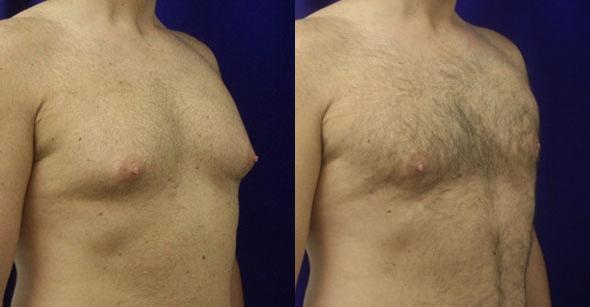
Gynecomastia, while rarely discussed, is a fairly common medical condition characterized by an enlarged breast in men. In fact, it’s believed that 40 to 60% of men suffer from gynecomastia. While there is no known cause in many cases of gynecomastia, there has been some correlation with certain drugs and medical conditions.
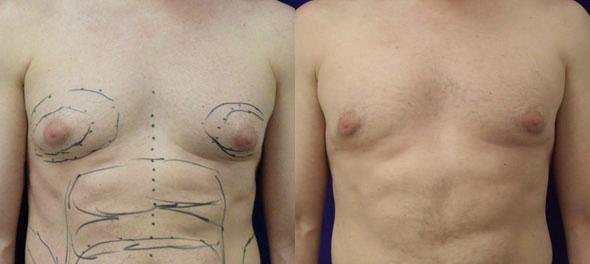
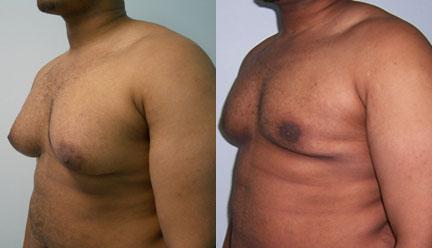
For men who are self-conscious about their appearance, male breast reduction surgery in NYC can help by restoring a flatter, firmer appearance to the male chest. Prior to surgery at our New York City surgical center, patients should be checked to see if there is any medical cause of their gynecomastia and if there is it should be sufficiently treated.
Before and After Male Breast Reduction Images
*Individual patient results may vary
Male Breast Reduction Surgery Procedure
Our doctors perform male breast reduction surgery in NYC on an outpatient basis at our JCAHO-accredited office-based surgery facility in New York City. General anesthesia or local anesthesia may be used. During surgery, excess fat and/or glandular tissue are removed from the breasts. In extreme cases, excess skin may be removed as well.
Recovery From Surgery
Some swelling and bruising can be expected after surgery. If drainage tubes are inserted, they will be removed within a day or two. You will be required to wear a special compression garment for a period of time during recovery to help support the new contours of the chest. If you experience any pain or discomfort, this can be relieved with medication. You will likely feel well enough after your surgery to return to work within one week.
To learn more about male breast reduction, visit betterhealth.vic.gov.au
Mommy Makeover
While the experience of giving birth and having a child can be a wonderful and rewarding one, the reality is that pregnancy and breastfeeding can cause significant unwanted changes in the body. These may include sagging breasts and enlarged areolas, less definition in the waist, sagging and pockets of fat in the abdomen, and stretch marks. While some of these may improve over time, such as stretched or sagging skin and loose muscles, the simple fact is that the body never fully returns to its pre-pregnancy state.
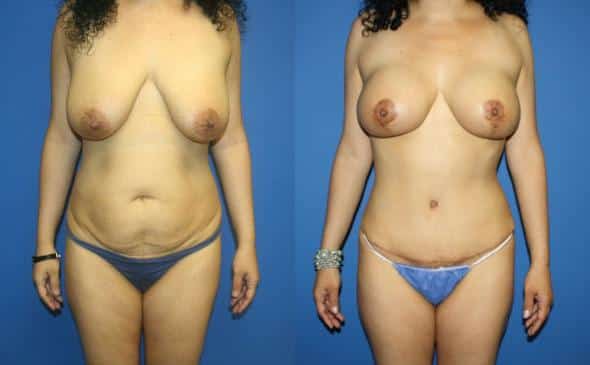
Fortunately, plastic surgery can help to restore a more youthful contour to the breasts and abdomen. There are several procedures available which are often referred to collectively as the “mommy makeover” or post-maternity breast and body reshaping. These include the breast lift, breast reduction, tummy tuck and liposuction. A mommy makeover does NOT require general anesthesia; in most cases, there is no issue with performing a mommy makeover with local anesthesia and a little sedation to make you relaxed here at our New York City office.
Breast Lift
Following pregnancy and breastfeeding, many women experience unwanted changes in the breasts including sagging, decreased volume, uneven breasts, drooping nipples and stretched or enlarged areolas. These changes can be improved with the breast lift. Also referred to as mastopexy, this surgical procedure removes excess skin and tightens the supporting tissues to restore a more youthful and uplifted shape to the breasts. The breasts will appear more elevated and firmer following surgery. In addition, enlarged areolas may be reduced in size if necessary. For women desiring larger or more fuller breasts, the breast lift can be combined with breast augmentation with implants. Conversely, breast reduction may be performed with the breast lift for those seeking a reduction in breast size.
Breast Reduction
While most women experience a reduction in breast size leading to sagging after pregnancy and breastfeeding, some women are left with breasts that remain larger than desired. For these women, breast reduction surgery can help by returning the breasts to their smaller, pre-pregnancy size. This can help to relieve symptoms commonly associated with large breast, including pain, rashes, breathing problems, improper posture, skeletal deformities, and poor self-esteem. Breast reduction is a surgical procedure in which excess fat and glandular tissue are removed and the remaining skin is tightened. The result is smaller, lighter breasts that are more proportionate to the rest of the body.
It should be noted that women who are planning to breastfeed in the future should postpone the surgery as many of the milk ducts leading to the nipples are removed.
Tummy Tuck
Pregnancy often takes its greatest toll on the abdomen, where stretching and weakening of the skin and muscles in the abdomen and waist can lead to loose skin, less definition in the waist, and stretch marks. These unwanted changes are often resistant to even the best attempts at diet and exercise.
Abdominoplasty, more commonly known as a tummy tuck, can help by restoring a flatter, more toned appearance to the abdomen and waist. This surgical procedure removes excess skin and tightens the muscles of the abdominal wall. This may be combined with liposuction to address areas of fat in the abdomen or flanks.
For patients planning a future pregnancy, it may be recommended that surgery is postponed as future pregnancy can diminish the results of the tummy tuck.
Liposuction
For some women, pregnancy leaves them with pockets of fat in the lower abdomen and decreased definition in the waistline that cannot be improved with diet or exercise. In addition, women who have undergone a C-section are often left with an area of fat that hangs over the surgical scar. In these cases, liposuction can help by removing excess fat from the abdomen, buttocks, hips, thighs and/or waist. Liposuction can sculpt the body after pregnancy for a slimmer, more contoured shape.
Several newer methods of liposuction exist today which generally offer benefits over traditional liposuction. These include ultrasound-assisted lipectomy (UAL) and suction-assisted lipectomy (SAL), both of which involve the injection of a special fluid into the treatment area prior to the removal of fat. Incisions made for liposuction are very small and inconspicuously placed so that the resultant scars are undetectable. Through these incisions, a small tube called a cannula is inserted to break up the fat which is then suctioned out.
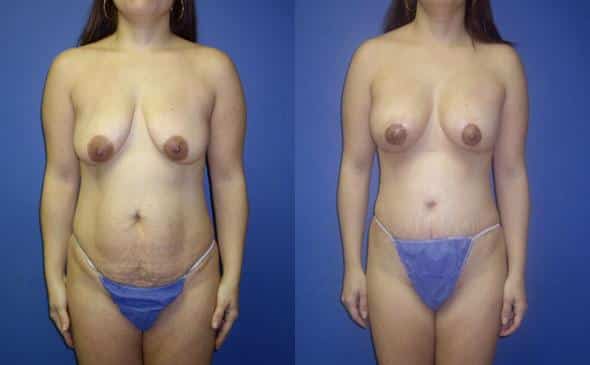
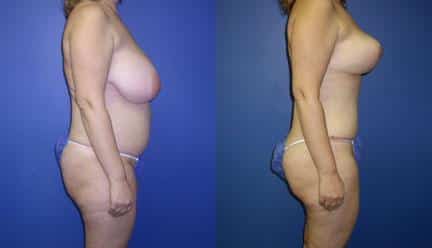
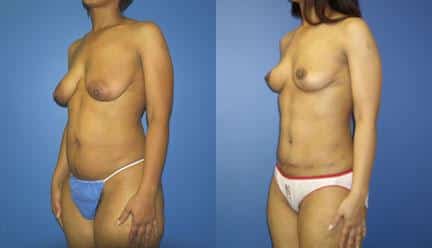
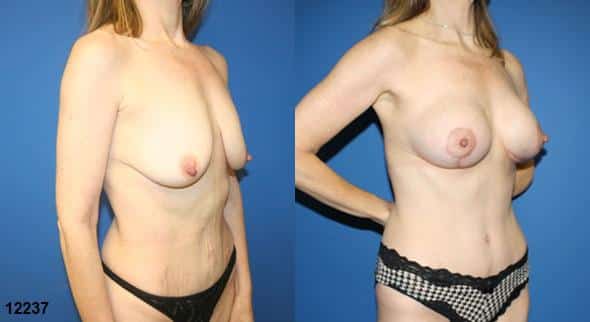
Before and After Mommy Makeover Photos in New York
*Individual results can vary

How to Choose a “Mommy Makeover” Surgeon in New York
If you’re thinking about undergoing a Mommy Makeover, we feel that it’s vital to choose a surgeon who you’re comfortable, and one who owns his own surgical center. Dr. Miller prefers using his own Joint-Commission Facility for Mommy Makeovers, as this center experience lower infection rates than traditional hospitals. Additionally, Dr. Miller can guarantee that any patients who use his Manhattan surgical center will be treated by a board-certified anesthesiologist.
During the recovery period, patients can stay overnight in our post-operative recovery room, stay in a local hotel, or go home with one of our private duty nurses. Contact our NYC facial plastic surgery center today to learn more about the Mommy Makeover and other body procedures! Additionally, you can visit plasticsurgery.org to learn more about the Mommy Makeover.
Body Banking
If you’re like many men and women, you may be dissatisfied with the appearance of your body. This is particularly true if you’re in your mid-30s or older, especially here in New York City.
Stress, bad eating habits, long work hours, and lack of exercise may contribute to the reduction of muscle mass and loss of body definition. These factors also may lead to an increase in fat accumulation in areas like your stomach, waist, love handles, thighs, butt, and more.
It can be difficult to improve your body shape because, at some point, the combination of age and an inefficient or slow metabolism can render all your efforts at weight loss and fat reduction ineffective.
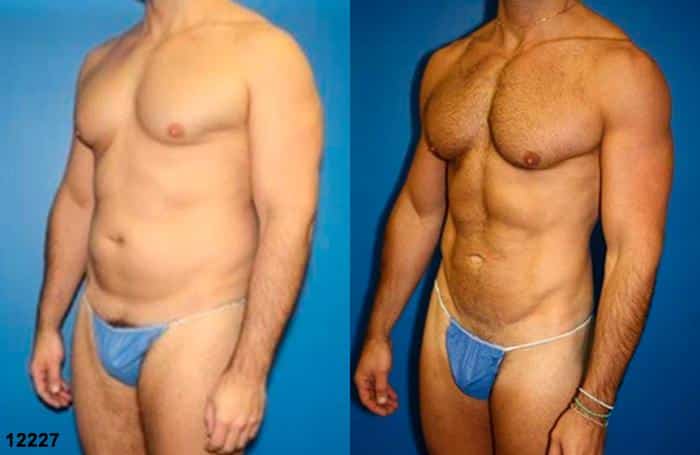
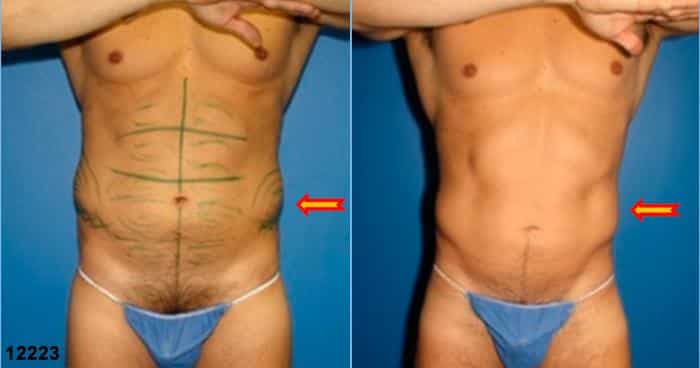
That’s why our plastic surgeons offer patients who come to Gotham Plastic Surgery in New York City from far and wide our unique BodyBanking® procedure. This innovative method of body contouring, combined with our MuscleShadowing® technique, can transform your body into a sculpted, natural-looking powerhouse.
Before and After Body Banking
Thank You
Thank you for contacting us. A member of our team will contact you shortly!
Post Operative Rhinoplasty Instructions
Dr. Philip Miller, a plastic surgeon in New York, NY, prides himself on giving patients comprehensive care, both before and after their procedures. Rhinoplasty is one of the most common forms of plastic surgery for both medical and aesthetic purposes. To ensure you experience the best results, this rhinoplasty guide will walk you through what to expect and how to care for yourself after surgery. Our team will discuss these instructions with you after your surgery and make sure you have everything you need. We look forward to sharing your journey and guiding you through the care and healing process.
WHAT TO EXPECT AFTER RHINOPLASTY SURGERY
Although rhinoplasty is a straightforward procedure, we recommend having another adult with you on the day of your procedure to take you home and care for you after you’ve successfully completed surgery. You should also plan to have someone stay with you the first night in case you experience any discomfort or serious side effects. Although it is rare, if you experience any serious discomfort or unusual symptoms, be sure to seek immediate medical attention.
For the first few days after your surgery, it is important to avoid touching or jarring your nose. Keep your head elevated at all times (even when you’re sleeping) the first night. We recommend sleeping in a comfortable reclining chair or propped up in bed to aid the healing process. To alleviate any discomfort and reduce natural swelling around your nose and eyes, use cool compresses during the first 48 hours after surgery. Gently drape a washcloth soaked in cold water across each of your eyes in twenty-minute intervals. You may switch out the cloths as often as needed to keep the area cool and comfortable. After the first few days, you will begin to see and feel great improvement.
While every risk after rhinoplasty surgery cannot be eliminated, there are some things you can do to minimize certain risks:
1.) Protect Your New Nose: Be Careful
Your new nose after a rhinoplasty surgery will be in a protective cast for the first week. It goes without saying that once the cast is removed, you should take great care to guard your nose against any trauma or impact.
2.) Sleep With Your Head Elevated
In the first few days after your nose job, try to keep your head slightly elevated and avoid contact with your pillow or other objects.
3.) Avoid Strenuous Activity
It takes 3-6 weeks to fully recover from a nose job. Even when you’re feeling better during this time, you should avoid strenuous activity or anything that presents a risk to your new nose after a rhinoplasty surgery.
MAINTENANCE AND DAILY CARE
Daily care and maintenance are simple and straightforward. Your nurse will review these steps with you after surgery, and our team is available in person or over the phone to answer any questions that arise throughout your journey.
Check out the video below as New York surgeon Dr. Philip Miller explains the proper post-operative care after a Rhinoplasty.
For Week 1:
For Weeks 2-3:
1. Use a cotton swab soaked in hydrogen peroxide to gently clean the suture lines inside your nose three times a day. After cleaning the stitches, coat the area with Vaseline to keep the skin supple. The stitches inside your nose will dissolve on their own as your skin heals.
2. When bathing and showering, be sure to keep the tape and splint on your nose dry. We recommend baths as opposed to showers. You can take a shower on your second day after surgery provided that you keep the area dry. Avoid getting water or bath products on the skin near your nose as it may irritate the surgery site. Only use gentle shampoos and cleansers for the first few weeks after surgery.
3. You may experience some minor bleeding or seepage around your sutures as the skin heals. However, if bleeding persists more than ten minutes, or if it is accompanied by fever, severe pain, swelling or infection, be sure to contact our team immediately.
4. We will bring you back to the office to remove any external stitches seven days after surgery. If you do not have external stitches, we will let you know when we need to see you again to remove the tape and split supporting your nose.
5. After the tape and splint are removed, be gentle with your nose for the next few weeks. Be sure to wash your face twice a day with mild soap to reduce the natural build-up of dust, oil and dirt on your skin.
For Weeks 2-6:
WHAT POST-SURGERY SYMPTOMS ARE NORMAL?
Don’t worry, some side effects are completely normal following surgery. This does not mean anything is wrong, but be mindful of your symptoms. Discuss any changes with our team or call if your side effects seem abnormal. These are the types of mild side effects you may expect after surgery:
Swelling – Most swelling should subside after two to three weeks, but it may take up to three months for swelling to completely dissipate. In the first few days, swelling may increase and your nose may still appear swollen after your splint is removed. Don’t be alarmed, this is all part of the healing process.
Discoloration – Discoloration and bruising may appear around the surgery site. Some patients will experience light, yellow bruises while others may see deep blue and red marks. This will vary by person, but should not be accompanied by extreme pain.
Numbness – As your nose heals, you may experience numbness, tingling or mild discomfort and itching.
Bleeding – Bleeding may occur from time to time, but it should stop quickly. Apply light pressure near the bleeding and wait. If bleeding lasts longer than 10-15 minutes, please contact our office.
Depression – Some patients feel a mild depression or disappointment after cosmetic surgery while swelling is going down and the healing process is taking place. It may take two to three months for your nose to fully heal, so be patient with yourself and your body during that time.
Eye Glasses – If you wear glasses, talk to your nurse about how to protect your nose from changing shape due to the pressure of the glasses. You may wear your glasses while your nose is still splinted, but they should be supported or suspended from your forehead or cheeks for six weeks after the splint is removed. Contact lenses are typically safe to wear two weeks after surgery. Your nurse can discuss options with you to ensure your vision is not impaired during this time.
RESTRICTIONS
For the first two weeks, avoid exercise or strenuous physical activity, pulling clothing over the face, blowing and rubbing your nose, or any large facial gestures (such as yawning or vigorous chewing). You should also use a baby toothbrush on your upper teeth for the first two weeks after surgery. Try to avoid driving, contact sports, and swimming. To learn more about rhinoplasty, visit ncbi.nlm.nih.gov
IN SUMMARY
Healing varies from person to person, but is often a mild and quick process. No matter what your experience is like, our team is here for you every step of the way. All visible healing should be completed after four to six weeks, but you may still experience changes throughout the first year after surgery. We’re here for you. Don’t hesitate to reach out to Dr. Miller today to schedule your rhinoplasty in New York.
Photo landing
MailChimp for WordPress: Form Preview
Juvéderm
Dr. Philip Miller offers several outstanding FDA-approved volume enhancers, including Voluma, Ultra, Ultra Plus, and Volbella from Juvéderm, which is the number one selling collection of hyaluronic acid fillers in the United States. Each product in the Juvéderm filler collection adds volume to different areas of the face and is recommended to lift your cheeks, smooth smile lines, or plump your lips. Juvéderm’s subtle results look natural and are long-lasting.
Dr. Philip Miller, MD, FACS specializes exclusively in facial plastic surgery and nonsurgical cosmetic treatments in New York. He has over 20 years of experience and is recognized as an expert in facial rejuvenation procedures, such as Juvéderm. Dr. Philip Miller has been featured on Discovery Health, TODAY, CNN, ABC, Forbes, and Elle BAZAAR, and he is frequently invited to share his aesthetic techniques with medical peers at national facial plastic surgery meetings.
What is Juvéderm®?
The Juvéderm collection offers dermal fillers that are made from hyaluronic acid (HA). HA is a natural substance within the skin that delivers nutrients and helps the skin to retain its softness and moisture while adding volume. As we age, hyaluronic acid (HA) is naturally depleted, and our skin loses moisture, volume, and strength. Juvéderm is FDA-approved to replace volume by injecting an HA dermal filler into specific areas of the skin to achieve beautiful results. Each product in the Juvéderm dermal collection of fillers is designed with a modified form of HA. Dr. Philip Miller offers Voluma, Ultra, Ultra Plus, and Volbella for patients who are seeking specific results.
As we age, our skin loses elasticity, and we experience moderate to severe parentheses lines, folds, and wrinkles that appear on the face and around the nose and mouth. Serums and creams may provide some relief but can only work on the skin’s surface. Lines, furrows, creases, thinning lips, and smile lines are common aging problems that can be improved with facial plastic surgery or chemical or laser peels, but the recovery time and expense can be greatly reduced when you choose an alternative solution. The results can provide you with the long-lasting results that you desire. Juvéderm fillers offer a reasonable alternative to surgery by adding volume to a depressed or wrinkled area using injections. Each Juvéderm volume enhancer has unique benefits that treat specific issues.

Which Juvéderm treatment is right for you? Here is a brief introduction to the Juvéderm products offered by Dr. Philip Miller.
Juvéderm Voluma™
Voluma is an injectable gel that is applied to the cheek area to correct age-related volume loss in adults who are over the age of 21. Voluma is a non-surgical cheek filler that beautifies the skin by restoring lost volume, lifting loose skin, and reshaping the cheeks. The Voluma™ results may be experienced for up to two years.
Juvéderm Vollure
Vollure is injected into facial tissue to correct moderate to severe facial folds, such as nasolabial folds and smile lines, in adults over the age of 21. Juvéderm Vollure goes deep into the layers of the skin to add volume to smooth lines and folds.
Vollure is applicable for moderate to severe folds, lines, and wrinkles. It is an excellent treatment that provides outstanding results for men and women for up to 18 months.
Juvéderm Lip Collection
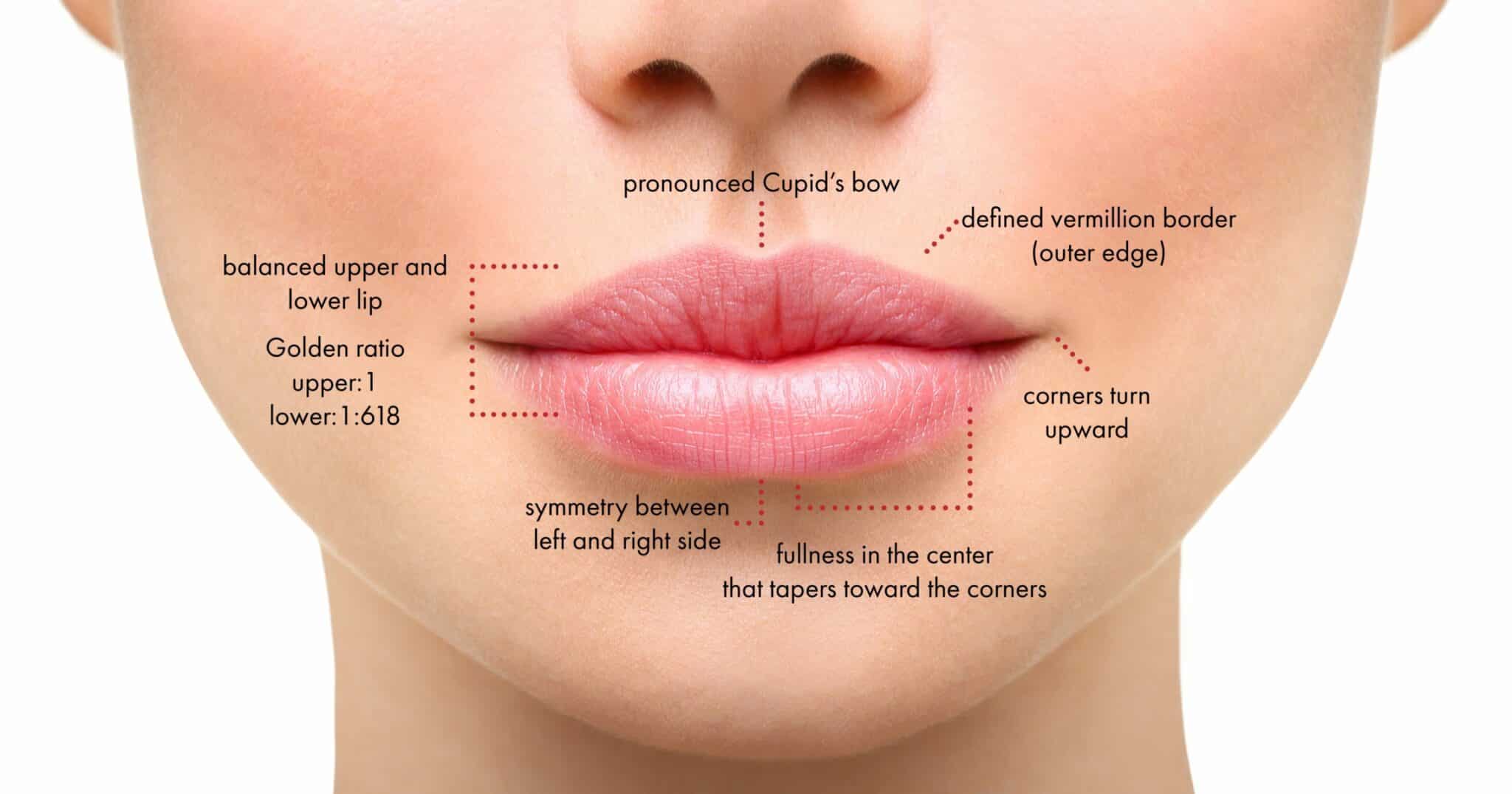
Juvéderm Ultra and Juvéderm Volbella are two formulations in the Juvéderm line that are ready to meet your unique needs. Ultra adds fullness to lips, and Volbella adds subtle volume and softens vertical lip lines. Dr. Phillips offers two Juvéderm lip options so that his patients can walk away with the exact look that they are seeking.
Juvéderm Ultra and Ultra Plus
Ultra and Ultra Plus are FDA-approved for injection into the lips and the perioral area for lip enhancement and augmentation in adults over the age of 21. Ultra Plus includes the addition of lidocaine for added comfort during the injection. Both Ultra and Ultra Plus add fullness and plump naturally thin lips or lips that have thinned due to age. This treatment is perfect for individuals who want plump lips and for those who desire the restoration of volume that has been lost due to age. Ultra and Ultra Plus last up to one year.
Juvéderm Volbella™
Volbella is FDA-approved for lip augmentation and for the correction of perioral lines in adults who are over the age of 21. It is known as the best choice among non-surgical treatments for the subtle beautification of the lips and the reduction of fine lip lines. Volbella provides refreshed, natural-looking lips that match each patient’s unique facial structure. Dr. Miller customizes each treatment to match the patient’s desired outcome. Volbella treats vertical age lines from around the lips and adds beauty to the face and kissably-soft definition to the lips. Volbella lip treatments are affordable and accessible, plus they require no downtime and last up to 12-months.
What to Expect During the Dermal Filler Procedure
During your facial filler treatment in New York, Dr. Miller will follow your prescribed treatment plan and will complete a series of injections, which may include adding lift and shape to your cheeks, filling in lines, wrinkles and folds, replacing lost volume to your lips, or adding new fullness to your lips. To ensure that the filler injection is evenly distributed and that you walk away with smooth, natural results, Dr. Philip Miller may gently massage the area. He will determine the number of doses that he must inject to achieve your desired results, and he may apply ice to reduce swelling and redness.
Your Juvéderm results will be immediate and long-lasting. The treatments are comfortable, and the recovery period is minimal. If you have Voluma injections, you will notice an immediate increase in facial volume and a gentle lifting of your cheeks. Voluma, Ultra, Ultra Plus, and Volbella™ results are immediate and will depend on the treatment that you have completed and on the treatment plan that is created by Dr. Miller during your consultation.
Touch-up treatments every nine months, 12 months or 18 months are recommended to maintain Voluma, Ultra, Ultra Plus, and Volbella by Juvéderm. Dr. Miller will provide you will follow-up procedures to ensure that you keep the look that you love.
What is the Recovery Like?
The recovery is mild and may include mild bruising and swelling, which can be covered with makeup and usually fades within 24 hours.
What to Expect During Your Juvederm Consultation
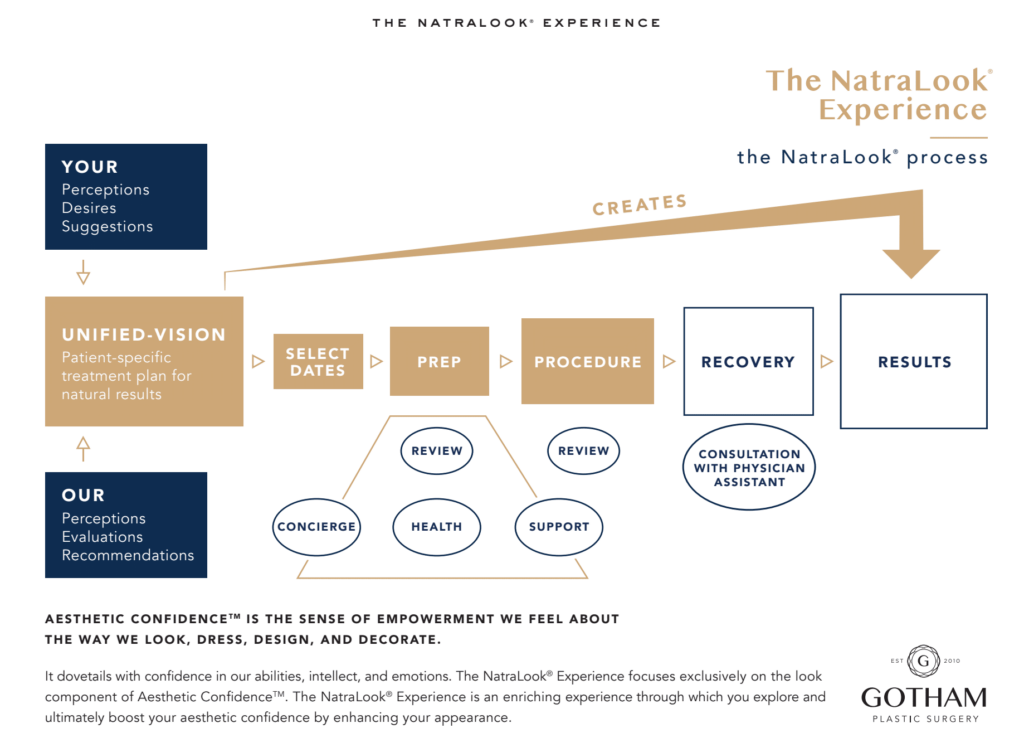
Dr. Miller’s NatraLook® Experience ensures every patient achieves their desired results. During your Juvéderm consultation in New York, Dr. Philip Miller will review your medical history and complete a full examination. After examining your facial anatomy and determining the health of your skin, he will offer you the best, personalized treatment options and will describe the benefits of the Juvéderm procedure that he has recommended. Dr. Miller will discuss your aesthetic goals and will provide you with an individualized treatment plan that will help you to achieve the look you desire.
The Ideal Juvéderm Candidate
The ideal candidate is over the age of 21, in good mental and physical health, and has realistic expectations. The ideal dermal filler candidate may also desire quick, long-lasting results with minimal downtime.
Juvéderm Cost
The cost of Voluma, Ultra, Ultra Plus, and Volbella treatments by vary depending on the areas being treated and the number of injections that are needed. We work with each patient’s budget to help them achieve their desired results whenever possible.
To learn more about dermal fillers and how to have a successful treatment, visit ncbi.nlm.nih.gov
FAQ
Q. Am I an ideal dermal filler candidate?
A. You may be an ideal candidate if you are older than 21 and are healthy with realistic expectations. Dr. Miller may recommend Juvéderm if you want to add fullness to your cheeks or lips or conceal lines and wrinkles by restoring lost volume.
Q. What should I expect at my consultation?
A. During your consultation, you will meet privately with Dr. Philip Miller. He will listen to your cosmetic goals and desires and he can provide you with an affordable Juvéderm treatment plan. Dr. Miller will share before and after photos with you and will provide you with a treatment plan that is customized for you.
Q. When can I return to work?
A. No downtime is required after a dermal filler treatment. You can return to work immediately after the treatment. Mild bruising may be experienced, which is typically resolved within 24 hours.
Dr. Philip Miller, MD, FACS specializes exclusively in facial plastic surgery and nonsurgical treatments, such as Voluma, Ultra, Ultra Plus, and Volbella treatments in New York, New York. Call us to request a consultation with Dr. Miller or schedule an appointment online. We look forward to meeting you!
Next, read about Kybella.
Wrinkle Treatments and Dermal Fillers
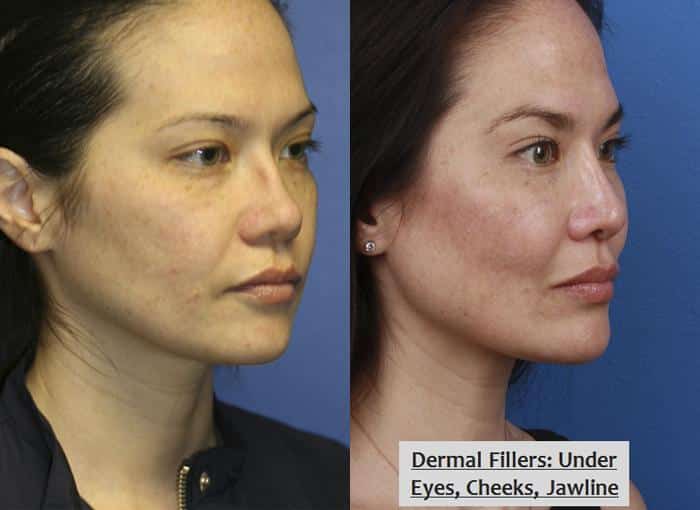
Wrinkles and volume loss are some of the most common signs of facial aging. As people age, their skin naturally produces less collagen and elastin, resulting in fine lines, loose skin, and hollows in the temples, cheeks, and under eyes. Philip J. Miller, MD, FACS, located in New York City, offers a wide range of minimally-invasive solutions to wrinkles and volume loss, such as injectable neuromodulators and dermal fillers.
Botox® — or Botulinum toxin
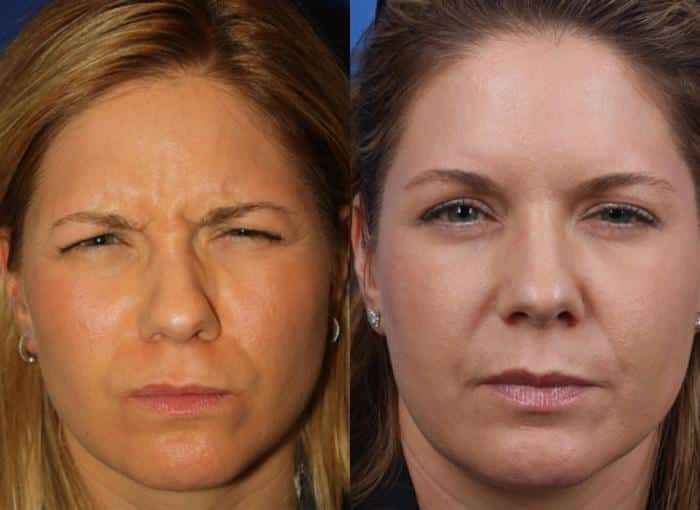
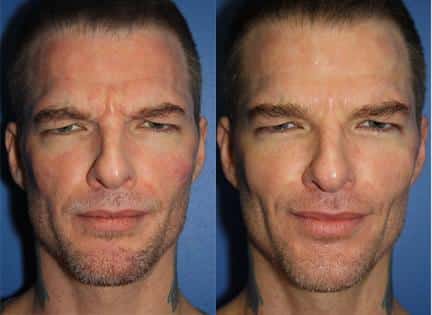
Unlike popular fillers or “volume” treatments such as Radiesse, Restylane, or Juvéderm that boost or inflate an area where there is a wrinkle or depression, Botox relaxes the muscles pulling on the skin to form the wrinkle. Botox is superior to dermal fillers for minimizing frown lines, horizontal furrows on the forehead known as surprise lines, and crow’s feet around the eyes. It can also be used around the lips, on either side of the nose, or on the bands of the neck.
Other advantages of Botox are that it causes no allergic reactions so no test dose is required, and there is no recovery period required after the injection. Finally, those with needle anxiety can relax because the needle used for Botox injections is finer than a strand of hair.
Dermal Fillers: Restylane, Radiesse, Juvéderm
The reality is that not every skin problem can be improved with facial plastic surgery, chemical or laser peels, or even Botox. Examples of these skin problems could be the following: (1) The crease between your eyebrows or the furrow formed at the corner of your mouth is too deep; (2) You might have a small crease between the corner of your mouth and chin (known as the jowls) causing you to look angry all of the time, or (3) You might have persistent frown lines or crow’s feet that cannot be resolved with Botox.
While certain operations may improve these, the recovery time and expense may be more than you are willing to invest at this point. A reasonable alternative is to “inflate” a depressed or wrinkled area with a dermal filler.
There are pros and cons to each volume enhancer. Which one is right for you? Here is a brief introduction to the products.
Radiesse
Radiesse is a longer lasting method to reduce the appearance of facial lines and folds. The injectable product can last for a year or so and has shown little to no allergic reactions or other side effects attributed to other injectable methods. One of the most recent FDA-approved products for the treatment of facial “deflation” or wrinkle reduction that we offer at our Manhattan office, Radiesse, consists of calcium hydroxylapatite (a derivative of human bone) mixed into an easy-to-use-gel foam.
Studies have shown that Radiesse remains soft for long periods of time when injected into the soft facial tissue. This is the preferred treatment for nasolabial lines, which are the wrinkles or furrows that form from the side of the nose to the side of the mouth.

Restylane and Juvéderm
Known as the most common injectables, Restylane and Juvéderm, last 6-8 months. They are made of a purified form of hyaluronic acid, a material that is naturally found in the body. Restylane and Juvéderm work well for lip enhancement and as brow and fine wrinkle solutions. Some options available include Juvéderm Voluma, Vollure, and Volbella, as well as Restylane Lyft and Kysse.
To learn more about dermal fillers, visit www.fda.gov
Volume Enhancement
Sagging skin is not the only consequence of aging. Not only does facial skin sag with time, but facial fat also deflates similar to a balloon stuck with a pin. Before realizing the role of deflation in the aging process, we’ve done facelifts to pull the loose skin. Sometimes the results are good, but sometimes the skin looks stretched and unnatural. Two solutions to the deflation problem are Sculptra and fat injections.
Sculptra
Sculptra works much like a seed. After it is injected, it looks great for a day. Then, the volume goes down by the next morning. Over the next weeks or months, your body stimulates collagen volume in response to those “seeds.” The result is a gradual and increased inflation of depressed or hollow areas. 2 or 3 treatments are often necessary. Sculptra contains poly-L-lactic acid and is injected into the face after it has been anesthetized with a cream.
Fat Injections
Fat injections use your own fat from the inside or outside of your leg or your belly to provide volume enhancement to the face. Fat is harvested, washed with saline, and reinjected into the areas of the face that need inflation. There is some controversy regarding how long transplanted fat survives. As a result, you should be prepared to received multiple treatments. Also, fat injections produce the best results when combined with surgical procedures; they cannot be used alone to cure all facial aging problems.
Intense Pulse Light Therapy/PROLITE
Specifically designed for patients suffering from rosacea and other skin discolorations, Intense Pulse Light Therapy (IPL) or ProLight Facial technology helps eliminate redness and pigmentation discolorations from sun damage. The treatment is performed by a gentle light pulse that is delivered to the skin over several 15 to 30-minute treatments which are administered in three-week intervals.
Between 4 and 6 treatments are necessary to achieve desired results. Diminished (or disappearing) redness, dark spots, and discolorations occur as well as reduced pore size. Equally beneficial is that little or no bruising occurs with this treatment, and there is no recovery period.
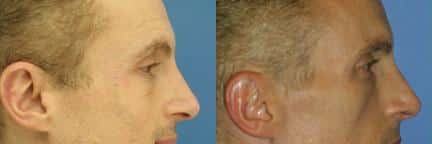
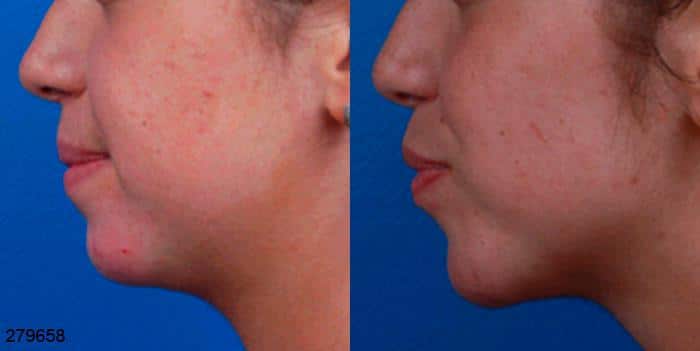
Before and After Photos
*Individual patient results can vary

Contact our New York-based Professionals.
Contact Dr. Miller and his team of skin specialists in New York to learn about the latest and most effective wrinkle treatments. Before recommending treatment, Dr. Miller will work will you to create a customized treatment plan through the NatraLook® Process. Utilizing various injectables, Dr. Miller can restore facial volume, reduce deep wrinkles, and help rejuvenate and lift the face.
Next, read about Juvéderm.