The Subway in New York City
The subway system in New York City is developed and highly efficient. Afterall, it has to be because of the heavy traffic that overcomes the city. The subway system is made up of 27 train services and a ride on the train is about $3.00. The subway system is the largest and most efficient in the country due to how essential it is, and it can be used to get just about anywhere in the city without much walking.
Despite the efficiency, there are some downsides to the subway. The subway is usually not very clean at most stations due to the trash and debris left by the thousands of passengers that use it everyday. Additionally, this can lead to unexpected guests such as insects and rodents. The New York subway has been functioning since the early 1900’s, so it is no surprise how dirty they are.
Despite the uncleanliness, it is still worth a ride just for the experience. You can get to all your favorite destinations in a matter of minutes, and there are constantly trains arriving in case you miss one or take the wrong car. Additionally, the graffiti art in the area is very admirable and quite unique to New York. Whether you’re trying to go shopping in Soho or go to work at Wall Street, the subway system is an essential part of New York.
Learn more about New York Here
Traffic in New York
New York City is known for its awful traffic. Even right and left turns were made illegal so that there would be less traffic accidents, however, the traffic is still almost unbearable.
Since the traffic is so bad in New York City, public transportation is the most ideal way to get around the city. Specifically, the subway system serves as the most effective form of transportation. As a result, the subway system is one of the most advanced in the world.
Traffic peak times in the city are from around 8:00-10:00am in the morning and 4:00-7:00 at night. Traffic peaks when people travel to and from work and school, holiday weekends, and when car accidents happen. When traffic is at its height, New York City is backed up in gridlock. This can interfere with individuals appointments, meetings, show times at Broadway, and other plans, which matches the hectic nature of the ever-moving city.
Traffic is especially heavy around tourist attractions that New York is famous for, such as the Brooklyn Bridge, Broadway, and Central Park. The Brooklyn Bridge is a hotspot for pictures and tourism, so there is not just automobile traffic, but pedestrian traffic as well.
Learn more about New York Here
About New York City
New York City is not only the city that doesn’t sleep but is also known for fashion, the subway, theater, traffic, shopping, pizza, finance, and so much more.
There are five boroughs that make up New York City–Manhattan, Brooklyn, Queens, The Bronx, and Staten Island–and each one has its own charm. In the center, Manhattan is one of the most functioning cities and desired locations to visit in the world.
Aside from incredible bagels and pizza, from the tap water New York is famous for, Manhattan is a fast-paced city where busy people always have somewhere to be, causing traffic left and right. The atmosphere of the city is what draws so many individuals to explore and often move to New York City.
New York City is a multi-faceted city, excelling in art, business, food, and more. The attractions are endless, as new trends and fads continuously change the city. However, one thing with always be timeless in New York City, and that is the energy that sweeps so many off their feet. Whether it is actors coming to fulfill their dreams of performing on Broadway or business people completing their goals of working on Wall Street, The City of Dreams awaits.
Learn more about New York Here
excel® V+ by Cutera®
If you’re ready for clear skin again — free of visible veins, hyperpigmentation, unwanted hair, and scars — the groundbreaking excel V+ by Cutera® makes it happen. The excel V+ is the latest generation of high-powered, precise, dual-wavelength lasers, and Gotham Plastic Surgery is the first practice in all of New York City to offer this advanced laser therapy.
What makes the excel V+ better than other lasers?
The excel V+ is the first laser to feature a micro-pulsed energy delivery system that’s so precise and powerful that it can break apart the pigment in the deepest lesions without affecting your surrounding, healthy skin.
The excel V+ utilizes CoolView™ sapphire technology to keep your skin comfortable and cool without the need for numbing gel, even as it zaps and eliminates:
- Rosacea
- Diffuse redness
- Sunspots
- Spider veins on the legs (telangiectasias)
- Cherry angiomas
- Fine lines and wrinkles
- Enlarged pores
- Facial rejuvenation
- Collagen stimulation
- Bruises
- Freckles
- Mild-to-moderate acne
- Acne scars and general scars
- Laser hair removal for small areas (perfect for small areas like armpits)
In short, you can use the excel V+ to treat rosacea, sunspots, veins, wrinkles, scars, unwanted hair and more on both your face and body.
You can get the excel V+ at any time, but spring is the perfect time to book some facial rejuvenation and treat pesky spider veins to help get summer ready.
Find yourself with sunspots at the end of summer? No problem! Book a “Summer Clean Up” treatment at the end of summer to remove sunspots (just make sure you no longer have a tan and haven’t tanned within 4 weeks prior to treatment) and the excel v+ can restore your even skin tone.
Does the excel V+ treat large lesions, too?
The excel V+ features advanced technology that breaks apart and eliminates excess pigment in lesions ranging in size from just 2 mm to as large as 16 mm in diameter (roughly the size of a pencil eraser to the size of a penny). Your Gotham Plastic Surgery expert adjusts the scope of the laser’s delivery in minute increments to ensure that all of the heat is delivered to the hyperpigmented regions of your skin or to visible veins and lesions.
Why does the excel V+ feature two different wavelengths?
The excel V+ lets your doctor choose from two clinically proven wavelengths — micro-pulsed 532 nm and 1064 nm — so that they can treat both superficial and deep lesions, veins, and wrinkles. Your doctor adjusts the wavelength depending on the type of lesion they’re treating. Cutera’s unique truPulse technology guarantees consistent, reliable outcomes.
How does the excel V+ remove hyperpigmentation and redness?
Hyperpigmentation is a condition in which patches of skin become darker in color than the normal surrounding skin. When you want to eliminate visible red veins, hyperpigmented lesions, or diffuse redness, your doctor targets the chromophores melanin and oxyhemoglobin. These two pigments are responsible for the red and brown color of unsightly lesions and veins. The laser energy breaks up the pigment so that your body can process it and eliminate it over time.
You may notice that your skin looks clearer after just one treatment. Some lesions may dry up and flake off over the next several weeks. As your skin rebuilds itself over the next weeks to months, you’ll notice that your complexion is clear, even, smooth, and free from disfiguring veins and spots.
How does this laser improve wrinkles and scars?
The laser energy from excel V+ can be directed at fine lines and wrinkles to stimulate neocollagenesis, which is a technical word for the healing process in which your skin starts to rebuild itself with the building blocks collagen and elastin. The laser’s energy can also break up the disordered collagen in scars and stimulate neocollagenesis to rebuild smoother, more orderly skin. For shallow, pitted scars — such as acne scars — the laser stimulates the growth of healthy new skin to fill out the depression so that your skin is smoother and more even.
Does this treatment hurt?
The excel V+ targets its micro-pulsed energy to the treated lesions, veins, and wrinkles only, so that your surrounding, healthy skin is untouched. The excel V+ also features advanced CoolView™ technology that uses the power of sapphires to keep your skin at a comfortable temperature throughout your treatment, without the need for numbing creams or gels or any type of anesthetic.
How long do excel V+ treatments take?
Your clear-skin and rejuvenating treatments with the excel V+ are up to five times faster than those of other lasers, like the VBeam laser. Dr. Miller treats a single area in just 3-5 minutes. You can schedule your session during your lunch hour, or in the middle of a busy day without creating a time pinch.
Depending on your needs, you may need a series of treatments to get the improvement you desire. Our team can book your follow-up treatments ahead of time and send reminders when necessary. While you may notice an improvement in your skin’s clarity and tone directly after your first treatment, the benefits continue to accrue over the 2-4 months as your skin rebuilds itself with new collagen and elastin.
To be among the first in Manhattan, New York to experience the unsurpassed power, precision, and performance of the excel V+, call our friendly team at Gotham Plastic Surgery today, or book your own appointment using our convenient online form.
Jeuveau
You’re not going to make the same mistakes your mom did by waiting until your wrinkles are set in stone before trying to erase them. You’re all about getting ahead of a problem and making that one “stitch” before you need nine. You’re all about pre-juvenation, not almost-too-late re-juvenation.
And since you’re not following mama’s footsteps, you’re not waiting too long to use her favorite wrinkle-smoother either. Not only do you have Botox, Xeomin and Dysport to keep your appearance line-free, but there’s a new neuromodulator offered in our New York office. Hello, Jeuveau™!
What’s Jeuveau?
Jeuveau is a brand-new, FDA-approved neuromodulator made from a proprietary 900 kDa purified botulinum toxin type A formulation. Jeuveau rocked clinical trials with rapid onset of action and long-lasting results making it comparable to other neuromodulators like Botox. To learn more about it’s FDA approval, visit accessdata.fda.gov

- Frown lines (otherwise known as 11s)
- Crows’ feet (squint lines)
- Forehead furrows (horizontal lines)
- Gummy smile
- Masseter reduction
- Brow or lip lift
Jeuveau is nouveau
Jeuveau is so new it won’t hit the market or the Gotham Plastic Surgery New York City office until Spring 2019. If you want to be the among the first adopters to try the newest neuromodulator in almost 10 years, call us for more information.
Jeuveau is fast and easy

Jeuveau treatments take 20-30 minutes or less to administer. You can schedule your first Jeuveau on your lunch hour and still have time to spare.
Within 2-3 days, your corrugators and/or procerus (the fancy names for your forehead muscles) decide to take a break from creating those pesky wrinkles for 3-6 months. And after your muscles relax, your skin does, too. You’ll have a smooth, relaxed look that conveys confidence and energy.
Jeuveau works hard
What really happened is you meant to get ahead of your frown lines. But they’re actually pretty deep at this point, thanks to all the deep thinking you do. No worries! Jeuveau is approved to smooth out all kinds of frown lines — including moderate to severe grooves.
Jeuveau lets you relax
Jeuveau works for up to 4-6 months, so you don’t have to worry about your worry lines. Just set up a re-touch appointment after your first treatment. Before long Jeuveau is as routine to your beauty routine as a haircut or manicure.
Jeuveau is safe
Jeuveau went through worldwide clinical trials — and passed with flying colors. As with any neuromodulator or drug, side effects are always possible so let your doctor know if you experience any unusual symptoms after Jeuveau. To learn more about Jeuveau, visit fda.gov
Stay tuned for more
Jeuveau is the lead launch product from Evolus™, a new performance beauty company that’s currently developing breakthrough products to make you look and feel your best. What’s coming down the pipeline? Keep in contact with Dr. Miller, New York City’s top facial plastic surgeon, and we’ll let you know about all of the available new therapies and those we’ll be offering soon.
Subscriber thank you
Thank you for subscribing to our newsletter!
Privacy Policy
THIS NOTICE DESCRIBES HOW MEDICAL INFORMATION ABOUT YOU MAY BE USED AND DISCLOSED AND HOW YOU CAN GET ACCESS TO THIS INFORMATION. PLEASE REVIEW IT CAREFULLY.
Philip Miller, MD, FACS
60 East 56th at Park Ave
New York, NY 10022
This Notice of Privacy Practices describes how we may use and disclose your protected health information to carry out treatment, payment or health care operations and for other purposes that are permitted or required by law. It also describes your rights to access and control your protected health information. “Protected health information” (PHI) is information about you, including demographic information, that may identify you and that relates to your past, present or future physical or mental health or condition and related health care services.
We are required to abide by the terms of this Notice of Privacy Practices. We may change the terms of our notice, at any time. The new notice will be effective for all protected health information that we maintain at that time. Upon your request, we will provide you with any revised Notice of Privacy Practices. You may request a revised version by accessing our website, or calling the office and requesting that a revised copy be sent to you in the mail or asking for one at the time of your next appointment.
1. Uses and Disclosures of Protected Health Information
Your protected health information may be used and disclosed by your physician, our office staff and others outside of our office who are involved in your care and treatment for the purpose of providing health care services to you. Your protected health information may also be used and disclosed to pay your health care bills and to support the operation of your physician’s practice.
Following are examples of the types of uses and disclosures of your protected health information that your physician’s office is permitted to make. These examples are not meant to be exhaustive, but to describe the types of uses and disclosures that may be made by our office.
Treatment: We will use and disclose your protected health information to provide, coordinate, or manage your health care and any related services. This includes the coordination or management of your health care with another provider. For example, we would disclose your
protected health information, as necessary, to a home health agency that provides care to you.
We will also disclose protected health information to other physicians who may be treating you.
For example, your protected health information may be provided to a physician to whom you have been referred to ensure that the physician has the necessary information to diagnose or treat you. In addition, we may disclose your protected health information from time-to-time to another physician or health care provider (e.g., a specialist or laboratory) who, at the request of your physician, becomes involved in your care by providing assistance with your health care diagnosis or treatment to your physician.
Payment: Your protected health information will be used and disclosed, as needed, to obtain payment for your health care services provided by us or by another provider. This may include certain activities that your health insurance plan may undertake before it approves or pays for the health care services we recommend for you such as: making a determination of eligibility or coverage for insurance benefits, reviewing services provided to you for medical necessity, and undertaking utilization review activities. For example, obtaining approval for a hospital stay may require that your relevant protected health information be disclosed to the health plan to obtain approval for the hospital admission.
Health Care Operations: We may use or disclose, as needed, your protected health information in order to support the business activities of your physician’s practice. These activities include, but are not limited to, quality assessment activities, employee review activities, training of medical students, licensing, fundraising activities, and conducting or arranging for other business activities.
We will share your protected health information with third party “business associates” that perform various activities (for example, billing or transcription services) for our practice. Whenever an arrangement between our office and a business associate involves the use or disclosure of your protected health information, we will have a written contract that contains terms that will protect the privacy of your protected health information.
We may use or disclose your protected health information, as necessary, to provide you with information about treatment alternatives or other health-related benefits and services that may be of interest to you. You may contact our Privacy Officer to request that these materials not be sent to you.
We may use or disclose your demographic information and the dates that you received treatment from your physician, as necessary, in order to contact you for fundraising activities supported by our office. If you do not want to receive these materials, please contact our Privacy Officer and request that these fundraising materials not be sent to you.
Other Permitted and Required Uses and Disclosures That May Be Made Without Your Authorization or Opportunity to Agree or Object
We may use or disclose your protected health information in the following situations without your authorization or providing you the opportunity to agree or object. These situations include:
Required By Law: We may use or disclose your protected health information to the extent that the use or disclosure is required by law. The use or disclosure will be made in compliance with the law and will be limited to the relevant requirements of the law. You will be notified, if required by law, of any such uses or disclosures.
Public Health: We may disclose your protected health information for public health activities and purposes to a public health authority that is permitted by law to collect or receive the information. For example, a disclosure may be made for the purpose of preventing or controlling disease, injury or disability.
Communicable Diseases: We may disclose your protected health information, if authorized by law, to a person who may have been exposed to a communicable disease or may otherwise be at risk of contracting or spreading the disease or condition.
Health Oversight: We may disclose protected health information to a health oversight agency for activities authorized by law, such as audits, investigations, and inspections. Oversight agencies seeking this information include government agencies that oversee the health care system, government benefit programs, other government regulatory programs, and civil rights laws.
Abuse or Neglect: We may disclose your protected health information to a public health authority that is authorized by law to receive reports of child abuse or neglect. In addition, we may disclose your protected health information if we believe that you have been a victim of abuse, neglect or domestic violence to the governmental entity or agency authorized to receive such information. In this case, the disclosure will be made consistent with the requirements of applicable federal and state laws.
Food and Drug Administration: We may disclose your protected health information to a person or company required by the Food and Drug Administration for the purpose of quality, safety, or effectiveness of FDA-regulated products or activities including, to report adverse events, product defects or problems, biologic product deviations, to track products; to enable product recalls; to make repairs or replacements, or to conduct post marketing surveillance, as required.
Legal Proceedings: We may disclose protected health information in the course of any judicial or administrative proceeding, in response to an order of a court or administrative tribunal (to the extent such disclosure is expressly authorized), or in certain conditions in response to a subpoena, discovery request or other lawful processes.
Law Enforcement: We may also disclose protected health information, so long as applicable legal requirements are met, for law enforcement purposes. These law enforcement purposes include (1) legal processes and otherwise required by law, (2) limited information requests for identification and location purposes, (3) pertaining to victims of a crime, (4) suspicion that death has occurred as a result of criminal conduct, (5) in the event that a crime occurs on the premises of our practice, and (6) medical emergency (not on our practice’s premises) and it is likely that a crime has occurred.
Coroners, Funeral Directors, and Organ Donation: We may disclose protected health information to a coroner or medical examiner for identification purposes, determining cause of death or for the coroner or medical examiner to perform other duties authorized by law. We may also disclose protected health information to a funeral director, as authorized by law, in order to permit the funeral director to carry out their duties. We may disclose such information in reasonable anticipation of death. Protected health information may be used and disclosed for cadaveric organ, eye or tissue donation purposes.
Research: We may disclose your protected health information to researchers when their research has been approved by an institutional review board that has reviewed the research proposal and established protocols to ensure the privacy of your protected health information.
Criminal Activity: Consistent with applicable federal and state laws, we may disclose your protected health information, if we believe that the use or disclosure is necessary to prevent or lessen a serious and imminent threat to the health or safety of a person or the public. We may also disclose protected health information if it is necessary for law enforcement authorities to identify or apprehend an individual.
Military Activity and National Security: When the appropriate conditions apply, we may use or disclose protected health information of individuals who are Armed Forces personnel (1) for activities deemed necessary by appropriate military command authorities; (2) for the purpose of a determination by the Department of Veterans Affairs of your eligibility for benefits, or (3) to foreign military authority if you are a member of that foreign military services. We may also disclose your protected health information to authorized federal officials for conducting national security and intelligence activities, including for the provision of protective services to the President or others legally authorized.
Workers’ Compensation: We may disclose your protected health information as authorized to comply with workers’ compensation laws and other similar legally-established programs.
Inmates: We may use or disclose your protected health information if you are an inmate of a correctional facility and your physician created or received your protected health information in the course of providing care to you.
Uses and Disclosures of Protected Health Information Based upon Your Written Authorization
Other uses and disclosures of your protected health information will be made only with your written authorization, unless otherwise permitted or required by law as described below. You may revoke this authorization in writing at any time. If you revoke your authorization, we will no longer use or disclose your protected health information for the reasons covered by your written authorization. Please understand that we are unable to take back any disclosures already made with your authorization.
Other Permitted and Required Uses and Disclosures That Require Providing You the Opportunity to Agree or Object
We may use and disclose your protected health information in the following instances. You have the opportunity to agree or object to the use or disclosure of all or part of your protected health information. If you are not present or able to agree or object to the use or disclosure of the protected health information, then your physician may, using professional judgment, determine whether the disclosure is in your best interest.
Facility Directories: Unless you object, we will use and disclose in our facility directory your name, the location at which you are receiving care, your general condition (such as fair or stable), and your religious affiliation. All of this information, except religious affiliation, will be disclosed to people that ask for you by name. Your religious affiliation will be only given to a member of the clergy, such as a priest or rabbi.
Others Involved in Your Health Care or Payment for your Care: Unless you object, we may disclose to a member of your family, a relative, a close friend or any other person you identify, your protected health information that directly relates to that person’s involvement in your health care. If you are unable to agree or object to such a disclosure, we may disclose such information as necessary if we determine that it is in your best interest based on our professional judgment. We may use or disclose protected health information to notify or assist in notifying a family member, personal representative or any other person that is responsible for your care of your location, general condition or death. Finally, we may use or disclose your protected health information to an authorized public or private entity to assist in disaster relief efforts and to coordinate uses and disclosures to family or other individuals involved in your health care.
2. Your Rights
Following is a statement of your rights with respect to your protected health information and a brief description of how you may exercise these rights.
You have the right to inspect and copy your protected health information. This means you may inspect and obtain a copy of protected health information about you for so long as we maintain the protected health information. You may obtain your medical record that contains medical and billing records and any other records that your physician and the practice use for making decisions about you. As permitted by federal or state law, we may charge you a reasonable copy fee for a copy of your records.
Under federal law, however, you may not inspect or copy the following records: psychotherapy notes; information compiled in reasonable anticipation of, or use in, a civil, criminal, or administrative action or proceeding; and laboratory results that are subject to law that prohibits access to protected health information. Depending on the circumstances, a decision to deny access may be reviewable. In some circumstances, you may have a right to have this decision reviewed. Please contact our Privacy Officer if you have questions about access to your medical record.
You have the right to request a restriction of your protected health information. This means you may ask us not to use or disclose any part of your protected health information for the purposes of treatment, payment or health care operations. You may also request that any part of your protected health information not be disclosed to family members or friends who may be involved in your care or for notification purposes as described in this Notice of Privacy Practices. Your request must state the specific restriction requested and to whom you want the restriction to apply.
Your physician is not required to agree to a restriction that you may request. If your physician does agree to the requested restriction, we may not use or disclose your protected health information in violation of that restriction unless it is needed to provide emergency treatment. With this in mind, please discuss any restriction you wish to request with your physician.
You have the right to request to receive confidential communications from us by alternative means or at an alternative location. We will accommodate reasonable requests. We may also condition this accommodation by asking you for information as to how payment will be handled or specification of an alternative address or other method of contact. We will not request an explanation from you as to the basis for the request. Please make this request in writing to our Privacy Officer.
You may have the right to have your physician amend your protected health information. This means you may request an amendment of protected health information about you in a designated record set for so long as we maintain this information. In certain cases, we may deny your request for an amendment. If we deny your request for amendment, you have the right to file a statement of disagreement with us and we may prepare a rebuttal to your statement and will provide you with a copy of any such rebuttal. Please contact our Privacy Officer if you have questions about amending your medical record.
You have the right to receive an accounting of certain disclosures we have made, if any, of your protected health information. This right applies to disclosures for purposes other than treatment, payment or health care operations as described in this Notice of Privacy Practices.
It excludes disclosures we may have made to you if you authorized us to make the disclosure, for a facility directory, to family members or friends involved in your care, or for notification purposes, for national security or intelligence, to law enforcement (as provided in the privacy rule) or correctional facilities, as part of a limited data set disclosure. You have the right to receive specific information regarding these disclosures that occur after April 14, 2003. The right to receive this information is subject to certain exceptions, restrictions, and limitations.
You have the right to obtain a paper copy of this notice from us, upon request, even if you have agreed to accept this notice electronically.
3. Complaints
You may complain to us or to the Secretary of Health and Human Services if you believe your privacy rights have been violated by us. You may file a complaint with us by notifying our Privacy Officer of your complaint. We will not retaliate against you for filing a complaint.
You may contact us for further information about the complaint process. This notice was published and becomes effective on 09/6/2018.
Microdermabrasion
Say goodbye to dirt, oil and dead skin and hello to kissably soft, smooth skin with microdermabrasion. The ultimate in exfoliation, microdermabrasion gently clears out clogged pores and eliminates dead skin cells to completely restore your complexion. Microdermabrasion is also the perfect pre-treatment to prepare your skin for further facial treatments.
What is microdermabrasion?
Performed by one of our expert aestheticians in New York City, our practice uses the Bio-Brasion® Trinity Wet/Dry micro-derm which is a multilayered skin-resurfacing device that features a fine-diamond tip device that gently removes dead skin cells from your epidermis. The epidermis is the top layer of your skin.
When you’re younger, your skin easily sheds dead skin cells so that healthy new skin can take its place. As you age, this process slows down. Dead cells stay on the surface longer, making your skin look dull. Microdermabrasion sloughs off this outer layer so that your bright new skin shines through.
What conditions does wet/dry microdermabrasion treat?
We recommend wet/dry microdermabrasion to improve skin that’s been damaged by the sun or stressed by the environment or aging. Microdermabrasion is also a great way to improve the overall quality of your skin, and minimize the chance of acne breakouts or other problems. Wet/Dry microdermabrasion removes or improves:
- Fine lines
- Wrinkles
- Scars
- Brown spots
- Acne
- Dry skin
How does wet/dry microdermabrasion differ from regular dermabrasion?
Traditional microdermabrasion consists only of one pass of the microdermabrasion device over dry skin that has been sprayed with tiny crystals. While traditional microdermabrasion can be effective, it doesn’t get the dramatic outcomes that wet/dry microdermabrasion does. In this two-step process, Dr. Miller resurfaces your skin while dry but also while infused with nourishing treatments.
Depending on your needs, the wet treatments contain peptides to reduce inflammation and wrinkles, salicylic acid to treat acne and oily skin, or skin brighteners. He may even perform up to four passes over your skin in a single treatment to improve your problem areas.
Using a diamond tip rather than spray-on crystals also increases the safety and versatility of the procedure. Dr. Miller can even use the diamond tip around the delicate eye area.
What benefits can I expect from microdermabrasion?
Microdermabrasion immediately improves the look of your skin by revealing healthy, new skin. Your face looks brighter and more radiant. The microdermabrasion process also stimulates your skin to produce strengthening collagen and elastin, so you can expect:
- Smoother, silkier skin
- Tighter skin
- More evenly toned skin
- Smaller pores
- Fewer wrinkles and lines
- Less noticeable scars
- Less acne
- Reduced spots
Depending on the condition of your skin and your aesthetic goals, you may need a series of treatments. Dr. Miller also recommends regular touch-up treatments in our practice in New York City to maintain your healthy glow.
What happens when I get microdermabrasion?
Each wet/dry microdermabrasion treatment takes about 30 to 60 minutes. The process is so gentle that you don’t even need a numbing cream. Your skin may feel tight or look pinkish after your procedure, but this will resolve within 24-48 hours.
Is there any downtime with microdermabrasion?
There’s no downtime with wet/dry microdermabrasion. As soon as your procedure’s over, you can return to your regular activities. You can even apply makeup directly after wet/dry microdermabrasion.
Can I combine microdermabrasion with other anti-aging treatments?
Dr. Miller often recommends more than one anti-aging treatment to maximize your results. For example, combining wet/dry microdermabrasion with Co2 laser resurfacing can create dramatic improvement in your skin’s texture and tone.
Am I a candidate for microdermabrasion?
You may be a candidate for wet/dry microdermabrasion if your skill looks dull or wrinkled, or if you have acne, scars, or hyperpigmentation. Finding out whether microdermabrasion is the best procedure for you starts by consulting with Dr. Miller. Based on your skin quality and other issues, he may recommend wet/dry microdermabrasion, other treatments, or combination therapy. clinicaltrials.gov has more information on microdermabrasion and if it’s right for you.
Rejuvenate Your Complexion Today
Whether you’re targeting a specific skin condition, or just looking to improve your overall skin health, you deserve a more rejuvenated appearance. Whether used alone or in combination with other treatments, your skin imperfections will show visible improvement in overall tone, texture and brightness with microdermabrasion! If you have questions or want to schedule an appointment with us in New York City, please call (646) 791-3025 or fill out this contact form.
Sitemaps
XML Sitemap
Pages
- MedSpa Treatments
- Dr. Philip Miller
- Lower Facelift in New York City
- VR and Other Technologies
- RealSelf Reviews
- RealSelf Questions & Answers
- MailChimp for WordPress: Form Preview
- About
- Meet the Team
- Contact
- About New York City
- Traffic in New York
- Insurance and Financing Basics
- Lip Lift in New York City
- Microsurgery Procedures: Minimally Invasive Facial Rejuvenation
- The Subway in New York City
- Shopping in New York City
- Pizza in New York
- TV Shows in New York
- The Metropolitan Museum of Art
- Central Park in New York
- Broadway in New York
- Wall Street
- Patients
- Out of Town Patients
- Dr. Miller's Rhinoplasty Booklet
- Daxxify - Now Available!
- Reviews
- Subscriber thank you
- Chin Implants and Reduction in New York
- Thank You
- Pixie Ear Deformity Correction in New York
- New York City Office
- Areas We Serve
- Resources
- Restylane
- Common Rhinoplasty Terms
- Saddle Nose Surgery in New York
- Rhinoplasty Recovery 101
- Videos
- Post Operative Rhinoplasty Instructions
- Mini Facelift in New York City
- Cobra Neck Deformity Correction in New York
- Upturned Nose Correction: Refine Your Profile for Natural Facial Harmony
- Press
- Skin Color & Scar Camouflage
- Vertical Facelift in New York
- Privacy Policy
- Deep Plane Facelift in New York
- Pollybeak (Supratip) Deformity
- Droopy Nose (How to Get a Pointy Nose)
- Turkey Neck Treatment in New York
- Book Online Consultation
- Media
- Bulbous Nose Tip
- Bifid Nose Tip
- Ski Slope Nose Job in New York
- Weak (Receding) Jaw and Chin Correction in New York
- Unified Vision
- Neck Fat Removal in New York City
- Dorsal (Nose) Hump
- Tech Neck Lines Treatment in New York
- Male Plastic Surgery in New York
- Rhinoplasty & Facelift Case Studies
- Our Online Reputation
- Neck Liposuction in New York
- Neck lines removal in New York
- Dermal Fillers in New York
- Facial Liposuction in New York
- Double Chin Removal: Refine Your Profile for a More Sculpted Look
- Photo landing
- Crooked Nose
- Vectra 3D Imaging
- Blog
- Universities in New York
- Homepage
- Hotels in New York City
- Fashion in New York City
- Live Entertainment in New York City:
- Architecture in New York
- Bridges in New York
- The Neighborhood of Harlem
- Hell’s Kitchen NYC
- Double Chin Removal: Refine Your Profile for a More Sculpted Look
- Non-Surgical Facelift in New York
- Boxy Nose Tip
- Privacy Policy
- Revision Facelift in New York
- Facial Plastic Surgery Procedures
- Non-Surgical Medical Spa Services
- Facial Plastic Surgery
- Face-Tite™
- Neck-Tite™
- Neck Fat Removal in New York
- NatraLook
- Facial Surgery
- Neck Lift
- Facelift in New York
- Midface Lift in New York City
- Microsurgery: MicroLift Face in New York
- Brow Lift
- Blepharoplasty in New York City
- Chin and Cheek Augmentation
- Buccal Fat Removal in New York City
- Otoplasty
- Facial Reconstruction
- Lip Reduction in New York
- PDO Thread Lifts in NYC
- G.I. Jaw® - Jawline Augmentation
- Non-Surgical (Liquid) Facelift in New York
- Neck Lift in New York City
- Preservation Rhinoplasty in New York: A New Solution To an Old Problem
- Nose Surgery Options in New York
- Male Rhinoplasty
- Teen Rhinoplasty
- Alarplasty / Wide Nostril Reduction Surgery in New York
- Microsurgery: MicroRhinoplasty™ in New York
- Nose Reduction Surgery in New York
- Broken Nose Surgery
- Anatomy of the Nose
- Nose Reshaping
- Non-Surgical Rhinoplasty in New York City
- Balloon Sinuplasty
- Septoplasty
- Nose Tip Surgery in New York
- Septoplasty/Turbinate Reduction
- Virtual Rhinoplasty
- Nasal Surgery
- Rhinoplasty and Nose Jobs in New York
- Revision Rhinoplasty in New York
- Ethnic Rhinoplasty
- African American Rhinoplasty in New York
- Asian Rhinoplasty in New York
- Korean Rhinoplasty in New York
- Hispanic Rhinoplasty in New York
- Middle Eastern Rhinoplasty
- Indian and Pakistani Rhinoplasty in New York
- Jewish Rhinoplasty
- Body Surgery Procedures
- Spreader Grafts Rhinoplasty in New York
Posts
- 8 Nose Imperfections People Correct with Rhinoplasty
- These Will Be the Biggest Facial Plastic Surgery Trends for 2025
- Tip Drop After Rhinoplasty
- 8 Common Signs of a Bad Rhinoplasty
- Nose Surgery for Breathing
- How to Make My Face More Symmetrical
- What Age is Normal to Get Wrinkles?
- When to Choose a Nose Tip Surgery Over Full Rhinoplasty?
- What to Expect from Your Neck Lift Results
- How to Reduce Swelling after Lip Fillers
- Redefining Masculinity: The Rise of Male Rhinoplasty
- Which Facelift Lasts the Longest? Understanding Your Options
- Unveiling the True Costs of Facelift Procedures in 2024 in New York City
- Upturned Nose: What It Means and How Rhinoplasty Can Refine Your Profile
- Mommy Makeovers for the Face: Natural Rejuvenation for Every Mom
- Surgical or Liquid (Non-Surgical) Rhinoplasty: Which one is right for me?
- Rhinoplasty and Allergies: What You Need to Know
- Why MicroLift-Neck Is the Ideal End-of-Summer Treatment
- How Rhinoplasty Can Boost Confidence Before the Holiday Season
- Neck Lift vs. MicroLift Neck: Which Option Fits Your Summer Schedule?
- Facelift Recovery Time – What You Need to Know
- Do I need rhinoplasty or septoplasty?
- Can You Get Rhinoplasty Without Losing Your Natural Look?
- How Microsurgery Can Smooth Texture with Minimal Downtime
- Facelift Recovery 101
- Why do you have to wear a cast after rhinoplasty?
- Facelift When Young: Is It Too Early for Surgery? A Reflection on Aging Gracefully
- Facelift in NYC: Why Fall Is the Perfect Time to Refresh Your Look
- Buccal Fat Removal and Cheek Fat Reduction for Natural Facial Contouring
- The Complete Guide to Neck Lift Cost in 2025 in NYC: Everything You Need to Know
- 7 Types of Facelift Procedures: Which One is Right for You?
- Facing the Future: Choosing Between Non-Surgical and Surgical Facelifts
- Submandibular Gland Excision for Refined Neck Contour and Jawline Definition
- 6 Facts About Male Facelift You Didn't Know
- Facelift Alternatives in NYC: Freedom from Aging Without Overly Invasive Surgery
- Blepharoplasty vs. Brow Lift: What's Right for You?
- Facelifts and Micro (Mini) Facelifts: Refresh Your Appearance Naturally
- Is Revision Rhinoplasty Right for You? Find Out This Summer in NYC
- Considering Rhinoplasty? What to Know Before Summer
- Microsurgery in NYC: The Facelift Alternative for Busy Professionals
- Why Choose an ENT Specialist for Rhinoplasty
- I Hate My Nose After Rhinoplasty: What to Do?
- Dr. Philip J. Miller Recognized as a Castle Connolly Top Doctor for 15 Years
- Liquid Rhinoplasty: Your No-Downtime Summer Refresh in NYC
- Do I Need a Spreader Graft?
- How to Make Your Face Less Flat? 6 Surgical and Non-surgical Options
- Fall Skin Revival: Combine Procedures for a Full-Face Refresh
- Will a Facelift Remove Wrinkles? What to Expect from the Results
- Blepharoplasty: Bright Eyes for Holiday Season Photos
- Nose Taping After Rhinoplasty
- Your Guide to the Deep Plane Facelift and Neck Lift
- From Hollywood to NYC: Why 3D Facial Implants Are the New Standard in Custom Beauty
- Why the Deep Plane Facelift Looks So Natural
- Should You Get A Facelift After Massive Weight Loss?
- The Advantages of Using Customized Facial Implants
- Enhancing Neck Lift Results: The Significance of the Submandibular Gland
- Microsurgeries: Natural-Looking Results, Less Downtime
- What Is the Best Age for a Nose Job?
- Neck Lift: Get Summer-Ready by Starting This Fall
- Endonasal Rhinoplasty
- What To Do After Rhinoplasty
- Rhinoplasty Swelling Stages: What to Expect
- 3 Types of Facelifts You Need to Know About
- Facelift vs. Neck Lift
- What are the best procedures for neck tightening in 2025?
- Can Rhinoplasty Make Your Nose Smaller?
- Popular Plastic Surgery Procedures: A look at the Real Housewives
- Your Most Beautiful Nose: Understanding Your Nose Type
- What is Dorsal Reduction?
- What is External Rhinoplasty?
- 5 Clues You Might Need Revision Rhinoplasty
- 5 Reasons Winter is the Perfect Time for a Facelift in NYC
- 5 Ways to Make 2022 Your Most Beautiful Year Yet
- Types of Rhinoplasty
- Men and Facelifts: What You Need to Know
- 5 Rhinoplasty Trends in 2022
- Fresh Face for Fall
- 7 Questions to Ask Your Facelift Surgeon
- Functional or Cosmetic Rhinoplasty - Which One is Right for You?
- Health Benefits of Rhinoplasty
- Turn Back the Clock without Surgery
- What is the G.I. Jaw?
- Brow Lift or Eyelid Surgery: How to Refresh Aging Eyes
- Get Natural Results with a Customized Facelift
- Planning for Your Rhinoplasty: Open vs. Closed Technique
- Reasons for a Nose Job: Celebrities Spill
- Men and Plastic Surgery: A Post-Pandemic Trend
- 5 Times a Surgical Facelift is the Right Choice
- What Makes Rhinoplasty So Complex?
- 10 Facelift Myths Everyone Should Stop Believing
- One Anti-Aging Procedure You Wouldn't Expect, Rhinoplasty
- 3 Reasons A Facelift and Neck Lift Make A Perfect Match
- Define Your Chin, Enhance Your Look
- Tired of Your Aging Neck? Tackle Your Concerns this "Neckvember"
- Dr. Phillip Miller Restores Confidence for Domestic Violence Survivors With Pro Bono Surgeries
- Your Guide to Facelift Alternatives
- Why are Revision Rhinoplasties So Common?
- How do you choose a neck lift?
- Look and Feel Your Best for Your New York Wedding
- Top New York Facial Plastic Surgeon Reveals Difference Between Surgical and Liquid Face Lifts
- New York’s Top Facial Plastic Surgeon Reveals The Most Popular Face Slimming Procedures
- Dr. Miller Explains How Long Does A Rhinoplasty Take To Complete?
- Reduce Swelling Through Nasal Exercises
- 5 Interesting Facts About Rhinoplasty That Everyone Should Know
- Post Surgery Reveal: Check Out Satisfied Client's Rhinoplasty Results
- Revealing Results of a Rhinoplasty: Watch This Young Woman's Unbelievable Reaction
- Watch Dr. Miller Highlight His Patients Excess Cartilage
- Facing the Facts When It Comes to Rhinoplasty Options: How to Choose the Right Surgeon in NYC for Your Nose Job
- A Breakdown of the Most Popular Rhinoplasty Treatments: How to Choose a Trusted Surgeon in NYC
- Examiner Features: NYC facial surgeon allowing you to test-drive a nose job
- Five Top Common Nose Shapes with Photos
- Nasal exercises after rhinoplasty
- Lifters Vs Fillers: The Benefits of Voluma
- 3-D Rhinoplasty in NYC
- Dripping With Envy: Liquid Facelift in NYC
- Your Options After Botched Plastic Surgery
- How a Nose Job Can Make You Look Younger
- 7 Rhinoplasty Preparation Tips
- The Top 5 Eyelid Problem Areas Explained by a Facial Plastic Surgeon
- What's Behind the Sudden Rise in Rhinoplasty Popularity?
- Blepharoplasty: Brighten Your Eyes for a Youthful Look
- What's The Difference Between A General Plastic Surgeon And Facial Plastic Surgeon?
- What is the Cost of a Rhinoplasty?
- Stem Cell Facelift
- Three Facial Plastic Surgery Procedures You've Never Heard Of
- The Truth About Snapchat Dysmorphia
- Why Requesting A Celebrity's Nose Isn't Always Best for Rhinoplasty Goals
- When a Deal is No Deal: The Cost of a Quality Rhinoplasty
- The Rise of Medical Aesthetics for Men
- If You’re a Millennial, Here’s Why You Should Start Anti-Aging Treatments Now
- Restore Lost Facial Volume with Fillers or Implants
- The Life-Changing Benefits of a Facelift
- Are You an Ideal Candidate for Eyelid Surgery?
- Get “Tite” with These Great Treatments
- 5 Tips for Your Rhinoplasty Recovery
- Submental Liposuction Versus Neck Lift Surgery
- Which Laser Treatment is Right for You?
- Benefits of a Facelift and Why This Procedure is Right for You
- Proper Post-Op Nutrition
- Will Scar Tissue Be an Issue After Rhinoplasty?
- Is a Micro-Lift Facelift Right for You?
- How Does Rhinoplasty Affect My Facial Features?
- Protecting Your Nose After Rhinoplasty
- Can Buccal Fat Removal Enhance Your Facelift Results?
- Common Recovery Inconveniences After Facelift Surgery
- Your Deviated Septum: Causes, Effects and Treatments
- Can a Facelift Fix Your Acne Scarring?
- What You Need to Know About Male Rhinoplasty
- Sleep On Your Back to Preserve Your Facelift
- There’s No Shame In Rhinoplasty
- Four Things Off-Limits After Your Facelift
- A Facelift at Any Age: What to Expect
- Ten Things to Avoid After Rhinoplasty Surgery
- Could Weight Loss Affect Your Rhinoplasty Results?
- What Factors Could Make Me Ineligible for a Facelift?
- Is MicroRhinoplasty™ Right for You?
- Rhinoplasty Tips for Prospective Teen Patients
- How to Cover Up Your Post-Op Facelift Bruising
- Hot Rhinoplasty Trend: Should You Copy A Celebrity Nose?
- Six Things Patients Wish They Knew Before Facelift Surgery
- The NatraLook Process and Your Rhinoplasty
- Why Realistic Expectations Matter
- What We Can Learn from Successful Celebrity Rhinoplasties
- Preparing for a Post-Traumatic Rhinoplasty
- How to Get Natural-Looking Facelift Results
- What Makes Facelifts So Popular?
- Smoking and Rhinoplasty: What’s the Big Deal?
- Your Facelift Results on Day One
- Reasons to Have a Refinement Rhinoplasty
- Every Face Is Different: Customizing Facelift Surgery
- Five Tips for Designing Your New Nose
- Is There Really an Optimal Age for Your Facelift?
- Tips for Choosing Your Facelift Surgeon
- Keeping Your Nose Job a Secret
- Tips to Minimize Your Post-Op Facelift Risks
- Facelifts and Neck Lifts Fight Tech Neck
- What to Expect From Your Rhinoplasty Consultation
- How to Guarantee Your Best Facelift Results
- The Many Amazing Benefits of Rhinoplasty
- Can You Be Addicted to Rhinoplasty?
- Why Fix a Broken Nose?
- Leaving the House After a Facelift
- Weight Loss and Facelifts
- How to Be a Great Candidate for Facelift Surgery
- Ways to Speed Up Your Rhinoplasty Recovery
- Fast Facts About Ethnic Rhinoplasty
- Could a Facelift Be Your New Beginning?
- Is Your Selfie Addiction a Reason for Rhinoplasty?
- Pick the Perfect Time for Your Facelift
- Five Things to Consider Before Your Rhinoplasty
- Top Three Reasons for Revision Rhinoplasty
- Could a Facelift Save Your Job?
- Why a Surgical Facelift Is Still the Best Option
- Solve Your Breathing Problems with Rhinoplasty
- Add On to Your Facelift for a Full Rejuvenation
- Seven Popular Facelift Myths
- What Makes Rhinoplasty So Popular?
- Life After Facelift: Tips to Make Your Results Last Longer
- Cosmetic vs. Functional Rhinoplasty
- Challenges of the Male Facelift
- Necklift vs. Facelift: Which is Right for You?
- Rhinoplasty & Common Cold
- Fixing a Twisted Nose
- Weight Loss After Facelift: All You Need To Know
- Cosmetic Procedures for Getting Rid of Turkey Neck
- What is a Deep Plane Facelift?
- Rhinoplasty Surgery for Older Patients
- The Mini Facelift
- What to Expect Immediately After Your Facelift
- Factors that lead to Nose Surgery Satisfaction
- The Injectable Nose Job
- Post-Facelift Makeup Tips
- What Do Bridalplasty and Rhinoplasty have in Common?
- Choosing the Right Shape for Your New Nose
- Minimizing Bruising After Rhinoplasty
- What to Expect from Your Plastic Surgery Consultation in NYC
- What to Expect After Your Facelift
- What Makes a Good Nose Job?
- Facelift vs. Liquid Facelift: Which is Better?
- Activities to Avoid after Facelift
- Five Tips for a Quick Recovery Following a Facelift
- MicroRhinoplasty™ Offers Patients Many Benefits
- Stem Cell Facelift in New York
- Male Rhinoplasty Surgery
- Check out this great Ulthera Result!
- 10 Years Off and 10K to Your Salary From Botox
- Carol Burnett talks about her plastic surgery experience on CNN
- Preparing For Your Facelift
- Cosmetic Surgery consultation in the palm of your hand
- 15 Minute Rhinoplasty
Male Breast Reduction
Gynecomastia, while rarely discussed, is a fairly common medical condition characterized by an enlarged breast in men. In fact, it’s believed that 40 to 60% of men suffer from gynecomastia. While there is no known cause in many cases of gynecomastia, there has been some correlation with certain drugs and medical conditions.
For men who are self-conscious about their appearance, male breast reduction surgery in NYC can help by restoring a flatter, firmer appearance to the male chest. Prior to surgery at our New York City surgical center, patients should be checked to see if there is any medical cause of their gynecomastia and if there is it should be sufficiently treated.
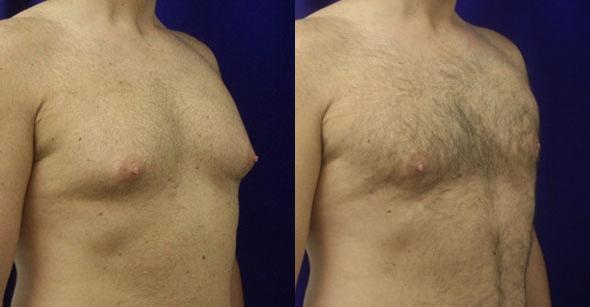
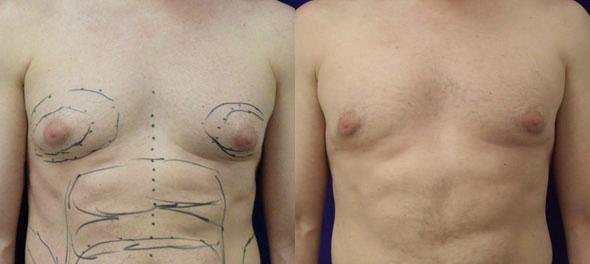
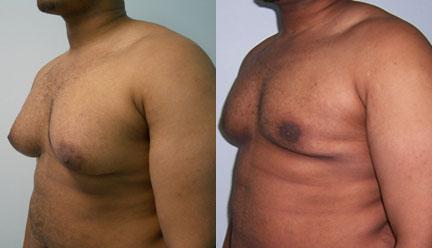
Before and After Male Breast Reduction Images
*Individual patient results may vary
Male Breast Reduction Surgery Procedure
Our doctors perform male breast reduction surgery in NYC on an outpatient basis at our JCAHO-accredited office-based surgery facility in New York City. General anesthesia or local anesthesia may be used. During surgery, excess fat and/or glandular tissue are removed from the breasts. In extreme cases, excess skin may be removed as well.
Recovery From Surgery
Some swelling and bruising can be expected after surgery. If drainage tubes are inserted, they will be removed within a day or two. You will be required to wear a special compression garment for a period of time during recovery to help support the new contours of the chest. If you experience any pain or discomfort, this can be relieved with medication. You will likely feel well enough after your surgery to return to work within one week.
To learn more about male breast reduction, visit betterhealth.vic.gov.au